
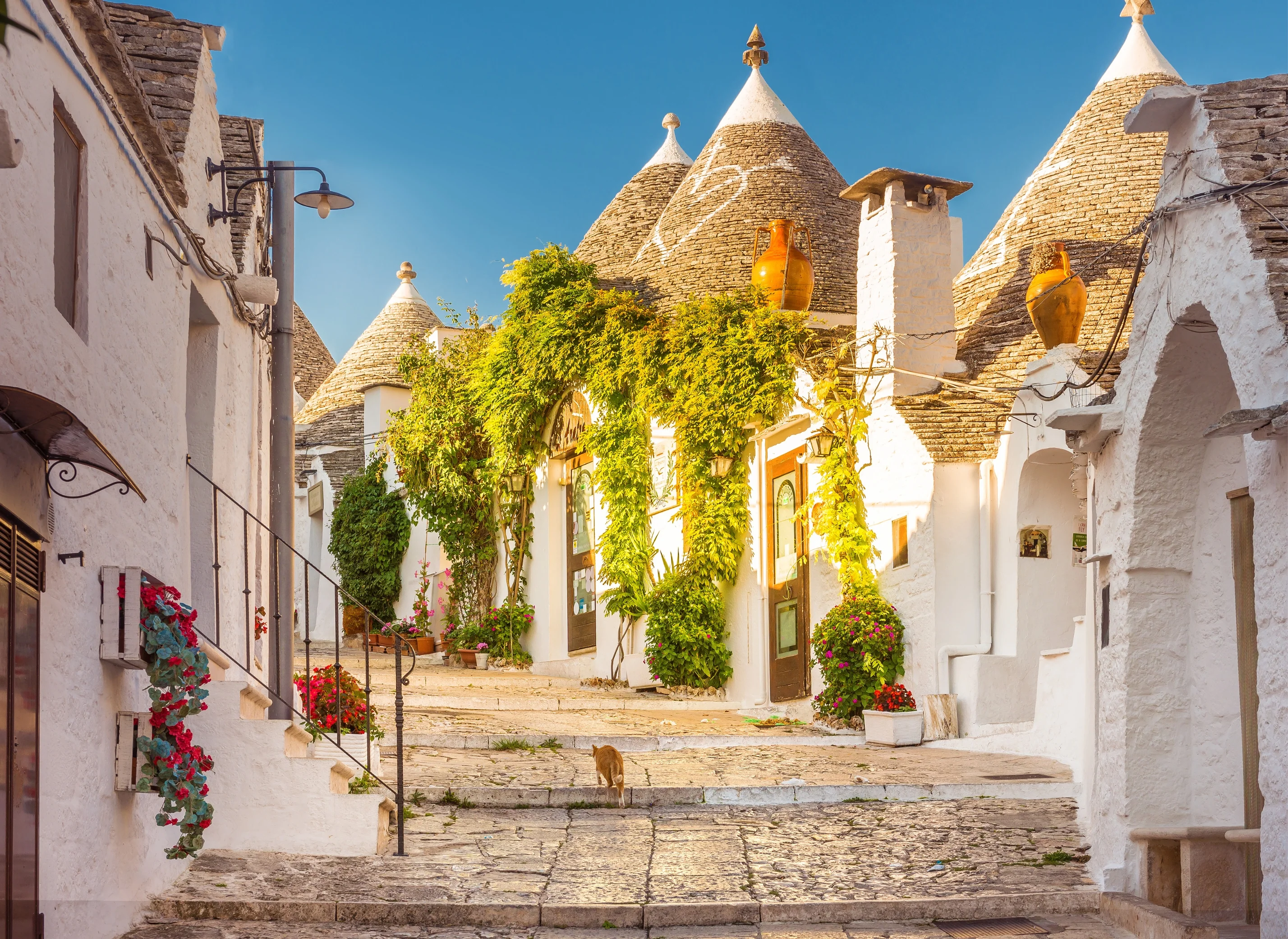
Visiting Alberobello and its famous trulli
At first glance, Alberobello looks like a page torn from a storybook. This small town in Puglia, tucked into the Itria Valley, is famous for its trulli, limestone dwellings with conical roofs that earned the site a UNESCO World Heritage designation. Wandering through its narrow streets reveals a unique atmosphere, balancing local tradition with a slower pace of life.
Architecture unlike anywhere else
The defining feature of Alberobello is its trulli, which are built without mortar using ancient techniques. Each house has a distinct silhouette, often marked with mysterious symbols on the roof. The Rione Monti district is home to more than a thousand of these structures, arranged in a labyrinth of steep alleys that are easy to get lost in.
Authentic discovery
Beyond the trulli, Alberobello has several specific points of interest. The San Antonio church, unique for its own conical roof, towers over the historic area. The Territoire museum, housed in several interconnected trulli, provides a complete look at local history. Nearby, the Aia Piccola district shows a more authentic side of Alberobello, with quieter streets and trulli that are still used as private residences.
Exploring the surroundings
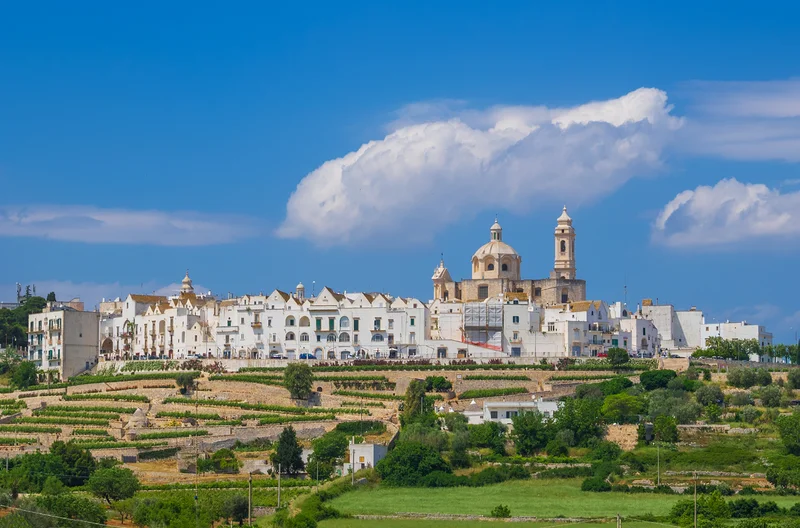
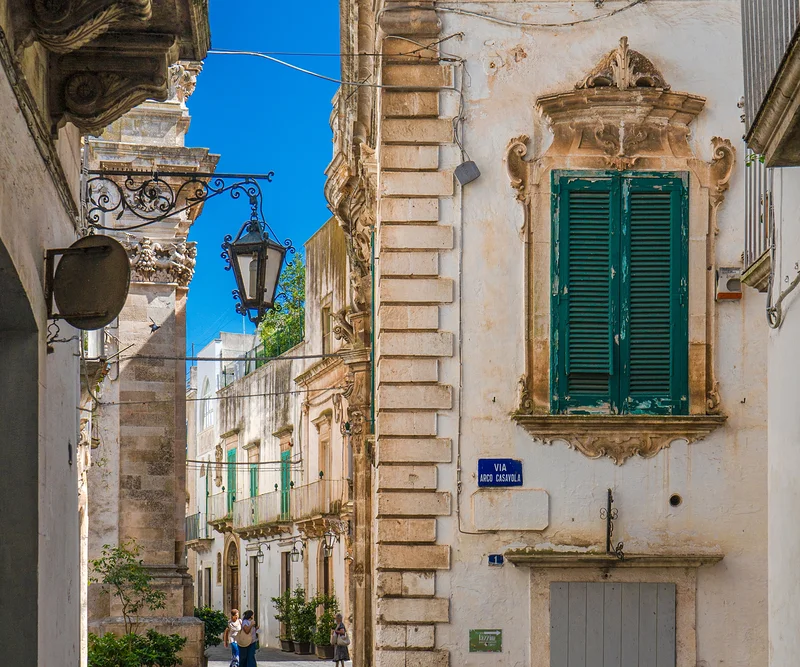
Alberobello is a practical base for exploring the Itria Valley. A few miles away, the towns of Locorotondo and Martina Franca are worth a trip to see their historic centers. If you have time, the Castellana caves are among the most impressive in Italy, or you can spend a day at the beach, as the Adriatic coast is less than an hour away by car.
Atmosphere and local crafts
Shops throughout Alberobello showcase regional craftsmanship, including ceramics, embroidery, and stone goods. Take the time to step inside a trullo open to the public, as many have been converted into small boutiques or galleries. In the late afternoon, once the tour buses leave, the town settles into a quiet, more intimate rhythm.
Flavors of Alberobello: simple and local
The local food scene reflects the land and its traditions. Among the specialties, homemade orecchiette, served with fresh tomato sauce or cime di rapa (broccoli rabe), is a staple. For dessert, try cartellate, which are crispy pastries drizzled with cooked wine. A glass of crisp white wine, typical of the Itria Valley, pairs perfectly with these simple, flavorful dishes.
Where to eat?
- Trattoria Terra Madre (Rione Monti): Organic cuisine and local products in a charming setting.
- La Cantina (City center): Puglian specialties served in an authentic former wine cellar.
- Casa Nova il Ristorante (Via Monte San Gabriele): An elegant atmosphere with a creative menu highlighting regional ingredients.
Where to stay?
- Trulli Holiday Albergo Diffuso (Historic center): Stay in a traditional trullo, perfect for an immersive experience.
- Le Alcove Luxury Hotel nei Trulli (Historic center): Refined, well-restored trulli.
- Tipico Resort (City center): Modern accommodations tucked into authentic trulli, consistently well-rated.
When to go?
Spring and fall offer pleasant temperatures to visit Alberobello away from the summer crowds. In July, the town comes alive with the festival of the patron saints, Cosma and Damiano, featuring traditional, colorful celebrations.
How to get there?
From Bari, it takes about an hour to drive to Alberobello. Regional trains take about 1 hour and 30 minutes for a fare of around 10 EUR (about $11). Bus service is also available.
How to get around?
Alberobello is best explored on foot. Distances are short and the historic heart of the town is pedestrian-only.
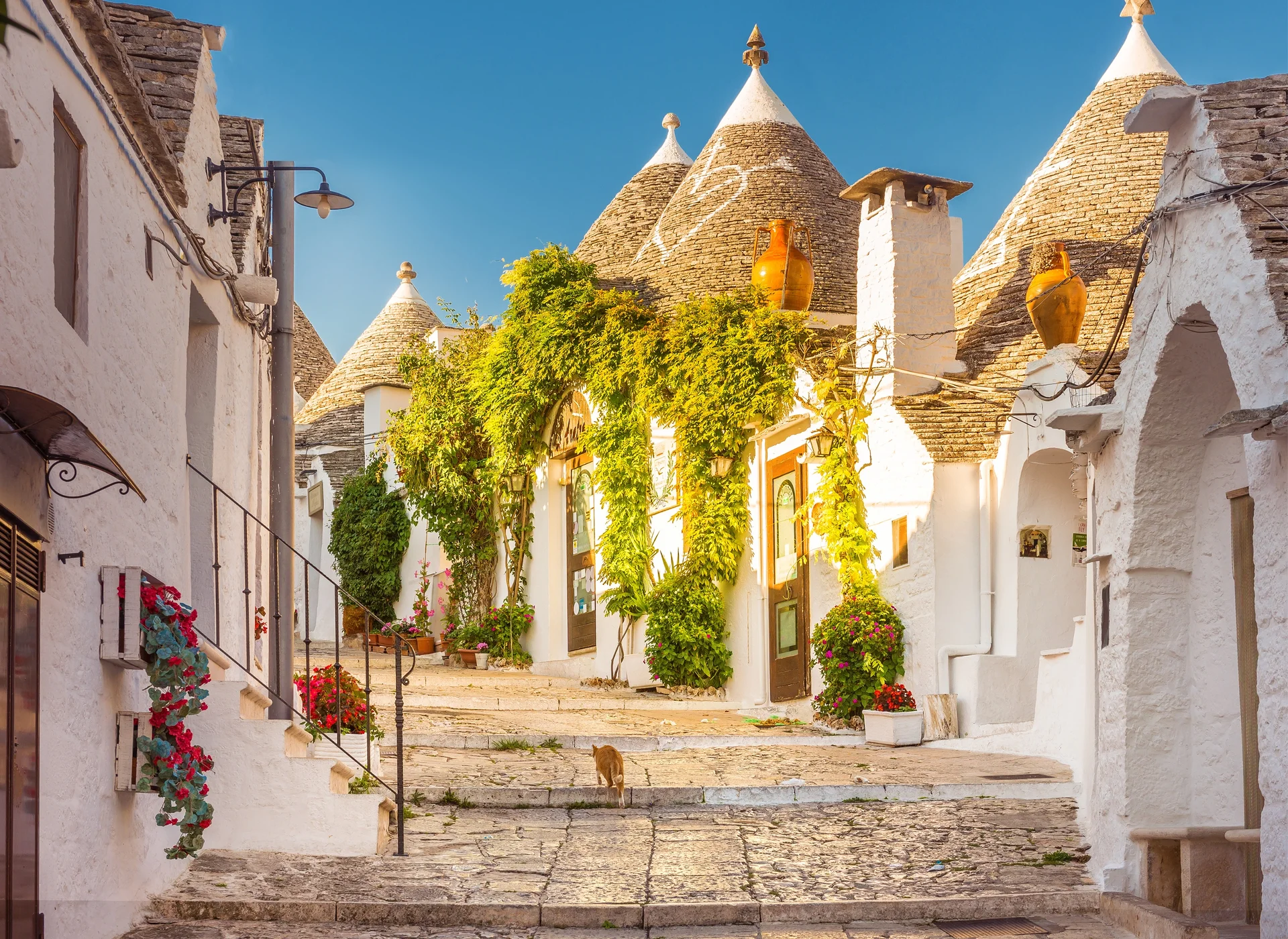
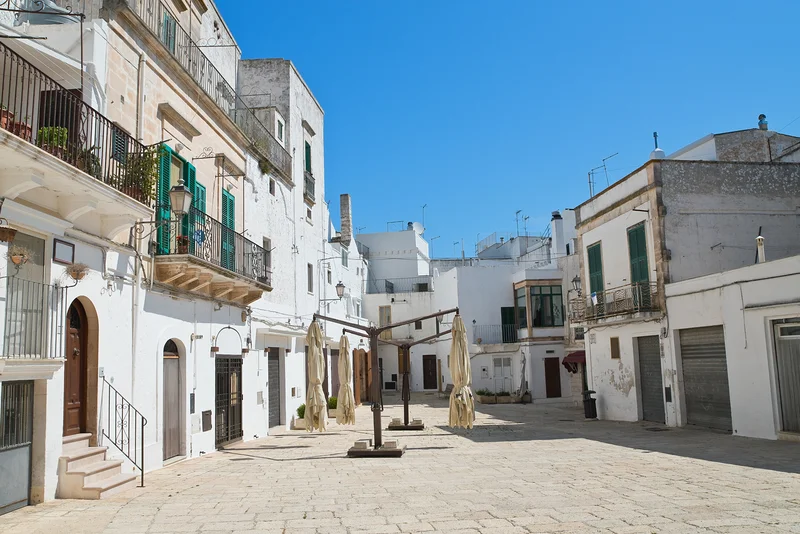
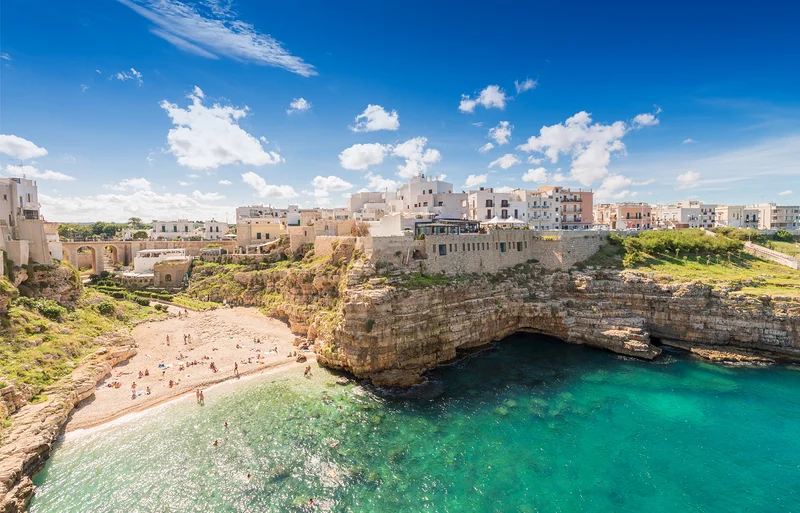
The village of Alberobello is really beautiful. I especially recommend visiting its trulli, which are those typical little white houses with pointed roofs that are quite amazing. You can visit them for free and at your own pace. Some of them now house shops or small museums. I suggest spending at least a half day there.