Georgia: The Small Caucasus Country That Gets Under Your Skin
Your first morning in Tbilisi, the smell of sulfur hits you before your coffee does. It drifts up from the old city's thermal baths, where generations of Georgians have been scrubbing each other's backs and talking loudly over the steam.
That detail tells you a lot about this country wedged between Europe and Asia: traditions here aren't preserved behind glass, they're lived. Georgia claims 8,000 years of winemaking, an alphabet found nowhere else on Earth, and a food culture that holds its own against anything in the Mediterranean.
You'll probably fall hard for it, but not everyone does
Georgia packs an extraordinary amount into a small space. In ten days, you can go from peaks above 16,000 feet to subtropical beaches on the Black Sea, with ancient vineyards and cliff-hanging monasteries in between. And the cost of living is remarkably low, you can eat and sleep well without watching every dollar.
That said, let's be straight: infrastructure outside the main cities is a work in progress, local driving can be genuinely alarming, and once you leave the urban centers, English is scarce.
thumb_up Great fit for:
- Hikers and trekkers after serious mountains without serious crowds
- Wine lovers and anyone who eats enthusiastically
- Budget travelers who want maximum experience for minimum spend
- Backpackers and digital nomads looking for an affordable base in the Europe-adjacent world
- History buffs into monasteries, ancient churches, and religious heritage
- Road trippers who live for dramatic scenery
warning Not the right fit for:
- Anyone chasing turquoise water and postcard-perfect beaches
- Travelers who need reliable, on-time public transportation
- People who don't handle logistical improvisation well
- Those looking for upscale beach resort experiences
Prices that make you do a double-take
Georgia is one of the most affordable destinations you can reach from the US without going to Southeast Asia. A full sit-down meal runs between 11 and 27 GEL, a guesthouse night between 27 and 68 GEL, and a marshrutka ride across the country costs next to nothing. Even if you're splurging, it's hard to spend more than 110 GEL a day while traveling comfortably.
| Trip Type | Where | Duration | Budget per person |
|---|---|---|---|
| City break, culture and food | Tbilisi | 4, 5 days | 410 to 950 GEL |
| High-altitude trekking | Svaneti (Mestia, Ushguli) | 1 week | 540 to 1,090 GEL |
| Full road trip | Tbilisi, Kazbegi, Kakheti, Svaneti | 2 weeks | 1,360 to 2,450 GEL |
| Wine country tour | Kakheti (Sighnaghi, Telavi) | 3, 4 days | 270 to 680 GEL |
| Black Sea beach stay | Batumi and the Black Sea coast | 1 week | 540 to 1,360 GEL |
| Winter skiing | Gudauri or Bakuriani | 1 week | 680 to 1,630 GEL |
Rough roads, warm welcome
The main highways have improved considerably, but venture off the primary routes and you're on dirt tracks. Marshrutkas, shared minibuses that leave when full, are the backbone of intercity travel. Comfort is basic, schedules are approximate, and personal space is a loose concept. The platform GoTrip now lets you book a private driver by the day at reasonable rates, and it's become the top recommendation among recent travelers.
On climate: summers are hot in the lowlands, with Tbilisi hitting 100, 104°F in July. Mountain winters are cold, but the capital stays relatively mild. The sweet spot is May through October, with peak crowds in July and August.
Is Georgia safe?
Georgia is generally safe. Petty crime is rare, and solo travelers, including women, move around without major issues. The main risk is on the road: mountain routes can be narrow, passing maneuvers are bold, and livestock wander onto the pavement without warning. Two regions are off-limits from Georgian territory: Abkhazia and South Ossetia, both occupied by Russia. Stay well away from those borders.
Heads up: check the political situation before you go. Tbilisi saw major protests in 2024 tied to tensions between pro-European and pro-Russian factions. Demonstrations centered on Rustaveli Avenue. Outside the capital, daily life was unaffected.
The Caucasus Mountains: the visual gut-punch
The Greater Caucasus range forms Georgia's northern border with Russia. Peaks top 16,000 feet, and the valleys below hold villages that feel genuinely cut off from the modern world. The most famous trek connects Mestia to Ushguli over four days through Svaneti, passing medieval defensive towers, glaciers, and alpine meadows that stretch as far as you can see.
This trek has gotten popular enough that you'll need to book guesthouses months ahead in summer. Hikers stay with local families for 54 to 68 GEL per night, full board included. The trail isn't technically demanding, but the daily elevation gain means you need to be in reasonable shape.
Heads up: if Svaneti feels too crowded for your taste, look into Tusheti, accessible only by 4WD over a vertiginous mountain pass. It's one of the most isolated regions in the country, with no ATMs and spotty cell service, but the landscapes and hospitality are exceptional.
Kazbegi and the Georgian Military Highway
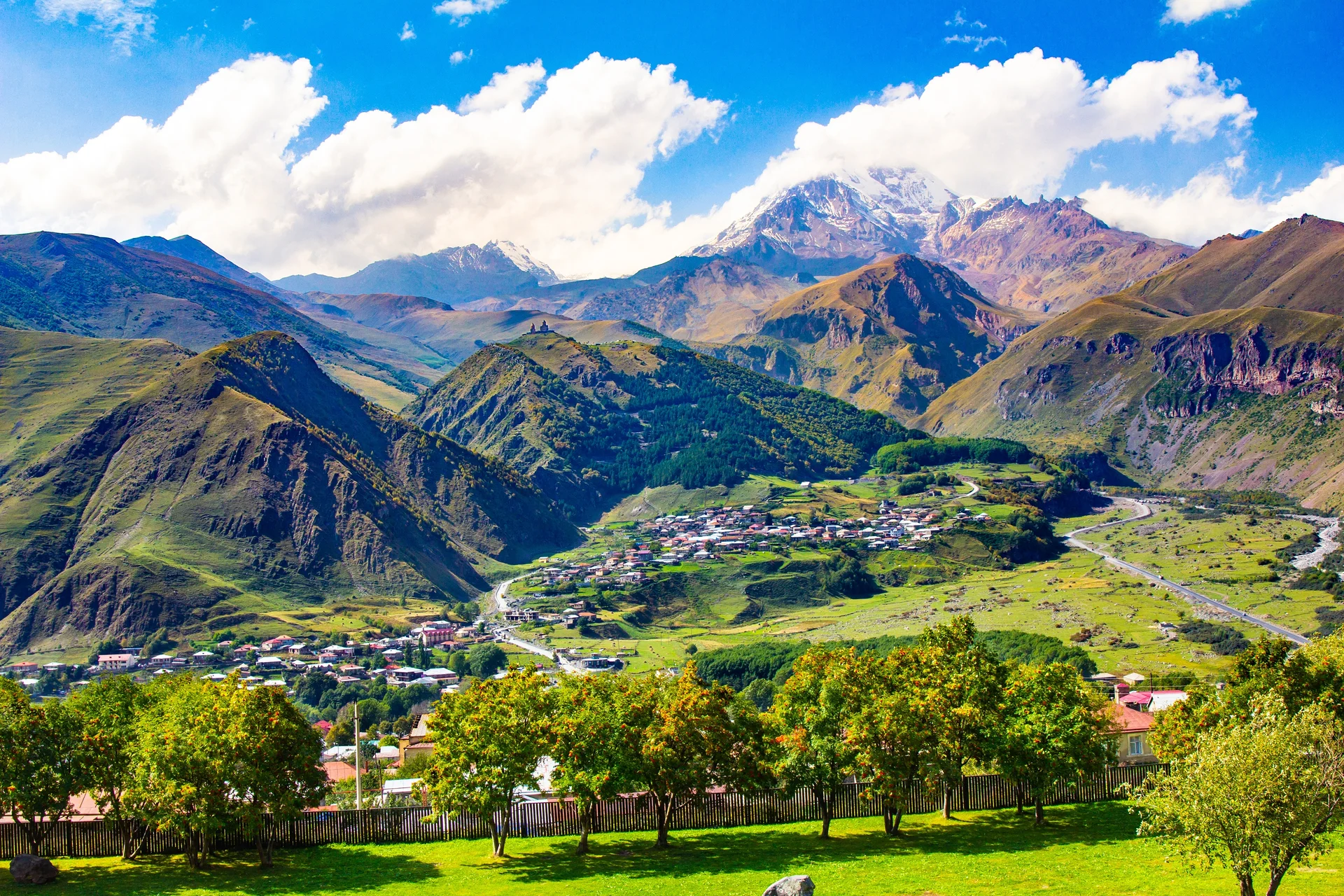
The Georgian Military Highway runs from Tbilisi north to the Russian border through the heart of the Caucasus, one of the great road trips in this part of the world. At the end of the road, the village of Stepantsminda delivers one of Georgia's iconic views: the Gergeti Trinity Church perched at 7,100 feet with Mount Kazbek looming behind it. You can do it as a day trip from Tbilisi, but spending the night lets you catch sunrise on the peaks.
On the way, stop at Ananuri Fortress, sitting above the Jinvali reservoir, and at Jvari Pass at 7,800 feet, where paragliders launch in summer for around 190 to 245 GEL a flight.
Georgian wine: 8,000 years in the making
Georgia didn't just develop a wine culture, archaeological evidence puts winemaking here as far back as 6000 BC, making it the oldest wine-producing country on record. The traditional method of fermenting in qvevri, large clay vessels buried underground, is recognized by UNESCO as an intangible cultural heritage.
The Kakheti region in eastern Georgia produces the bulk of the country's wine. The small towns of Sighnaghi and Telavi make good bases for visiting producers. Skip the large commercial wineries in Sighnaghi and head straight to the small family operations, where tastings happen around a table loaded with food.
At Avygeo, we have a soft spot for Kindzmarauli, a semi-sweet red that catches people off guard if they're used to dry wines. Also worth trying: an amber qvevri wine, which is tannic and structured in a way that has almost nothing in common with what you'd find in California or France. It's an acquired taste, but most people go back for more.
Tbilisi: a capital with real personality
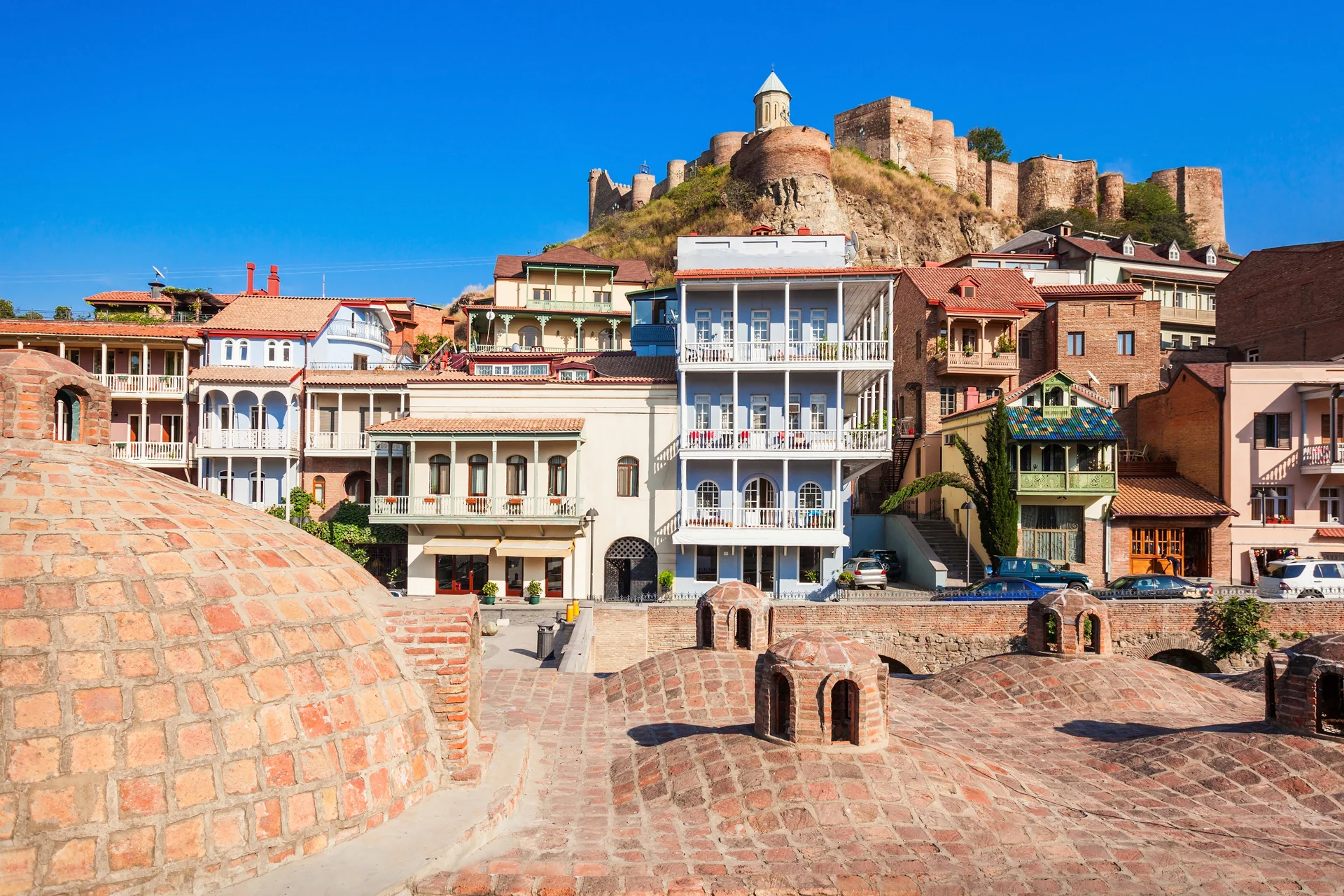
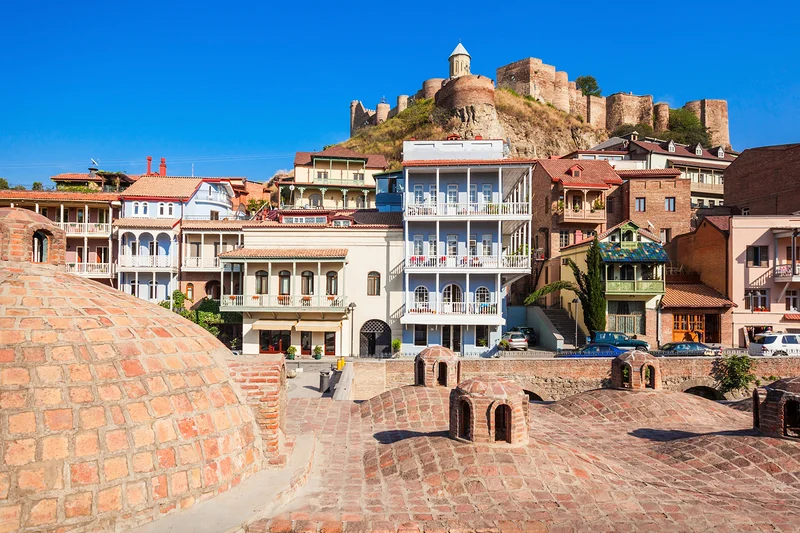
Tbilisi doesn't look like any other European capital. The carved wooden balconies of the old city lean out precariously over narrow lanes. The Sololaki neighborhood hides inner courtyards where laundry hangs between grapevines climbing crumbling facades, and kids play while neighbors argue and laugh across the courtyard.
Neighborhoods worth your time
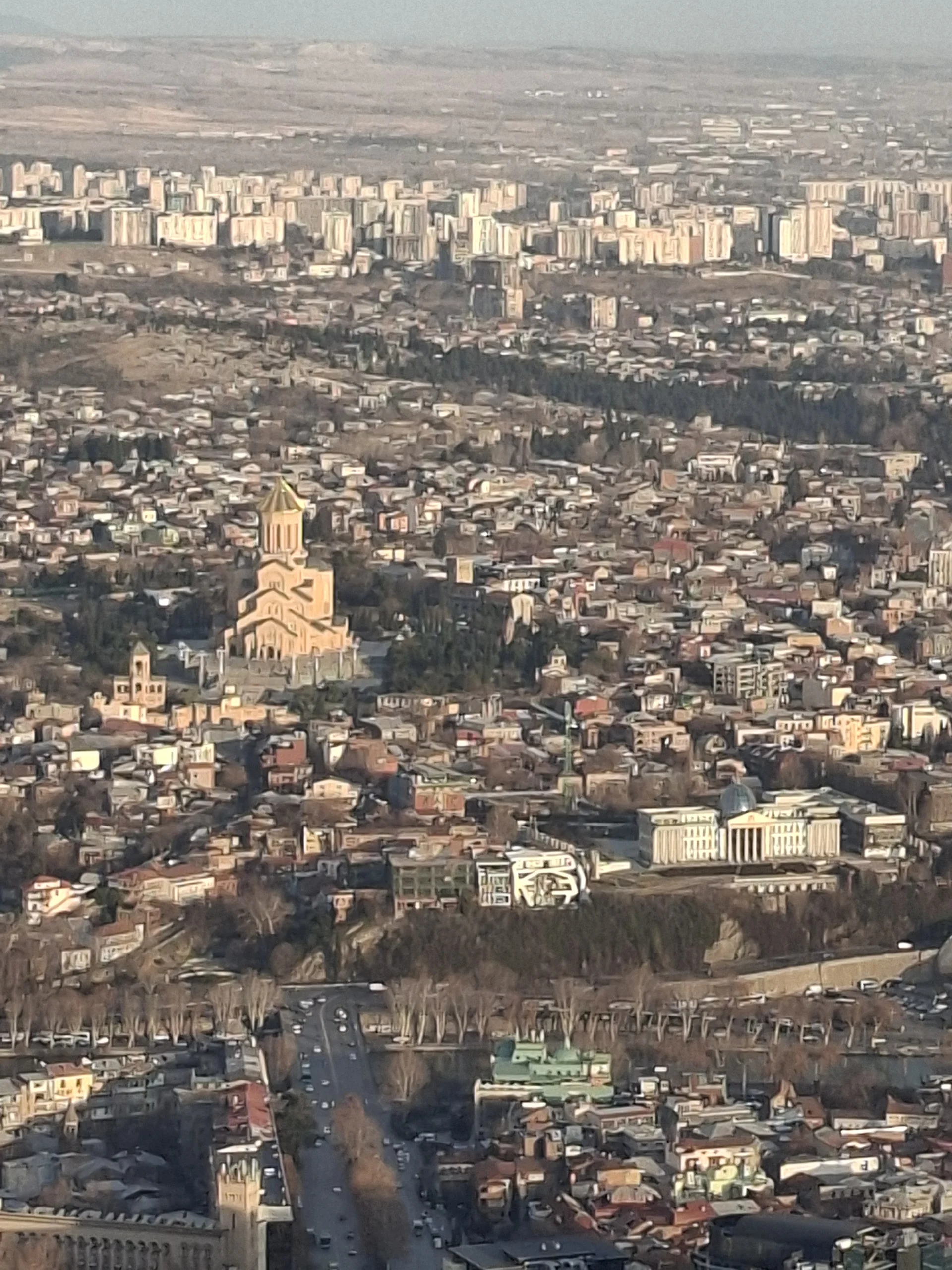
The Narikala Fortress, reachable by cable car, gives you the best panorama over the city. Below it, the sulfur baths of the Abanotubani district offer private soaking rooms starting at just a few dollars. It's a rough-around-the-edges experience, but exactly what you want after a long day of walking.
Fabrika, a Soviet-era textile factory converted into a hostel, co-working space, and cultural hub, captures what contemporary Tbilisi is becoming. Come evening, the natural wine bars and techno clubs in the Vera neighborhood draw a mix of locals and international visitors.
Heads up: pick up a Magti SIM card when you land. For around 27 GEL, you get 5GB of data for a month. You'll need it for Google Maps on mountain roads and for translating the Georgian alphabet on the fly.
The lesser-known interior: caves, steppes, and monasteries
Kutaisi, the country's third-largest city, is the gateway to western Georgia. The Gelati Monastery, a UNESCO site, and Martvili Canyon, where you float through limestone gorges by rowboat, each deserve half a day. Nearby, the old Soviet spa town of Tskaltubo, with its decaying sanatoriums still standing, is a photographer's dream.
In the southeast, the David Gareja monastery complex, carved directly into the rock along the Azerbaijani border, is one of the most striking sites in the country. The semi-desert steppe surrounding it, dotted with mud volcanoes, makes it feel like you've crossed into a different continent entirely.
Gori and the Soviet past
Gori is Stalin's birthplace and home to a museum dedicated to the Soviet dictator. It's a complicated, fascinating place that says a lot about Georgia's unresolved relationship with its own history. A few miles away, the cave city of Uplistsikhe, one of the oldest human settlements in the Caucasus, is well worth the detour.
Georgian food: the feast that never ends
Georgian food doesn't do moderation. The supra, the traditional feast, can go on for hours, led by the tamada, a toastmaster whose job is to keep the wine flowing and the speeches coming. Two dishes define the table: khachapuri, a cheese-filled bread whose Adjaran version arrives shaped like a boat, topped with an egg and butter, and khinkali, large juicy dumplings eaten by hand.
Lobiani, flatbread stuffed with spiced red beans, makes a full meal for well under a dollar. Grilled meat skewers, cucumber-tomato salads dressed generously with walnuts, and churchkhela, a candle-shaped candy made from grape juice and nuts, round things out. Georgian cooking draws from its Turkish, Persian, and Russian neighbors while staying unmistakably its own.
When to go to Georgia
The best window runs from May through October. Spring brings green landscapes and comfortable temperatures, though some mountain passes stay closed until June. Summer is prime time for high-altitude trekking and beach time in Batumi, even if the lowland heat gets oppressive.
Fall, September through mid-November, lines up with the grape harvest in Kakheti, making it the best time to visit if wine is your priority. Winter draws skiers to Gudauri and Bakuriani, two solid if unspectacular ski resorts with affordable lift tickets.
Getting to Georgia from the US
There are no nonstop flights from the US to Georgia. Most American travelers connect through Istanbul (Turkish Airlines is the most common option and often the most competitive on price), or through other European hubs. Flight times from the East Coast with one stop typically run 14, 18 hours total. Georgian Airways operates regional routes once you're in the area. Pegasus Airlines via Istanbul is another solid budget option.
US passport holders can enter Georgia visa-free for up to one year, one of the most generous entry policies in the world. Your passport just needs to be valid for the duration of your stay. Travel insurance is strongly recommended.
Getting around Georgia
Marshrutkas are the most common way to get between cities, shared minibuses that leave when full, connecting most towns for a handful of laris. Seats are tight, air conditioning is hit or miss, and departure times are suggestions. Trains connect Tbilisi to Batumi and Kutaisi in more comfort, with tickets bookable online.
Renting a car gives you the most freedom, especially for remote areas. Budget around 68 to 109 GEL per day for a standard vehicle, and double that for a 4WD, essential in Tusheti and on some Caucasus tracks. Gas runs about 2.70 GEL per liter. Be prepared to share the road with cattle, trucks, and drivers with a very confident passing style.
If you'd rather not drive, GoTrip lets you book a private driver by the day for roughly 218 to 326 GEL, fuel included. Bolt and Yandex Taxi both work well in the major cities.