
Fréjus, where the French Riviera meets its Roman roots
On October 9, 1799, a 30-year-old general landed in the Gulf of Fréjus after a rough crossing from Egypt. His name was Bonaparte, and he was heading inland to set up the coup d'état that would rewrite French history. The town put him up in an inn on rue Charles de Gaulle, which is still standing today.
That snapshot tells you everything you need to know about Fréjus: a town where every street corner spans twenty centuries of history, yet most travelers blow right past it on their way to Saint-Tropez or Cannes.
A smart alternative to the flashy Riviera
This town suits history buffs, families traveling with kids, and anyone looking for a wallet-friendly base to explore the region. Sandy beaches and hikes in the massif de l'Estérel draw outdoor enthusiasts. Partygoers and celebrity watchers, however, will be let down since the vibe stays firmly laid-back and provincial.
Having a car proves almost essential to get the most out of the surrounding area. You can easily walk around the historic center, but the beaches, the marina, and the natural sites are spread across a municipality spanning more than 100 square kilometers. Plan for a full day to cover the main historic sights, or two to three days if you want to add beach time and hiking.
A gentler budget than the rest of the coast
Fréjus remains significantly cheaper than Nice or Cannes. Expect $90 to $169* a night for a decent hotel, $17 to $34* per meal at a restaurant, and set aside some cash for parking if you bring a car. Major historic attractions cost between $3.40 and $9* to enter.
The historic center: 2000 years packed into a few blocks
Julius Caesar founded Forum Julii in the 1st century BCE as a naval base. The local amphitheater once seated 10,000 spectators for gladiatorial games. It still cuts an impressive figure despite the centuries and now hosts summer concerts. The Roman theater and the ruins of the aqueduct round out the ancient sites, which feel less grand than what you see in Arles or Nimes, but much more accessible and far less crowded.
The groupe épiscopal forms the medieval heart of the town. Saint-Léonce Cathedral shelters a 5th-century baptistery, ranking among the oldest in France. Back then, worshippers practiced full-immersion baptism in a central basin. The adjoining cloister features a painted wooden ceiling covered in mythical creatures, a rare sight anywhere in the country.
Friendly tip: Download the tourism office's free audio guide before you arrive. It turns a standard walk into a historic treasure hunt and points out small details you would otherwise miss with the naked eye.
Offbeat curiosities
Fréjus hides some genuinely unexpected sights. The Hong Hien Pagoda, built by Vietnamese soldiers during World War I, sits right among the umbrella pines. The Missiri Mosque, a replica of a mud-brick mosque in Mali, nods to the presence of Senegalese colonial troops stationed here in the 1930s. These monuments serve as quiet reminders of a lesser-known chapter of colonial history.
Beaches and the marina: the Mediterranean side
Seven kilometers of fine sand stretch from Fréjus-Plage down to Saint-Aygulf. The main beach, lined with palm trees, comes with all the standard amenities including restaurants, lounge chair rentals, and water sports. It gets packed in July and August. For more breathing room, head further down toward the plage des Esclamandes or the hidden coves of Saint-Aygulf.
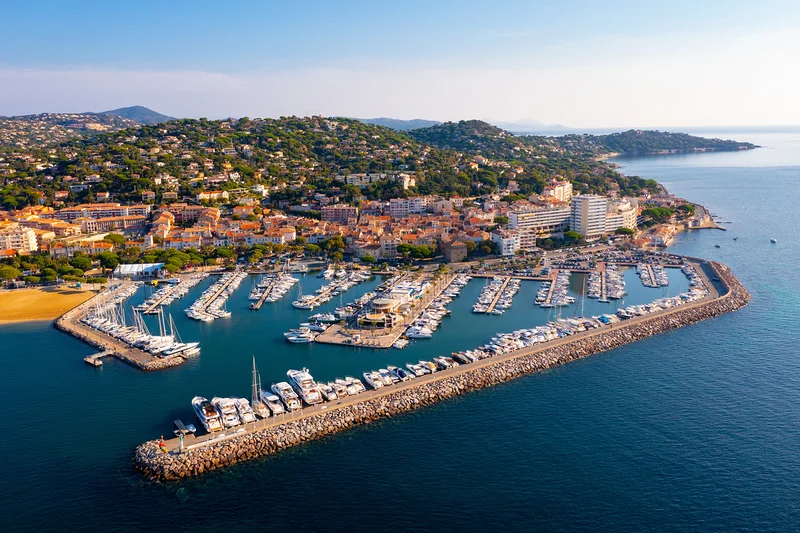
Port-Fréjus opened in 1989 and now holds 849 boat slips. Its brightly colored facades echo traditional Provençal fishing ports, and the restaurant terraces buzz every evening. The marina has earned the Blue Flag label for 30 consecutive years for water quality.
The Base Nature François Léotard offers a massive 135-hectare public park right on the waterfront, featuring a summer pool, running tracks, and playgrounds. Families easily spend a full day here.
The Estérel: red rock plunging into the sea
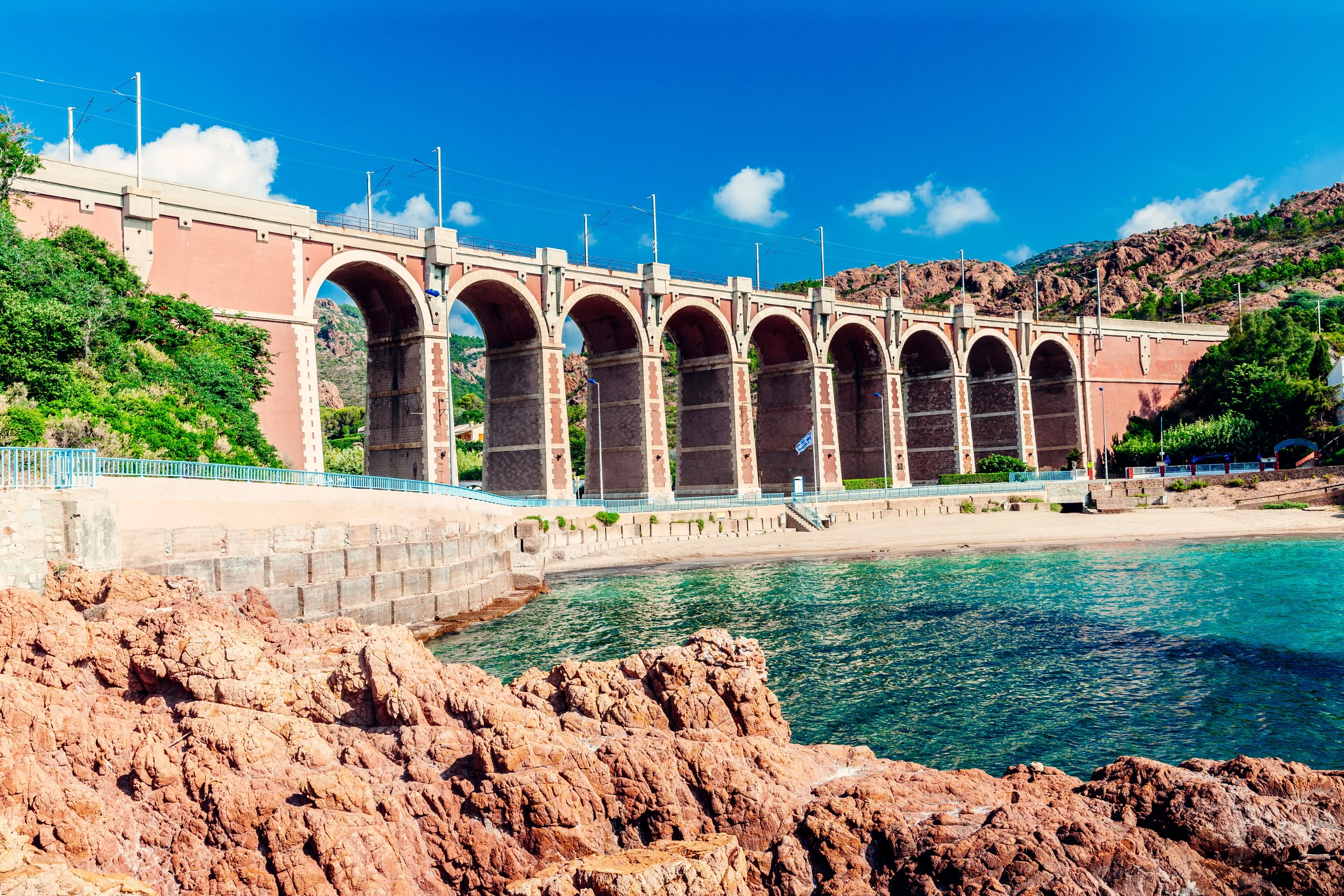
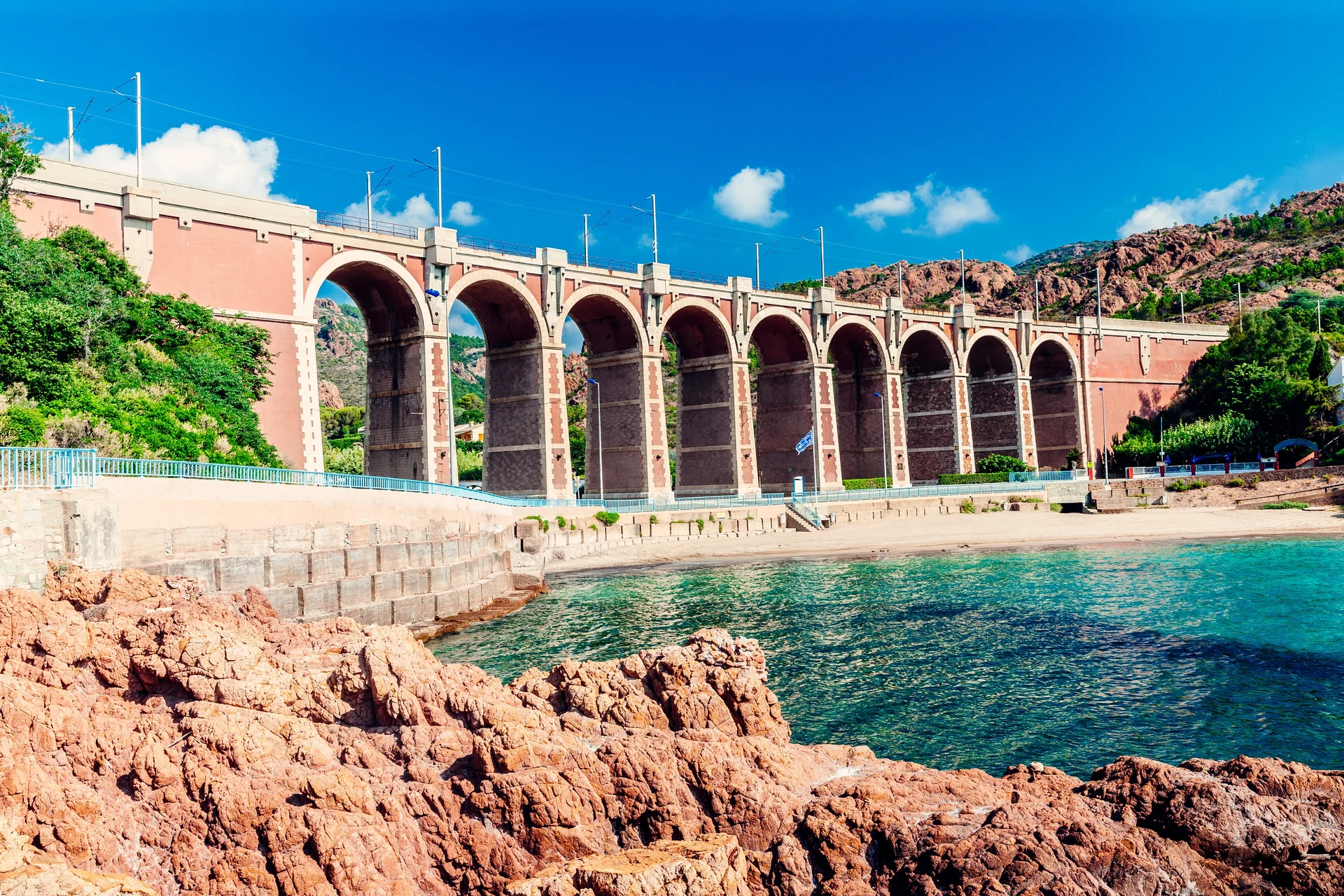
The massif de l'Estérel puts on one of the most striking visual shows along the coast. Its jagged red porphyry rocks stand in sharp contrast to the deep blue of the Mediterranean. Dozens of marked trails let you explore on foot, by mountain bike, or on horseback. Mont Vinaigre, the highest point at 618 meters, delivers a 360-degree panorama of the coastline.
The ruins of the Malpasset Dam sit a few miles outside the center. Its catastrophic collapse in December 1959 killed over 400 people, marking one of the worst civil engineering disasters in 20th-century France. Reached via an easy hike along the Reyran river, the site still preserves giant chunks of shattered concrete tossed around by the tidal wave.
Friendly tip: Start your hikes in the Estérel early in the morning, especially during the summer. The heat builds up fast, and parking lots fill up by 10 AM.
Where to eat and drink in Fréjus
Local cooking leans heavily on Mediterranean staples: grilled fish, tapenade, and stuffed vegetables cooked Provençal style. The historic center market on Wednesday and Saturday mornings showcases the best fresh produce in the area. Make sure to try the local Estérel olive oil and the regional AOC Côtes de Provence wines from nearby vineyards.
The restaurant at Hôtel Aréna serves polished Provençal dishes out in a garden facing the swimming pool. La Crêperie de Gaëlle down at the port flips homemade crêpes with views of the moored boats. For artisanal ice cream, the Ness parlor in Port-Fréjus is a local favorite. Further out, Clos des Roses, an estate winery right off the national highway, combines organic wine tastings with a restaurant overlooking the vines.
Where to stay in Fréjus and around
The historic center offers boutique spots like Hôtel Aréna, housed in the same building where Bonaparte once stayed. Port-Fréjus concentrates apartment complexes overlooking the water. Saint-Aygulf feels more residential and works well for families looking for a quiet atmosphere.
Campgrounds are plentiful and often top-notch, featuring direct access to either the beaches or the surrounding nature reserves. Vacation rentals remain the most budget-friendly option if you are staying a week or longer. Book several months ahead if you are aiming for July or August.
How to get to Fréjus and get around
Nice-Côte d'Azur airport is about a 45-minute drive or a one-hour train ride away. The A8 motorway links Fréjus to Marseille in an hour and a half and the Italian border in an hour. From North America, the simplest route is a flight into Nice, usually with one connection in Europe. Coming from Paris, the TGV train to Saint-Raphaël takes roughly four and a half hours, followed by a quick five-minute local train hop into Fréjus.
The Fréjus train station sits on the coastal rail line connecting Marseille and Ventimiglia. Local buses tie the different neighborhoods together, but having a car is by far the easiest way to explore the wider region. Plan for parking expenses during the summer, particularly right by the beaches.
When to go
May, June, and September strike the ideal balance between pleasant weather and manageable crowds. July and August bring heavy traffic and drive up prices. Winters stay mild, but many shops and restaurants close down for the off-season. If you time it right, you can pair a trip to Fréjus with big regional events like the Nice Carnival in February or the Cannes Film Festival in May.
A pretty nice spot if you are looking for a place for a day trip or a short family vacation. You will find what you are looking for between the fine sand beaches and the attractions. If you are looking for more peace and authenticity, however, you will have to go somewhere else! Nevertheless, the city has a certain charm thanks to its historical ruins.