
Cluny, the medieval capital that rattled Rome
Back in 910, an Aquitanian aristocrat decided to gift his lands to establish a monastery free from any local authority. Eleven centuries later, that pious act gave birth to a small Burgundian town of 5,000 residents that once sheltered the largest church in Christendom.
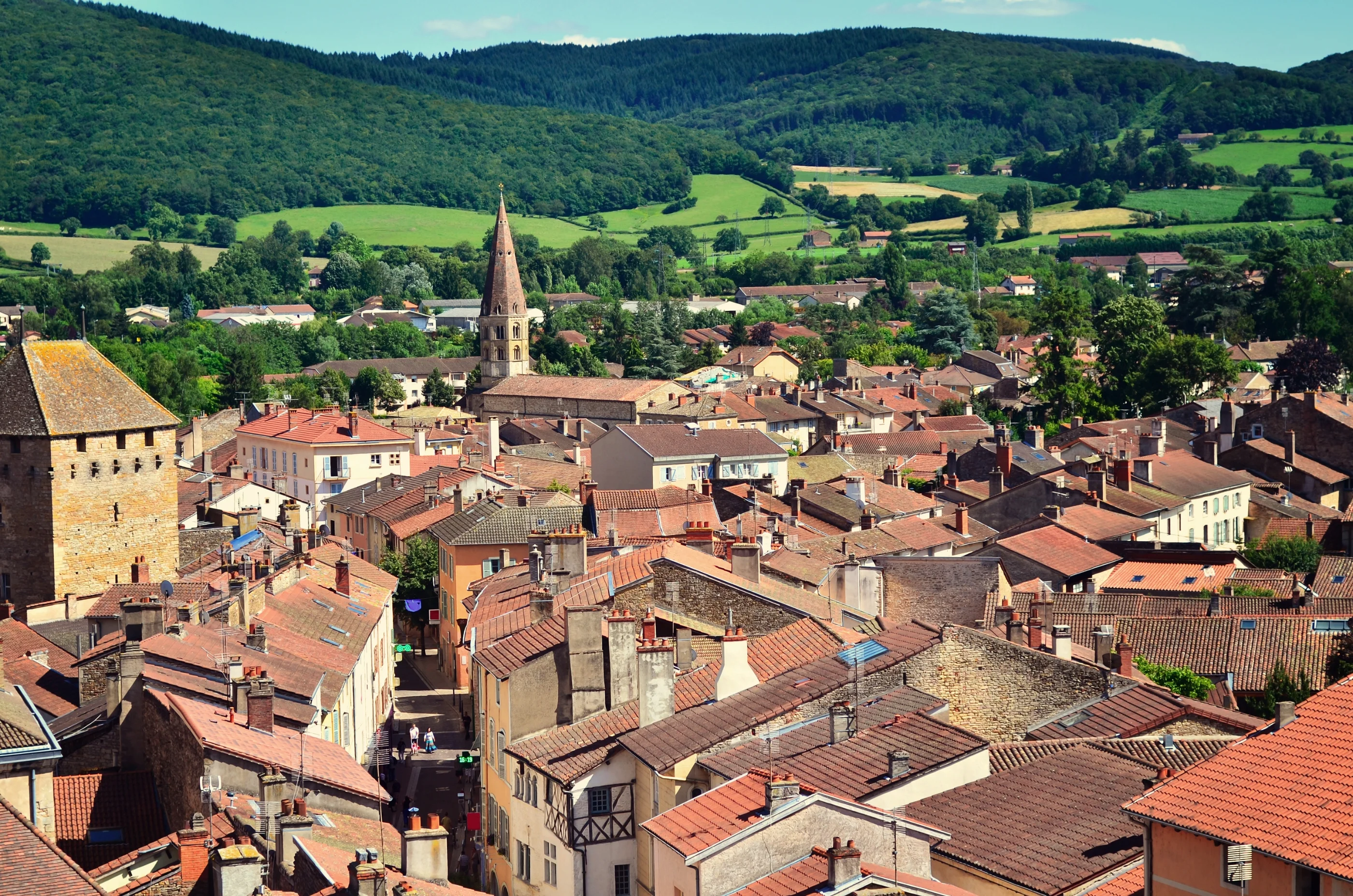
Cluny boasts the second highest concentration of Romanesque houses in the world, right behind Venice. Cobbled alleys wind past 11th-century facades, the scent of fresh bread drifts from bakeries on Saturday mornings, and the octagonal bell tower of the Eau-Bénite still commands the rooftops just as it did nine centuries ago.
A destination for history lovers and peace seekers
This small town in Saône-et-Loire suits medieval heritage enthusiasts, cycle tourists, and dedicated food lovers alike. The pace is slow, and crowds are rare. Families with children will appreciate the equestrian shows at the Haras national and outdoor nature walks. Wine lovers can easily branch out toward the Mâconnais and its celebrated white wines.
On the flip side, if you are looking for nightlife or beaches, keep driving. Tourism infrastructure remains modest, and you will need a car to explore the surroundings. Car traffic in the historic center occasionally disrupts the town's serenity. Plan for two to three days to soak in the highlights without rushing.
A reasonable budget for Burgundy
Expect $90 to $135* per day for a couple, lodging included. A double room in a boutique hotel runs between $79 and $146*. At restaurants, lunch menus hover around $16-$21*, while dinner climbs from $29 to $45*. Abbey admission costs $13*.
The abbey and its ruins: what remains of a vanished giant
During the Middle Ages, the abbey of Cluny exerted influence over 1,400 monasteries across Europe, stretching from Poland to Scotland. Its massive church, stretching over 180 meters long, surpassed every cathedral in size until the rebuilding of Saint Peter's in Rome during the 16th century. Then came the Wars of Religion, the Revolution, and the stone-by-stone dismantling between 1798 and 1823. Today, only a tenth of the original building survives.
The visit starts with a film that reconstructs the abbey in its former glory. Visitors then walk through the southern transept arm topped by the majestic Eau-Bénite tower, the 17th-century cloister, and the Jean de Bourbon chapel. The Farinier, an old 13th-century monk granary, preserves an exceptional collection of sculpted capitals under its original timber frame. These works represent the eight tones of Gregorian chant, an iconographic program found nowhere else on earth.
Friendly tip: climb the 120 steps of the Tour des Fromages for a 360-degree panorama over the rooftops and surrounding countryside. An augmented reality screen up there displays the abbey as it stood centuries ago.
The medieval town: walking between two eras
Cluny is more than just its abbey. The town preserves around twenty Romanesque houses visible from the street, and over a hundred if you count the interiors. Follow the bronze floor studs marked with the Paschal lamb so you do not miss anything. rue Lamartine and rue de la République concentrate the finest facades featuring arcades and mullioned windows. The 13th-century Gothic Notre-Dame church deserves a stop for its stained glass and luminous nave.
The Hôtel-Dieu, a 17th-century former hospice, preserves a contemporary fresco by artist Chaimowicz. The Museum of Art and Archaeology, housed in the palace of Abbot Jean de Bourbon, displays Romanesque sculptures saved from destruction, including a reconstruction of the lost grand portal.
The National Stud and equestrian arts
Napoleon established a stallion depot inside the monastic buildings in 1806. Two centuries later, the Haras national de Cluny remains a major equestrian hub. The stables house about twenty horses that perform in shows throughout the year. Guided tours let you discover the stud's history and get close to the animals. A racetrack rounds out the complex for trotting and steeplechase races.
Friendly tip: in summer, the Thursday Cluny events offer free equestrian demonstrations for families.
The surroundings: castles, cliffs, and Romanesque villages
About ten kilometers south, on the road to Mâcon, the fortress of Berzé-le-Châtel towers over the vineyards from its perch of thirteen towers. The film The Last Duel was shot here. The château de Cormatin, 13 kilometers away, unveils lavish 17th-century interiors and French-style gardens. Farther out, the fortified village of Brancion features medieval alleys and sweeping views over the Grosne valley.
To the south, the Roche de Solutré rises from the vineyards like a limestone prow. The hike to the summit takes about an hour and rewards you with a dramatic view over the Mâconnais. It is also a major prehistoric site: a museum at the foot of the cliff traces 50,000 years of human presence.
Where to eat and drink in Cluny?
Burgundian cuisine rules supreme here. Restaurants highlight Charolais beef, a tender, marbled meat raised in nearby pastures, Burgundy snails cooked in garlic and parsley butter, and PDO goat cheeses from Mâconnais and Charolais. Local white wines make a fantastic pairing: Pouilly-Fuissé, Saint-Véran, and Viré-Clessé.
The Café du Centre Chez Sissis serves hearty bistro fare with a daily menu around $16*. The Bistrot Marie-Lou charms diners with careful plates and truffle-infused camembert. For a more inventive menu, the Restaurant de l'Abbaye blends Burgundian and Asian influences through its famous snail egg rolls. Every Saturday morning, the market at place du Marché brings together about sixty local producers.
Where to stay in Cluny and around?
The downtown area packs in several boutique hotels within walking distance of the abbey. The Hôtel de Bourgogne and the Hôtel de l'Abbaye offer comfortable rooms in historic settings. For something a bit different, the Art'Hotel & Spa Le Potin Gourmand occupies a former pottery workshop complete with exposed stone walls, a spa, and a fine dining restaurant. B&Bs pop up across the surrounding villages for travelers who prefer absolute country quiet.
Rates drop significantly in the off-season. Book ahead for July and August, festival season.
How to get to and around Cluny?
By car from Paris, plan for about 4 hours via the A6 highway down to the Mâcon-Sud exit. From Lyon, 1 hour and 15 minutes is plenty. The drive from Geneva takes about 2 hours. Trains are less convenient: you have to get off at Mâcon-Loché TGV and then catch a car or bus to Cluny, adding another 25 kilometers. From North America, the practical entry point is Lyon-Saint-Exupéry, reached with one connection through Paris or Amsterdam; Cluny is an hour and a quarter from there by rental car.
On site, a car is essential for exploring the surrounding countryside. The historic center is easily walkable in half a day. Cyclists will love the Voie Verte, a paved 70-kilometer bike path connecting Chalon-sur-Saône to Mâcon right through Cluny.
When to go?
Spring and fall offer the best compromise between pleasant weather and lighter crowds. Summer brings temperatures climbing to around 25°C and a packed festival schedule: the Grandes Heures de Cluny in July and August for classical music, and Jazz Campus en Clunisois in August. Winter stays quiet, though some spots close or cut back their hours. Skip November if you want to avoid lingering gray skies.
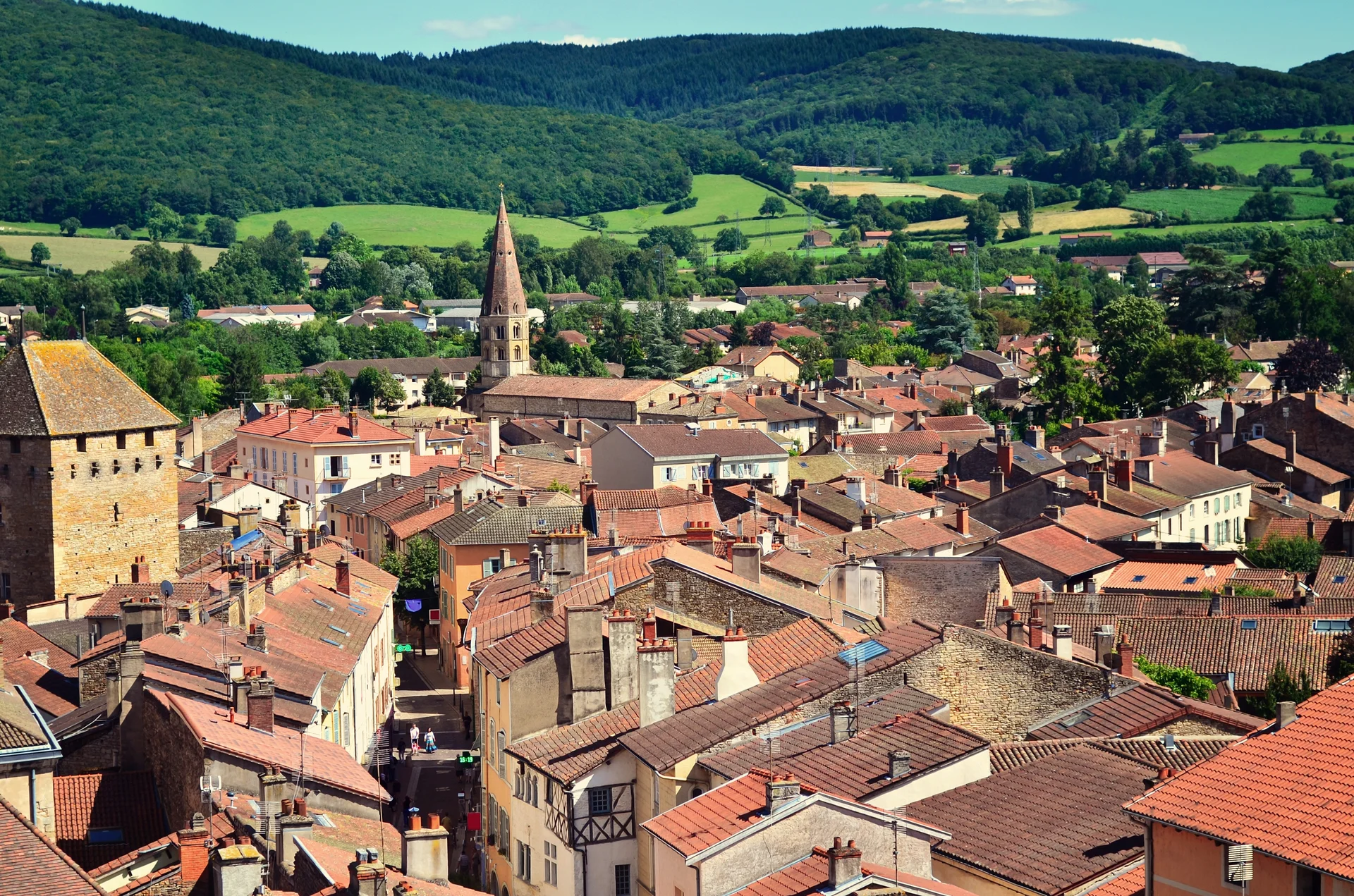
I was pleasantly surprised by my visit to the town of Cluny. The city center is very pleasant and pretty lively, at least during the summer season. The streets are well preserved and have many little shops as well as several good restaurants. Definitely do not miss visiting the abbey.