
Jaisalmer, the citadel melting into the sand
The yellow sandstone of the Sonar Qila ramparts vibrates with an almost surreal hue, somewhere between honey and copper. At this hour, the citadel's narrow alleys are still quiet, disturbed only by the clinking of a chai tray balanced by a local boy on his morning rounds.
Jaisalmer is a destination you earn. Tucked away at the far western edge of Rajasthan, about 60 miles (100 km) from the Pakistani border, it rewards those who make the trek with a timeless atmosphere. Founded in 1156 by the ruler Rawal Jaisal on the advice of a hermit, this former stop on the caravan routes between India, Persia, and Arabia retains its mercantile soul and intricately carved sandstone with rare intensity.
Is this the right destination for you?
Jaisalmer is not a place you visit on a whirlwind stopover between flights. Its geographic isolation dictates a slow pace, and that is precisely where its charm lies. To really experience it, you have to be willing to immerse yourself in a dusty, rural side of India that feels a world away from the amenities of big cities.
Best for:
- Architecture and medieval history buffs
- Travelers chasing desert adventure: camel safaris and nights under the stars
- Photographers after that specific, golden-hour light
- Backpackers and slow travelers folding Jaisalmer into a 2 to 3-week Rajasthan itinerary
- Enthusiasts of Rajput and Jain culture
Not for:
- Those looking for beaches, nightlife, or luxury shopping
- Travelers in a hurry who only have 2 or 3 days in Rajasthan
- People sensitive to extreme heat if traveling between April and September
- Families with very young children requiring modern infrastructure
A low-cost budget, even by Indian standards
Jaisalmer is one of the most affordable cities in Rajasthan. Prices are noticeably lower than in Jaipur or Udaipur, and a savvy traveler can live very comfortably for a modest sum. Here are our estimated daily costs per person.
| Expense | Price Range |
|---|---|
| Night in a basic hostel or guesthouse | 450 INR to 1,350 INR (about $5 to $15) |
| Night in a comfortable hotel or renovated haveli | 2,700 INR to 6,300 INR (about $30 to $70) |
| Street food (kachori, street thali, chai) | 45 INR to 135 INR (about $0.50 to $1.50) |
| Restaurant meal (rooftop, Rajasthani cuisine) | 270 INR to 630 INR (about $3 to $7) |
| Transportation and activities for one day | 450 INR to 1,350 INR (about $5 to $15) |
| Backpacker daily budget | 1,350 INR to 2,250 INR (about $15 to $25) |
| Comfortable daily budget | 4,000 INR to 7,200 INR (about $45 to $80) |
What to know before you go
Jaisalmer is a small city of about 65,000 people. You can easily get around on foot between the fort, the old town, and Gadisar Lake. While English is spoken in tourist areas, knowing a few words of Hindi goes a long way. The desert climate dictates the schedule: between October and March, days are pleasant and nights are cool. From April through June, the mercury regularly pushes past 104°F (40°C).
ATMs are few and far between. Carry enough cash in rupees before you arrive, as many small shops and guesthouses do not accept cards.
Safety: should you be worried?
Jaisalmer is considered one of the safest cities in Rajasthan for tourists. The proximity to the Pakistani border poses no risk to travelers, as the area is heavily patrolled by the Indian army. The real traps are elsewhere: safari scams in the desert and aggressive touts at the train station or near the fort entrance. Always book through your accommodation or a reputable agency, never through someone who approaches you on the street.
Can a woman travel solo in Jaisalmer?
It is doable, provided you follow the usual precautions for North India. The city relies on tourism and locals are generally welcoming. Dress modestly by covering your shoulders and knees, avoid isolated areas after dark, and opt for small-group safaris rather than heading out solo with an unknown guide. Most hotels can organize reliable transfers for your excursions.
The living fort and the old town: the heart of Jaisalmer
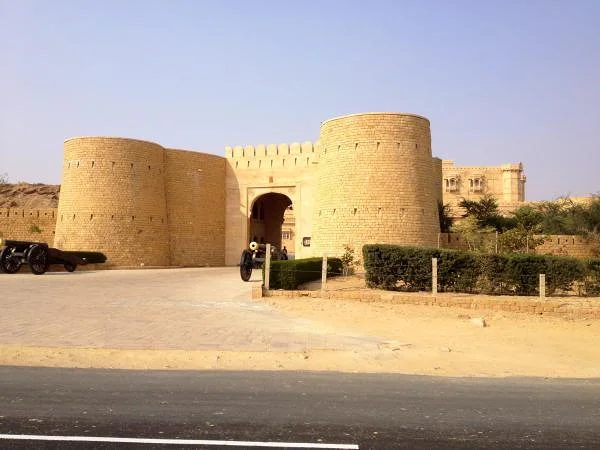
The Jaisalmer Fort is not a static monument. It is one of the last "living forts" in the world, with about 4,000 people still residing within walls featuring centuries-old carved facades. The narrow, labyrinthine alleys are pedestrian-only and lined with artisan shops, tiny temples, and guesthouses. You will pass Brahmins in white dhotis, curious goats, and local kids playing cricket.
Inside, the Fort Palace Museum is worth a good hour. The silver throne, miniature paintings, and the view from the terrace over the desert justify the 250-rupee entrance fee for foreigners. Right next door, the seven interconnected Jain temples, dating from the 12th to the 15th century, offer a festival of stone lacework. The finesse of the carvings is staggering.
Pro tip: visit the Jain temples between 7 a.m. and 9 a.m., when the golden light filters through the jalis and before the tour groups arrive. It is worth the early start.
Should you stay inside the fort?
It is a dilemma we often debate at Avygeo. Staying inside the fort offers a unique experience: at night, once the day-trippers leave, the citadel regains its calm and magic. However, the fort is suffering under the strain of tourism. The water used by hotels and restaurants is weakening the sandstone foundations, sections of the ramparts have collapsed, and the World Monuments Fund has placed the site on its list of monuments at risk.
Many major guidebooks have stopped listing accommodations inside the fort. We believe the responsible choice is to stay outside the fort and visit it during the day.
Havelis: breathtaking merchant palaces
Once you leave the fort, the old town holds its own surprises. The havelis, those lavish mansions built by wealthy Jain merchants in the 18th and 19th centuries, are the other great architectural spectacle of Jaisalmer.
Patwon Ki Haveli, the most imposing, is a complex of five adjacent havelis built by a merchant and his sons. The jharokhas, or overhanging carved balconies, are precise to a fault. Visit early in the morning: the sunlight hitting the stone screens creates an unforgettable play of shadows.
Further away, Nathmalji Ki Haveli hides a strange history. Built in 1885 by two stone-carver brothers, each completed half of the facade, resulting in subtle design differences between the left and right sides. The Salim Singh Ki Haveli stands out for its peacock-shaped roof and 38 ornate balconies.
The Thar Desert: dunes, camels, and starry nights
Nobody comes to Jaisalmer without heading into the desert. The question is not "if" but "how." The Sam dunes, about 26 miles (42 km) from the city, are the most spectacular but also the most commercial, featuring rows of camps, loud music at night, and crowds of Indian tourists during national holidays. The Khuri dunes, further south, offer a significantly quieter and more isolated vibe.
A camel safari remains the signature experience. Expect to pay about 1,200 to 2,500 rupees per person for a trip including an overnight camp, meals, and transport. Luxury camps at the Sam dunes can easily run 5,000 rupees and up.
Pro tip: book your safari only through your accommodation or a verified agency. Too-good-to-be-true offers from street touts often hide mediocre service or abysmal living conditions. Negotiate prices, but never choose the cheapest option.
Beyond the classics: visits that make a difference
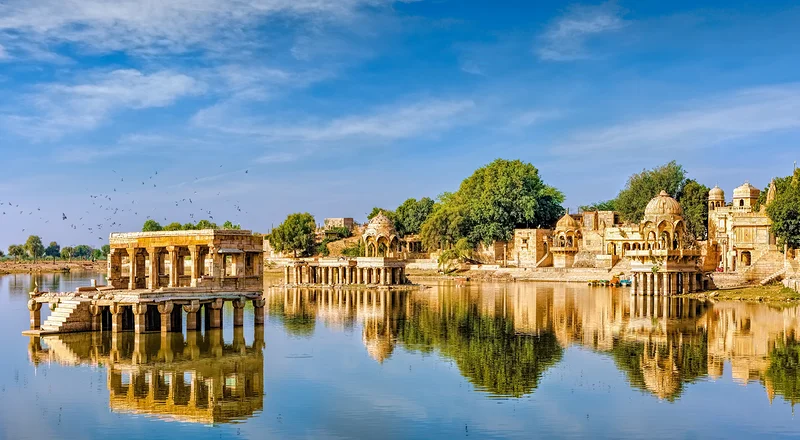
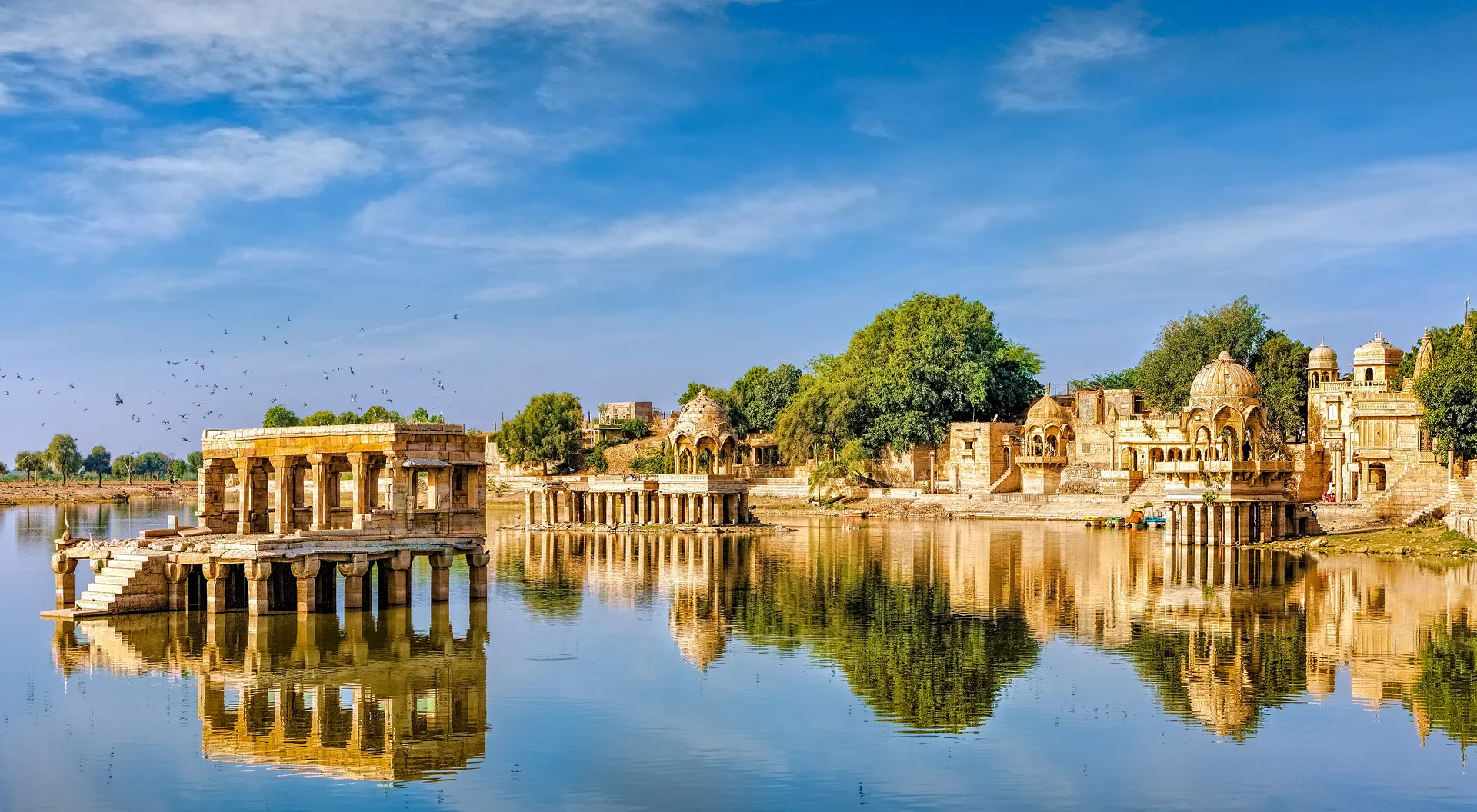
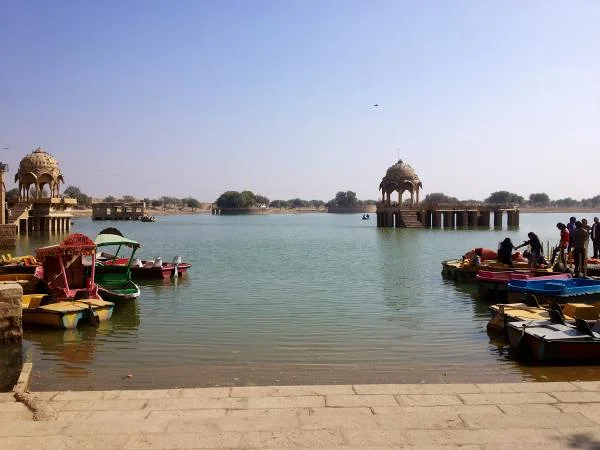
Gadisar Lake, a mile south of the fort, is an unexpected haven of peace in this desert city. Built in the 14th century for water storage, it is lined with temples, cenotaphs, and a remarkable carved gateway, the Tilon Ki Pol. You can rent a rowboat for a few rupees. In winter, dozens of migratory birds stop here.
About 15 miles (25 km) to the west, the abandoned village of Kuldhara fuels the imagination. Legend says its 85 villages were deserted in a single night in the 19th century. The wind-swept golden stone ruins have a melancholy, cinematic quality.
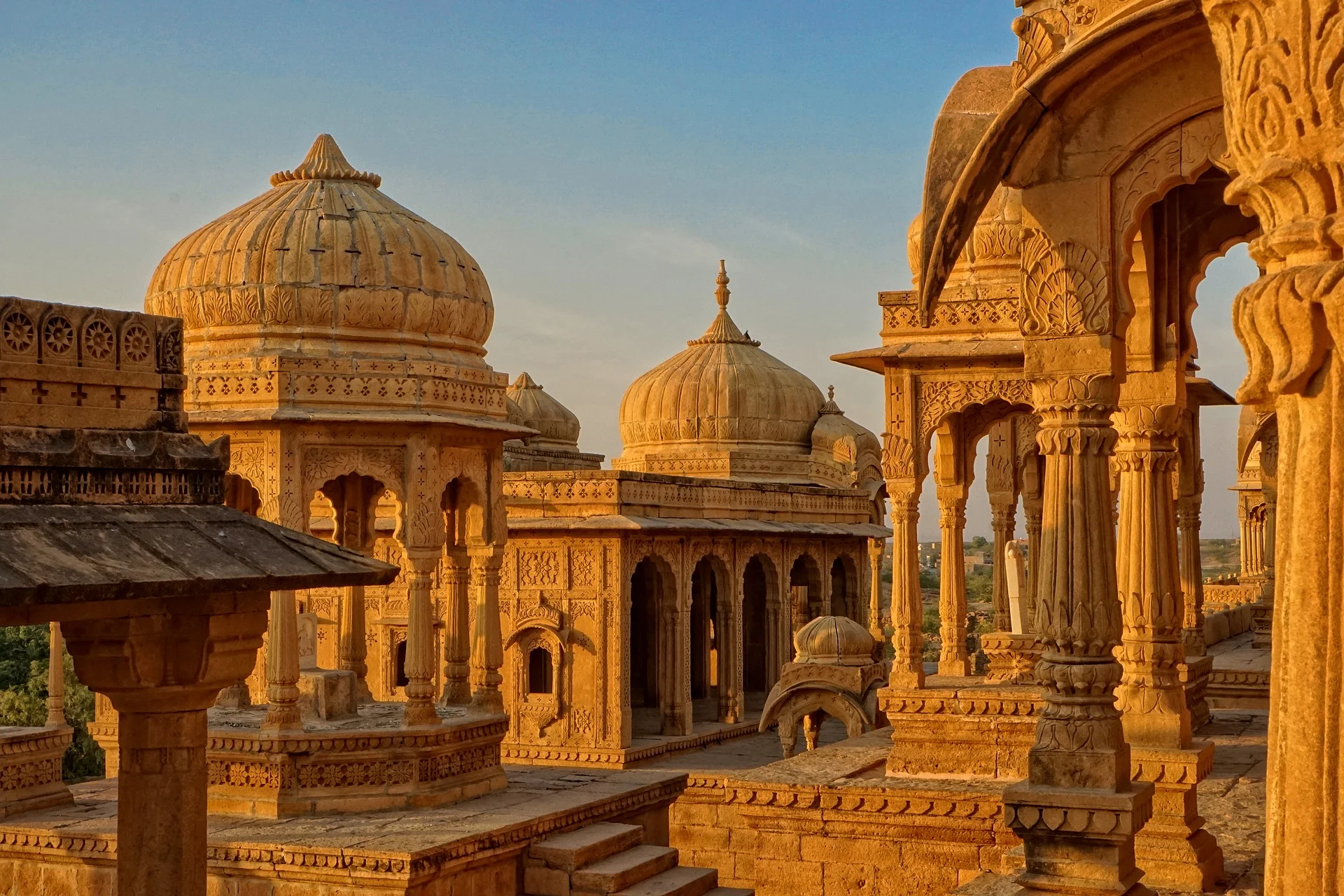
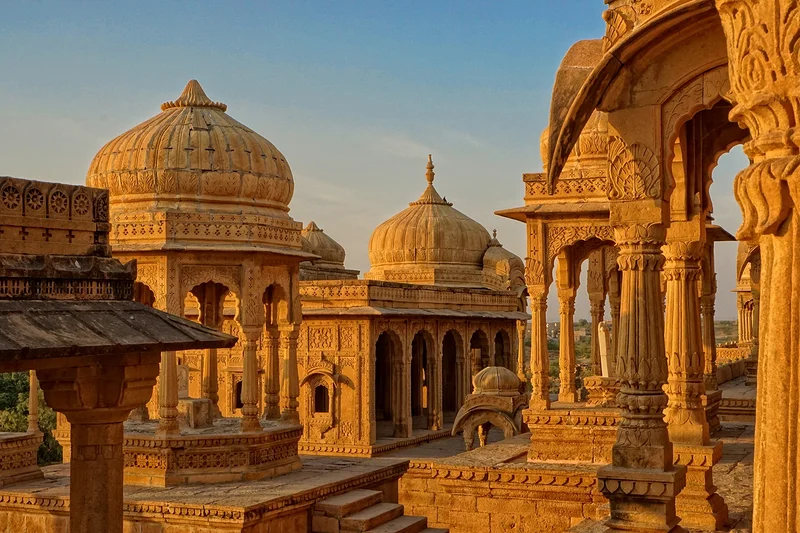
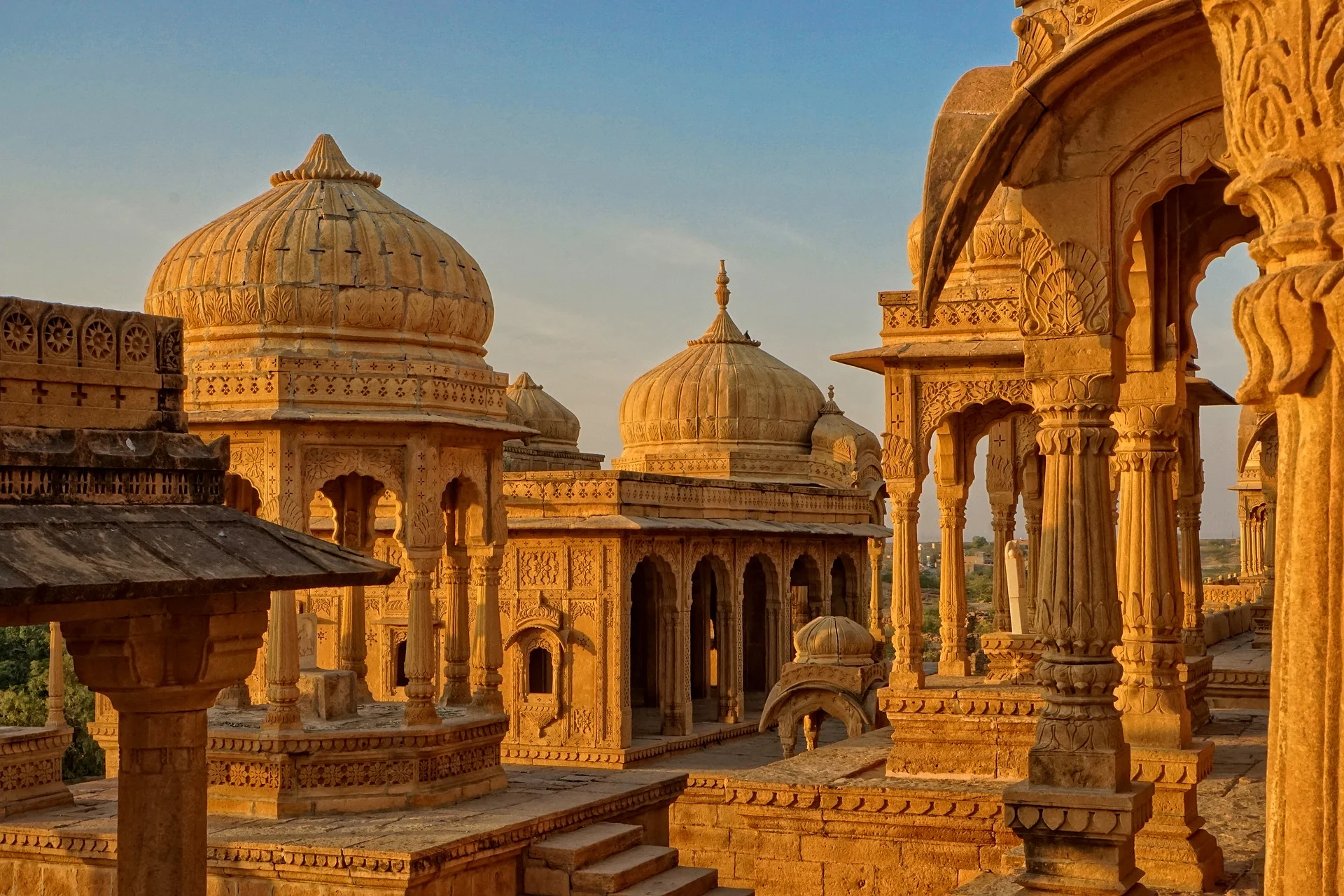
On the road to the dunes, Bada Bagh and its royal cenotaphs offer another memorable sunset spot. Geology enthusiasts should check out the Aakal Wood Fossil Park, 9 miles (15 km) away, where 180-million-year-old fossilized tree trunks poke out of the sand.
Pro tip: if your trip coincides with the Desert Festival (late January to early February), go. It is three days of camel races, mustache competitions, Rajasthani dancing, and folk music, all culminating on the Sam dunes under a full moon.
Where to eat and drink in Jaisalmer?
The cuisine of Jaisalmer is shaped by the desert. There is less butter and oil here compared to the rest of Rajasthan, but bold spices, desert legumes, and recipes passed down for centuries. Dal baati churma, a trio of lentils, fire-roasted bread balls, and a ghee-based sweet crumble, is the signature dish. Ker sangri, made from desert berries and beans, has a taste found nowhere else. For meat lovers, laal maas, a fiery red mutton curry with Mathania chilies, is a potent treat.
For dining, The Trio at Gandhi Chowk serves solid thalis and laal maas. Café The Kaku, located in an 850-year-old fort bastion, offers brunch on floor cushions placed directly on the stone. For sweets, head to Dhanraj Bhatia Sweets near the fort; this family shop has been making ghotua ladoos for over ten generations. And do not leave town without trying the thick, creamy makhania lassi at Kanchan Shree, inside the fort.
Where to stay in Jaisalmer and its surroundings?
The best compromise is to stay in the old town at the foot of the fort, around Gandhi Chowk or in the Malka Pol neighborhood. You are a two-minute walk from the main sites, with views of the ramparts from the rooftop terraces. The havelis renovated into hotels offer a lavish setting for reasonable prices.
For budget travelers, Zostel or Moustache Hostel offer decent dorms starting from 500 rupees a night. Travelers seeking luxury can head to Suryagarh, a desert palace, or the Jaisalmer Marriott Resort & Spa. For a night under the stars, camps at the Sam dunes range from basic tents to glamping with a pool.
How to get to Jaisalmer?
From abroad, you will first need to reach New Delhi or Mumbai. From Delhi, the Delhi-Jaisalmer Express departs in the late afternoon and arrives the next day around noon, a roughly 18-hour trip in an air-conditioned sleeper berth.
From Jodhpur, the trip takes only 4 to 5 hours by train or car, on a superb road through the desert. An air-conditioned bus costs about 500 rupees. A local airport exists, but commercial flights are very irregular. The closest reliable airport is in Jodhpur, 177 miles (285 km) away.
How to get around Jaisalmer?
The city center is entirely walkable. The route between Gadisar Lake, the old town, and the citadel takes only about twenty minutes. For longer distances, auto-rickshaws are everywhere; negotiate the price before you board, usually 50 to 100 rupees for a trip within the city.
Scooter or bicycle rentals are popular for exploring the outskirts. For excursions to the dunes or Kuldhara, hotels organize jeep transfers. There is no Uber in Jaisalmer, and taxi rates are negotiated daily.
When to go?
The ideal period is October to March, when temperatures hover between 41°F (5°C) at night and 77°F (25°C) during the day. January and February are the most popular months, with the Desert Festival as the highlight. Avoid April through June at all costs, when the thermometer can exceed 113°F (45°C) and makes any exploration miserable.
A must-visit spot in Rajasthan! Jaisalmer stands out from other cities, and you discover a magnificent fortress with a whole life happening inside it. Many guides speak French and help us discover the history and local culture. I loved the desert safari with a camel ride, sunset over the dunes, and a night sleeping under the stars.