
Where to stay in Nikko: the best neighbourhoods (2026)
In Nikko, your first choice isn't the hotel itself, it's the elevation. A single city name covers the downtown area near the shrines, Lake Chuzenji at 1,269 meters, the Yumoto valley floor, and the hot spring town of Kinugawa Onsen. Moving between them takes 30 to 50 minutes by bus or train, and evening departures thin out fast.
This vertical spread even staggers the fall foliage, with maples turning red up top in late September while the lower town waits until late October. For budgeting, the lodging type changes everything, as standard hotels price per room at $69 to $126* for two people, while a ryokan charges per person at $115 to $183*, dinner and breakfast included. Without meals, nightly rates drop toward $29*. That explains the four areas featured in this guide.
Dedicate a half day to visiting the sacred sites. Then, take the bus to go admire Lake Chuzenji.
Compare hotel prices in Nikko
In a hurry? Find the best accommodation deals in 3 clicks.
Compare live deals from Booking, Expedia, Agoda and other partners.
At a glance: our picks by traveller type
Pick the profile that suits you to head straight to the recommended neighbourhood.
The neighbourhood map in Nikko
Get your bearings on the neighbourhoods and must-see sights before choosing where to drop your bags. Click a name to jump to its description.
Downtown Nikko Between the two train stations and the temple entrance
To reach the temples on foot
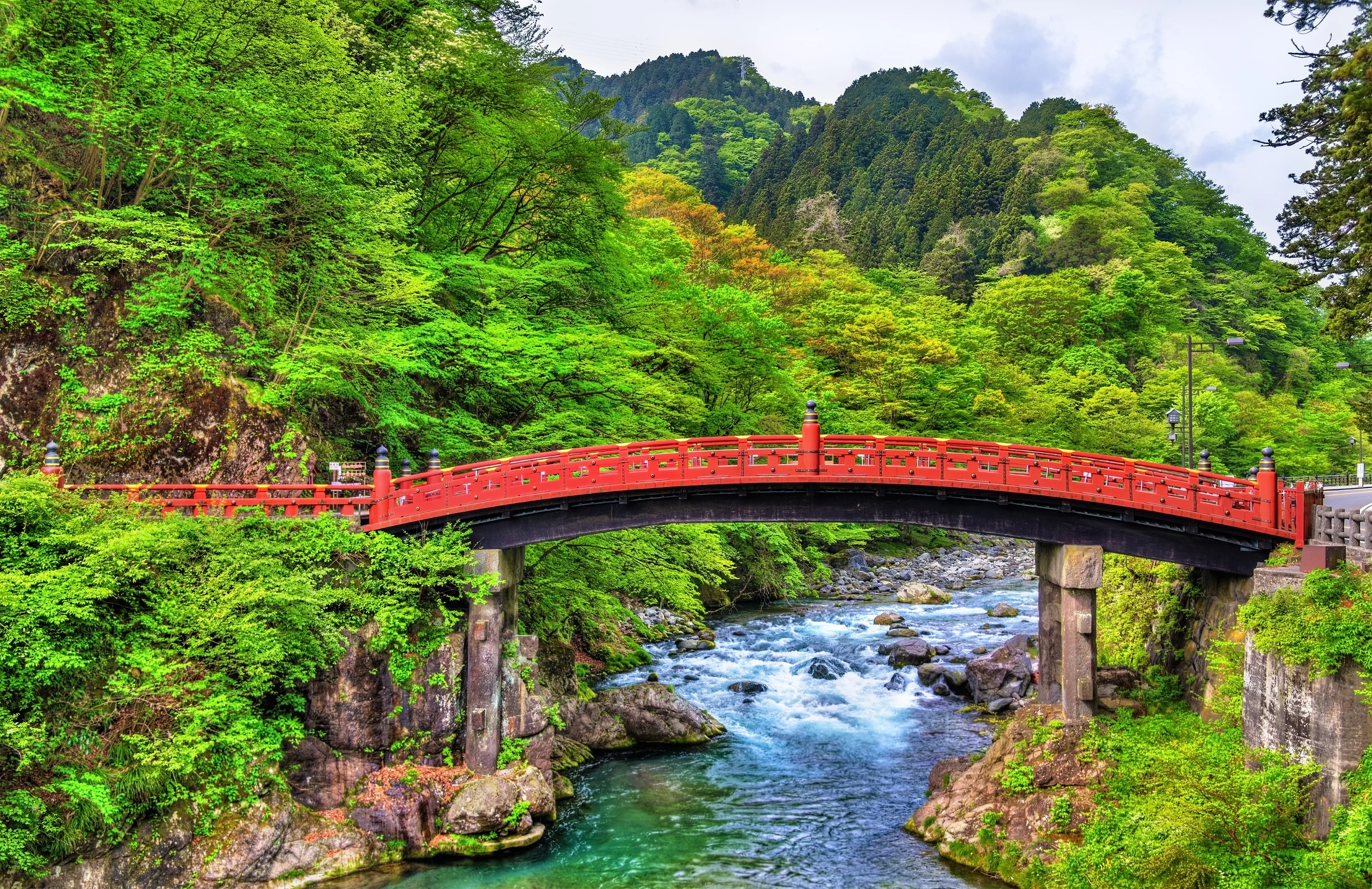
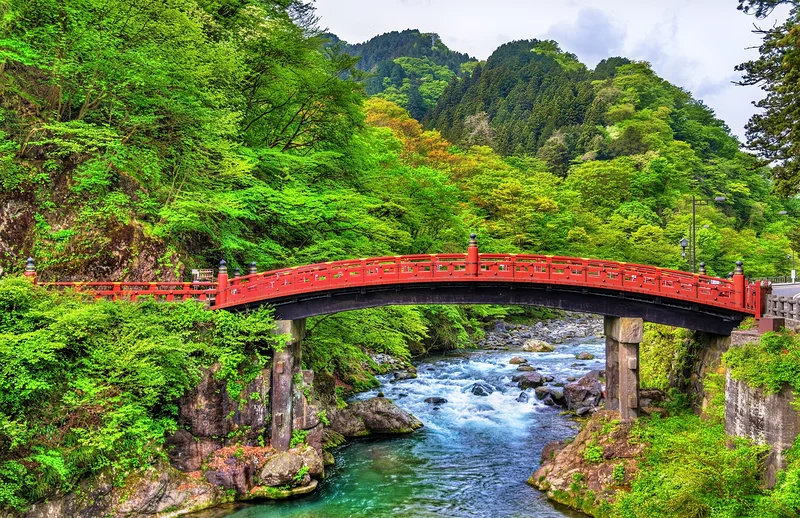
A long street climbs from the stations toward the Shinkyo Bridge, lacquered in red above the Daiya River, and behind it lies the temple district with the Toshogu, the Rinno-ji, and the Futarasan-jinja just minutes apart. FloraC, a member of our community, notes of Futarasan that "it is easily accessible by bus or on foot from the station through Nikko Park." This is the only area where you can explore entirely without bus schedules, and the sole spot offering budget rooms. The trade-off is constant: restaurants close early, and the hot spring water is 20 km away.
What to see & do in the area
Where to stay in this area
Nikko Kanaya Hotel Luxury
Japan's oldest resort hotel, opened in 1873 along the road climbing to the Shinkyo Bridge. It features 63 rooms spread across four buildings, a period dining room, and sits a 15-minute walk from the Toshogu.
Nikko Station Hotel Classic Mid-range
A 71-room hotel in Aioicho located right next to the stations, complete with hot spring baths. This is the most straightforward option for a late arrival and early departure without relying on a bus.
Nikko Park Lodge Tobu Station Budget
A guesthouse in Matsubaracho advertised at 1 minute on foot from the Tobu station and 3 minutes from the JR station, offering private rooms. The most practical address in the guide for arrivals from Asakusa late in the day.
Pros
- The shrines on foot, independent of bus schedules
- The two train stations and the most economical rooms in town
Cons
- Evening dining spots close down early
- No local thermal springs, they sit 20 km away
Lake Chuzenji A 50-minute bus ride away on the north shore of the lake
to wake up right on the water
The bus leaves town and winds up the switchbacks of Irohazaka to Lake Chuzenji at an elevation of 1,269 meters, where the temperature drops noticeably compared to the valley below. The village of Chuzenji Onsen sits along the northern shore between the boat pier and Kegon Falls. Staying here means waking up with the lake right outside your window before the tour buses arrive. The catch is twofold: budget options are extremely limited, and the lake boat cruises only run from mid-April through November 30.
A bus takes you there directly from the Nikko station. I went in the winter on a clear day and it was magnificent.
Where to stay in this area
The Ritz-Carlton, Nikko Luxury
A 94-room hotel right on the lakeshore in Chugushi. Its baths are fed by thermal water piped in from Yumoto deep in the valley, marking the brand's first onsen property worldwide.
Chuzenji Kanaya Hotel Mid-range
A mountain lodge run by the same owners as the Kanaya in the lower town, tucked among the birch trees by the lake. It runs its own scheduled shuttle to and from the Nikko stations taking about 50 minutes, so you do not have to rely on the last public bus.
Sugimotokan Budget
A mountain inn in Chugushi offering room-only, bed-and-breakfast, or half-board rates. It is the lowest-priced address in this entire guide, and it sits right by the lake instead of down in town.
Pros
- The lake in the morning before the tour buses arrive
- Noticeably cooler than down in the valley during summer
Cons
- Very few low-priced options
- Getting back in the evening means taking a 50-minute bus ride
Yumoto, deep in the valley A 70-minute bus ride at the end of the road
For sulfur springs and snow
The bus keeps going past the lake, cuts across the Senjogahara marshes, and ends up in Yumoto, the final settlement before the mountains. The water here bubbles up white and sulfurous right at the source, feeding the lakeside baths via pipes running down from the heights. This is prime territory for snow, skiing, and trailhead departures, and the only place where you actually hear water boiling in the village basins. The downside is simple: there are no budget rooms to be found, and the road heading toward Gunma over the Konsei Pass shuts down from late December through late April.
Where to stay in this area
Kyukamura Nikko-Yumoto Mid-range
A large 63-room inn at the very end of the bus line featuring an outdoor bath and 2 private soaking tubs. The sulfur water here is the most distinctive in the area, and the property runs a shuttle van from the bus stop.
Yumoto Itaya Mid-range
A village ryokan booked with dinner and breakfast included, offering traditional tatami mat rooms. This is the classic Yumoto setup: you arrive late afternoon, soak in the bath, and dine on-site.
Kamenoi Hotel Okunikko Mid-range
A chain hotel in Yumoto offering full board and more transparent pricing than independent ryokans. Convenient if you plan a 2-night stay alternating between soaking and hiking.
Pros
- Sulfur water straight from the source and snow lingering into spring
- Direct access to the Senjogahara hiking trails right from your hotel
Cons
- No budget rooms anywhere in the village
- A 70-minute bus ride just to get back down to the shrines
Kinugawa Onsen 30 km to the east, on the Kinugawa line
for a ryokan with dinner and baths
On the other side of the municipality, the Kinugawa carves a gorge lined with large ryokan featuring multiple baths. You can reach it directly from Asakusa in 2 hours by train, and the routine here never changes: a room, a served dinner, and baths open late. This is the area in the guide where people come for the water rather than the temples. The downside is visible right from the train, as the resort lost several properties after the bubble burst, and a few abandoned buildings still stand along the riverbank.
Where to stay in this area
Asaya Hotel Luxury
The grand resort inn, opened in 1888, features an outdoor bath set on a terrace overlooking the valley. It sits 8 minutes by bus from Kinugawa-Onsen station and includes a 400-space parking lot.
Kinugawa Plaza Hotel Mid-range
A hot spring hotel right on the gorge, offering both Japanese-style rooms and western beds alongside an evening buffet. This follows the usual Kinugawa formula at a more standard price point than the historic inns.
K's House Nikko Budget
Watch the name since this inn is not in the lower town but in Kinugawa Onsen, having opened in late 2022 in Ohara. It offers dorm beds and private rooms with thermal baths, making it the only truly budget-friendly address in the area.
Pros
- A direct train from Asakusa takes 2 hours
- Late-night baths and dinner served on-site
Cons
- The shrines require a train with a transfer
- Abandoned buildings still line the river
Our tips for booking the right place
- Evening transit and what it requires: Everything relies on buses and trains, and they stop running early. Toward the lake, expect a 50-minute ride from the Nikko stations, and 70 minutes all the way to Yumoto, meaning dinner in town followed by a late trip back up the mountain is not realistic, which is why the lodges around the lake and Yumoto almost all serve dinner on-site. Between the lower town and Kinugawa Onsen, the direct bus only runs on Saturdays and holidays, so on weekdays you will need a train and a transfer. If the schedule has you stressed, the Chuzenji Kanaya operates its own scheduled shuttle.
- Fall foliage, neighborhood by neighborhood: The colors do not peak everywhere at once, and the tourist office publishes zone-by-zone dates: Oku-Nikko from late September to late October, central Nikko from late October to mid-November, and Kinugawa and Kawaji from mid-October to late November. Booking your trip for the wrong zone means missing peak season by a full month. The same source offers two clear warnings: heavy traffic drastically increases travel times between the center and Oku-Nikko during this period, and booking your lodging well in advance is essential.
- Understanding ryokan rules before you compare rates: Booking a ryokan works differently than a standard hotel. Rates usually apply per person instead of per room, and they often include dinner and breakfast. For instance, the Tokinoyuu in the lower town quotes its rate for 4 people in a room, whereas the Kanaya lists a room rate for 2. Comparing the two without knowing this throws everything off. Another detail to check before booking: the Asaya in Kinugawa does not permit guests with tattoos in its large public bath, instead directing them to a private bath or their room's private facilities, though small tattoos are permitted if covered with a waterproof bandage.
- Booking a stay in Nikko without checking the exact neighborhood: the municipality stretches across dozens of miles, and a room advertised in Nikko might actually sit a 70-minute bus ride away from the shrines deep in the valley.
- Relying on the direct bus between the lower town and Kinugawa Onsen on a weekday: it only runs on Saturdays and national holidays. The rest of the week, you have to take the train with a transfer.
- Selecting a river view room in Kinugawa Onsen without checking photos of the view itself: several abandoned hotels from the 1990s still line the gorge, and they are visible from both the train and the bridges.
FAQ: where to stay in Nikko
Where to stay in Nikko for a first-time visit?
Where to stay on a budget in Nikko?
Where to stay in Nikko with family?
Is it worth staying by Lake Chuzenji?
Do you need a car to stay in Nikko?
How much does a night cost in Nikko?
 Keep exploring
Discover everything in Nikko
Keep exploring
Discover everything in Nikko
Comments (0)
No comments yet. Be the first!