
Ixmiquilpan, where jaguar warriors keep watch in a church
In the mid-16th century, Otomí artists painted jaguar warriors and Aztec eagles onto the walls of a Catholic church. These were not saints. They were fighters in feathered armor, dragons, and centaurs woven into acanthus vines.
The Augustinian monks allowed it. At some point, the frescoes were plastered over, remaining hidden until their rediscovery in the 1950s.
A destination for travelers who want to go off the map
If you have seen photos on social media of turquoise pools clinging to a Mexican cliffside, you are likely looking at the Grutas de Tolantongo, and this city is your gateway to them. But treating it as just a transit point is a mistake. The city and its surroundings form a region rich in thermal springs, pre-Hispanic history, and Hñähñú culture, the Otomí people of the Mezquital Valley.
This corner of Mexico suits those who want to skip the standard tourist trail. There are no resorts, no international crowds, and prices are rock bottom. If you require high-end infrastructure or English menus, you might find this area challenging. English is almost non-existent, and mobile service is spotty near the natural sites.
Budget basics
Expect to pay between 400 and 850 MXN (about $20, $45) per night for a decent hotel. A hearty meal at a local fonda runs 80 to 150 MXN (about $4, $8). Admission to the Grutas de Tolantongo is 230 MXN (about $12) per day.
The warrior frescoes of San Miguel Arcángel
The Templo y Ex-Convento de San Miguel Arcángel, built between 1550 and 1560 by the Augustinians, looks like a crenelated fortress from the outside. The real surprise is inside.
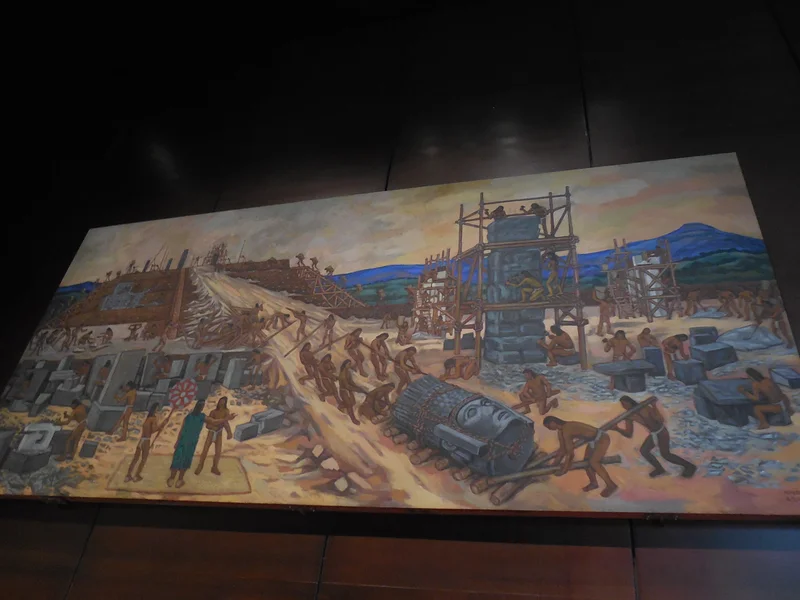
Frescoes over two meters tall show warriors armed with macahuitl, those obsidian-bladed swords, battling fantastical creatures amidst a tangle of acanthus vines. How indigenous artists managed to paint this inside a Catholic church remains a subject of ongoing debate.
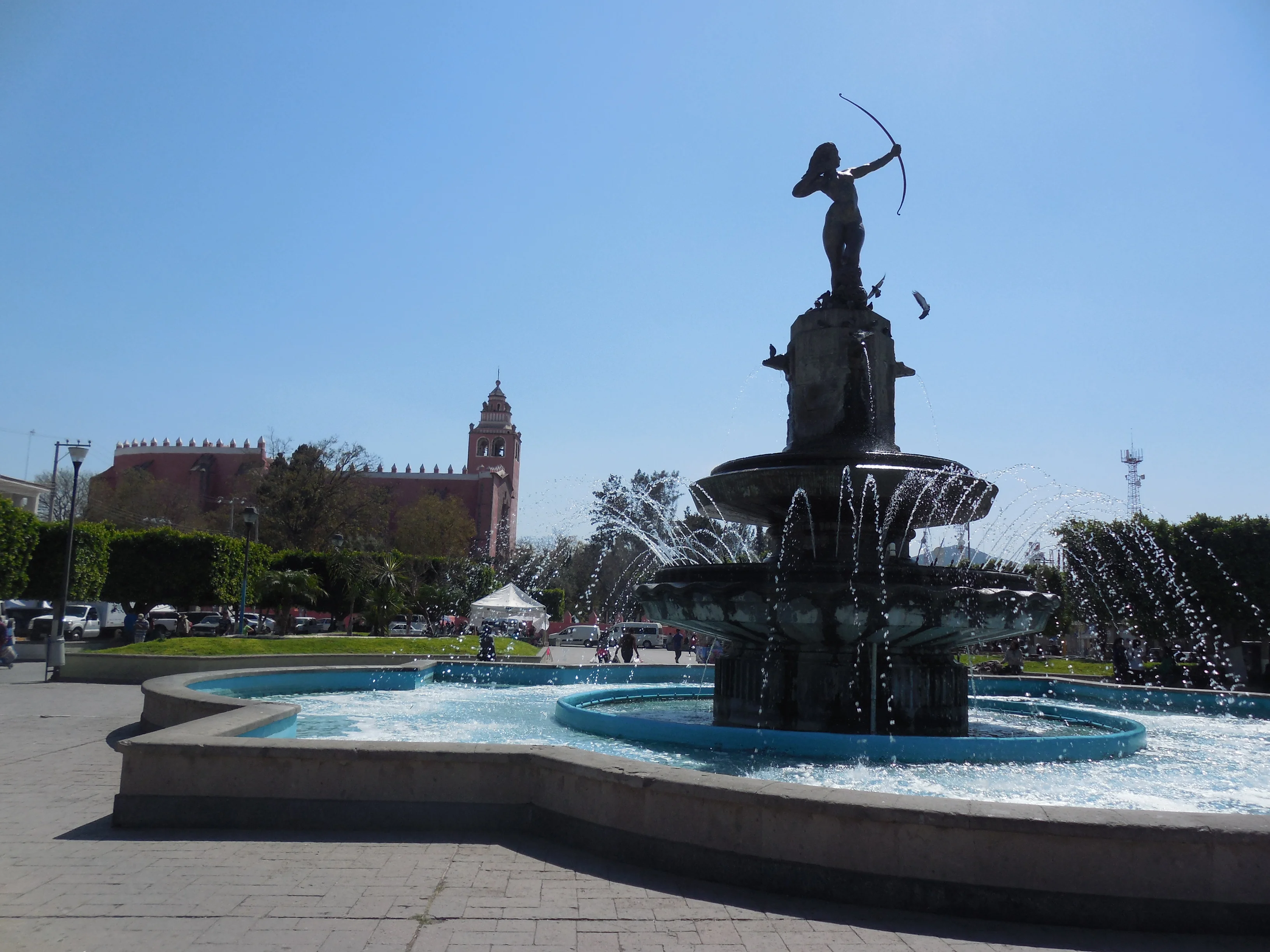
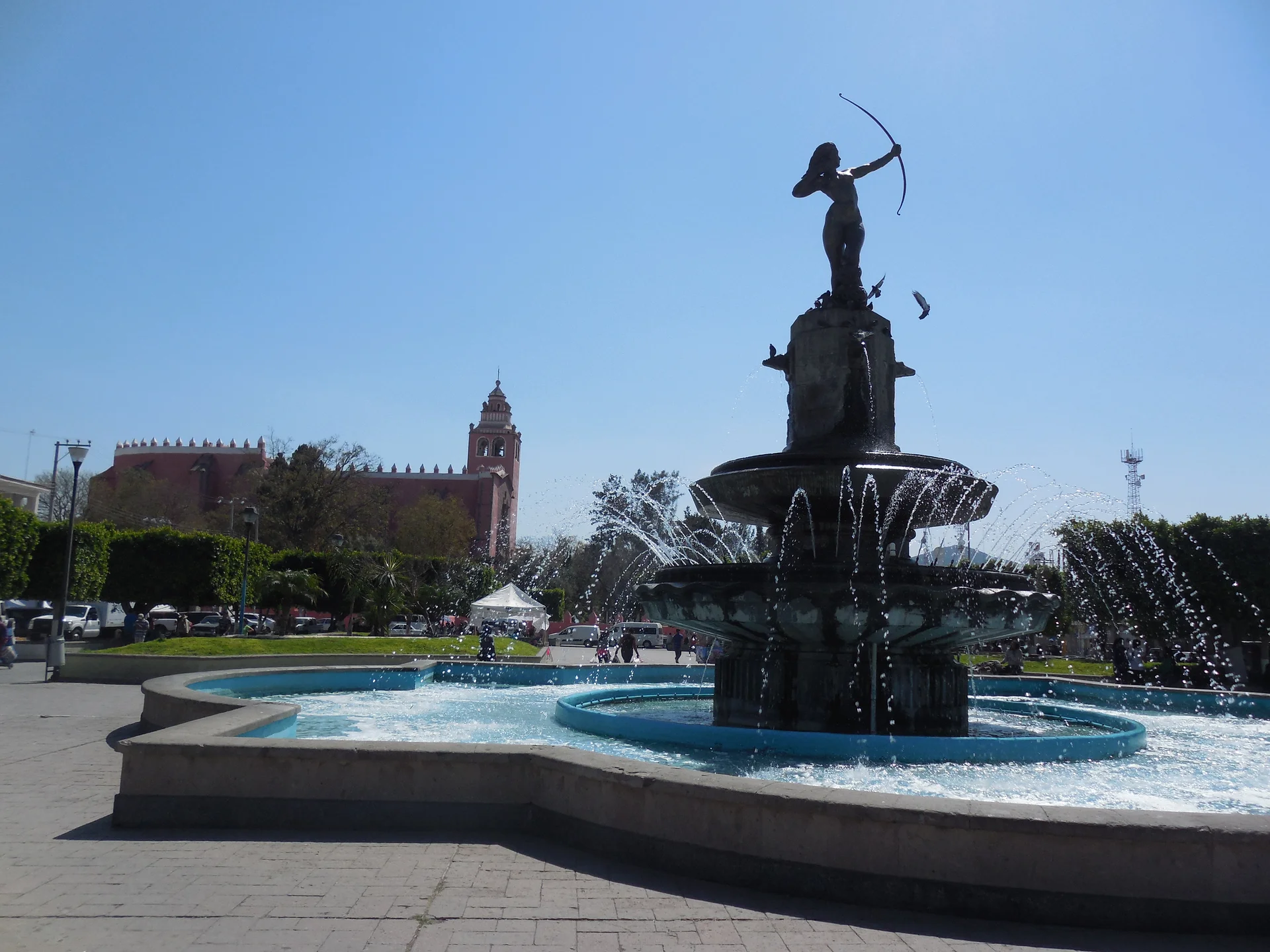
On the Plaza Juárez, a seven-meter bronze sculpture catches the eye. It is the original Diana Cazadora, which once stood on the Paseo de la Reforma in Mexico City. Damaged in 1968, it was recovered by the regent of Mexico City, a native of this town, and installed here. The one on Reforma is a copy.
Pro tip: observe the carved shields on the facade before entering. They depict eagles and jaguars without Christian symbols, a hint of what awaits you inside.
Grutas de Tolantongo: the canyon's thermal pools
About a 45-minute drive away, the Grutas de Tolantongo are the region's most spectacular natural site. Thermal turquoise pools, carved into terraces along the canyon wall, overlook an emerald-colored warm river. A cave with a gushing waterfall completes the scene.
Let's be honest: on weekends, the place is overrun by families from Mexico City, and the atmosphere feels like a water park. On weekdays, everything changes. You can enjoy the pozas almost alone, facing the canyon.
Pro tip: everything is cash-only at the Grutas, including the hotel. There are no ATMs on-site. Bring plenty of pesos.
Underground caves and community parks
Caving enthusiasts will find their niche at the Grutas de Xoxafi, a 250-million-year-old cave system. There are three options: a 600-meter illuminated path, an adventure tunnel with an 80-meter rappel, and an extreme circuit with an underground zipline. The rock forms leopard-skin patterns caused by iron oxide.
Managed by the Hñähñú community, the Parque EcoAlberto offers ziplines, kayaking on the río Tula, and suspension bridges. Its most unique attraction is the Caminata Nocturna, a three-hour night hike that simulates the illegal crossing of the border into the United States to raise awareness of the dangers of emigration that has emptied many local villages.
Where to eat and drink in Ixmiquilpan?
The local specialty is barbacoa de borrego: lamb cooked in a pit oven, served at dawn in the markets. gorditas de maíz, small corn cakes stuffed with chicharrón or black beans, are the other local classic.
As for drinks, pulque is right at home here. It is a fermented drink extracted from maguey sap, viscous and tangy. The Mercado Morelos offers street stalls at very low prices, and the restaurant La Herradura, behind city hall, serves hearty regional cuisine.
Where to stay in and around Ixmiquilpan?
The city center has a few simple hotels like the Apartahotel Villa del Sol, which is well-rated and affordable. For a nature-focused stay, the Grutas de Tolantongo has a hotel complex at the bottom of the canyon, but the rooms are basic, without Wi-Fi or television.
Another option is the Parque EcoAlberto, which offers cabins along the canyon, and forest areas like Puerto Dexthi offer cabins for 500 MXN (about $25) per night under a sky free of light pollution.
How to get to and around Ixmiquilpan?
From Mexico City, an Ovnibus or Flecha Roja bus departs from the Terminal del Norte, platforms 7 or 8. Expect 2 to 3 hours for about 350 MXN (about $18). By car, it is a 2.5-hour drive via the México-Pachuca highway, then toward Actopan.
If arriving from abroad, fly into Mexico City and take a bus or rent a vehicle.
Once you are there, get around by colectivo. For Tolantongo, a microbus leaves from the parking San Antonio near the Mercado Morelos every four hours for 70 MXN (about $4). Be aware that the final stretch of the road winds through dizzying switchbacks.
When to go?
The dry season, from November to April, is ideal. Avoid September, the rainiest month, as mountain roads become difficult. Weekends and especially Holy Week turn the sites into an anthill, so aim for mid-week.
Not far from the capital, Ixmiquilpan is located in the state of Hidalgo, which is relatively little visited by international tourists. Nevertheless, it is in this state that you can discover the Otomí culture and its traditions. Ixmiquilpan is full of monuments with architecture that is a mix of Catholicism and allegories to nature, specifically Otomí paintings.