
Where to stay in Ottawa: the 5 neighborhoods to know in 2026
A capital that does not try to impress: that is Ottawa, and knowing it changes how you book. A sandstone promontory above the Ottawa River, the institutions, the great national museums and a canal on the World Heritage list: the list stops there. Our three members say the same thing two ways: one finds the hill "honestly a sight to behold", the other expected more going on than in Toronto or Montréal. Both are right, and a stay should be set to that measure: two to three days, all on foot, and the rest in museums.
Where to sleep therefore comes down to one thing: which bank of the Rideau Canal your window should face. The hotels are almost all on the hill, in Centretown and at the ByWard Market, which means twenty minutes' walk from everything the city shows. Rates are high for what they offer: $102* at the entry level, $147* for a three-star, $210* for a four-star up on the hill. Five neighbourhoods follow, three of which have not a single address to name, and this guide says why.
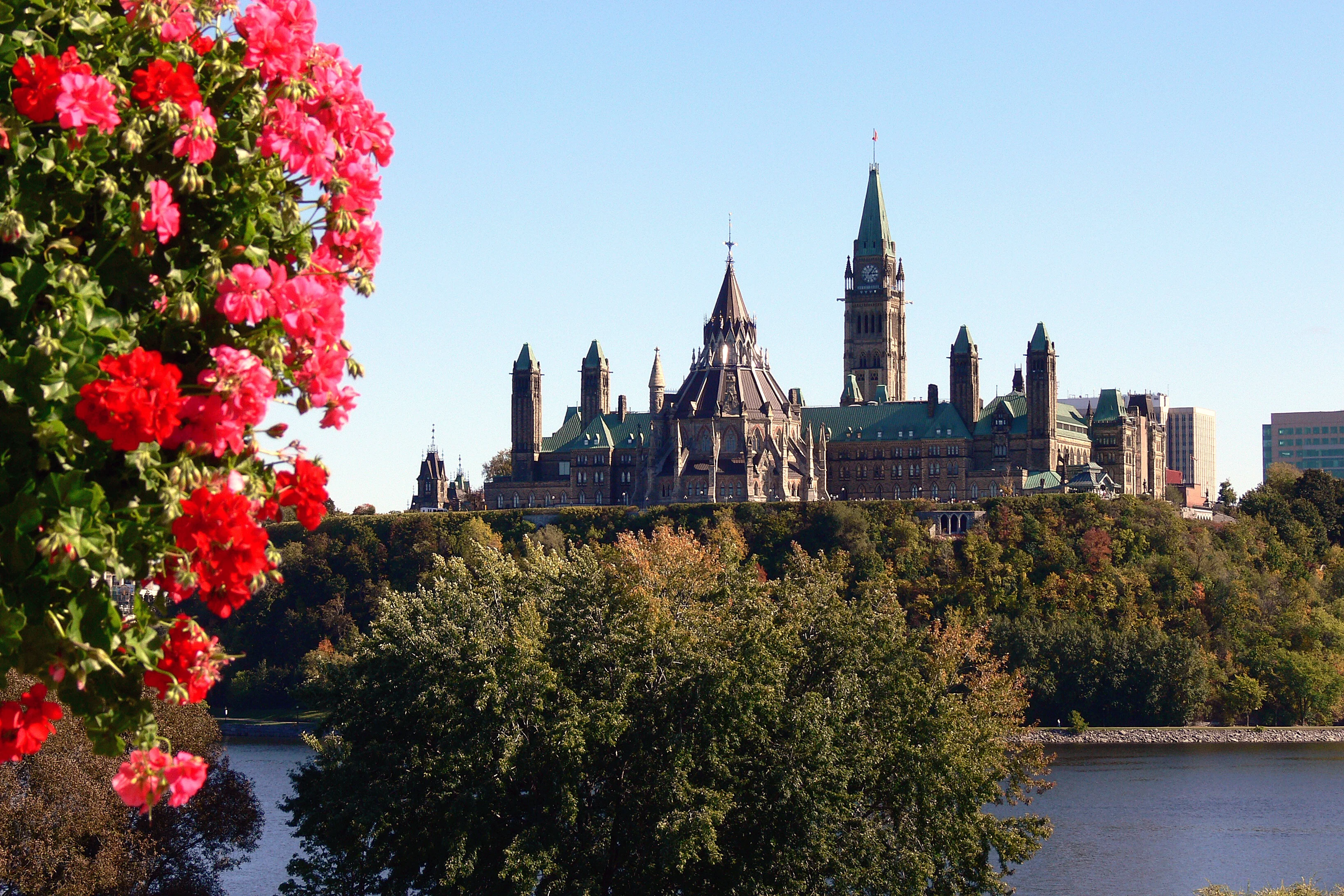
Ottawa, that little hill, is honestly a sight to behold!!
Compare hotel prices in Ottawa
In a hurry? Find the best accommodation deals in 3 clicks.
Compare live deals from Booking, Expedia, Agoda and other partners.
At a glance: our picks by traveller type
Pick the profile that suits you to head straight to the recommended neighborhood.
The neighborhood map in Ottawa
Get your bearings on the neighborhoods and must-see sights before choosing where to drop your bags. Click a name to jump to its description.
Parliament Hill and Centretown Parliament Hill and the Peace Tower, the Supreme Court of Canada, the National War Memorial and Confederation Square, the National Arts Centre, Library and Archives Canada, Confederation Park and the garden of the provinces and territories, city hall, the convention centre, the Canadian Tribute to Human Rights, Dundonald Park
for a first visit, for doing everything on foot, for the institutions
This is the neighbourhood of ceremonies and offices, and the only one you can leave on foot for everything. Parliament Hill looks down on the river, and one thing has to be said at once, because the photographs do not: Centre Block and the Peace Tower have been closed to visitors since December 2018, for works announced into the 2030s; the House sits in West Block and the Senate in the former railway station, both open to visit by reservation. Around them, the Supreme Court, the National War Memorial and its changing of the guard, the National Arts Centre beside the canal, and the streets of Centretown where the two best addresses in this guide are.
Very cute city with beautiful architecture and nice views when you get a little bit of elevation.
Where to stay in this neighborhood
Lord Elgin Hotel Mid-range
The highest rating in this guide, and the best position: 8.6 from more than fifteen hundred reviews, with 9.6 for location, 9.3 for staff and 9.0 for both cleanliness and comfort. A big copper-roofed building from 1941 facing Confederation Park, five minutes from Parliament and from the canal. Value for money, at 8.3, is fair for the area.
Alt Hotel Ottawa Downtown Mid-range
The same rating, ten years old instead of eighty: 8.6 from more than twelve hundred reviews, with 9.2 for cleanliness, comfort and location, and 9.1 for staff. Square rooms with no frills, a single rate announced up front, on Slater Street. This is the choice for anyone who wants new and no surprises, around $210*.
Pros
- The institutions, the canal and the museums on foot
- The two highest ratings in this guide, five minutes apart
Cons
- The Peace Tower is closed, and for years to come
- An office district: very quiet in the evening and at weekends
The ByWard Market, Lowertown and Sussex Drive The ByWard Market and its stalls since 1826, the National Gallery of Canada and its bronze spider, Notre-Dame cathedral basilica, Major's Hill Park, the Bytown Museum at the locks, the Royal Canadian Mint and the currency museum, the Rideau Centre, the SAW gallery, the Ottawa Art Gallery, the University of Ottawa, the run of embassies along Sussex Drive
for the restaurants, for the museums, for an evening with life in it
Cross the canal and the city changes tempo. The ByWard Market, open since 1826, fills four blocks with terraces, fishmongers and shops, and it is the only place in Ottawa where something is happening on a Tuesday evening. A few steps away, the National Gallery of Canada and the bronze spider guarding its entrance, Notre-Dame basilica, Major's Hill Park for the view of Parliament, and the locks where the canal steps down to the river. Sussex Drive then lines up the embassies all the way to the governor general's residence.
Active atmosphere, without being hyperactive or overwhelming.
Where to stay in this neighborhood
Fairmont Château Laurier Luxury
The limestone château set between the locks and Parliament, opened in 1912: 8.1 from nearly fifteen hundred reviews, with 9.5 for location, 8.9 for staff and 8.6 for both cleanliness and comfort. You pay for the address and the grand staircase; value for money, at 7.6, is the lowest figure on its listing and nobody is surprised.
Andaz Ottawa ByWard Market Luxury
The newest of the market's big hotels, on Dalhousie Street: 8.2 from nearly twelve hundred reviews, with 9.1 for location, 9.0 for comfort, 8.9 for cleanliness and for staff. A rooftop bar on the top floor, the one with the view of the hill. Budget $210*.
Les Suites Hotel Ottawa Mid-range
Apartments with kitchens rather than rooms, on Besserer Street: 7.9 from nearly fifteen hundred reviews, with 9.1 for location and 8.7 for staff. It is the right call for a family or a week-long stay, when Ottawa's restaurants end up costing more than the room. Reviews complain about noise on some façades.
Pros
- The only neighbourhood with evening life, by a wide margin
- The gallery, the market and the locks in the same area
Cons
- Noisy on weekend nights around George Street
- Prices rise the closer you get to the market
The Rideau Canal, the Glebe and Lansdowne The Rideau Canal on the World Heritage list, Lansdowne Park and Frank Clair Stadium, Commissioners Park and its May tulips, Brewer Park, Carleton University, the shops along Bank Street in the Glebe
for running along the water, for a game, for the tulips
The Rideau Canal cuts the city in two and loops around it: on the World Heritage list since 2007, with paths along both banks, it can be followed on foot or by bike for kilometres. In winter it becomes the largest skating rink in the world over 7.8 kilometres, and here is the sentence no brochure writes: it no longer opens for certain. Zero days in 2023, ten days in 2024, fifty-two in 2025. Further south, Lansdowne Park and its stadium give the Glebe its game nights, and Commissioners Park its tulips in May. No hotel worth naming on this side: this guide names none here.
However, I was expecting more events and activities while visiting the Canadian capital.
Pros
- The canal on foot or by bike, and the tulips in May
- The restaurants on Bank Street, cheaper than downtown
Cons
- No hotel worth naming: this guide names none
- The canal skateway no longer opens every winter
The west: LeBreton Flats, Carling and the big venues The Canadian War Museum at LeBreton Flats, Andrew Haydon Park by the river, the Canadian Tire Centre and the Bell Sensplex, the Nepean Sportsplex and the Walter Baker sports centre, the Nepean Sailing Club, the Capital Golf Centre, Fitzroy provincial park, the Centrepointe theatre
for a hockey game, for a car, for paying less
West of the hill, the open ground of LeBreton Flats carries the Canadian War Museum, a half-buried building of concrete and copper whose ramp climbs towards a window that frames the Peace Tower. Beyond it, the city turns into a suburb of avenues: parks along the river, skating rinks, the Canadian Tire Centre where the Senators play, and rooms cheaper than downtown. People sleep here for a game, for a car or for the price; without a car it is a bad calculation.
Where to stay in this neighborhood
Best Western Plus Ottawa City Centre Budget
Its name says city centre, its address says Carling Avenue: five kilometres from the hill, and its location, rated 8.4, confirms it. For the rest, 8.2 from nearly eight hundred reviews, with 8.8 for staff and 8.6 for both cleanliness and comfort. It is the lowest price in this guide, around $147*, and it is paid for in journeys.
Pros
- The war museum, and hockey at the Canadian Tire Centre
- Rooms cheaper than in Centretown
Cons
- Without a car, everything takes a long time
- Nothing to do on foot in the evening
East and south: the big museums and Rideau Hall The Canada Aviation and Space Museum, the Canada Science and Technology Museum, the Canada Agriculture Museum with its working farm in the city, Rideau Hall and its grounds, Laurier House, the Billings Estate museum, Watson's Mill in Manotick, Saunders Farm, the Rideau Carleton raceway, Petrie Island park, Princess Louise Falls, Saint Paul University
for the museums with children, for a day with a car
The three museums families prefer are not downtown: aviation and space in a hangar to the north-east, science and technology to the south, and agriculture on a genuine experimental farm in the middle of the city, cows and tractors included. Add Rideau Hall, the governor general's residence, whose grounds can be walked freely, and Laurier House, where two prime ministers lived. None of this calls for sleeping nearby, and in any case this guide names no address on this side: the accommodation here is highway motels with no solid listing.
Pros
- The three museums children remember
- Rideau Hall and its grounds, free of charge
Cons
- No address named: this guide names none
- Everything by car or bus, far from downtown
Our tips for booking the right place
- Two to three days, and the capital is seen: Our member expected "more going on": that is exactly the expectation to correct before leaving. Ottawa takes two full days, three if you like museums: the hill, the changing of the guard in summer, the war memorial; the ByWard Market and the National Gallery; then one of the three big museums on the edge of town, chosen according to the age of the travellers. With one more day, take the bridge to Gatineau and its museum of history, the one our member still calls the museum of civilisation: it changed its name in 2013, and the view of Parliament from its terrace is the finest in the region.
- Parliament can be visited, but not the one in the photographs: This is the piece of information that spoils the most visits, and nobody gives it early enough: Centre Block, the one with the Peace Tower, has been closed since December 2018 for a renovation announced into the 2030s. So you do not go up the tower and you do not see the Library of Parliament. What can be visited, by reservation and free of charge, is the House of Commons installed in West Block and the Senate installed in the former railway station. The lawn, the changing of the guard in summer and the evening sound and light show have not moved.
- The canal skateway: do not build a trip on it: The Rideau Canal Skateway is the largest in the world, 7.8 kilometres through the middle of the city, and it is a marvel when it opens. The figure to know before booking a February flight: zero opening days in 2023, ten days in 2024, fifty-two in 2025, against a historical average of fifty days. If the skateway is your reason for coming, buy a changeable ticket, follow the opening announcement, and have a plan B: Winterlude and the museums happen anyway.
- Everything on foot, and one ticket to buy: Between the hill, Centretown and the ByWard Market, everything is done on foot: count twenty minutes end to end, less if you cut along the canal. The museums on the edge of town, though, need the bus or the tram, and a day pass costs less than a single taxi. Two details that change a stay: the city is bilingual in practice, and French is enough everywhere in the institutions and often in the shops; and in winter the underground passages downtown let you walk from a hotel to a shopping centre without going outside.
- Booking in February for the skateway with no plan B: it did not open at all in 2023 and opened for ten days in 2024.
- Counting on the Peace Tower: Centre Block has been closed since 2018 and will stay closed into the 2030s.
- Sleeping west of Carling or to the south without a car: the museums are far, the pavements stop and every outing becomes a journey.
- Expecting from Ottawa what Toronto or Montréal give: our member says it plainly, the capital is calmer. That is its quality, not its flaw.
FAQ: where to stay in Ottawa
Which neighbourhood should you stay in in Ottawa?
How much does a night cost in Ottawa?
How many days do you need for Ottawa?
Is Ottawa worth the detour?
What is the best season to come?
Can you do everything on foot in Ottawa?
 Keep exploring
Things to do in Ottawa
Keep exploring
Things to do in Ottawa
Comments (0)
No comments yet. Be the first!