
Where to stay in Natal: the 6 neighborhoods to know in 2026
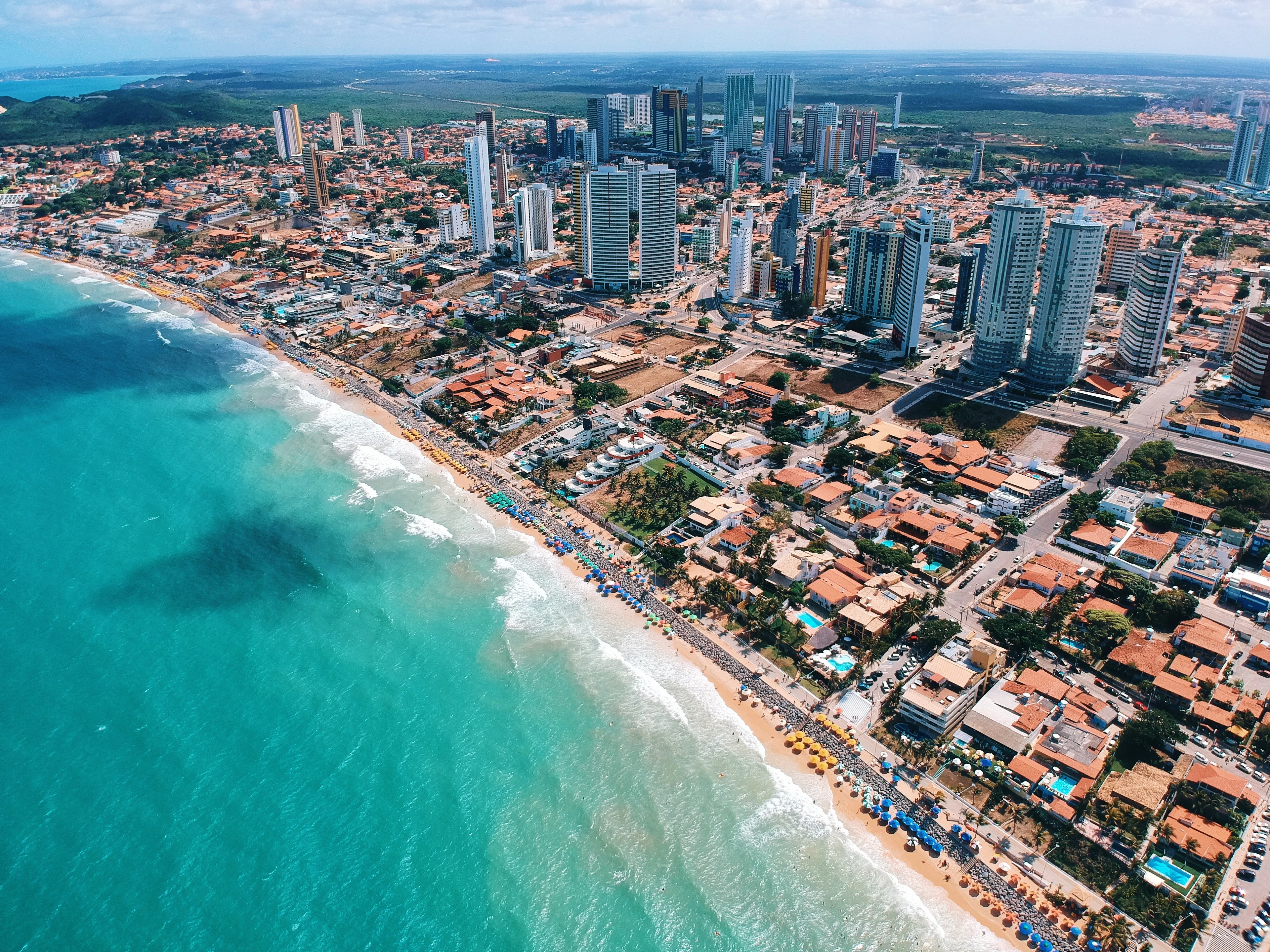
In Natal you do not pick an atmosphere, you pick a beach. The city runs along some fifteen kilometres of coastline, and that coastline is cut into three stretches that have nothing in common. In the south, Ponta Negra is the travellers' beach: a bay closed off by the Morro do Careca, a dune one hundred and twenty metres high, and behind it the restaurants, the guesthouses and the best ratings in the city. In the middle, the Via Costeira runs for six kilometres between a protected dune ridge and the ocean, with no shops at all and large resorts set between the road and the sand. And at the northern end of the seafront, Praia dos Artistas is the city-centre beach, older, more local, cheaper.
Elsewhere, few people sleep: the historic centre keeps its churches and its museums but not a single hotel, and the dunes of Genipabu, to the north, already belong to another municipality. Rates start at $29*, move up to $46* for a three-star and climb to $107* for a four-star on the seafront; the all-inclusive resorts on the Via Costeira play in another league. Six neighbourhoods, two of them with nowhere to sleep, and this guide says why.
Coming to Natal means always finding great scenery, beaches, and sunshine.
Compare hotel prices in Natal
In a hurry? Find the best accommodation deals in 3 clicks.
Compare live deals from Booking, Expedia, Agoda and other partners.
At a glance: our picks by traveller type
Pick the profile that suits you to head straight to the recommended neighborhood.
The neighborhood map in Natal
Get your bearings on the neighborhoods and must-see sights before choosing where to drop your bags. Click a name to jump to its description.
Ponta Negra and the Morro do Careca Ponta Negra beach and the Morro do Careca dune, the restaurants and bars along Avenida Erivan França, the potiguar craft shops, Praia Shopping, the Natal convention centre, the statue of the Three Kings
for the beach, for families, for the best ratings in the city
This is the beach where travellers sleep, and it earns the title: a bay a kilometre and a half long, closed off to the south by the Morro do Careca, a dune one hundred and twenty metres high that can no longer be climbed but can be photographed from anywhere. Behind the sand, a single avenue holds the restaurants, the juice bars and the shops, and the hotels stack up the slope above. This is also where the highest ratings in the guide are found, by a wide margin: three addresses above 9, on volumes of more than a thousand reviews each.
A good place to travel with family, friends, or as a couple.
Where to stay in this neighborhood
Manary Praia Hotel Luxury
The highest rating in this guide: 9.5 from nine hundred and thirty-eight reviews, with 9.8 for staff, 9.7 for location and 9.6 for cleanliness. A small wood and stone house right on the sand, around twenty rooms, a restaurant the reviews mention as often as the beach. Value for money, at 8.9, stays high for this level.
Golden Tulip Natal Ponta Negra Mid-range
The second rating in the guide, on a large volume: 9.2 from more than sixteen hundred reviews, with 9.4 for cleanliness, comfort, location and staff, all four at the same level. Wide rooms with a view, a pool, breakfast. Budget $107*.
Majestic Ponta Negra Beach Luxury
The largest volume on the beach: 9.1 from more than two thousand five hundred reviews, with 9.4 for location and staff. A seafront tower, rooftop pool, family rooms. The wifi, rated 8.4, is the low point of its listing.
Pros
- Beach, restaurants and hotels all within walking distance
- The best ratings in the city, on large review volumes
Cons
- The historic centre is a twenty-minute drive away
- Prices climb hard in January and during carnival
The Via Costeira and Areia Preta The six kilometres of the Via Costeira between protected dunes and the ocean, Areia Preta beach, the Mãe Luíza lighthouse and its view over the whole coast, the Natal sundial, the big all-inclusive resorts
for a resort, for the pool, for having nothing to organise
Between the city centre and Ponta Negra, the coast road runs for six kilometres along a listed dune ridge: sand and forest on one side, the ocean on the other, and a dozen large hotels standing alone in between. There is not a single shop here, not a restaurant outside the hotels, and that is exactly the deal: you come for a pool, a buffet and a private beach, not to go out in the evening. North of the road, Areia Preta beach and the Mãe Luíza lighthouse give the widest view in the city, from the Morro do Careca all the way to the fort.
Where to stay in this neighborhood
Ocean Palace All Inclusive Premium Luxury
The big all-inclusive resort at the southern end of the road: 9.0 from more than twelve hundred reviews, with 9.4 for location and 9.3 for staff. Fourteen pools, five restaurants, a spa, direct access to the sand. Value for money, at 8.3, is the lowest figure on its listing, and that is the rule with all-inclusive packages.
Hotel Senac Barreira Roxa Mid-range
The training hotel of the Via Costeira, and the surprise of this guide: 9.1 from more than a thousand reviews, with 9.4 for staff and 9.3 for both cleanliness and comfort. Pool, garden, a breakfast the reviews describe at length. The location, rated 8.7, states the constraint of the road: everything happens by car.
Pros
- Real resorts with pools, beach and everything on site
- The lighthouse and the widest view in the city close by
Cons
- Nothing within walking distance: no shops over six kilometres
- A taxi for every outing, in both directions
The old seafront: Praia dos Artistas and Praia do Meio Praia dos Artistas and its kiosks, Praia do Meio, the craft market on Praia do Meio, the fort of the Three Kings out on the point, the Alberto Maranhão theatre, the tourist information centre
for paying less, for the fort, for the everyday life of the seafront
This is the city-centre beach, the one where Natal swam before tourism moved south, and it has kept its kiosks, its plastic tables and its old prices. Praia dos Artistas and Praia do Meio follow one another for two kilometres to the point, where the fort of the Three Kings, built from 1598 against French corsairs, juts out in a star shape into the mouth of the Potengi. The hotels are older and clearly cheaper than in Ponta Negra, and the ratings say so too.
Where to stay in this neighborhood
Natal Praia Hotel Budget
The largest review volume in this whole guide, and the lowest rating: 7.7 from more than six thousand four hundred reviews. We mention it for what it is, an old hotel sitting on Praia dos Artistas, well placed (8.6) and decent on value for money (8.1), where the reviews criticise the facilities (7.3) and the wifi (6.5) rather than the welcome.
La Belle Beach Hotel Mid-range
On the same beach, better rated: 8.4 from more than eight hundred reviews, with 9.1 for staff and 9.0 for location. A small seafront hotel, simple rooms with a view, a pool. It is the best compromise on the old seafront, around $46*.
Pros
- The lowest prices on the seafront, and the fort on foot
- The historic centre a quarter of an hour's walk away
Cons
- A more worn neighbourhood, and hotels that show their age
- Fewer restaurants open late than in Ponta Negra
The historic centre: Cidade Alta and Ribeira The metropolitan cathedral and the church of Santo Antônio, known as the Rooster Church, the church of São Pedro, the Câmara Cascudo memorial, the Café Filho museum, Natal city hall, the listed facades of the Ribeira district beside the Potengi
for a visit, not for a night
This is seventeenth-century Natal, and it can be seen in a morning: the cathedral, the church of Santo Antônio with its weathervane bell tower, the lanes of Ribeira along the river with their listed facades and their theatre. The whole is beautiful and under-visited, and the rest has to be said plainly: nobody sleeps here. The city's hotels are all on the coast, the neighbourhood empties in the evening, and this guide therefore lists no address here. From the old seafront it is a quarter of an hour's walk.
Pros
- The city's heritage within one walkable area
- A quarter of an hour's walk from Praia dos Artistas
Cons
- No hotel worth recommending: this guide lists none
- The neighbourhood empties at nightfall
Tirol and Lagoa Nova: the working city The Câmara Cascudo museum and its ethnographic collections, the Riachuelo theatre, the Arena das Dunas built for the 2014 World Cup, the federal university of Rio Grande do Norte, the Midway, Natal Shopping and Via Direta malls, the eucalyptus grove, the Christmas Tree monument
for a business trip, for the prices, for a match
Two kilometres from the sea the other Natal begins, the one that works: wide avenues, residential towers, the big malls and the university. People sleep here for three reasons and no more: a business meeting, a match at the Arena das Dunas built for the 2014 World Cup, or a price. The neighbourhood also holds two places worth the trip from the beach: the Câmara Cascudo museum, which keeps the ethnographic collections of the Nordeste, and the Riachuelo theatre.
Where to stay in this neighborhood
Villa Park Hotel Mid-range
On Avenida Senador Salgado Filho, two kilometres from the sea and not on the beach, whatever the listings suggest: 8.7 from around sixteen hundred reviews, with 9.1 for location and for staff. A large garden, a pool, breakfast. This is the right address for a stay that is not about the beach.
Pros
- Rooms cheaper than on the seafront
- Museums, theatre and stadium without leaving the neighbourhood
Cons
- The beach is two kilometres away, so by car
- A business district: nothing touristic in the streets
The north: Redinha, the bridge and the dunes of Genipabu The Newton Navarro bridge and its hundred metres above the Potengi, Redinha beach and its public market famous for ginga com tapioca, Genipabu beach and its lagoon, the shifting dunes crossed by buggy
for a day out, not for a night
Cross the Newton Navarro bridge, one point eight kilometres at around a hundred metres above the mouth of the Potengi, and the city changes at once: Redinha is a local beach with a public market where people eat ginga com tapioca, a grilled fish served on a cassava pancake. Further up begin the shifting dunes of Genipabu, the postcard image of the whole of Rio Grande do Norte, crossed by buggy. Two things to know: this is a day out, and those dunes already lie in the municipality of Extremóz, thirty kilometres from the centre.
Pros
- The dunes and the buggy, the best-known landscape in the state
- Redinha market, which is not a tourist outing
Cons
- No Natal hotel here: the dune guesthouses are in Extremóz
- Thirty kilometres from the centre, and a bridge to cross twice
Our tips for booking the right place
- Three beaches, three different deals: This is the decision that matters, and it comes before the price. Ponta Negra is the default choice: beach, restaurants and hotels within the same walkable area, and the best ratings in the city. The Via Costeira is another deal: six kilometres without a shop, so everything happens inside the hotel, which suits anyone who wants a pool and a buffet very well, and anyone who wants to go out in the evening very badly. The old seafront is the choice of budget and of the city: more worn, more local, a quarter of an hour from the historic centre. None of these three answers is better than the others, but picking the wrong deal ruins a stay.
- The dunes of Genipabu are not in the city: This is the most common confusion about this destination. The photographs of dunes, buggies and dromedaries that sell Natal are taken at Genipabu, which lies in the municipality of Extremóz, thirty kilometres north of the centre, on the far side of the Newton Navarro bridge. Two consequences. First, this is a half-day or full-day excursion, not a beach you walk to for a swim after breakfast. Second, the guesthouses advertised "in Genipabu" are not Natal addresses: sleeping there means giving up the city.
- The sunshine our member mentions, and what to do about it: "The weather here is always good," our member writes, and that is roughly true: Natal sits on a headland swept by the trade wind, which tempers the heat and also explains the kitesurfs above the lagoons. The rainy season does exist, from March to July, with short heavy showers above all in April and May. The good stretch runs from August to February, and January plus carnival are the two weeks when Ponta Negra prices double. For the rest, a hat and water: the wind makes you forget the sun, and sunburn arrives without being noticed.
- Getting around: what works on foot and what does not: Each seafront neighbourhood can be walked within itself, and only connects to the others by car. From Ponta Negra to the historic centre, count twenty minutes by taxi; from the Via Costeira, the same in both directions; from the old seafront, a quarter of an hour on foot to the churches, which makes it the only neighbourhood where you can sightsee without driving. App taxis cover the whole city and cost little. For the dunes and the southern beaches such as Pipa, though, it is an excursion or a rental car.
- Booking on the Via Costeira expecting to go out for dinner: there is not a shop over six kilometres, and every meal outside the hotel is paid for in taxi fares.
- Looking for a room in the historic centre: Natal's hotels are all on the coast, the neighbourhood empties in the evening, and this guide lists no address there.
- Believing that guesthouses "in Genipabu" are Natal hotels: the dunes are in Extremóz, thirty kilometres further north, and the bridge gets crossed twice a day.
- Taking the old seafront for a postcard beach: this is the city's own beach, with its kiosks and its hotels from the 1980s. The pale sand and the high ratings are in Ponta Negra.
FAQ: where to stay in Natal
Which neighbourhood should you stay in in Natal?
How much does a night cost in Natal?
Which beach is best for swimming?
How many nights should you plan in Natal?
Is Natal a safe city?
What can you see in Natal in two days?
 Keep exploring
Things to do in Natal
Keep exploring
Things to do in Natal
Comments (0)
No comments yet. Be the first!