Visiting Namibia: Endless Desert and Wild Animals
The red sand dunes stretch farther than you can see. The canyons are scorched to deep amber. And the animals, elephants, lions, rhinos, roam freely across landscapes that feel like they belong to another planet. Namibia is one of the few places left on earth where the scale of everything genuinely humbles you, and where a single road trip can take you from towering dunes to a colonial-era beach town to a floodlit waterhole at midnight.
Is Namibia the right trip for you?
If you love raw nature, wide open spaces, and the feeling of being genuinely far from everything, Namibia delivers like few destinations can. It's ideal for anyone dreaming of a self-drive safari, a slower pace, and landscapes that reward serious photography. Think of it as the African equivalent of a Southwest road trip, except the scale is even bigger and the wildlife is real.
That said, this is not a destination for travelers who want dense tourist infrastructure, reliable urban comforts, or quick hops between highlights. Distances are long, some roads are rough, and safari costs can add up fast. But for travelers who are ready for that tradeoff, the payoff is hard to match anywhere else on the continent.
The Namib Desert and its towering dunes
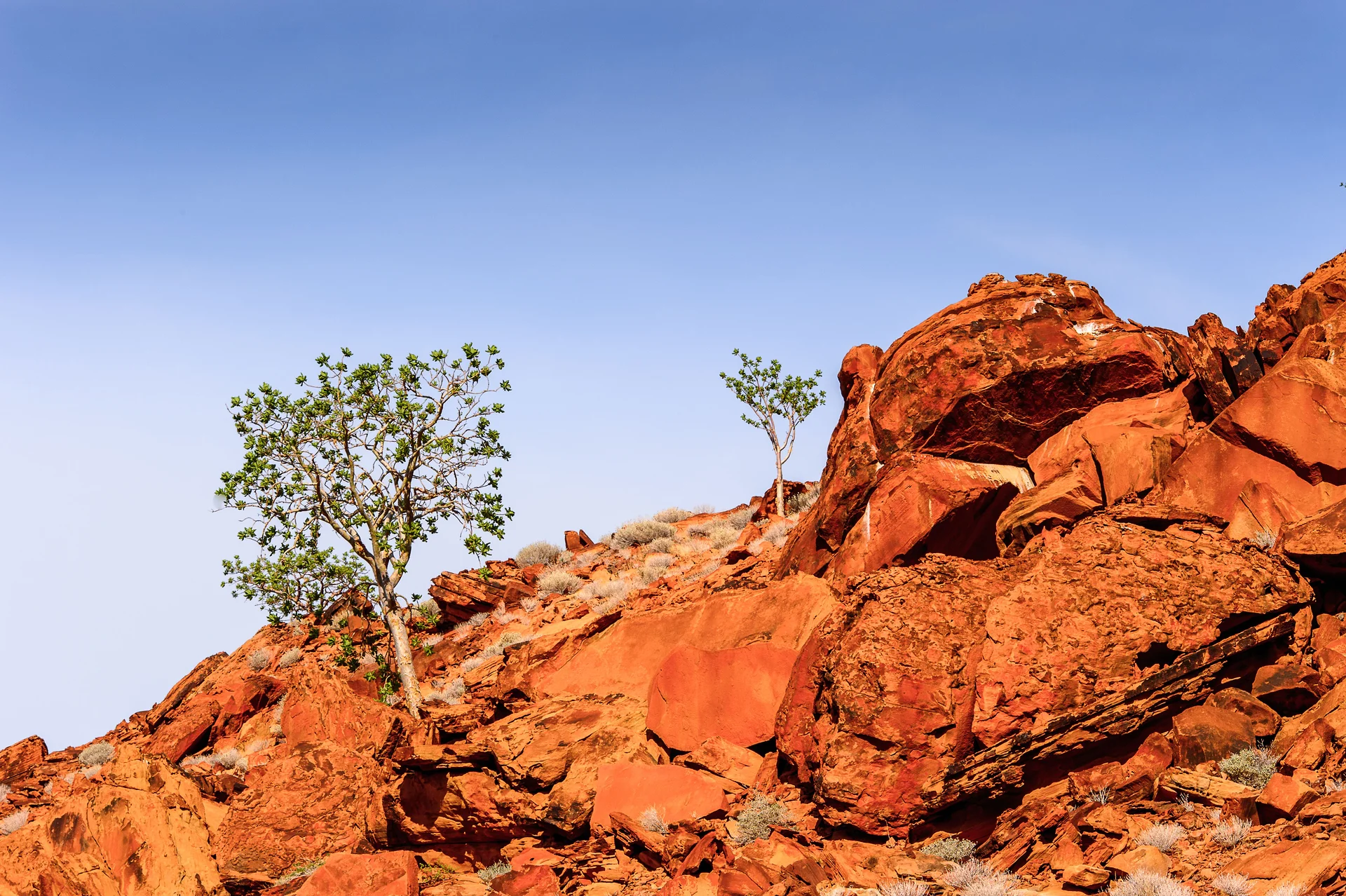
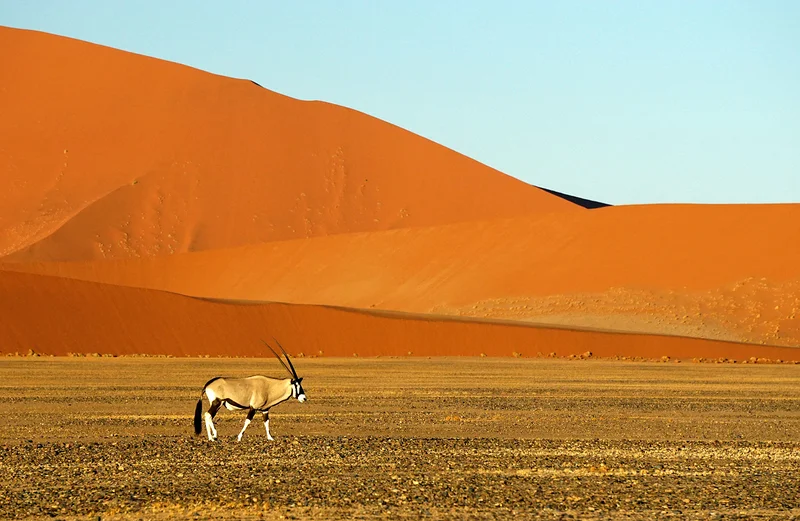
The southern part of the country is dominated by the Namib Desert, one of the oldest deserts on earth. Its red sand dunes top out at over 980 feet (300 meters), and at sunrise they glow in colors that shift by the minute. The centerpiece of the region is Sossusvlei, a clay pan where the blackened silhouettes of dead trees rise against the blazing orange dunes behind them.
Deadvlei: a scene frozen in time
A few miles from Sossusvlei, Deadvlei looks like a film set that nobody built. The contrast between the rust-red sand, the bleached white clay floor, the skeletal trees, and the deep blue sky above makes it one of the most photographed spots in the country, and one of those places that actually looks better in person than in pictures.
Insider tip: Get to the park gates before dawn. Morning light makes the dune colors pop, and the temperatures are manageable. By midday, the heat in the desert is no joke.
Etosha National Park
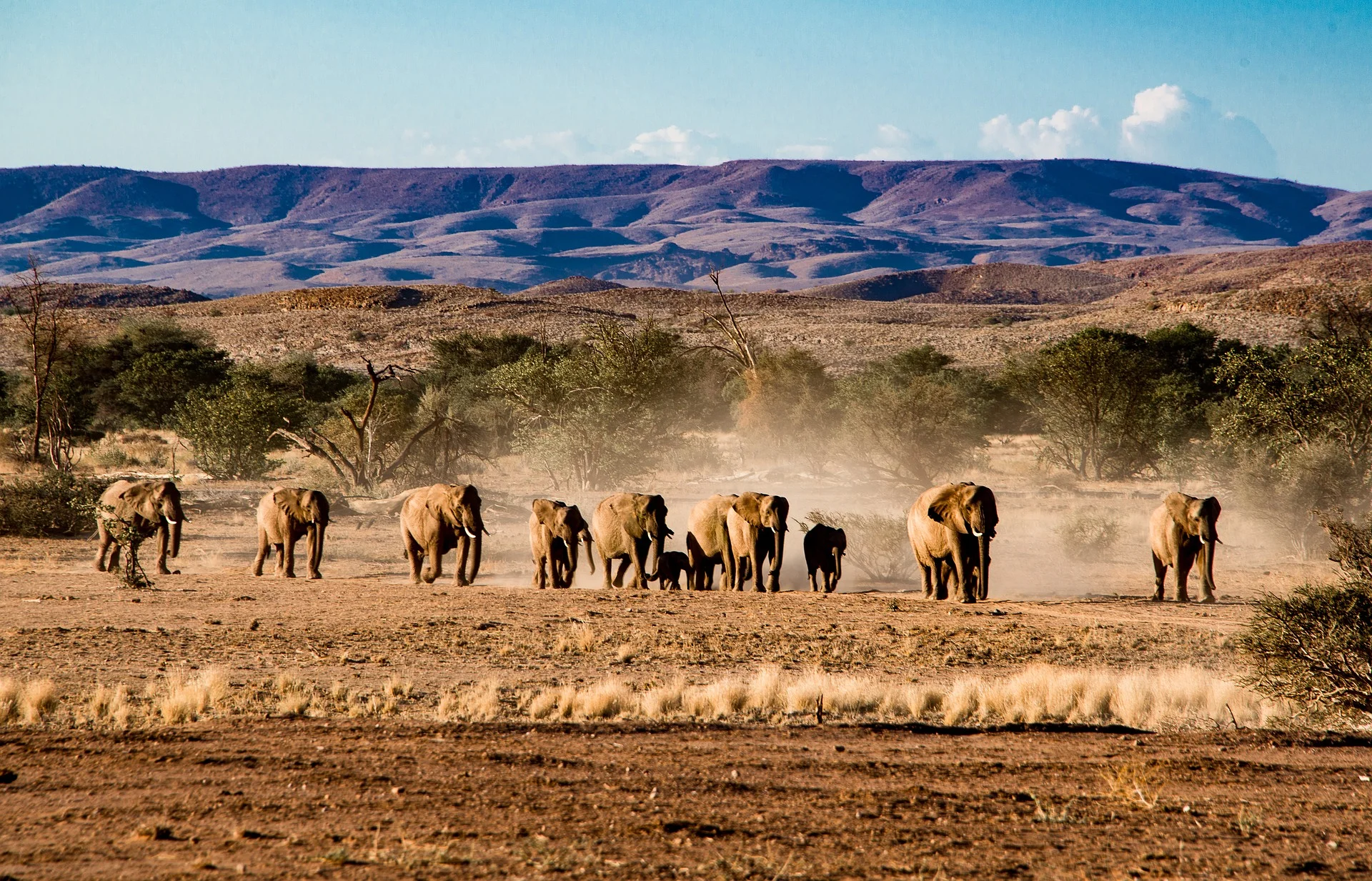
In the north, Etosha National Park is one of Africa's top wildlife sanctuaries. Its vast salt flats attract a serious concentration of animals: elephants, lions, giraffes, black and white rhinos, and more antelope species than you'll be able to name. The best wildlife viewing happens near the waterholes, where animals gather in large numbers, especially during the dry season (May through October).
A safari you can do yourself
Etosha is one of the few major African parks where you can do a self-drive safari in your own rental vehicle, no guide required. Rounding a bend and finding a herd of zebras blocking the road, or catching a leopard slipping through the brush, hits differently when you're the one behind the wheel.
Insider tip: Plan for multiple days in the park and move between camps to cover different terrain. The more patient you are, the better your chances of spotting the shyer species.
The Skeleton Coast and Swakopmund
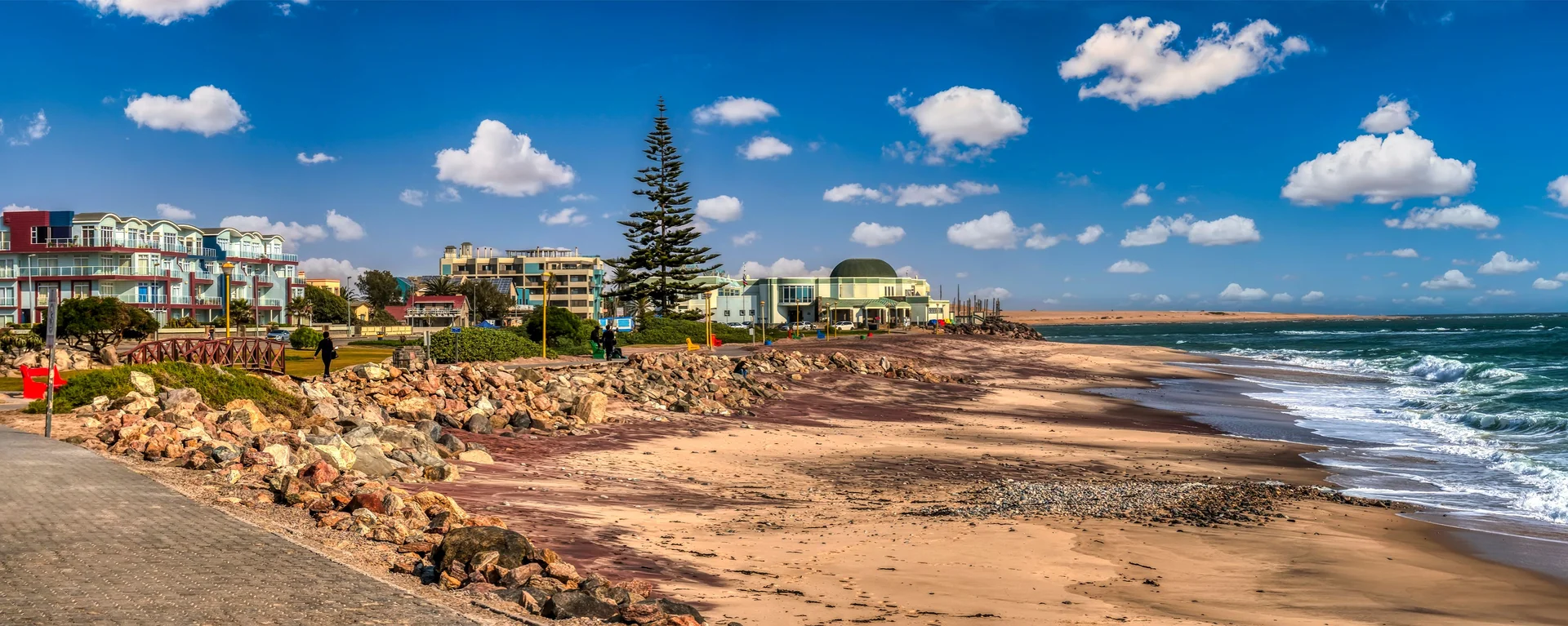
Head west to the Atlantic and Namibia shifts completely. The Skeleton Coast is one of the eeriest stretches of shoreline anywhere: rusted shipwrecks half-buried in sand, cold surf, and wind that never quits. Further south, the town of Swakopmund is a genuine surprise. Its German colonial architecture and laid-back beach-town energy feel completely out of place next to the desert, in the best possible way.
Activities between the ocean and the dunes
In Swakopmund and the Walvis Bay lagoon nearby, you can take boat tours to spot Cape fur seals and dolphins, or spend a morning on a quad bike or sandboard in the dunes. After days of desert silence, the energy here feels like a reset.
Insider tip: Try the oysters from Walvis Bay. Fresh, cold, and genuinely excellent, the last thing you'd expect from one of the driest countries on earth.
Himba culture in the northwest
Namibia isn't only about landscapes. In the remote northwest, the Himba people have maintained their traditions, language, and way of life with remarkable continuity. Visiting a Himba community means stepping into a world organized around a deep connection to the land and to ancestral practice.
These encounters require genuine respect and curiosity. Namibia's cultural makeup is as layered as its geography, and it deserves the same attention.
Insider tip: Book visits through local guides who work directly with the communities. It's the only way to make sure the experience is both authentic and fair to the people hosting you.
Food in Namibia: simple, wild, and surprisingly good
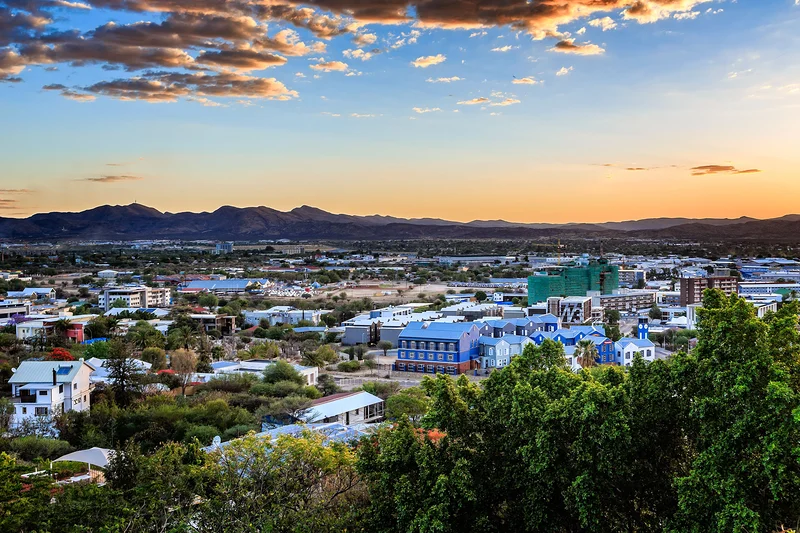
Namibian food reflects the country's mix of cultures and its closeness to the land. Meat-eaters will want to try the game: oryx, springbok, and ostrich are all commonly served grilled and are leaner and more flavorful than most beef back home. The Atlantic coast adds fresh fish and oysters to the mix. In Windhoek and Swakopmund, the old German colonial influence shows up in the local beer culture and in bakeries serving proper pastries.
When to go to Namibia
May through October is the sweet spot. That's the Southern Hemisphere winter: dry, mild, and ideal for wildlife viewing since animals cluster around shrinking water sources. The rainy season runs November through April, when the landscape greens up but some roads become difficult or impassable. Summer temperatures in the desert can be genuinely brutal, especially in January and February.
Getting to Namibia
Flying is the practical choice. International flights land at Windhoek, typically with a connection through Johannesburg or another Southern African hub. From the US, expect a long haul with at least one layover, budget a full day of travel each way. If you're already traveling elsewhere in Southern Africa, road crossings from South Africa, Botswana, and Angola are common and well-traveled by overland road-trippers.
Getting around Namibia
Namibia runs on road trips. Renting a 4x4 is essentially mandatory if you want to reach the remote sites and handle the unpaved tracks between them. The main roads are generally well-maintained, but the distances between places are enormous, you need to actually enjoy driving to make this work.
Intercity buses exist but cover limited routes. Light charter planes are used to reach some lodges and private reserves quickly, which can be worth it if your time is tight.