
Visiting Etosha National Park: The Heart of Namibian Wildlife
Etosha National Park, in Namibia, is a promise of vast horizons and unforgettable wildlife encounters. It is a mandatory stop for anyone traveling through this fascinating country. Picture an expanse so wide it feels infinite, the famous Etosha Pan, a whitish salt depression that shimmers under the intense sun, rimmed by savanna and vital waterholes.
A Desert Teeming with Life
Do not let the arid appearance fool you. While the pan itself is dry, the surrounding lands are a sanctuary for an incredible wealth of wildlife. The secret to Etosha lies in its numerous natural and artificial waterholes that draw animals in, especially during the dry season (from May to October). This is where the spectacle unfolds, offering wildlife scenes worthy of the best nature documentaries. Patience is often rewarded with magical sightings.
Etosha Wildlife: A Star-Studded Cast

Get your binoculars and cameras ready. Etosha is home to an exceptional concentration of animals.
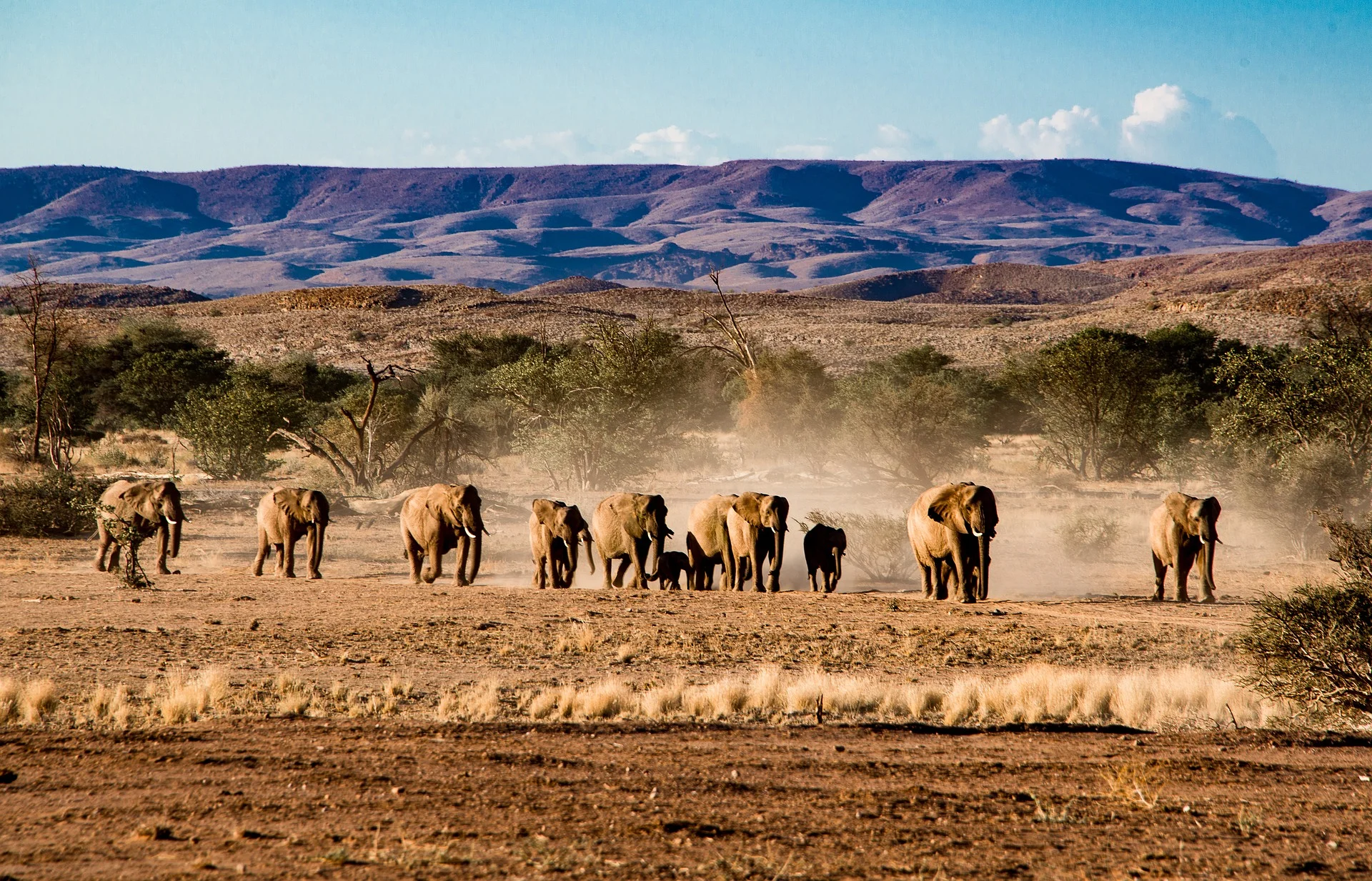
You are almost certain to encounter herds of herbivores, particularly elephants, often coated in the white dust of the pan, which gives them a ghostly appearance. Giraffes, thousands of Burchell's zebras, leaping springboks, and blue wildebeest are everywhere. And let us not forget the black rhinoceros, an iconic and endangered species that Etosha works hard to protect.
Predators are well represented, too: lions, more elusive leopards, spotted hyenas, and black-backed jackals roam the area. Birdwatchers will be equally delighted with over 340 recorded species, including the ostrich, the kori bustard (one of the heaviest flying birds), and a myriad of raptors.
The park is a true Noah's Ark, with the notable exception of the buffalo, which is absent from this region.
Waterholes: Open-Air Theaters

The waterholes are the true stages of Etosha. Each main camp in the park (Okaukuejo, Halali, Namutoni) has its own floodlit waterhole, allowing for prime viewing in total safety. The one at Okaukuejo is particularly famous. Imagine sitting on a bench, watching in silence as elephants, rhinos, and lions come to drink just a few yards away. Other waterholes, like Okondeka, are known for attracting lions, while Chudop is a favorite for giraffes.
Planning Your Safari: Self-Drive or Guided?
The wilderness of Etosha is magnificent, but you should not venture in without preparation. Here is a page with tips for traveling in Namibia provided by Allibert Trekking. You will also find organized travel packages on this page that include a safari in Etosha. There is no stress and no bad surprises, as you are in the hands of experts.
Do you feel like an adventurer experienced in exploring African lands? You can also opt for a self-drive safari in your own rental vehicle. A 4x4 is not strictly necessary but recommended for comfort on the gravel roads and for accessing certain areas. The roads are well-maintained and signposted. Respect the speed limits (60 km/h) religiously and never leave your vehicle outside of secure areas. Game drives organized by the camps are also available, offering the expertise of a local guide.
Remember to book your accommodations in the park camps (managed by Namibia Wildlife Resorts - NWR) well in advance, especially during high season. Entrance fees are payable at the park gates.
When to go?
The best time to visit Etosha National Park is during the dry season, from May to October. Temperatures are more comfortable and the vegetation is less dense, which makes it easier to spot the animals that gather in large numbers around the waterholes.
The rainy season (November to April) offers lush green landscapes and excellent birdwatching, but the wildlife is more dispersed and temperatures can be extremely high.
Suggested Itineraries in the Park
For a first visit, a stay of 3 to 4 days is ideal. Enter through the Anderson gate in the south, spending one or two nights at Okaukuejo for its waterhole. Then, head east to Halali, a more central camp that offers access to different types of landscapes and waterholes. Continue to Namutoni, near the Von Lindequist gate, with its historic fort and greener landscapes. Every drive between the camps is a safari opportunity in itself.
If you have more time, explore the western part of the park, once a restricted area, now accessible via the Galton gate. The Dolomite camp there offers a more luxurious and isolated experience, while Olifantsrus is a more rustic camp with an incredible viewing hide overlooking a waterhole. Do not forget a park map, available at the entrances or in the camp shops. It is essential for navigating and locating the waterholes.
Etosha Camps: More Than Just Stopovers

The main camps are not just places to sleep. Okaukuejo, in addition to its legendary waterhole, features an observation tower, a pool, a restaurant, and a shop. Halali, nestled in the middle of mopane trees, is quieter, and its waterhole, Moringa, is also an excellent spot. Namutoni, with its pristine white former German fort, has historic charm. They offer various types of accommodation, from camping to comfortable chalets.
Plan to stock up on water and snacks before entering, although the camp shops offer the essentials. The restaurants serve decent meals, but cooking your own food on a barbecue (braai) under the stars is part of the Namibian experience. Be vigilant regarding jackals and baboons, which can be thieving in the camping and picnic areas.
Conservation Challenges at Etosha and the Need for Responsible Tourism
Like many African sanctuaries, Etosha faces challenges. Poaching, particularly of rhinos and elephants for their horns and ivory, remains a constant threat despite the efforts of rangers and anti-poaching measures. Water management is also crucial in this arid environment, especially with the impacts of climate change. Responsible tourism plays a role, as the revenue generated by entrance fees and stays contributes directly to the conservation of the park and supports local communities.
As a visitor, your respect for the rules (do not feed the animals, do not exit the vehicle, do not leave trash) is paramount for the preservation of this unique ecosystem. Etosha is a treasure, a natural heritage whose survival depends on everyone's commitment. A visit here is not just a safari, but an immersion in a world where nature still dictates the law, a powerful reminder of the beauty and fragility of our planet.

If you love animals, this is the one place you cannot miss in Namibia!
In addition to its incredibly rich wildlife (leopards, lions, elephants), you can drive around in your own rental car, which is a real experience!
The advantage is that you get to cross some truly grand landscapes. A vast white salt desert where the savanna adds its own touches of vegetation.
I managed to photograph several leopards in just a few days, a dream come true.