
Visiting Twyfelfontein: Unlocking the Mystery of Ancient Rock Engravings in Damaraland
Set within the stark and dramatic landscapes of Damaraland in Namibia, Twyfelfontein is a UNESCO World Heritage site of immense significance. History here is etched directly into the rock, providing a rare window into the art and daily lives of the ancient peoples who traversed these lands thousands of years ago.
Why explore Twyfelfontein? An open-air gallery with a deep history
Twyfelfontein is more than just a landmark. It functions as an expansive, open-air prehistoric art gallery, home to one of the largest concentrations of rock engravings in Africa. Every step across this ancestral terrain echoes with the presence of the San hunter-gatherers who left their mark here. Viewing these works, carved with precision into the red sandstone, is a moving experience that feels like stepping back in time.
Friendly tip: The desert sun can be relentless at Twyfelfontein. Plan your visit for early morning or late afternoon to enjoy softer light, which is ideal for photography, and to avoid the intense heat of midday.
Rock engravings: Stories carved in stone
A fascinating menagerie and scenes of daily life
The engravings at Twyfelfontein depict a rich and active world. You will find detailed African wildlife, including rhinoceros, elephants, giraffes, zebras, and lions, often rendered with striking realism. Beyond the animals, scenes of hunting, footprints, and human figures provide insight into the rituals and survival strategies of San communities. The famous Lion Man engraving is a standout example, featuring five-toed paws and an upturned tail that exudes a near-mystical energy.
Art as storytelling: Decoding ancient messages
Each engraving serves as a piece of a larger narrative, documenting the beliefs and observations of the site's former inhabitants. Local guides, many of whom are descendants of these peoples, are essential for interpreting these messages. They explain the role of animals in regional spirituality, traditional hunting techniques, and the profound connection the San maintained with their environment. The detail and scale of these carvings remain impressive given that they were created without the use of modern metal tools.
The landscape of Twyfelfontein: Rugged mineral beauty
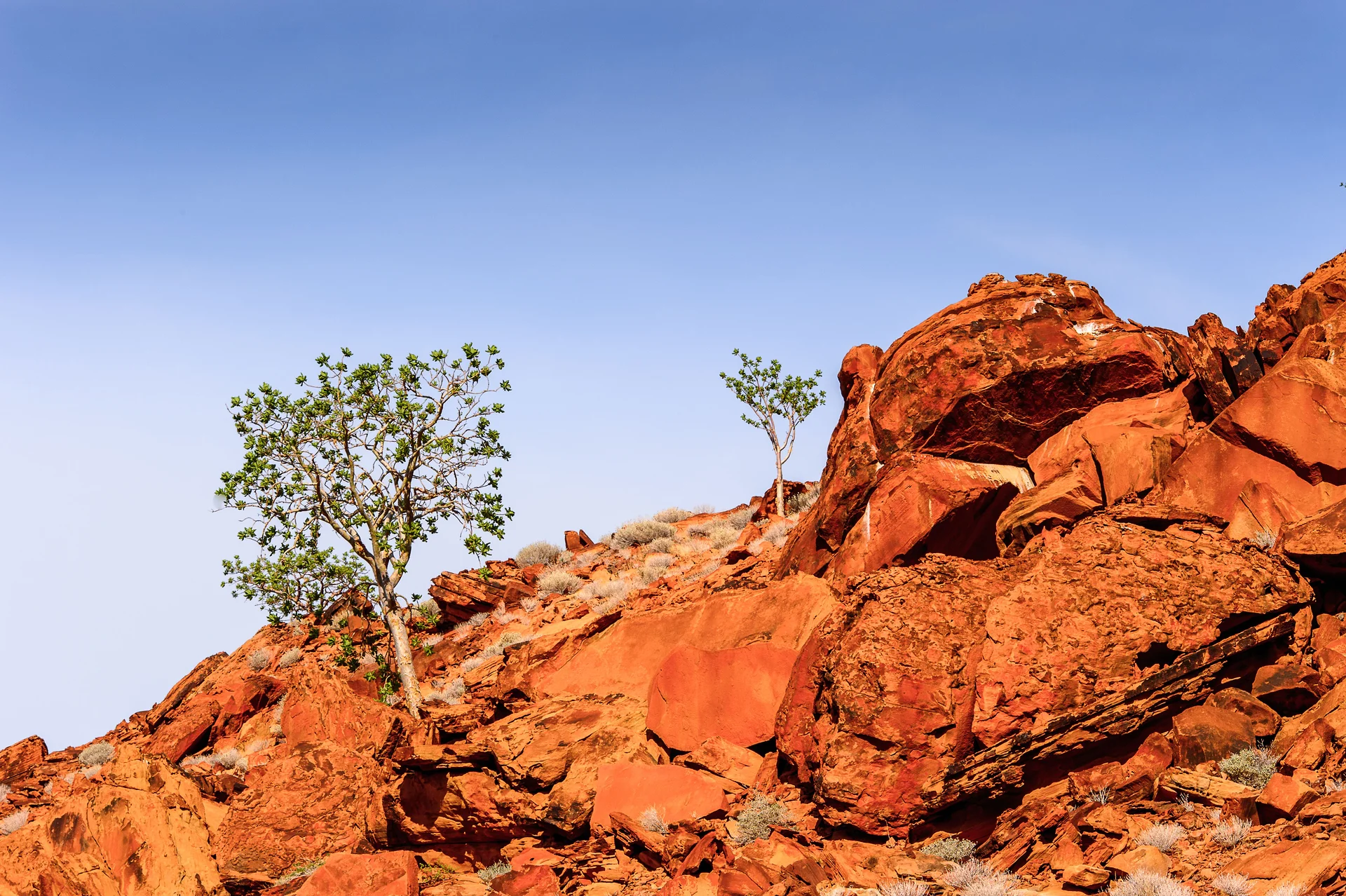
Beyond the engravings, the geological setting of Twyfelfontein is remarkable. The sandstone rock formations, shaped by millennia of erosion, display ochre and crimson hues that shift with the changing light. This mineral-heavy beauty, punctuated by resilient desert vegetation, offers a sharp contrast to the delicate nature of the rock art. The presence of an intermittent water source, which gave the location its Afrikaans name meaning doubtful fountain, attracted both wildlife and humans for millennia, making this area a natural hub for habitation and artistic expression.
Visitors can explore the site via marked trails, always accompanied by a guide to help protect this fragile heritage and provide necessary context for the experience.

After miles of desert roads and trails, it is surprising to discover this unique site.
Indeed, here there are several thousand prehistoric rock paintings and engravings that await curious eyes.
I loved observing the animals depicted and telling myself that they have been there, engraved, for thousands of years...
The setting of the place also contributes to the magic emanating from this spot, with the color of the rock varying from red to orange.