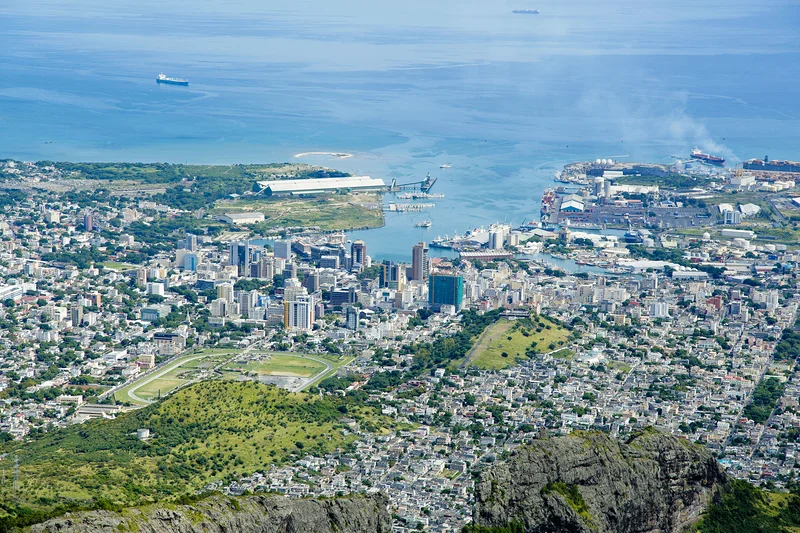
Mauritius Is a Lot More Than a Turquoise Postcard
In Port Louis, a street vendor wraps a dholl puri, a flatbread stuffed with split yellow lentils, with practiced precision, spoons a steaming pea curry on top, and hands it to you for around 20 MUR (less than 50 cents). A Hindu temple stands twenty meters from a mosque, and fruit bats glide overhead through century-old banyan trees.
Mauritius is what you'd get if a novelist were asked to compress India, Africa, China, and France onto 2,040 km² (about 787 square miles) ringed by coral reefs.
Not Just a Honeymoon Destination: Who Is Mauritius Actually For?
Mauritius gets reduced to a honeymoon backdrop with cocktails and sand between your toes. That sells it short. The island works for a wide range of travelers, as long as you know what you're after. Here's a quick breakdown:
thumb_up Great fit for:
- Couples looking for gorgeous beaches and high-end resorts
- Families with kids: calm lagoons, minimal natural hazards, solid infrastructure
- Kitesurfers, divers, snorkelers, and water sports enthusiasts
- Hikers looking for short tropical trails without a multi-day commitment
- Food and culture lovers interested in a genuinely mixed culinary and cultural scene
- Digital nomads: Mauritius offers a free one-year Premium Visa
warning Not the right fit for:
- Nightlife seekers: after-dark options are mostly limited to Grand Baie and stay pretty low-key
- Travelers on a tight backpacker budget: accommodation runs pricier than Southeast Asia
- Anyone craving vast wilderness or multi-day backcountry treks
- Those looking for a culture shock: the island is comfortable, well-organized, and largely English-speaking
More Affordable Than You'd Think
Mauritius spent years being perceived as strictly a luxury destination. That's changed considerably. The range of options now covers everything from guesthouses to private-pool suites, and the budget spread reflects that.
| Trip Type | Where | Duration | Budget per Person |
|---|---|---|---|
| Beach vacation, mid-range comfort | Trou-aux-Biches / Belle Mare | 1 week | ~70,000, 140,000 MUR ($650, $1,300) |
| Luxury honeymoon | Le Morne / Bel Ombre | 10 days | ~235,000, 530,000 MUR ($2,200, $4,900) |
| Nature and beach road trip | Island-wide by car | 2 weeks | ~94,000, 176,000 MUR ($870, $1,650) |
| Kitesurfing and water sports | Le Morne / Pointe d'Esny | 1 week | ~82,000, 153,000 MUR ($760, $1,420) |
| Budget backpacker, guesthouses | Flic-en-Flac / Mahébourg | 2 weeks | ~53,000, 88,000 MUR ($490, $820) |
| Family exploration trip | West coast + north | 10 days | ~106,000, 212,000 MUR ($980, $1,970) |
Easy to Get Around Once You're There
You can drive from one end of Mauritius to the other in under two hours. Main roads are in good shape, though traffic around Port Louis and Curepipe gets heavy during rush hour. One thing to know upfront: traffic drives on the left, a legacy of British rule. It takes about a day to feel natural.
As a US traveler, you won't have a language barrier here. English is the official administrative language and widely spoken. You'll also hear Mauritian Creole (the everyday language, built on a French base), French in the media and casual conversation, and Hindi, Tamil, and Mandarin in certain neighborhoods.
Is Mauritius Safe?
Mauritius consistently ranks among the safest countries in Africa, with low crime rates. Solo travelers, including women traveling alone, generally move around without issue. Standard common-sense precautions apply: watch your belongings in busy markets, avoid poorly lit areas at night.
On the nature side: the coral reef keeps sharks away from the shoreline, there are no dangerous snakes, and no large predators. The main things to watch out for are sea urchins on certain beaches and sunburn.
Good to know: Don't drink tap water, and pack a UK-style electrical adapter (Type G plug). Local pharmacies are well-stocked, but bring any prescription medications you need. US citizens do not need any vaccinations to enter Mauritius, though standard travel health precautions are always a good idea. No visa is required for US passport holders for stays up to 90 days, you'll get an entry permit stamped on arrival. Make sure your passport is valid for at least six months beyond your return date.
The Lagoons Are Real, but There's a Lot More Going On
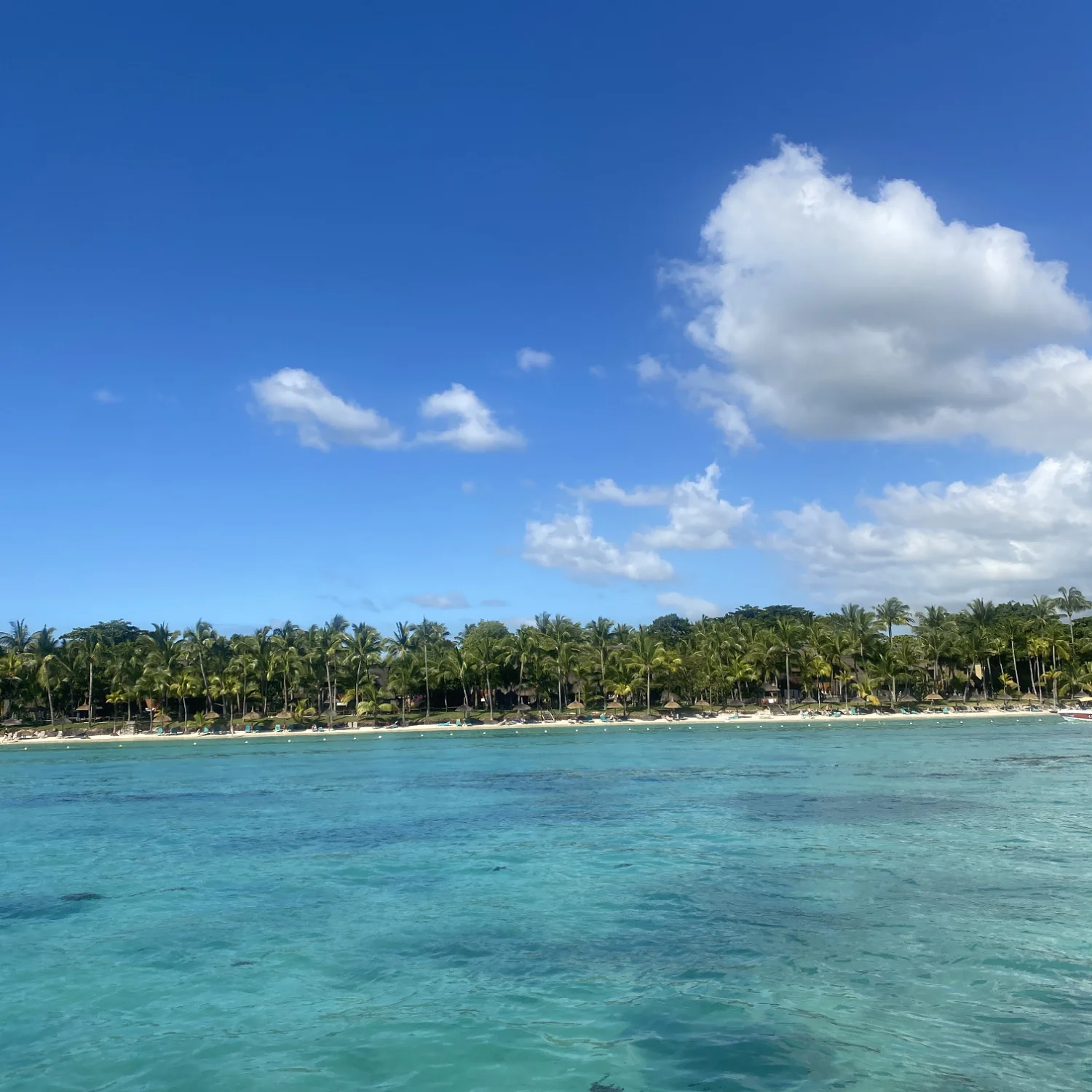
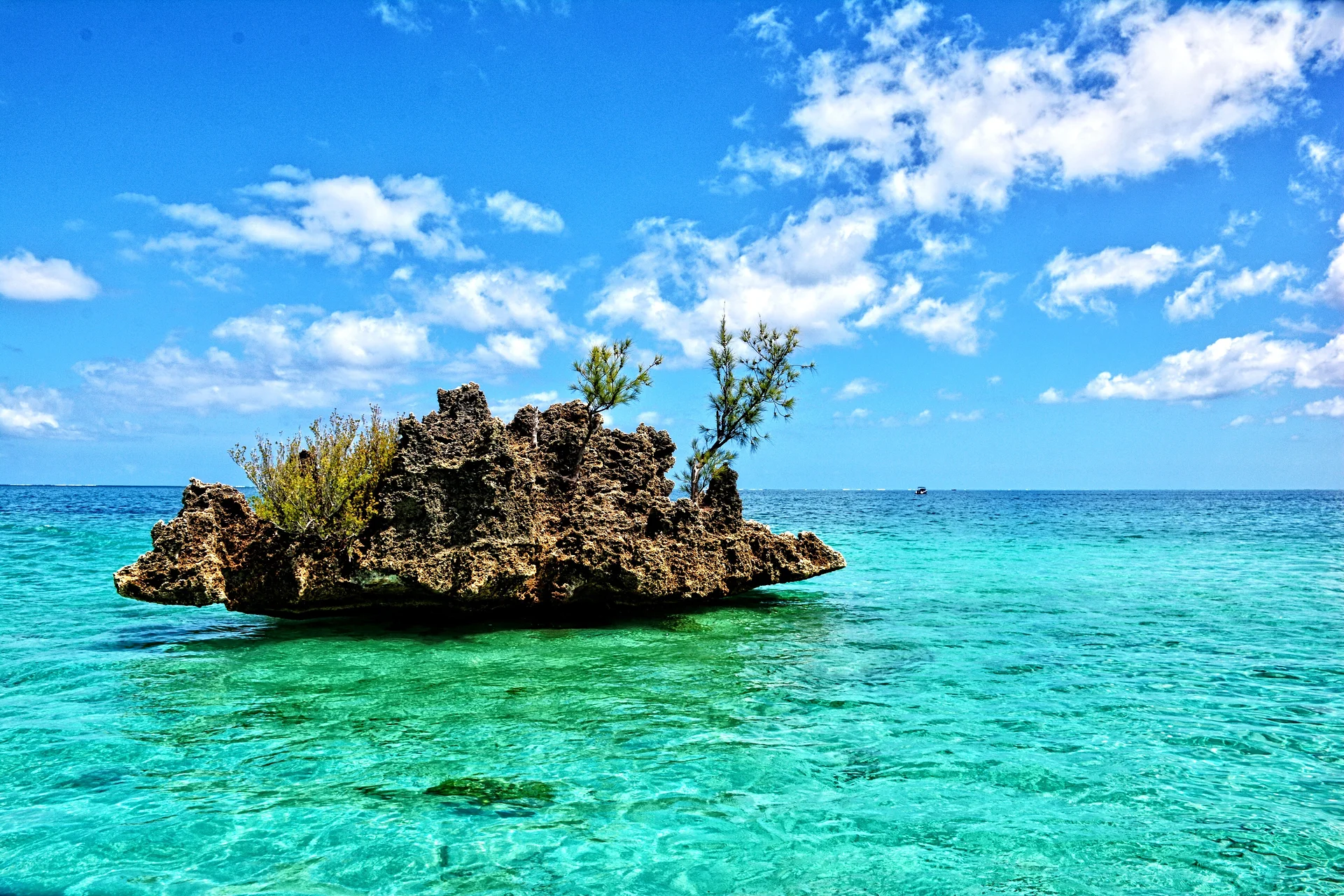
The Mauritian coastline runs 330 km (about 205 miles), bordered by one of the largest coral reef systems in the world. The protected lagoons create naturally calm, shallow swimming areas that are ideal for young kids, think Caribbean-level water clarity, but warmer and more sheltered.
On the north coast, Trou-aux-Biches has white sand that looks almost artificially perfect, with crystal-clear water shallow enough to snorkel just a few meters from shore. Further east, Belle Mare stretches out into a long, wide beach that's noticeably quieter on weekdays, with spectacular sunrises.
The Wild South
The south coast is a completely different mood. Waves pound the cliffs at Gris-Gris, the beaches are rawer, the vegetation denser. This is the Mauritius the brochures rarely show. The Pont Naturel, a volcanic rock arch carved by the ocean, gets very few visitors despite being one of the most striking natural sites on the island.
Good to know: Pack water shoes for the beach. At Flic-en-Flac and Trou-aux-Biches, scattered coral fragments can catch bare feet off guard. The beaches at Pereybere and La Cuvette are smooth and sandy all the way in, making them the better call for families with small kids.
Mountains, Gorges, and Colored Earth
Mauritius is volcanic, and the mountainous interior holds some real surprises. Black River Gorges National Park, the island's only national park, covers 6,500 hectares (about 16,000 acres) of tropical forest. You might spot the pink pigeon, an endemic species pulled back from the edge of extinction, and the scenery feels closer to Costa Rica than the Indian Ocean.
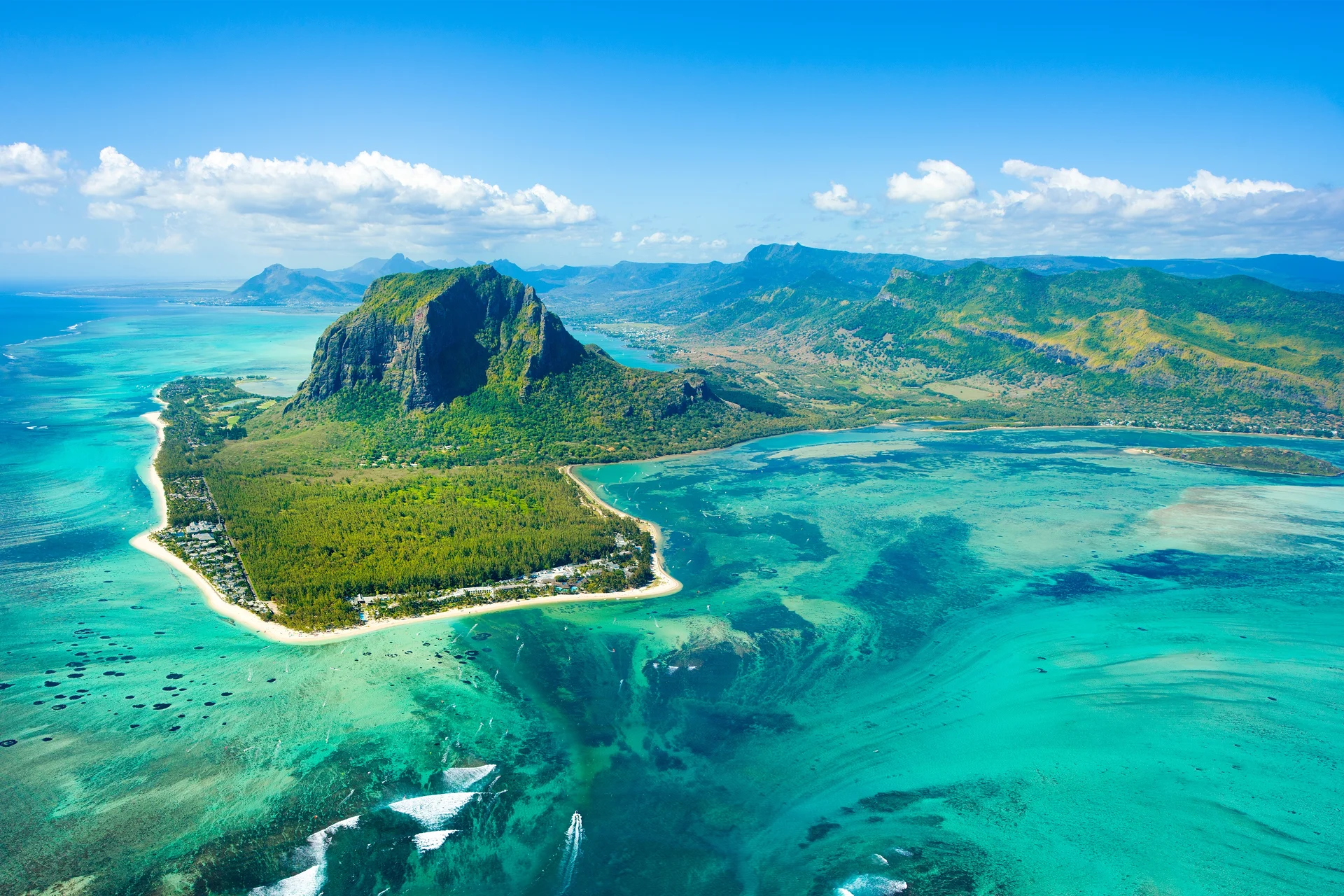
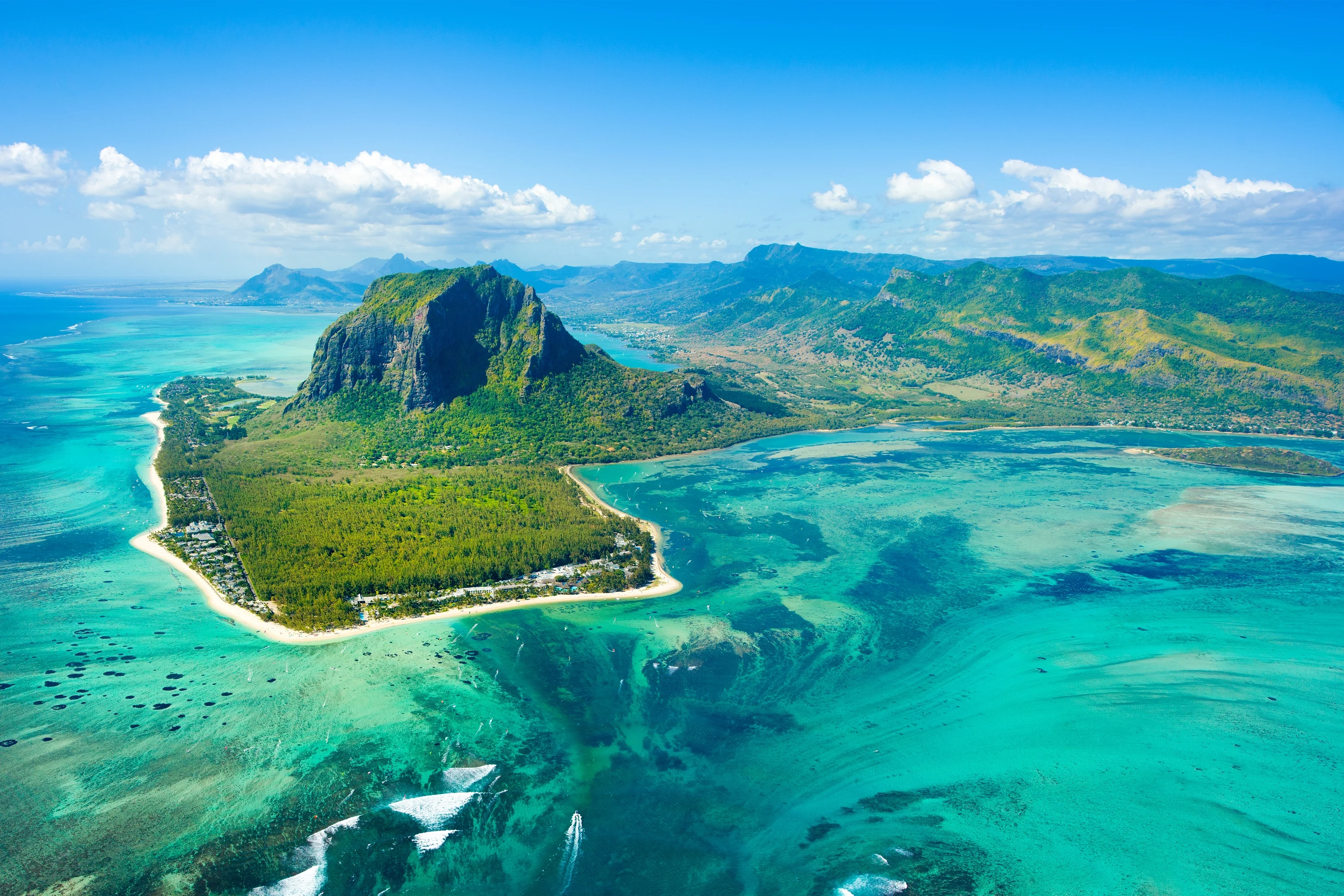
Hiking to the summit of Le Morne Brabant, a UNESCO World Heritage site, rewards you with a view of the famous "underwater waterfall" optical illusion, a sandbank formation that looks, from above, like the ocean floor is draining away. The mountain also carries a heavy history: it was a refuge for escaped enslaved people in the 18th century.
Chamarel and the Seven-Colored Earth
The village of Chamarel packs several natural curiosities into a small area. The seven-colored sand dunes, formed from volcanic soil in distinct shades of red, brown, violet, green, blue, purple, and yellow, create a genuinely lunar-looking landscape. The Chamarel Waterfall drops 100 meters (about 330 feet) into dense tropical vegetation. And the Chamarel Rum Distillery (Rhumerie de Chamarel) runs guided tours followed by tastings of their well-regarded agricultural rum made from local sugarcane.
Less visited but worth the detour: the volcanic crater at Trou aux Cerfs in Curepipe offers an easy walk around a crater lake inside a dormant volcano. On a clear day, the view takes in a large portion of the island.
The Most Culturally Dense Crossroads in the Indian Ocean
Mauritius has no indigenous population. Every wave of colonization and immigration left its cultural mark: Dutch, French, British, Indian, African, Chinese. The result is a layered cultural mix that's rare for a territory this small. About 48% of the population is Hindu, 26% Catholic, 17% Muslim, with the remainder split between Buddhists and other faiths.
In Port Louis, that diversity is written into the streetscape. The Chinatown district sits right next to the Jummah Mosque, one of the most architecturally impressive mosques in the Southern Hemisphere. Brightly painted Tamil temples are tucked into side streets. The Central Market, loud and fragrant, is the best place to get a real sense of this city that most tourists pass through too quickly.
Aapravasi Ghat and the History of Indentured Labor
The UNESCO-listed Aapravasi Ghat site in Port Louis documents the arrival of Indian indentured workers who came to Mauritius after the abolition of slavery. This chapter of history, less widely known than the transatlantic slave trade, fundamentally shaped the demographics and culture of modern Mauritius. The visit is understated, moving, and free.
For something lighter, the Château de Labourdonnais in the north offers a window into 19th-century colonial plantation life, complete with gardens, a distillery, and tastings of house-made jams.
Water Sports, Adrenaline, and Hiking
Mauritius ranks in the global top 10 for kitesurfing. The beach at Le Morne, swept by trade winds, draws riders from around the world from June through November. Conditions are excellent: a flat lagoon protected by the reef and consistent wind.
Divers do well on the west coast, particularly around Flic-en-Flac, where several beginner-accessible sites let you swim alongside rays, clownfish, and sea turtles. Swimming with dolphins off Tamarin is a popular activity, though it's worth choosing an operator that keeps a respectful distance from the animals.
Hiking for All Fitness Levels
The climb up Pieter Both, the island's second-highest peak with its famously precarious balancing boulder at the summit, is strictly for fit, experienced hikers. For something more moderate, Tamarind Falls offers a series of waterfalls reachable in a few hours of walking, with natural pools for swimming along the way.
At Avygeo, we think Mauritius is one of the rare tropical destinations where you can combine beach time, mountain hiking, and genuine cultural immersion without ever driving more than an hour between them.
Eating in Mauritius: Four Continents on One Plate
Mauritian food is a direct reflection of its population. Indian, Creole, Chinese, and French influences show up in every dish, and street food is where you taste them best. Dholl puri, a flour flatbread stuffed with ground yellow lentils and topped with curry, sells everywhere for around 20 MUR per pair (under 50 cents). It's the national dish, eaten standing up, at any hour of the day.
Gâteaux piments are spiced split-pea fritters similar in concept to falafel, eaten at breakfast or afternoon tea, often stuffed into a buttered baguette. The bol renversé, a Sino-Mauritian rice dish topped with sautéed vegetables and a fried egg flipped onto the plate, reflects the island's Chinese heritage. Vindaye, fish marinated in mustard, turmeric, and vinegar, is a purely local preparation you won't find anywhere else.
On the drinks side, alouda is a cold sweetened milk drink with basil seeds and jelly that's surprisingly refreshing after a spicy meal. Local rum, distilled from sugarcane grown on the island, holds its own against better-known Caribbean bottles.
When to Go to Mauritius
Mauritius has two main seasons. The Southern Hemisphere summer, November through April, brings heat and humidity with temperatures between 81°F and 93°F (27, 34°C) and a real cyclone risk from January through March. The Southern Hemisphere winter, May through October, is drier and milder, with temperatures ranging from 63°F to 79°F (17, 26°C), making it the better window for hiking and outdoor activities.
Peak tourist season follows European school vacations: December-January and July-August. Prices climb noticeably during those periods. The smartest months to visit are May, June, September, and October, when the weather is pleasant, prices are more reasonable, and the beaches aren't overrun.
Good to know: The west coast is generally sunnier and more sheltered from the wind than the east coast. If you're traveling during the Southern Hemisphere winter, base yourself at Flic-en-Flac or Le Morne to maximize your sunny days.
Getting to Mauritius
From the US, there are no nonstop flights to Mauritius. Plan on a connection, typically through Dubai with Emirates, Doha with Qatar Airways, or Amsterdam with KLM. Total travel time from the East Coast runs around 20, 24 hours depending on the layover. Air Mauritius operates the island's flag carrier routes and often partners on these itineraries.
Booking 3 to 4 months in advance is the most reliable strategy for getting decent fares. Round-trip prices from major US hubs vary widely by season and routing, so flexibility on travel dates pays off.
Entry requirements for US citizens: no visa required for stays up to 90 days. You'll receive a free entry permit on arrival at Sir Seewoosagur Ramgoolam International Airport. Your US passport must be valid for at least six months beyond your return date. The time difference from the US East Coast is UTC+4, which puts Mauritius 9 hours ahead of Eastern Standard Time (8 hours ahead during EDT).
Getting Around Mauritius
Renting a car is the most practical way to explore the island on your own schedule. Compact cars start around 1,700, 2,400 MUR per day (about $20), with gas prices reasonable by US standards. Driving on the left takes some adjustment for the first hour or so, then becomes second nature. Parking is free at most public beaches and tourist sites.
The public bus network covers most of the island at very low fares, around 70, 90 MUR per ride (under $1), but schedules are irregular and buses get packed. If you'd rather not drive, hiring a private taxi with a driver-guide for the day is a popular option that lets you customize your itinerary while getting local commentary along the way.
A few useful things to know:
- Main roads are well-maintained, with a highway connecting the north and south of the island
- You can cross the entire island in under 2 hours, which makes multi-base itineraries very workable
- Rodrigues Island, Mauritius's quieter, lesser-known sibling, is reachable by a 90-minute flight from the main island