
Visiting Essaouira, the sleepy beauty of the Atlantic
Editorial note, published 08/19/2025
The high-pitched cry of seagulls blends with the distant tapping of craftsmen working with thuya wood. A gust of salty wind, the trade wind, sweeps through the whitewashed alleys, carrying the unmistakable scent of fish grilling at the port. You do not just arrive in Essaouira, you let yourself be carried by it, pulled in by a bohemian nonchalance that has drawn generations of artists, musicians, and travelers looking for a different side of Morocco.
Essaouira: a bohemian escape, not a tropical postcard
This city acts as a pressure valve for those who find Marrakech too frantic. It is a refuge for creative souls, fans of Gnaoua music, kitesurfers, and anyone who appreciates a laid-back vibe. If you are looking for a slow pace, stress-free souks, and art galleries on every corner, you will be in heaven.
On the other hand, if your Moroccan dream involves sweltering heat and lounging by a pool, you might be disappointed. Here, the wind is almost constant and cools the air significantly, even in the middle of summer. It is a bracing, invigorating climate, but rarely sweltering. The beach is more of a playground for water sports than a place for stationary sunbathing.
Getting lost in the medina, a labyrinth of art and craft
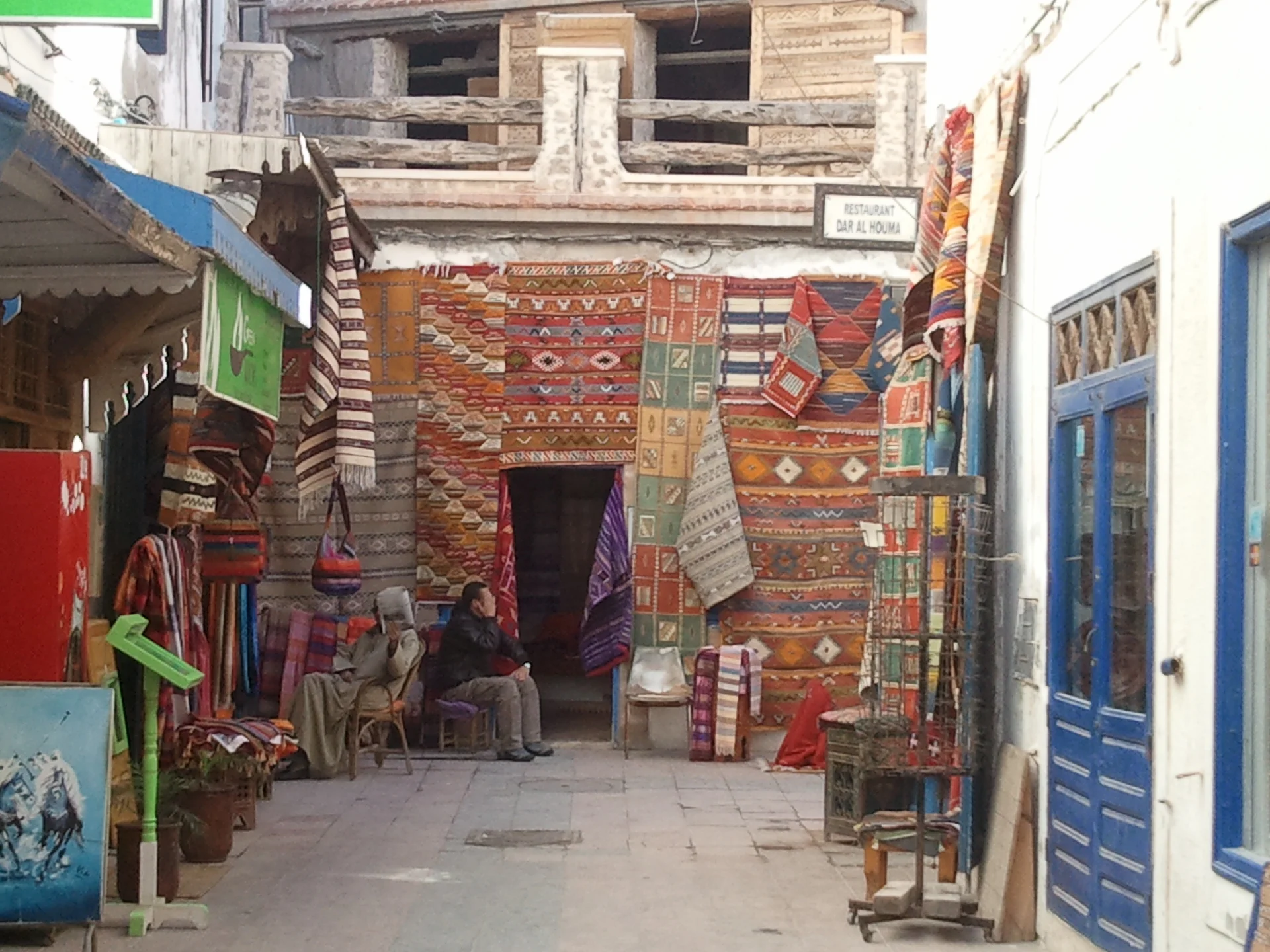
A UNESCO World Heritage site, the medina is the beating heart of the city. Forget the intensity of other Moroccan souks, because wandering is easy here. It is a pleasure to get lost in the maze of alleys where the white walls are punctuated by the intense blue of doors and shutters. Each turn reveals a new artisan workshop, a folk art gallery, or a hidden cafe.
The Mellah, the former Jewish quarter, offers a quieter and slightly more weathered atmosphere, serving as a testament to a rich and cosmopolitan history. The primary craft here is working with thuya wood, a conifer with a woody and peppery scent that artisans use to create objects of remarkable finesse.
Friendly advice: Do not stick only to the two main thoroughfares of the medina. Venture into the side alleys and look up to admire the details of the doors and windows. That is where you will find the most authentic scenes of daily life.
The constant spectacle of the ramparts and the fishing port
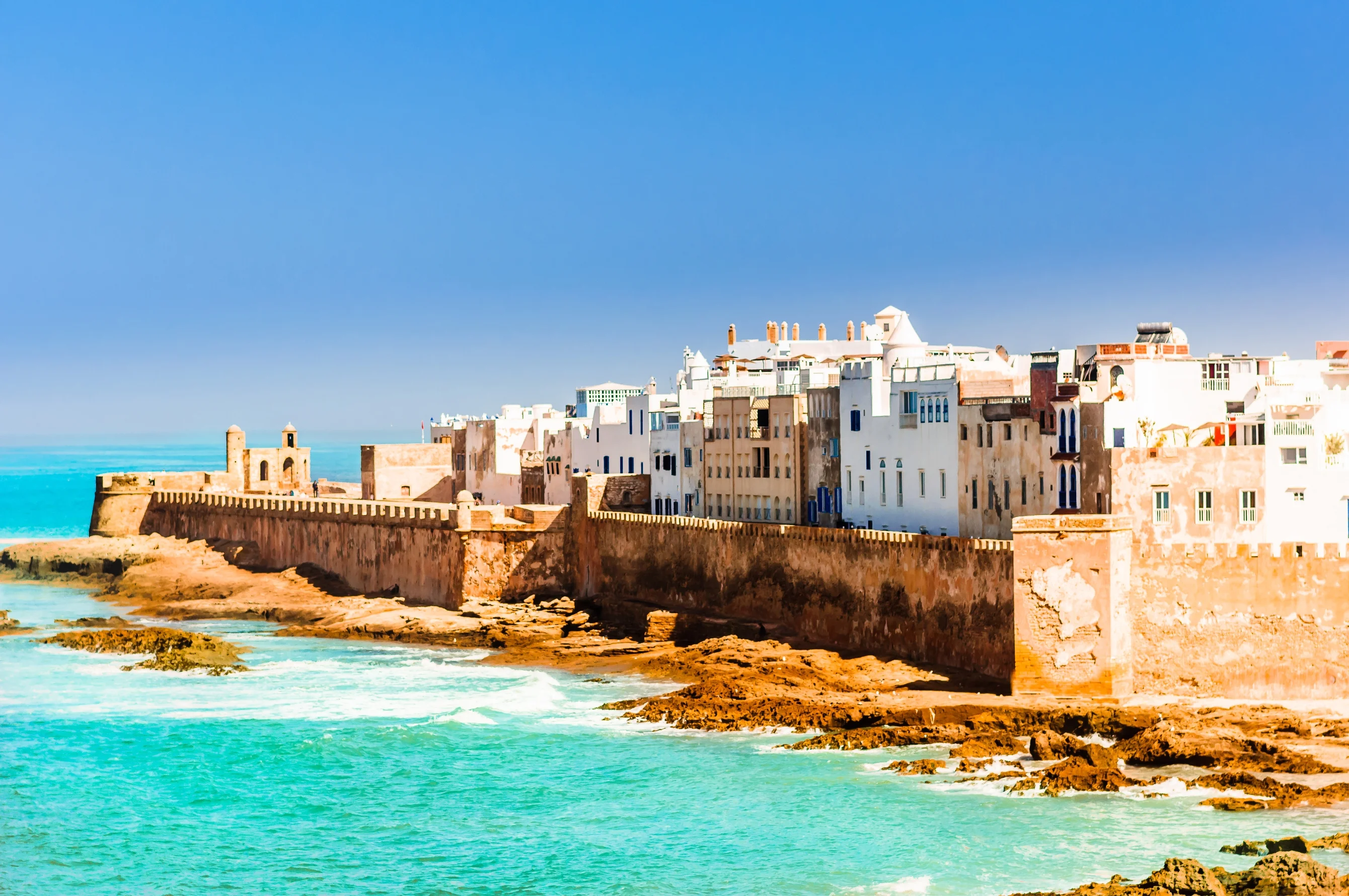
To understand the soul of the city, you have to get high up on its fortifications. The Skala de la Kasbah, the sea wall, offers a spectacular walk with its bronze cannons pointed toward the ocean. It is the go-to spot at the end of the day to watch the waves crash against the rocks and the sun disappear over the horizon.
Below, the fishing port is an open-air theater. Activity is frantic in the mid-morning when the famous blue boats return. Fishermen unload their catch in organized chaos, seagulls dive to grab their share of the spoils, and cats wait patiently for their turn. It is a lively, noisy, and incredibly photogenic scene.
Friendly advice: For lunch, buy your fish directly from the stalls at the port market. A few feet away, small food stands will grill it for you on the spot for a modest price. It is hard to find something fresher or more local.
When the wind invites you to ride the waves and escape
The long sandy beach bordering the city is the kingdom of the wind. It is one of the most famous spots in Morocco for kitesurfing and windsurfing, especially in summer when the trade winds blow hard. Many schools offer introductory lessons for beginners.
Even if you are not into water sports, the beach is a great place for a walk. You will see camels and horses for sunset rides, locals playing pickup soccer matches, and walkers enjoying the vastness of the space. For a wilder vibe, an excursion to the village of Sidi Kaouki, 20 minutes south, is an excellent option.
Where to eat and drink in Essaouira?
The star of local gastronomy is undoubtedly the fresh fish: sardines, sea bream, and squid are all delicious simply grilled with a drizzle of olive oil. Also try the tagines, which are often lighter and more subtle than those found inland. The region is also the cradle of argan oil, which you will find in cosmetic or food versions, perfect for enhancing a salad.
In the evening, rooftop terraces of riads offer a magical setting for dinner. Many small restaurants in the medina offer home-style, tasty cooking in an intimate atmosphere.
Where to sleep in Essaouira and the surrounding area?
The most authentic experience is staying in a riad in the heart of the medina. You will be immersed in the atmosphere of the old town, with its sounds and charm. Many have terraces offering magnificent views. For more quiet, space, and direct access to the beach, several hotels are located just outside the ramparts. These are often better suited for families.
How to get to and around Essaouira?
The city has its own airport (ESU) with direct flights from a few European cities. Otherwise, the most common option is to land in Marrakech (RAK) and take a bus (about a 3-hour trip). The Supratours and CTM companies are reliable and comfortable.
Once you are there, the medina is explored exclusively on foot, which is part of its charm. To get to surf spots or explore the surrounding area, the small blue taxis are very affordable.
When to go?
Spring and autumn are perfect, offering generous sunshine and moderate wind. Summer is the high season for kitesurfers because the wind is strongest then, but it can be too powerful for those who just want to relax on the beach. Winter is mild but can see a few rain showers, and the city is very quiet during that time.
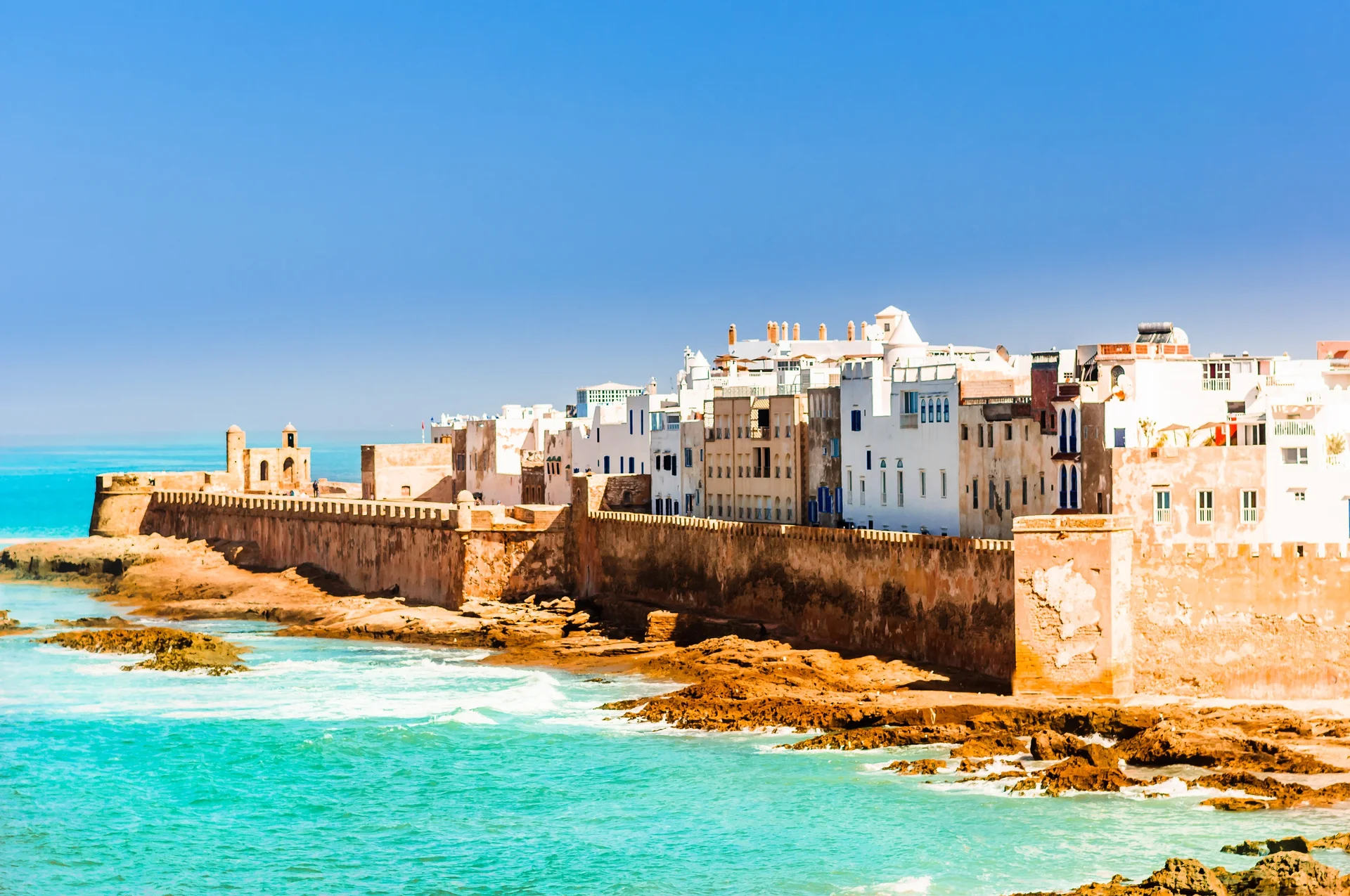
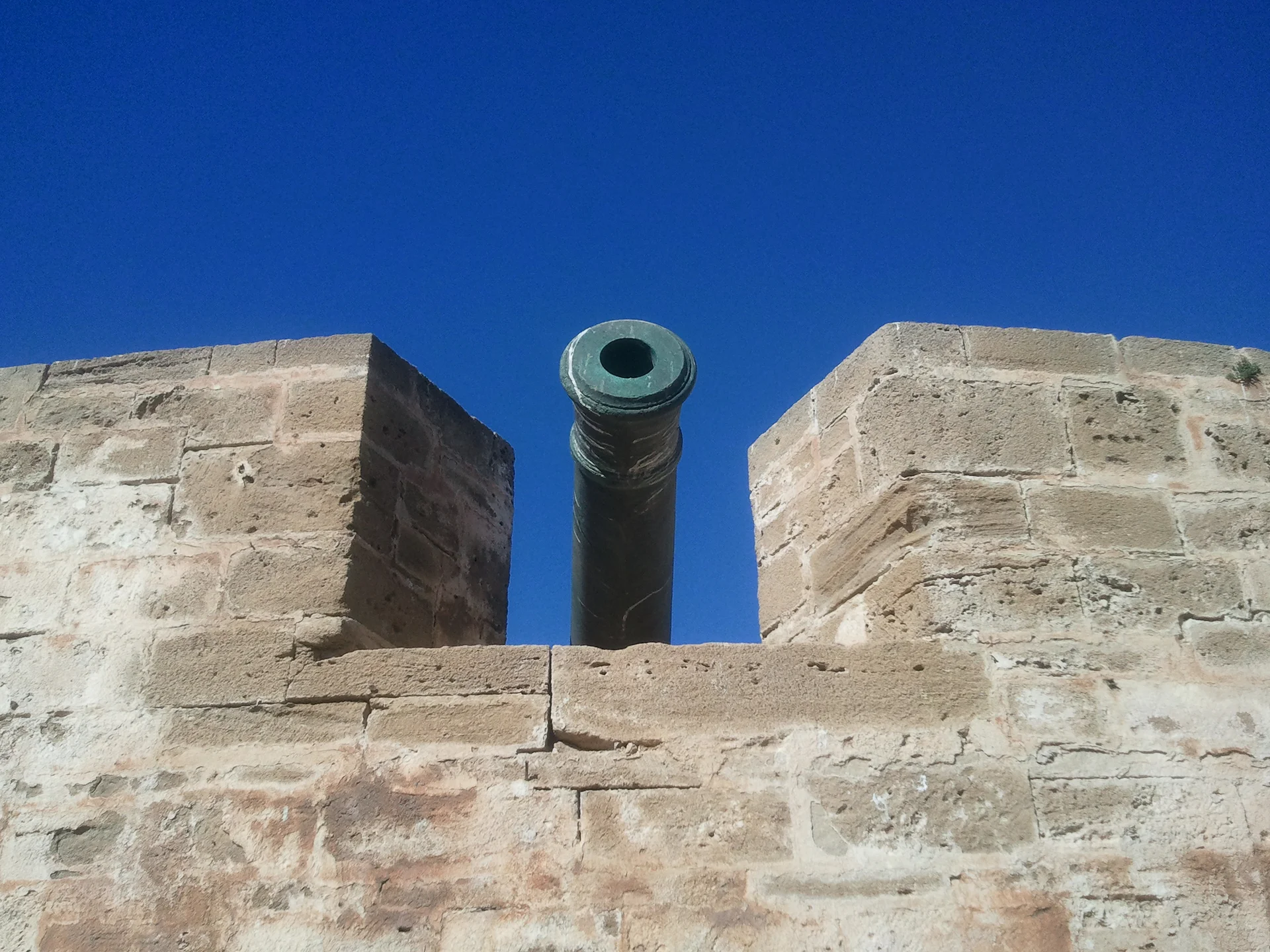
Essaouira, once called Mogador by the Portuguese, is a city located on the Atlantic coast of Morocco, west of Marrakech. The old town (medina) is protected by ramparts that date back to the 18th century. Adorned with old brass cannons featuring Portuguese inscriptions, they offer an incredible view of the Atlantic Ocean.
Essaouira is the city of painters. There is even the "Essaouira school," whose most iconic contemporary artists, Mohamed Tabal, Saïd Ouarzaz, Houssein Miloudi, and Mohamed Zouzaf, were honored by the Institut du Monde Arabe in the winter of 2015.
Essaouira is also known for the Gnaoua Festival.