
Once upon a time, there was San Francisco, or rather, a maze of hills and inclines, each more dizzying and outlandish than the last. They’re so steep that, watching from your living room TV or the big screen at the cinema, you might think the whole city is just a big joke cooked up by Hollywood studios!
That was actually my first impression when I discovered San Francisco in the famous American film "Mrs. Doubtfire"! Stunned and amazed by the city's completely implausible and improbable urban layout, I initially thought the movie's set was a product of some "eccentric" Hollywood producer's imagination, built from scratch to add to the film's quirky, whimsical character!

But in reality, it wasn't a joke... After asking my parents, who were watching the movie with me, I got confirmation that this scenery really existed and wasn't some California studio trickery. It was at that exact moment I told myself that when I grew up (I was only 6 at the time), one of my first missions would be to see the madness of this city with my own eyes.
And that day finally arrived during my first road trip with my partner through the American West. San Francisco was our second stop after Los Angeles (I tell you all about our LA leg in this article), and we had planned a two-day stay, which, looking back, was unfortunately too short to truly dive deep into this city filled with so many treasures and surprises!
So, for the curious among you, follow the guide, and let’s see what San Francisco is really made of!
But wait a minute, before we go any further with our dissection, let’s get a little more familiar with this colorful specimen so we can appreciate all its charm, authenticity, and, above all, its unusual character!
A bit of history...
Far be it from me to be boring or tedious, but I thought a quick historical recap was necessary to better understand the very essence of this unconventional metropolis, its mentality, its urban planning, and its population...
First off, founded in 1776 by Spanish missionaries from the Viceroyalty of New Spain (known today as Mexico!), the city was named in honor of the patron saint of those religious men, Saint Francis of Assisi (in Spanish: "San Francisco de Asís").
The Gold and Silver Rushes
The small village really took off on January 24, 1848, when, 220 km away, James Marshall (an itinerant worker) brought the first gold nugget to his boss, the Swiss merchant John Sutter.

That was the start of the Gold Rush and the San Francisco myth (1848-1849). In barely two years, the land was overrun by adventurers, miners, the unemployed, ladies of the night, sailors, merchants, and scoundrels of every stripe from all over the world. It became so wild that it earned the label "Barbary Coast," referring to its rough, turbulent nature where all sorts of excesses (prostitution, gambling, opium, corruption) flourished.
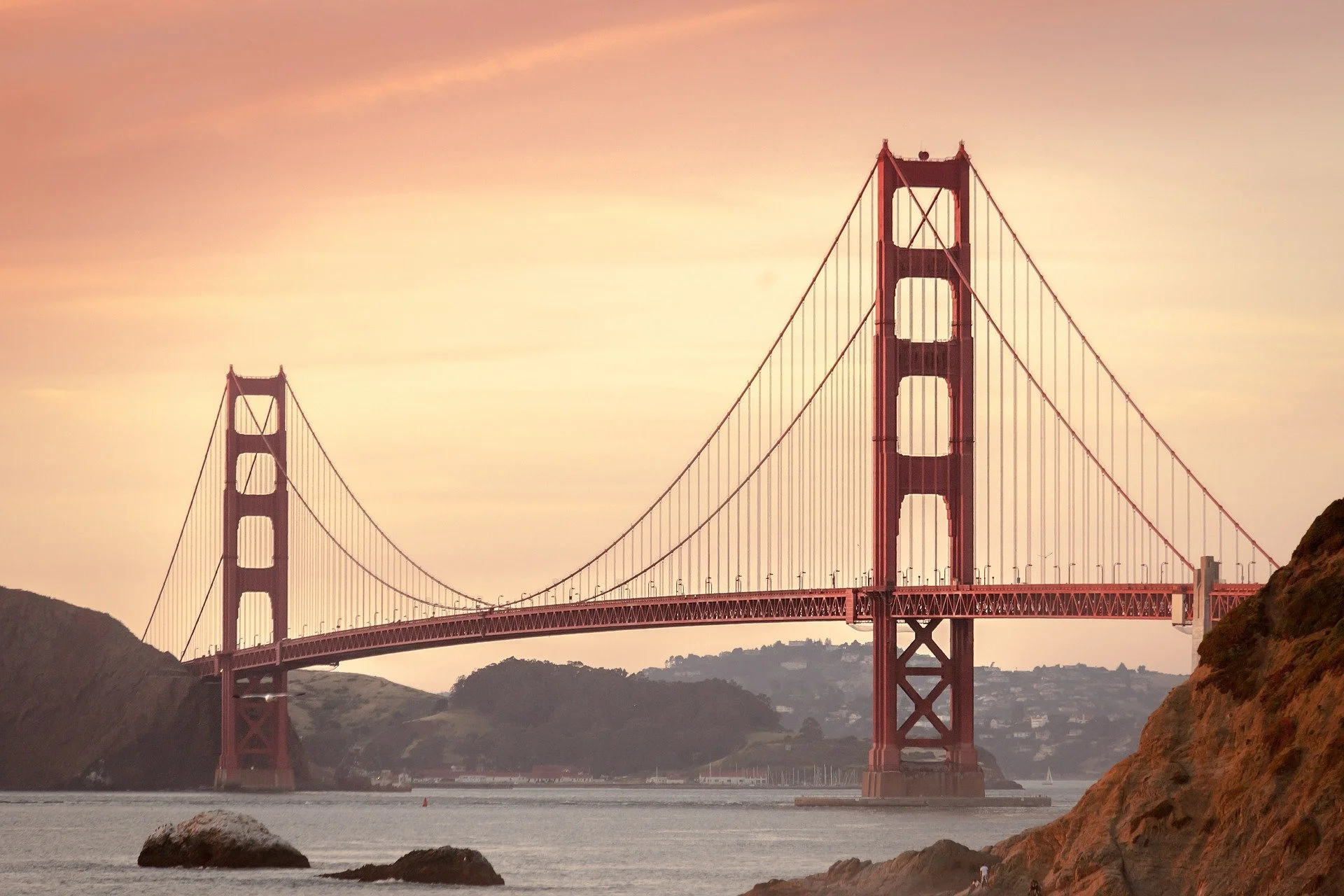
By the way, it’s from this era that its legendary red-orange bridge got its famous name, "Golden Gate Bridge." Not because it’s built of gold, but because it leads directly to the "land of gold"! A gold mine that was exploited with urgency, though it eventually dried up, as all good things must!
Luckily, about a decade later, the fever returned with the discovery of silver deposits in the Sierra Nevada, attracting a host of investors and professional miners. San Francisco became a "boomtown," with its population multiplying by 25 between 1848 and 1849, and by 150 between 1848 and 1870.
The arrival of the transcontinental railroad
This growth was made even easier when the railroad arrived in 1860, linking the Atlantic and Pacific coasts in just six days, compared to two months previously! (On that note, if I may add a quick side note, thousands of Chinese workers were recruited for the dangerous construction of what was called the "iron horse," which partly explains the large Chinese community in San Francisco today).

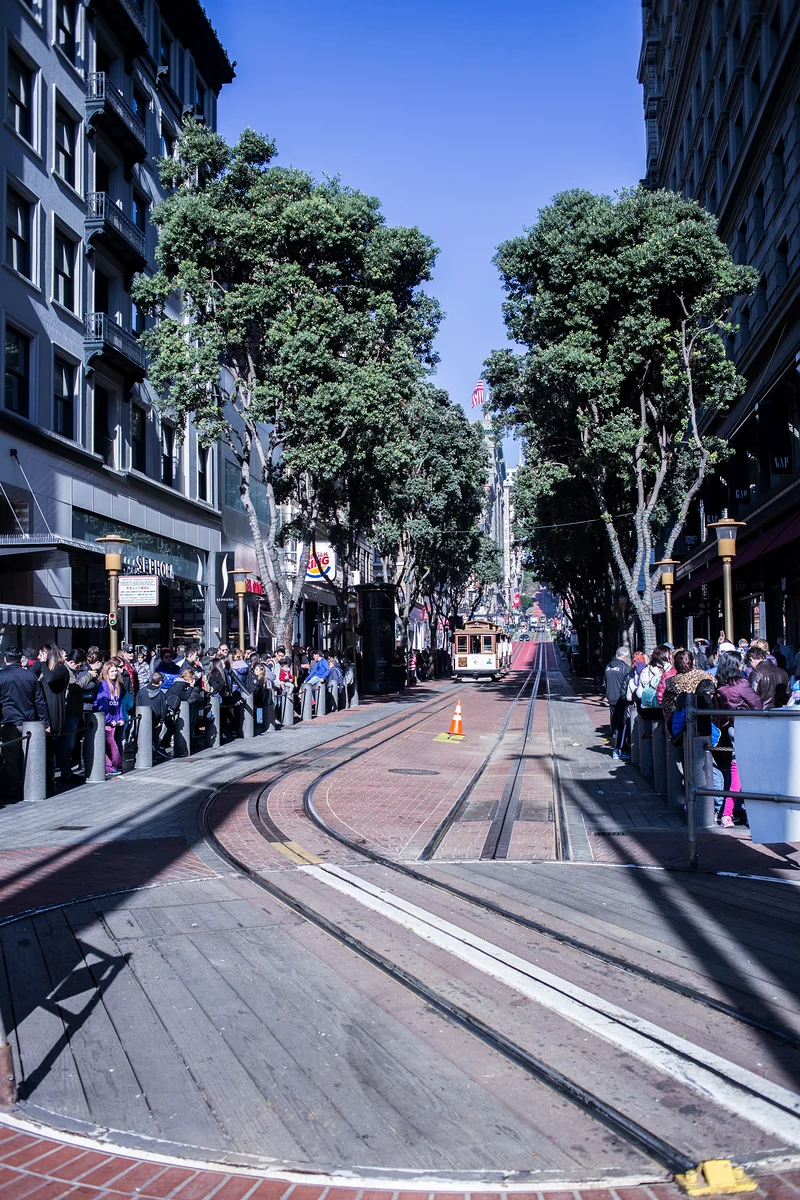
It was a true revolution for the city, which gradually lost its "Far West" vibe to take on the appearance of a more serious metropolis with banks, shops, and offices. Furthermore, the "cable cars" began climbing the steep streets, and the Nob Hill neighborhood took on a certain pomp and solemnity with the construction of lavish wooden Victorian mansions by the first railroad and business magnates.
The famous San Francisco we know today, with its Victorian houses, cable cars, dynamic energy, and status as a symbol of tolerance and the emancipation of minorities, makes perfect sense when you look at this tumultuous past, oscillating between a somewhat "debauched" and "liberated" city and a refined, bold center of business.
The 1906 earthquake
And don't be surprised if you don't find (or find very few) historical monuments in San Francisco, because in April 1906, a powerful earthquake measuring 7.1 on the Richter scale destroyed 80% of the city.
Divine retribution to punish a decadent city given over to the demon of vice?
While that was the theory of some religious and puritanical figures of the time, we prefer the more scientific and rational version, which looks at the city's geographical location to explain this natural disaster.
A bit of geography...
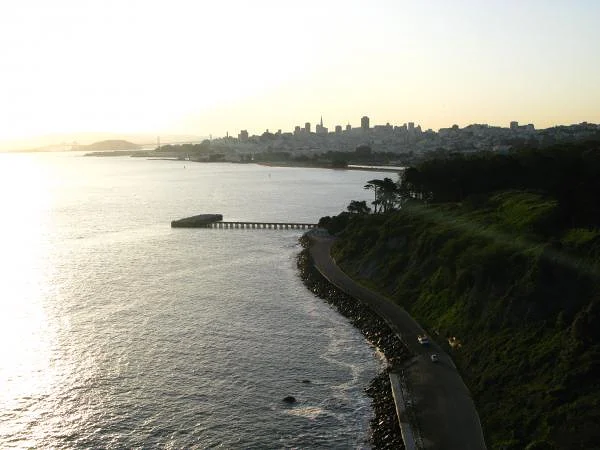
First, the city nicknamed, not without reason, the "City by the Bay" is located at the northern tip of the San Francisco Peninsula, surrounded by water on three sides (to the east by San Francisco Bay; to the north by the Golden Gate Strait; and to the west by the Pacific Ocean), allowing it to boast sumptuous landscapes and dream beaches that have nothing to envy those of Los Angeles.
But while this water-surrounded territory has the look of an "island paradise," it’s important to note that its geography also makes it a geologically inhospitable, and even risky, territory for the entire population.
Starting with its coastline, which is particularly rugged due to the very strong waves and winds coming from the West.
Furthermore, the city is very frequently engulfed for days at a time under a thick cloud of mist (the famous "fog"), caused by the thermal difference between the overheated California land and the cold Pacific waters, sometimes even erasing our Golden Gate Bridge. It’s easy to see why San Francisco earned its other nickname: "Fog City"!

Finally, San Francisco, like all of California, is located on the great San Andreas Fault, born where the Pacific and North American tectonic plates are gradually separating, making this region particularly unstable and prone to numerous earthquakes and fires (like the 1906 earthquake I mentioned earlier).
In fact, a major earthquake expected in the Bay Area within the next 30 years, nicknamed the "Big One," is a constant source of worry, making this little corner of California a real "ticking time bomb"!
That’s why you absolutely must discover this city before it disappears completely and permanently from the map of the United States!
So, to do that, several options are available to you:
How to get around San Francisco
By bike, on foot, or by public transport
If you read several blogs, many will tell you that it’s very enjoyable to explore the city by bike, public transport, or simply on foot, because San Francisco is a relatively condensed metropolis where all the major points of interest are close by.
Furthermore, they say this is an excellent way to truly soak up the unique and exceptional atmosphere that reigns in the city, especially since it has an excellent public transport network (buses, electric buses, streetcars, "cable cars"...).

While they aren't entirely wrong, they aren't entirely right either. Because, first of all, given the rather impressive incline of the streets, your calves and feet are likely to take a hit very quickly and you might regret it!
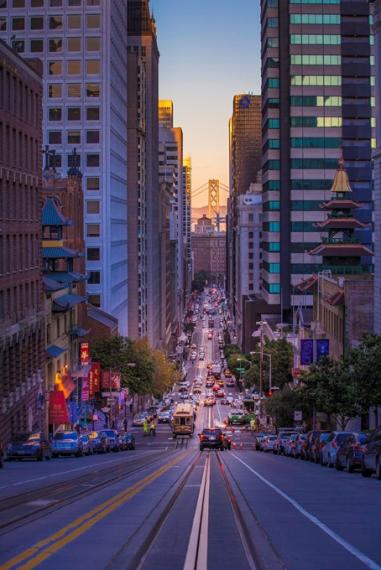
Moreover, if you want to get away from the center or even just drive the "49-Mile Scenic Drive" (a tour through the city that spans about 49 miles and traces a superb route to visit the most beautiful parts of San Francisco), a car proves to be particularly useful, or even essential, compared to a simple pair of hiking boots!
By car
Personally, every time we go to the United States, my partner and I have a habit of renting a car on the Internet several months in advance to take advantage of better rates. For this, we use the site BSP Auto, which is an excellent price comparison tool that we have never been disappointed by so far.
So, a quick tip (and this is no joke): if you rent a car in San Francisco, know that when you park on a steep street, it is mandatory to turn your wheels toward the curb so that the vehicle doesn't roll down the street if the handbrake fails!
This rule has been in the California Vehicle Code since 1959, and if you don't follow it, expect to pay a fine, whether you’re a tourist or not!
So, to summarize, the choice of how you get around San Francisco will depend on your itinerary, your physical condition, the length of your stay, and, above all, your preferences. The wisest choice is probably to mix the two options we just looked at so you don't feel frustrated or have any regrets!
With these few details and information in your pocket, I think we are ready to set off and discover "SF", a nickname for San Francisco that the locals will gladly let you use. But, and this is a piece of advice, don't let anyone catch you calling the city "Frisco" or "San Fran," because you risk having your integration mocked by the most puritanical and chauvinistic residents, who can't stand those two nicknames, even if the City by the Bay has a reputation for being the most tolerant in the United States!
DAY 1
Before heading to San Francisco, I made it a point of honor to absolutely see three things that were very close to my heart: the Golden Gate Bridge, the Painted Ladies, and those famous steep streets!
Three things that were so symbolic in my eyes that I couldn't spend our first day in the city without making a detour to see them.
So, if you’d like, let’s head off without further ado to meet this red giant that seems to have emerged straight from the sea: the Golden Gate Bridge!
1, The Golden Gate Bridge and its neighbor Fort Point

Attacked by an octopus rising from the depths (It Came from Beneath the Sea, 1955), shaken by an earthquake (Superman, 1978), torn apart by a mutant (X-Men: The Last Stand, 2006), bitten by a giant shark (Mega Shark vs. Giant Octopus, 2009), or leveled by a tsunami (San Andreas, 2015), the Golden Gate Bridge has made the rounds on our small screens and in cinemas around the world. But on this day, it was no longer fiction, it was reality. It was there, in front of us, for REAL, and the only word that came to mind was: "MAGICAL"!
My wide-eyed gaze wasn't enough to take in the full scale of this 2.7 km long colossus that overlooks the Golden Gate, the strait connecting San Francisco Bay to the Pacific Ocean, where six lanes of traffic jealously share space with two pedestrian and bike paths, much to the delight of us tourists!
Because, indeed, this layout allows you to stop a third of the way across the bridge and admire the breathtaking view it offers of San Francisco, but also gives you a slightly more chilling view of the former Alcatraz prison!


One thing is for sure: whether you are on it or at its base, this iconic monument completed in 1937 is undoubtedly an architectural and technical masterpiece. It remains and will forever remain the quintessential emblem of the city, THE photo to take, the snapshot we’ll all keep in our minds, share with friends and family; in short, the indelible image of a trip to the heart of an iconic city.

And do you want a little anecdote? It’s said that the steel wires that make up the cables of this giant of San Francisco Bay could wrap around the Earth three times!
That should confirm the spectacular and immeasurable nature of the site, in front of which something happens, an inexplicable "je ne sais quoi" that will leave a mark on you for life!

And as if to protect and watch over what is considered "one of the seven wonders of the architectural world," an old military fort built in 1850, right in the middle of the Gold Rush era, awaits every visitor at the foot of the Golden Gate Bridge. It is Fort Point, which, even though it wasn't built to protect the famous bridge (as it is much older), was still intended to defend San Francisco Bay and its commercial and military installations. Fortunately for the Americans, the fort was never used, and the cannons that adorn its upper level never had to fire a single shot!
In fact, given the obsolescence and disuse of the site, the cannons were removed after the Civil War, and there was even talk of razing the fort to facilitate the construction of the future Golden Gate Bridge. But fortunately for us and the entire American nation, the engineer behind the bridge itself, Joseph Baermann Strauss, firmly and fiercely opposed the destruction of the fort because he considered it a unique example of architecture. And having personally visited this historical monument, one completely understands the architect's stubbornness, and we agree with him entirely!

Speaking of architecture, let’s continue our journey to one of the most photographed places in San Francisco: the Painted Ladies!
2 - The Painted Ladies

If, like me, you are passionate about the style of American houses, then it will feel like Christmas come early when you arrive at 710-720 Steiner Street, in front of this row of seven Victorian houses built in a stair-step pattern, with the downtown skyscrapers as a backdrop, creating a striking contrast for the eyes!
Because, indeed, while the buildings in the background highlight the bubbling, bustling character of the city in a dominant gray color, the Painted Ladies, painted in bright colors to accentuate their lace-like architectural details, seem to stop time and remind you of the dollhouses of your childhood.
A true delight for the eyes, so much so that you could spend hours admiring these facades, which reflect all the delicacy and refinement of the Victorian style.

It took a lot of strength for my partner to drag me away from this place, where I took perhaps hundreds of photos so that no detail would escape me, so that I could keep a real trace of the magic that had just happened before my eyes, and to remind myself that it wasn't a dream!
But while leaving this majestic place was truly heartbreaking, fortunately for me, an unexpected comfort awaited me a few blocks away. It turns out that other houses of the same style, as well as Edwardian style, 48,000 to be exact, were built in San Francisco between 1849 and 1915 during its boom at the end of the 19th century!
What incredible happiness that was for me... But also what a misfortune and ordeal it was for my partner, who would have to stop at every street corner so I could immortalize the beauty and majesty of these houses, each more beautiful than the last! But, as the famous proverb says: "When you love, you don't count the cost"!
And I wasn't counting the time in these multiple steep streets that we were discovering for the first time, with great astonishment at how significant the incline was! On that note, our calves still remember it... But never mind the suffering in the face of the exceptional and almost surreal scenery that passed before our eyes, which seemed to whisper in our ears: "admire me, contemplate me, and explore me again and again"!
Besides, why stop while we're on a roll, knowing that another major surprise awaited us a few blocks away: Lombard Street, or the crookedest street in the world.
3, Lombard Street
Once upon a time, there was a little stretch of street barely 200 meters long, but which had managed to forge a global reputation, not for its historical value, its buildings, or its residents, but just for its shape and its eight legendary turns! Ladies and Gentlemen, I have the honor to present: Lombard Street!

Laid out in 1922 by landowner Carl Henry in the Russian Hill neighborhood, between Hyde Street and Leavenworth Street, it is said to be the most winding street in the world, with eight very tight turns.
But why such a whim?

In reality, this somewhat strange design was supposedly implemented to reduce the original 27% incline (too steep for vehicles or walking) to 16%.
And the gamble paid off, given the number of cars that never stop trying to drive down it and the millions of tourists who flock there every year!
But while this highly publicized street, known the world over, attracts many curious onlookers due to its surprising and disconcerting tortuosity, it is also highly appreciated for its atypical character and original decor, rolling out a carpet of red bricks on the ground, offering visitors flowerbeds and greenery in every loop, and providing a breathtaking view from its summit.

In short, enough to make your head spin in many ways!
And our heads didn't stop spinning, so enchanted were we by the treasures discovered since the morning!
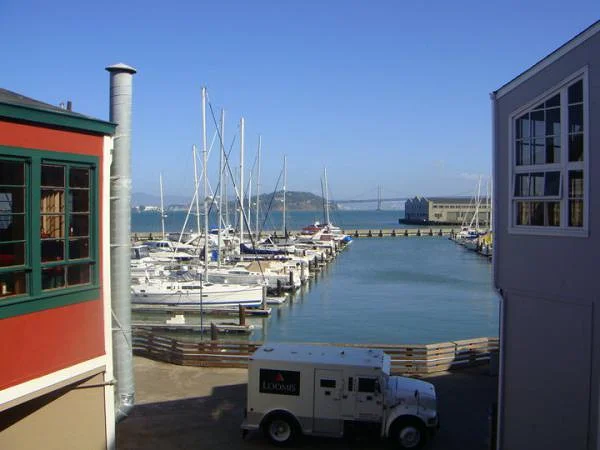
Besides, to savor these delicious memories accumulated during this first day, what could be better than treating yourself to a little relaxing break at the foot of the Bay Bridge, another extraordinary bridge in the city that, like its neighbor in the northwest of San Francisco, is really worth lingering over for a delicious coffee!
4, The Bay Bridge

If its red-orange companion is easily spotted from afar and in the middle of the San Francisco "fog," the Bay Bridge proves to be a bit more discreet with its blue-gray color that tends to blend delicately into the blue California sky.
But just because it’s more understated doesn't mean it’s less interesting. With its two distinct levels and its two stacked bridges (each dedicated to one direction of traffic: the lower level for going toward Oakland and the upper for returning to San Francisco), the Bay Bridge is a true architectural feat that deserves to be crossed at least once in your life!
That’s exactly what my partner and I did to reach Oakland after an 8 km crossing suspended in the void, making this bridge one of the longest in the world and perhaps the most anxiety-inducing and spectacular of all those I’ve crossed so far!

So, in conclusion, if I had to say a quick word in comparison with the Golden Gate Bridge, I would say that the Bay Bridge has no reason to "blush" in front of its sidekick!
It was like this, savoring our "caramel macchiato coffee" while watching the sun set over this exceptional Bay Bridge, that this first day, rich in emotions and full of memories, came to an end. And, as if to say goodnight, this bridge with its 25,000 LEDs lit up in a burst of a thousand and one lights, leaving us with stars in our eyes before going to sleep.

DAY 2
If our first day was devoted to the great monuments of San Francisco that make it a legendary city, this time I suggest we dedicate this second day to the very diverse neighborhoods of the metropolis, which will also know how to seduce and surprise you, take my word for it!
Starting with Haight-Ashbury, the most popular hippie neighborhood in the city.
1, Haight-Ashbury

Located at the intersection of Haight and Ashbury streets (hence its current compound name), it was in this legendary neighborhood that the hippie movement was born in the early 1960s, a time of non-conformism, carefree attitudes, and pacifism, with free love, joints, and concerts galore featuring headliners like the famous Janis Joplin, Jimi Hendrix, and Jefferson Airplane.
While that era is long gone, there are still vestiges of this liberated and quirky time in the neighborhood, including very colorful murals, thrift stores, tattoo and piercing parlors, vinyl shops, and everything that makes up hippie culture. In short, a must-see for music lovers and vintage enthusiasts.


But while this neighborhood should be one of your priorities during your stay in San Francisco because of its originality, I must warn you about one point. After Tenderloin, Haight-Ashbury is known as the most dangerous neighborhood in San Francisco, with its 7,000 homeless people lying on the ground, in front of whom you won't know how to react. I therefore advise you to avoid this neighborhood at night and plan your visit for earlier in the day instead.
Just as colorful and unbridled, I now suggest we set off to discover Castro, THE gay neighborhood of San Francisco, which is also highly recommended to visit during the day for those with more sensitive souls...
2, Castro
The headquarters of Harvey Milk, a fervent activist for the homosexual cause who was assassinated in "SF" in 1978, I present to you the first gay neighborhood of San Francisco and one of the first in the United States to emerge in the 1970s: Castro. Here, many rainbow flags (the famous "rainbow flag") await every traveler at the turn of a balcony, a traffic light, an electric pole, or a crosswalk, as if to welcome anyone who ventures there.

I say "ventures there" because it’s better not to be faint-hearted when you enter this neighborhood, where it’s common to come face-to-face with some "specimens" in almost Adam and Eve attire!
But don't worry, this neighborhood with its very pretty Victorian homes and numerous boutiques and cafes lining the streets is considered very safe, it’s even one of the safest in the city for shopping!
So, above all, don't deprive yourself of taking a little detour through this very pleasant and friendly neighborhood during the day, especially since it contains several gems, including the Castro Theatre, a magnificent baroque-style movie theater inspired by Spanish colonial architecture, where you can attend a screening for a little over 10 dollars and discover a sumptuous interior.

Furthermore, you will find in this neighborhood, specifically at 3841 18th Street, San Francisco, CA 94114, the very famous "Blue house leaning against the hill" that the Frenchman Maxime Le Forestier sings about in one of his very first hits, "San Francisco" (1972). It was put up for sale in early 2020 for the modest sum of 3.5 million dollars (about 3 million euros), and a commemorative plaque in tribute to the famous singer and his song was offered to the owners to remind Americans why this house is so important to us French people.
So, what do you say, dear readers?
Well, I’ll let you think about it while we head this time toward Union Square, where a much more hectic and agitated atmosphere awaits you than in this quiet, rainbow-colored neighborhood.
3, Union Square
If you love the hustle and bustle of big cities, skyscrapers, restaurants, department stores, chic boutiques, and, above all, if you want to taste a slice of the best cheesecake in the United States at the famous Cheesecake Factory, which you have certainly heard of in the famous American series "The Big Bang Theory", then you are in the perfect place to treat yourself, both in terms of shopping and taste. Because, indeed, Union Square is known for being the temple of fashion and one of the most important shopping centers in the country!
So, I have only one thing to say to you: "Get your wallets ready and treat yourselves"!
But Union Square isn't just about boutiques. It’s also a large esplanade, in the center of which stands an immense 30-meter-high Corinthian-style column topped by a bronze statue of the goddess of victory. It features an ice rink and a large Christmas tree in winter, taking on the appearance of Rockefeller Center in New York at Christmas!

It’s also the place where, if you feel like it, you can hop between two errands onto one of those iconic old streetcars (or if you prefer, the "cable cars") that regularly cross Union Square.

Finally, Union Square is also famous for housing in its depths the first underground parking garage in the world, completed in 1934!
So, whether you are on foot or by car, you have no excuses, gentlemen, not to invite your sweetheart to go shopping in this prestigious and essential place in San Francisco!
Personally, my partner didn't have the patience, as this neighborhood, teeming with pedestrians, tourists, and businessmen, reminded him too much of the stress of large European cities. That’s why he decided to hastily drive around the large Union Square plaza and head straight into a completely different atmosphere: Chinatown, where a guaranteed change of scenery awaited us.
4, Chinatown
Comments (0)
No comments yet. Be the first!