
Visiting Sacromonte Abbey, perched on the mount of martyrs and mysteries
High on Mount Valparaíso, facing the Alhambra, a four-century-old abbey overlooks Granada from its sacred promontory. Its stone walls safeguard one of the most controversial discoveries in Catholic Spain alongside timeless views. The quiet of the cloisters contrasts sharply with the tumultuous history that brought the complex into being.
Why does Sacromonte Abbey still fascinate?
The story starts in 1595 within abandoned Roman kilns. Workers unearthed the bones of San Cecilio, the first bishop of the Roman city of Ilíberis, alongside his companion martyrs. Alongside the relics came the famous libros plúmbeos, lead plates engraved in Arabic recounting a legendary version of Christian apostolic origins in Granada.
The find touched off a wave of deep religious fervor. More than twelve hundred crosses line the path leading up to the caves. Archbishop Don Pedro de Castro decided to build a monumental abbey on the site. The original plan, modeled after the Escorial and entrusted to the Jesuit architect Pedro Sánchez, called for four cloisters and a grand basilica. The prelate's death in 1623 scaled back those grand ambitions, yet the completed complex remains striking.
The Santas Cuevas, a subterranean journey through faith
The visit begins with a descent into the sacred caves, the spiritual heart of the abbey. A staircase leads down into the cool, dim light where the relics were found. The rough stone walls still retain the marks of their Roman past.
Chapels carved into the rock
The Chapel of the Dolorosa opens the underground tour. Further along, the Chapel of Stone preserves the altar where, according to tradition, the apostle Santiago celebrated the first Christian service in Spain. Wax figures of San Víctor and San Leoncio stand guard at the entrance. Behind an iron grille, the final crypt protects a bust of San Cecilio and the cross that San Juan de Dios carried while begging through the streets of Granada.
The walls feature painted stars, mysterious circles, and the founder's coat of arms. These symbols bear witness to the devotion that turned simple kilns into a revered sanctuary.
The artistic heritage of the abbey
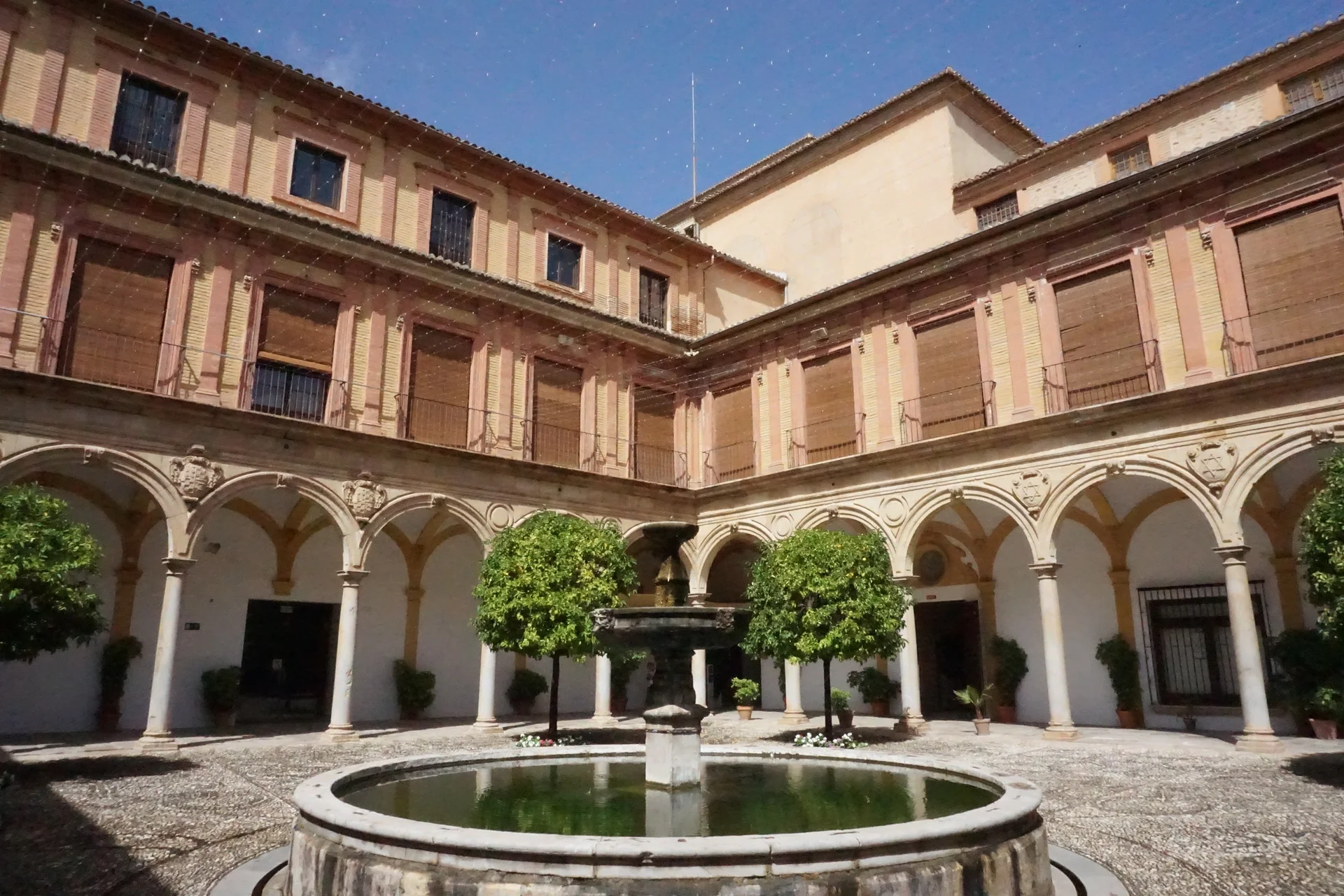
The claustro is the only one built of the four originally planned. Its galleries feature Tuscan columns supporting round arches. In the spandrels, the Castro coat of arms alternates with the Star of Solomon, the emblem of the abbey. A cobblestone courtyard surrounds a central fountain, while the brickwork of the upper level adds warmth to the architecture.
The museum and its treasures
Opened in 2010, the museum displays exceptional works across four rooms. Visitors find the only Goya painting on public view in Granada, a portrait of Francisco Saavedra. The Nuremberg Chronicles by Hartmann Schedel sit alongside a world map by Ptolemy and Arabic manuscripts. The medical treatises of Averroes and an autograph hymn by San Juan de la Cruz rank among the highlights. The controversial libros plúmbeos are also on display, recalling the intense polemic that stirred the Church for decades.
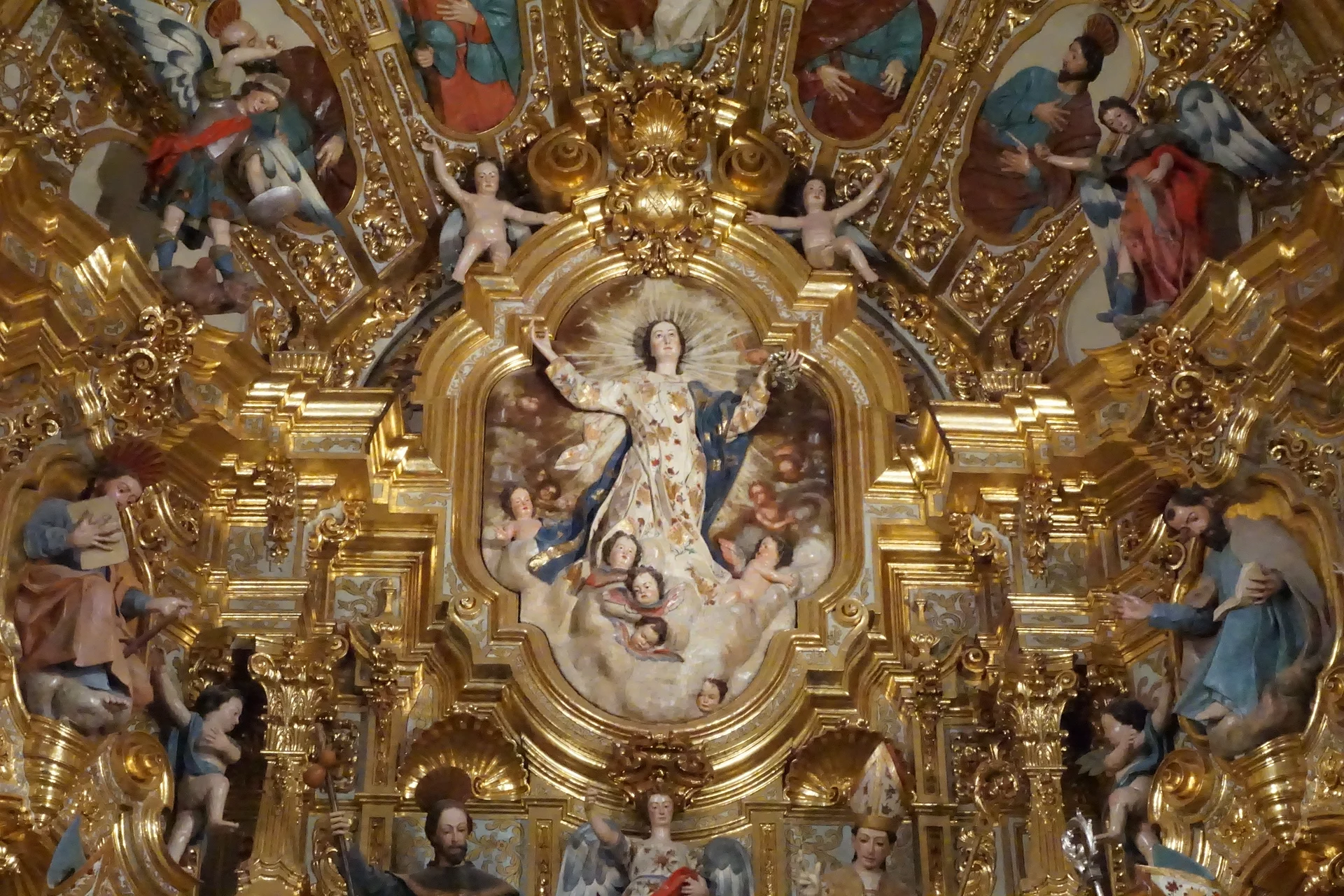
The collegiate church houses the Cristo del Consuelo, known as the Christ of the Gypsies, carved by José Risueño in 1695. This Holy Wednesday processional image embodies popular devotion in Granada. The high altarpiece, attributed to Blas Moreno, shelters the ashes of the martyrs beneath sculptures representing them.
Friendly tip: Head up in the late afternoon to catch the golden light hitting the Alhambra from the abbey esplanade. The panoramic views stretch across the Sierra Nevada, the Darro valley, and the entire city. Walk back down via the Camino del Sacromonte, a thirty-minute stroll winding through the Gypsy neighborhood and the Albaicín.
A living institution looking toward the future
Unlike many historic monuments, the abbey remains active today. A community of canons lives on-site, keeping a four-century tradition alive. Sunday mass at 12:30 brings together local parishioners and pilgrims. Back in the 19th century, Canon Andrés Manjón founded the Escuelas del Ave María here to educate the most disadvantaged Gypsy children of Sacromonte.
The complex also preserves the remains of the Colegio Viejo de San Dionisio Areopagita and the seminary that served as an intellectual beacon well into the 20th century. Pope Benedict XIV granted the institution chairs in law, ecclesiastical history, and Oriental languages. Its former students went on to achieve prominence across Spain and Latin America.
Opening hours
*Information subject to change

This beautiful abbey is a bit far from the city center, but it is worth the trip. Wear good shoes for the walk up, or take the bus to get closer. I loved the cloister, it is very peaceful, and the view over Granada is lovely.
But my most memorable takeaway is the walk through the sacred caves, where martyrdoms took place. These caves house surprising underground chapels, including the one of the Piedra, which contains only a large stone. According to the legend, women just have to kiss it to find a husband.