
San Jerónimo Monastery: The Fortress of the Conquerors
The San Jerónimo Monastery stands in the center of Granada as a physical record of the Christian victory in Spain. Its stonework holds a history that predates the fall of the Nasrid kingdom. Within its Renaissance walls rests one of the most significant military strategists in Spanish history.
Why visit the San Jerónimo Monastery?
Founded by the Catholic Monarchs in 1492 during the siege of Granada, this monastery predates the end of the Reconquista. Construction began in 1504 using stone salvaged from the old Arab gate of Elvira, a deliberate symbol of a changing era. Diego de Siloé took over the project after the death of Jacopo Florentino in 1526, pivoting the original Gothic design into a Renaissance masterpiece.
What was intended as a modest monastery became a grand pantheon when María Manrique, the widow of the Gran Capitán, funded the construction in exchange for a final resting place for her husband. As a result, the church became the first in the world dedicated to the Immaculate Conception.
A monumental altarpiece that defies time
The main chapel is striking. Its Mannerist altarpiece, built between 1576 and 1603, reaches toward the vaults in a dense display of gold and sculpture. Seven different artists worked on it for over three decades, resulting in one of the most impressive installations in Andalusia.
The four stacked tiers depict the life of Christ through more than thirty carved scenes. At the center of the first level sits the Virgin of the Pear. Juan Bautista Vázquez el Mozo and Pablo de Rojas chiseled saints, mythological heroes, and historical figures into a vertical arrangement that culminates in the Calvary. On either side of the altarpiece, the kneeling statues of the Gran Capitán and María Manrique stand eternal guard.
The hidden treasures of the main chapel
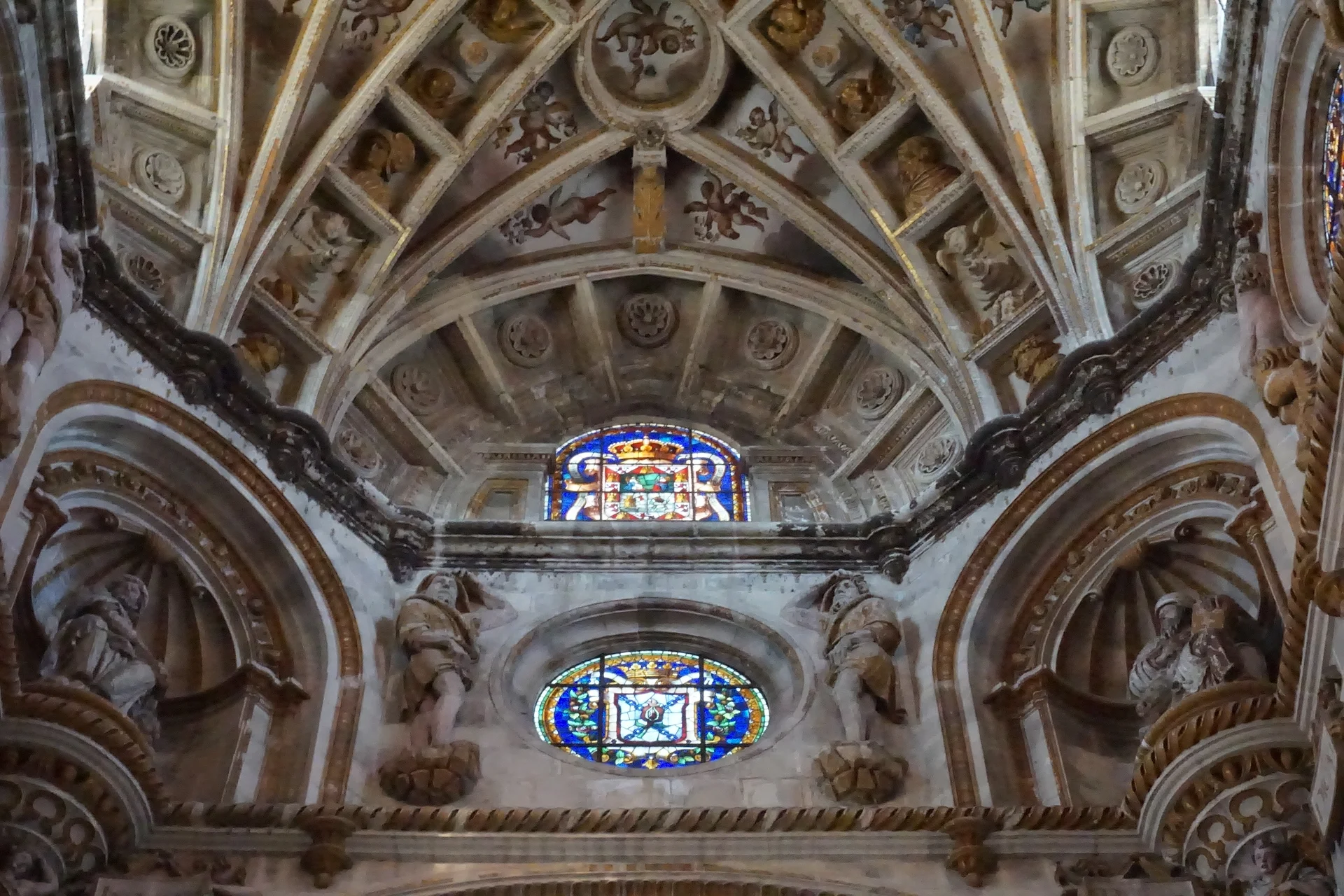
Look up at the transept vaults. Diego de Siloé solved the transition from a square floor plan to an octagonal one using squinches decorated with the four evangelists. The coffers of the dome house figures, monsters, and gilded rosettes that catch the morning light in a way that feels almost cinematic.
Pro tip: Visit in the mid-morning when the natural light hits the altarpiece at its best angle. The audio guide included with your ticket reveals iconographic details that are easy to miss at first glance.
The two cloisters, an architectural journey
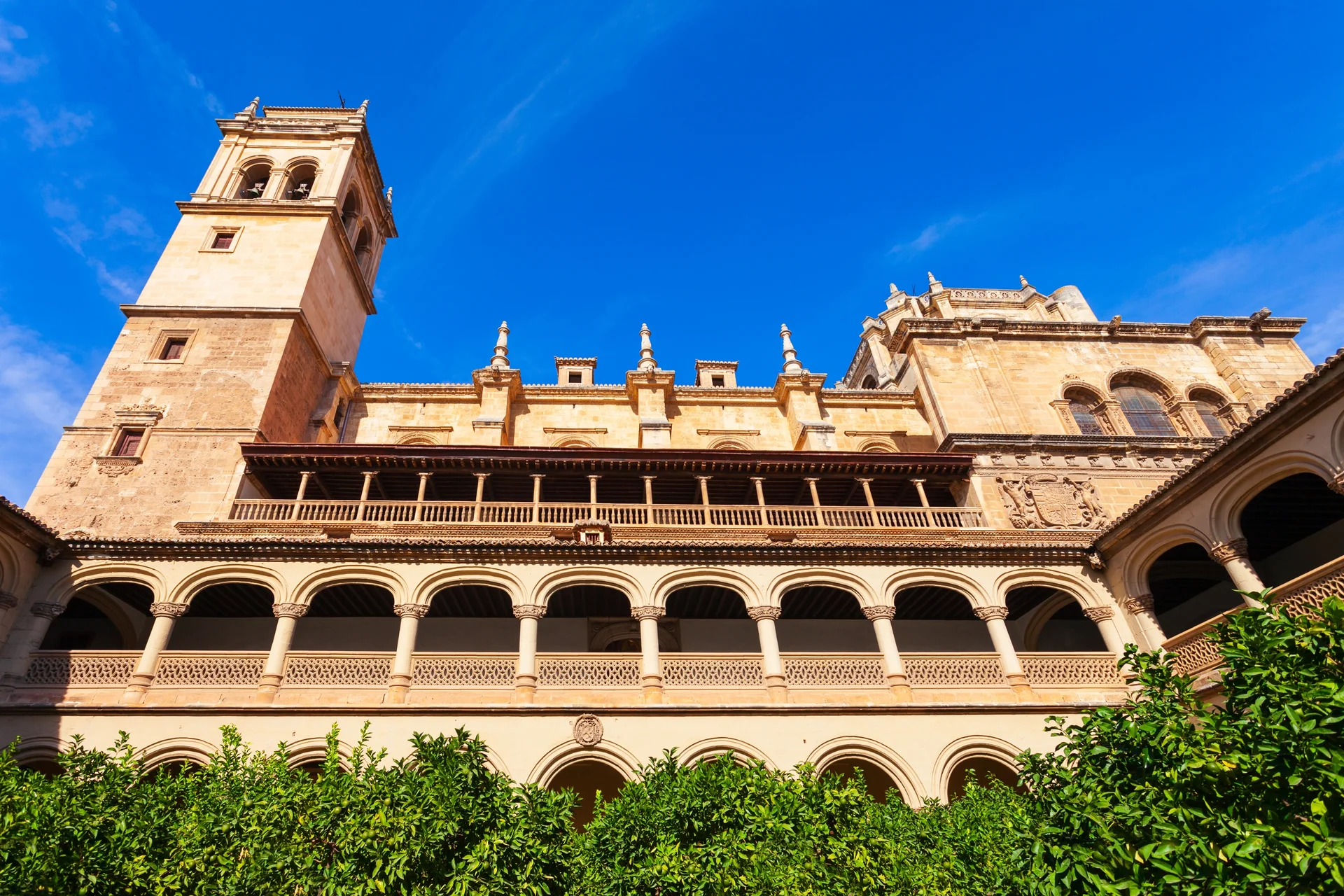
The main cloister is notable for its scale. Thirty-six semicircular arches on the first level bear the emblems of the Catholic Monarchs and the coat of arms of Fray Hernando de Talavera, the first archbishop of Granada. Gothic foliage capitals support a second level of basket-handle arches.
Diego de Siloé designed seven beautiful portals that were meant to lead to the funerary chapels of prominent local families. Today, they provide access to different areas like the refectory, chapter house, and a brilliant Baroque sacristy. The orange trees in the patio fill the air with scent during the spring.
The second cloister of the enclosure
Hidden from public view, the second cloister mixes Gothic, Mudejar, and Renaissance styles. This is where Isabella of Portugal stayed during her honeymoon with Charles V in 1526. Today, the Jerónima nuns live there according to the rule of silence and contemplation established in the 14th century.
The scars of history
Napoleonic troops turned the monastery into an artillery barracks in 1810. They destroyed the tower and looted the treasury, even using its stones to build the Puente Genil (Genil Bridge). After the Mendizábal Disentailment in 1835, the building served as a barracks for over a century.
It was not until 1967 that the monastery returned to its spiritual roots. A community of Jerónima nuns settled there in 1977, arriving from the nearby monastery of Santa Paula. Successive restorations, including the work on the altarpiece in 2004, have returned the site to its Renaissance glory.
Opening hours
*Information subject to change

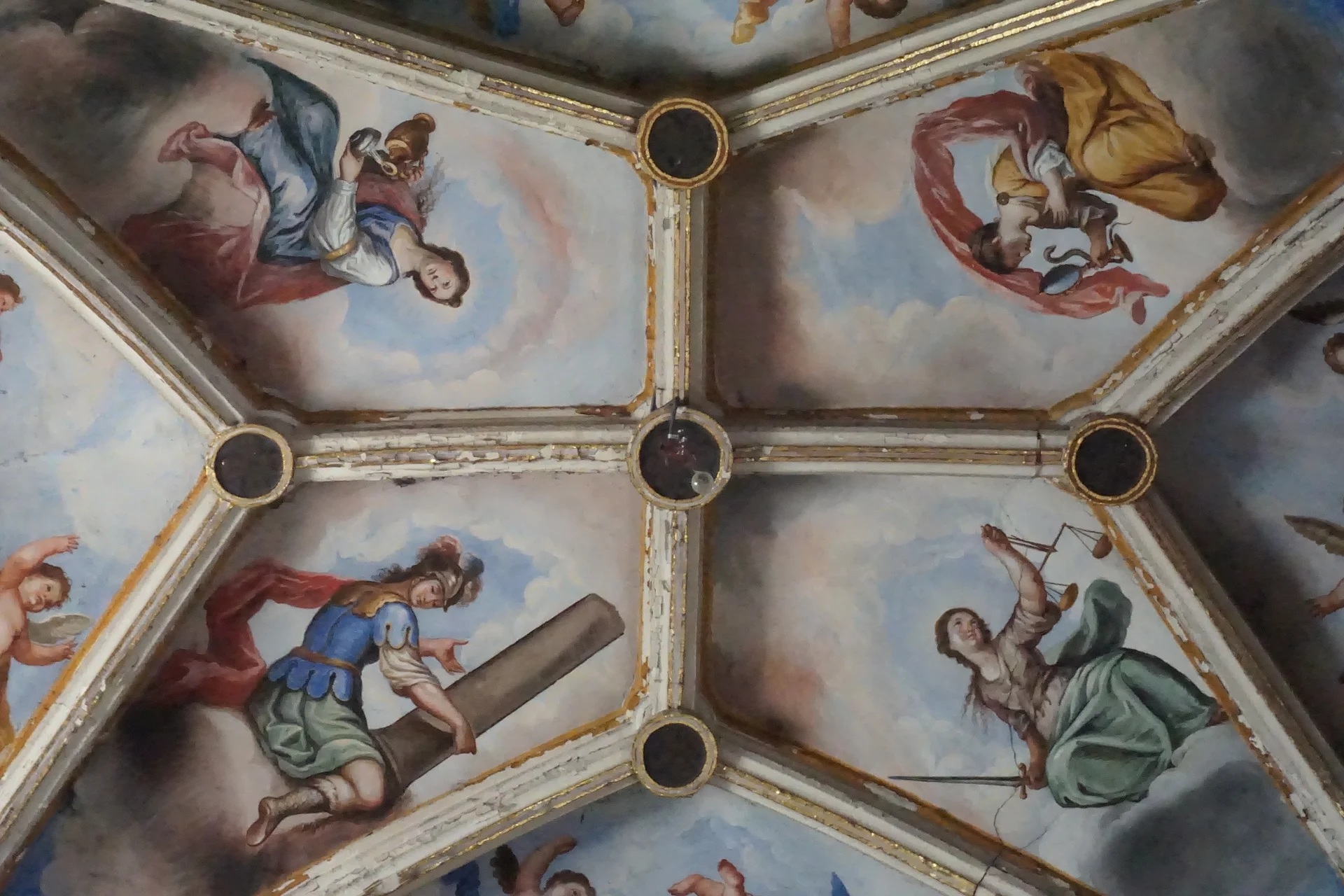
I visited this monastery on a friend's recommendation and I loved it. Less well known than the Alhambra, this beautiful place offers a soothing break that invites meditation. The cloister and its small garden are charming. The adjoining church is also worth a look. I really liked the refreshing atmosphere and the richness of the decor, with some pretty frescoes. I recommend downloading the audio guide, because there are very few explanations provided along the route.