
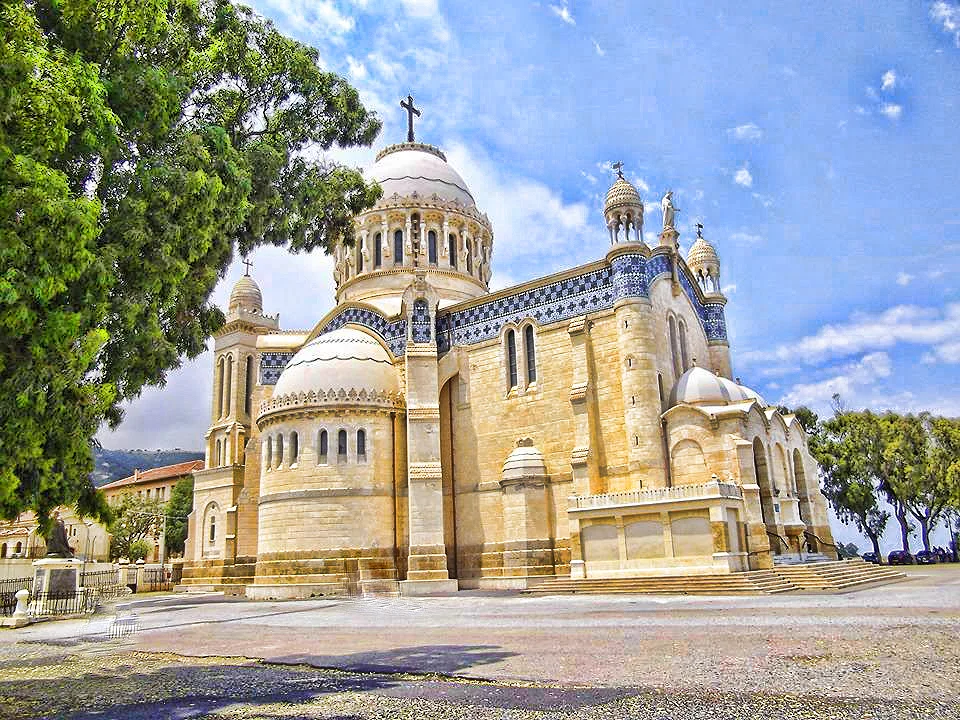
Visiting the Notre-Dame d'Afrique Cathedral
Overlooking the bay of Algiers from the heights of the Bologhine neighborhood, the Notre-Dame d'Afrique cathedral stands as an architectural and spiritual landmark of the Algerian capital. Constructed between 1858 and 1872, this cathedral serves as a testament to the history of Catholicism in Algeria, while also acting as a site of religious coexistence.
A masterpiece of Byzantine and Moorish architecture
The cathedral strikes visitors with its distinct fusion of Byzantine and Moorish design, blending European and North African influences. The imposing dome, intricate arches, and vibrant mosaics provide the structure with a unique aesthetic. Inside, you can view various frescoes and statues, while the stained glass fills the nave with soft, colorful light. This harmonious mixture of styles makes it one of the most compelling religious monuments in Algiers.
Unobstructed views of the Mediterranean
Perched on a cliff 124 meters above sea level, Notre-Dame d'Afrique offers a wide panorama of the Mediterranean Sea and the bay of Algiers. The trip up to the cathedral, whether by car or on foot, is an experience in itself, allowing you to appreciate the scale of the city and the Algerian coastline. The courtyard is a quiet spot to take in the view, similar to the coastal overlooks found in Santa Monica.
A symbol of peace and tolerance
What makes Notre-Dame d'Afrique stand out is its enduring message of peace and coexistence. An inscription on the walls of the cathedral reads, Notre-Dame d'Afrique, pray for us and for the Muslims, embodying a spirit of tolerance between faiths. This sacred space remains a powerful symbol of interreligious dialogue in Algeria.