
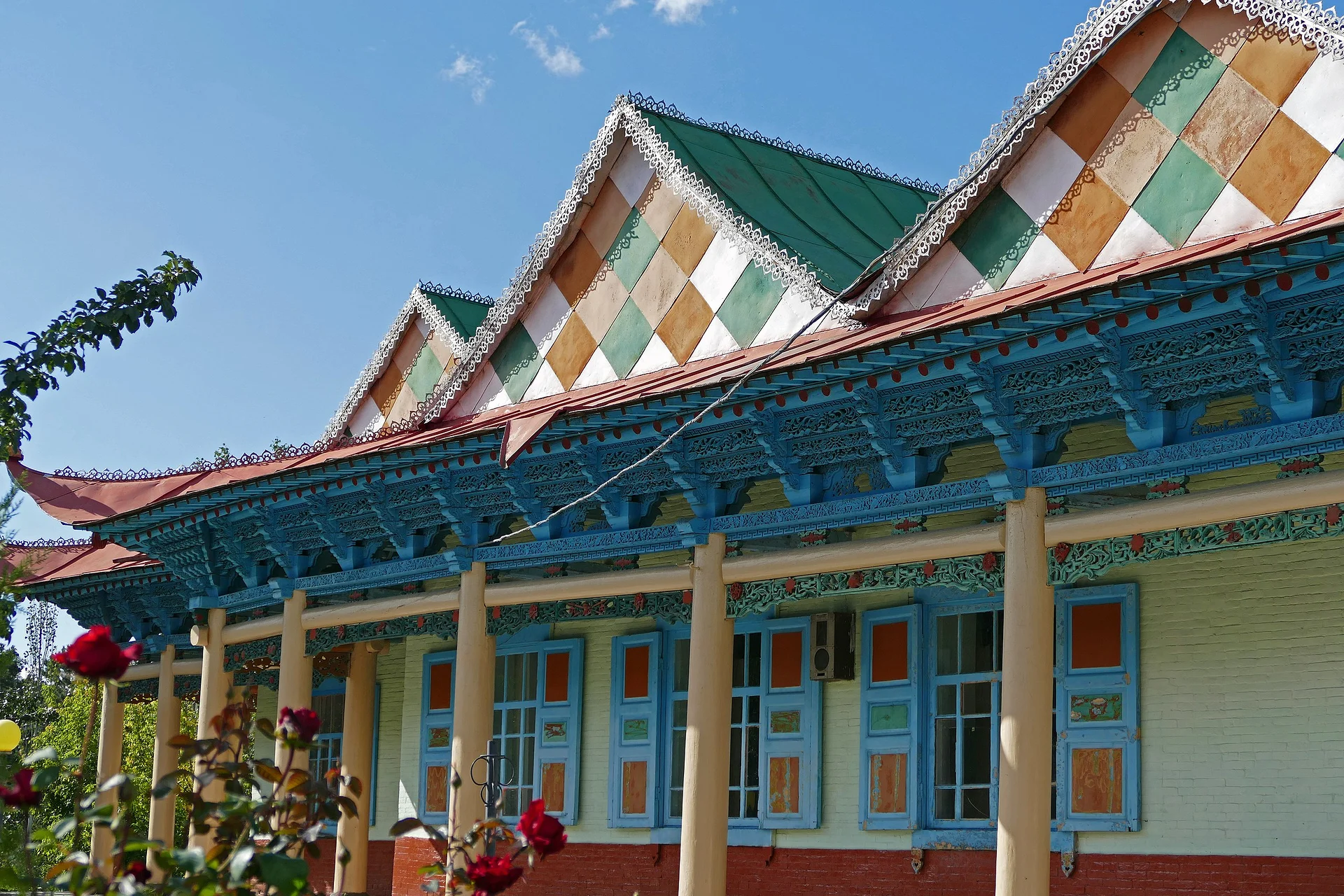
Visiting the Karakol Dungan Mosque, a mosque that dreamed it was a pagoda
In the heart of Karakol, one structure stands out and commands your attention. Forget the domes and minarets you associate with a typical mosque. Here, a roof with elegant curves, vivid colors, and fantastic creatures carved into wood transport you thousands of miles away to somewhere in Imperial China.
Why is this monument so singular?
The Karakol Dungan Mosque is much more than a place of worship. It is a symbol of a people's resilience. It was built at the beginning of the 20th century by the Dungan community, Hui Muslims who fled persecution in China in the late 19th century. Upon arriving in Karakol, they constructed this prayer hall using only the techniques and aesthetics of their homeland.
This monument stands as a poignant testament to exile and a fascinating cultural fusion in the heart of Central Asia.
An architectural feat without nails or screws
The true tour de force of this mosque lies in its construction. The artisans, led by master Chou Sze, erected the entire wooden structure without using a single nail. The whole building is held together by a complex and ingenious system of joints and tenons, a traditional Chinese technique that has allowed the building to withstand earthquakes.
The main building, the prayer hall, rests on 42 pillars. Observe the woodwork closely. The precision of the joinery is a spectacle in itself and a lesson in ancestral engineering.
Friendly tip: Take the time to walk the entire perimeter of the building. Each angle reveals new details and plays of light on the carvings, a perspective often missed by those who rush straight inside.
The language of colors and creatures
The facade is an open book on Chinese cosmology, where every element carries deep meaning. The colors were not chosen at random. Red symbolizes luck and protection against evil spirits, yellow evokes wealth and prosperity, and green is associated with harmony and happiness.
Look up toward the beams and eaves. You will discover an entire bestiary of fantastic creatures carved into the wood. Dragons, symbols of power and benevolence, sit alongside phoenixes, which represent rebirth and good fortune. These pagan ornaments on a Muslim house of worship make this mosque absolutely unique.
Friendly tip: To visit the interior, respectful attire is required (shoulders and knees covered). Capes are provided at the entrance for women.
Opening hours
| Monday | 09:00-12:00, 13:00-17:00 |
|---|---|
| Tuesday | 09:00-12:00, 13:00-17:00 |
| Wednesday | 09:00-12:00, 13:00-17:00 |
| Thursday | 09:00-12:00, 13:00-17:00 |
| Friday | 09:00-12:00, 13:00-17:00 |
| Saturday | 09:00-12:00, 13:00-17:00 |
| Sunday | 09:00-12:00, 13:00-17:00 |
Visits are available outside of prayer times, so keeping your schedule flexible is recommended.

The small Dungan Mosque in Karakol is worth the trip. It is very colorful, and you can take some pretty photos. We loved dressing up in the traditional outfits at the entrance. We looked like real locals with our grandma headscarves on. Admission is only 50 soms per person, so do not hesitate to go in. You can also try some Dungan meals in Karakol.