
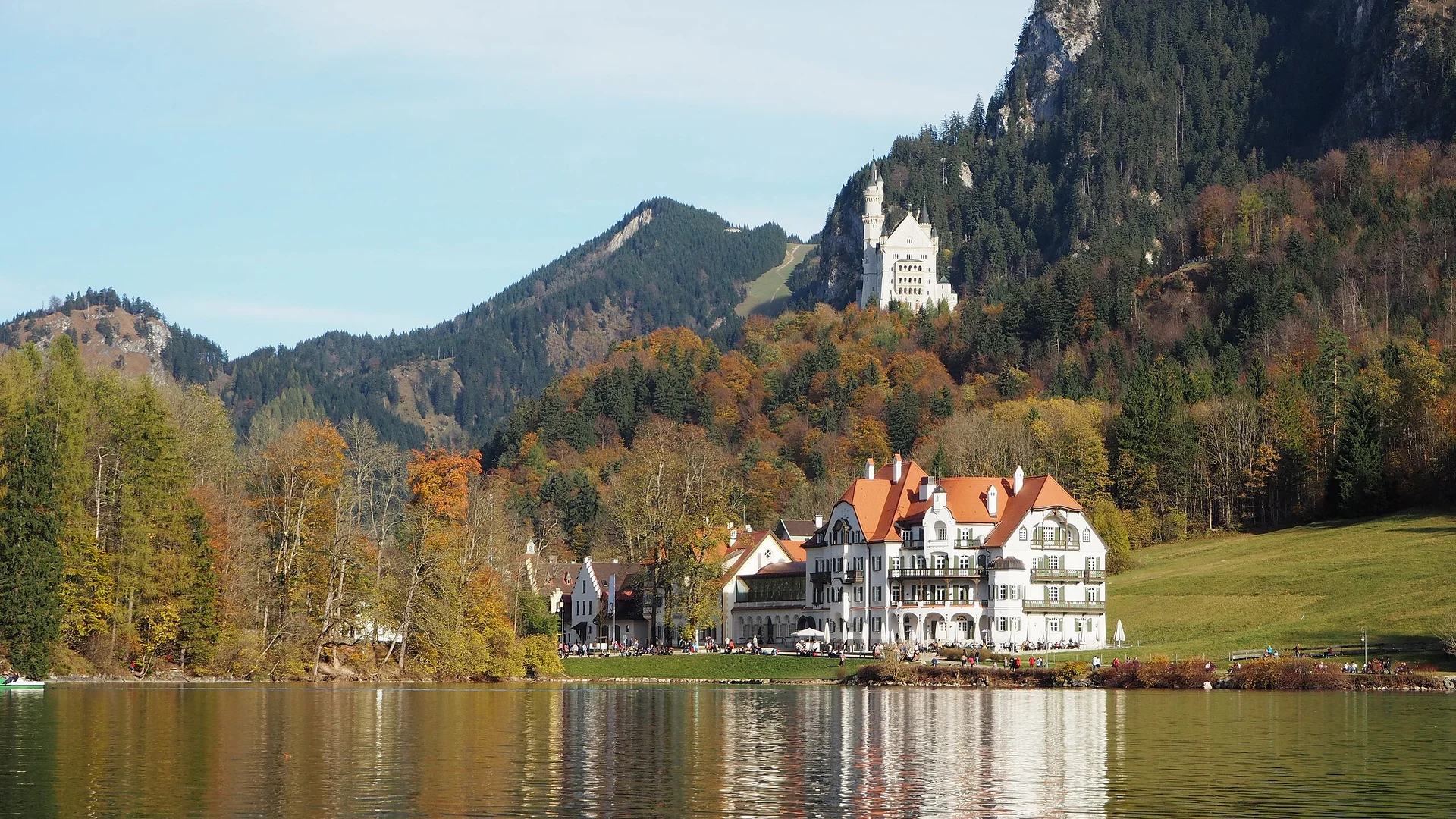
In the footsteps of Bavarian kings along the shores of the Alpsee
On the banks of the Alpsee, facing the majestic outlines of the Neuschwanstein castle and Hohenschwangau castle, stands a modern museum that chronicles eight centuries of Bavarian history. The Museum of the Bavarian Kings immerses visitors in the fascinating world of the Wittelsbach dynasty, one of the oldest and most influential royal families in Europe.
Why visit the Museum of the Bavarian Kings?
This museum offers far more than a simple postscript to the neighboring castles. It pulls back the curtain on a dynasty that shaped the Bavarian identity for nearly 800 years, from the Middle Ages until the monarchy was abolished in 1918. The exhibit focuses specifically on two iconic figures: Maximilian II, who transformed Hohenschwangau into a summer residence, and his son Ludwig II, the builder king behind Neuschwanstein.
Housed in the former Alpenrose luxury hotel, the museum enjoys a prime location. Its expansive glass facades turn the panorama of the Bavarian Alps into a living painting.
An interactive journey through the centuries
The permanent collections
Spread across two floors and 16 exhibition rooms, more than 130 original artifacts document the daily life and splendor of the Bavarian court. Among the centerpieces are:
- The sumptuous ermine cloak of Ludwig II, a symbol of royal power
- A solid gold tableware set adorned with scenes inspired by the Nibelungen
- Ceremonial swords and royal regalia
- Family portraits and rare historical documents
- The magnificent table centerpiece commissioned by Maximilian II from the sculptor Ludwig von Schwanthaler for his 1842 wedding to Marie of Prussia
Immersive technology and personal stories
The museum relies on modern staging. Interactive screens showcase the castle projects that Ludwig II imagined but never realized. 3D animations bring the atmosphere of the court to life. Multimedia interviews feature current descendants of the Wittelsbach family, including Prince Luitpold and Duke Franz of Bavaria, who has served as the head of the house since 1996.
A monumental family tree traces 700 years of history through more than 70 family members, from their rise as counts palatine and dukes to their coronation as kings of Bavaria in 1806.
Architecture in the service of history
The building itself is part of the museum experience. Designed by German architect Volker Staab, the structure plays with transparency and light. Its centerpiece is a 21-meter panoramic window offering a spectacular view of Hohenschwangau, the Alpsee, and the surrounding mountains. Benches invite you to sit and contemplate this alpine scene.
The barrel vault constructed from steel lattice houses the exhibits dedicated to the protagonists of Hohenschwangau: Maximilian II and Ludwig II, a father and son who were polar opposites but shared a passion for this magical place.
Pro tip: Combine your visit with the castles by purchasing a combination ticket. Start at the museum in the morning when the light on the lake is at its best, then visit the castles in the afternoon. Multilingual audioguides are included and significantly deepen your understanding of the exhibits. Plan on 1.5 to 2 hours to enjoy the museum at a relaxed pace.
The Alpenrose am See restaurant
After your tour, the Alpenrose am See restaurant extends the experience. Its lakeside terrace provides an idyllic setting to enjoy traditional Bavarian cuisine while gazing out at the alpine landscape. The adjacent cafe, nestled in a greenhouse known as the Palm House, also hosts concerts and lectures in a welcoming atmosphere.