
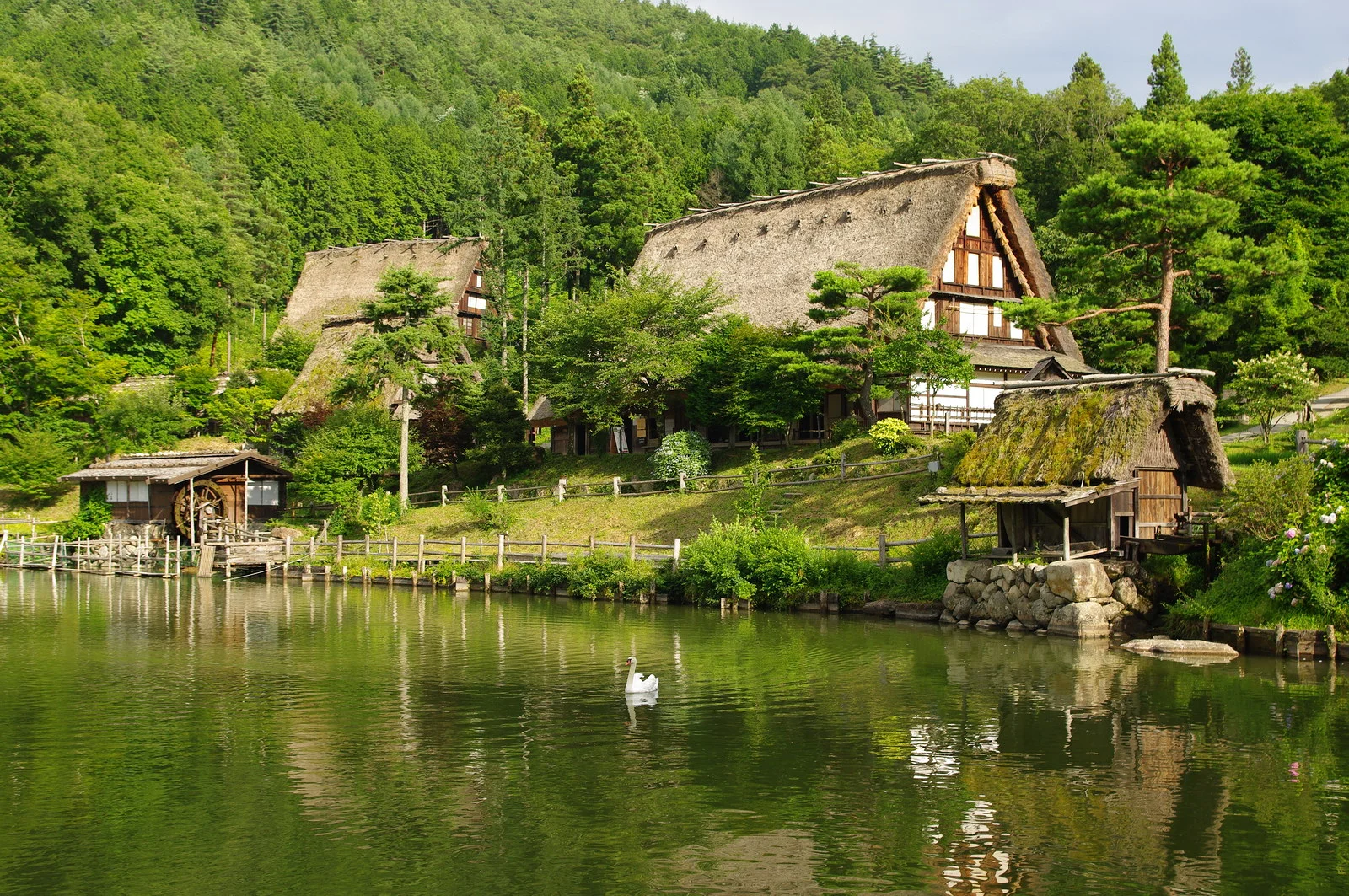
Hida Folk Village, a sensory trip into Japan's rural past
The scent of woodsmoke hangs in the air between the thatched roofs. Every morning, the village caretakers light the irori hearths in these centuries-old homes, continuing a daily ritual that has defined life here for generations. This smoke, which permeates the blackened wooden rafters, is more than just a rustic touch. It serves as a natural preservative that shields the timber framing from insects and moisture.
Why visit Hida Folk Village?
This open-air museum was established in 1971 to save dozens of traditional farmhouses from the mountainous Hida region from being lost forever. The construction of dams along the Sho River once threatened these unique structures. More than thirty buildings, including four designated as Important Cultural Properties of Japan, were dismantled piece by piece and carefully reconstructed on this hilly site southwest of Takayama.
The site offers a quiet alternative to Shirakawa-go, the famous UNESCO World Heritage village. While that site can get crowded, Hida Folk Village allows you to explore the interiors at your own pace, climb up to the upper levels, and examine the joinery details without being rushed by tour groups.
Decoding gassho-zukuri architecture
These farmhouses with their 60-degree steep roofs carry a poetic name: gassho-zukuri, which translates to "hands joined in prayer." This extreme pitch was not a stylistic choice. It allowed the heavy snowfall of the Japanese Alps to slide off without crushing the structure. The carpenters of Hida, renowned throughout medieval Japan, assembled these massive pine and chestnut frames without using a single nail.
The secret floors of the silkworms
Climb the steep stairs to the attic to see the ingenuity of these homes. The vast loft spaces were used for raising silkworms, a vital source of income for farming families during the long winters. Heat from the irori hearth rose naturally to the upper floors, creating the ideal climate for sericulture. The museum still displays the original wooden trays and tools used for this textile production.
The irori hearth, the beating heart of the home
Family life revolved around the central fire pit. Every position was codified, with the head of the household at the back and the youngest member near the entrance. This was where everyone cooked, kept warm, and dried their damp clothes. The museum collection includes more than 980 everyday objects displayed throughout the various homes.
Three paths depending on your time
The site offers three marked routes circling the Goami Pond. The red route takes 20 minutes and is accessible for those with limited mobility. The blue route takes 40 minutes and covers the main houses. The full brown circuit takes about an hour and reveals the quietest corners of the village.
Friendly tip: Wear shoes that are easy to slip on and off. You will need to take them off at the entrance of every house, which happens about 15 times during your visit. Bring thick socks in winter, as the tatami mats feel quite cold underfoot.
Living crafts and hands-on workshops
Local artisans work on-site, practicing traditional weaving, basketry, and wood carving. Their demonstrations are not locked away behind glass. You can watch the steady rhythm of a weaver at a loom or see wood shavings curl away under a sculptor's chisel.
The Hida Takayama Crafts Experience Center, located just steps from the entrance, offers workshops lasting 15 to 60 minutes where you can make your own souvenir: a sarubobo doll, a ceramic cup, or a glass wind chime. Expect to pay between 800 and 3000 JPY ($5 to $20) depending on the workshop.
For families, the museum provides stamp rally booklets with English quizzes. Children can explore the village to find the stamping stations and receive a small prize once the book is complete. It is an effective way to keep younger travelers engaged with the history of the site.
The village through the seasons
Autumn paints the maple trees in shades of red and orange, creating dramatic reflections on the pond. Evening illuminations transform the site from mid-October to early November, again around Christmas, and throughout the winter until the end of February. The snow-covered roofs under the lights create a scene straight out of a storybook. The evening entry fee is reduced to 300 JPY (about $2) for adults.
Before you leave, stop by the shop near the bus stop. Their Hida beef croquettes are excellent and make for a comforting snack after your walk.
Opening hours
*Information subject to change

Another unique spot. It is super quick to get to by bus from Takayama station. It is an open-air museum where you can see old farmhouses. It is as beautiful as a painting (or a print), with large houses with roofs covered in moss. Plus, you make some fascinating discoveries about the local way of life. I would love to be able to go back in winter.