
Matsukura Castle: The forgotten ruins overlooking Takayama
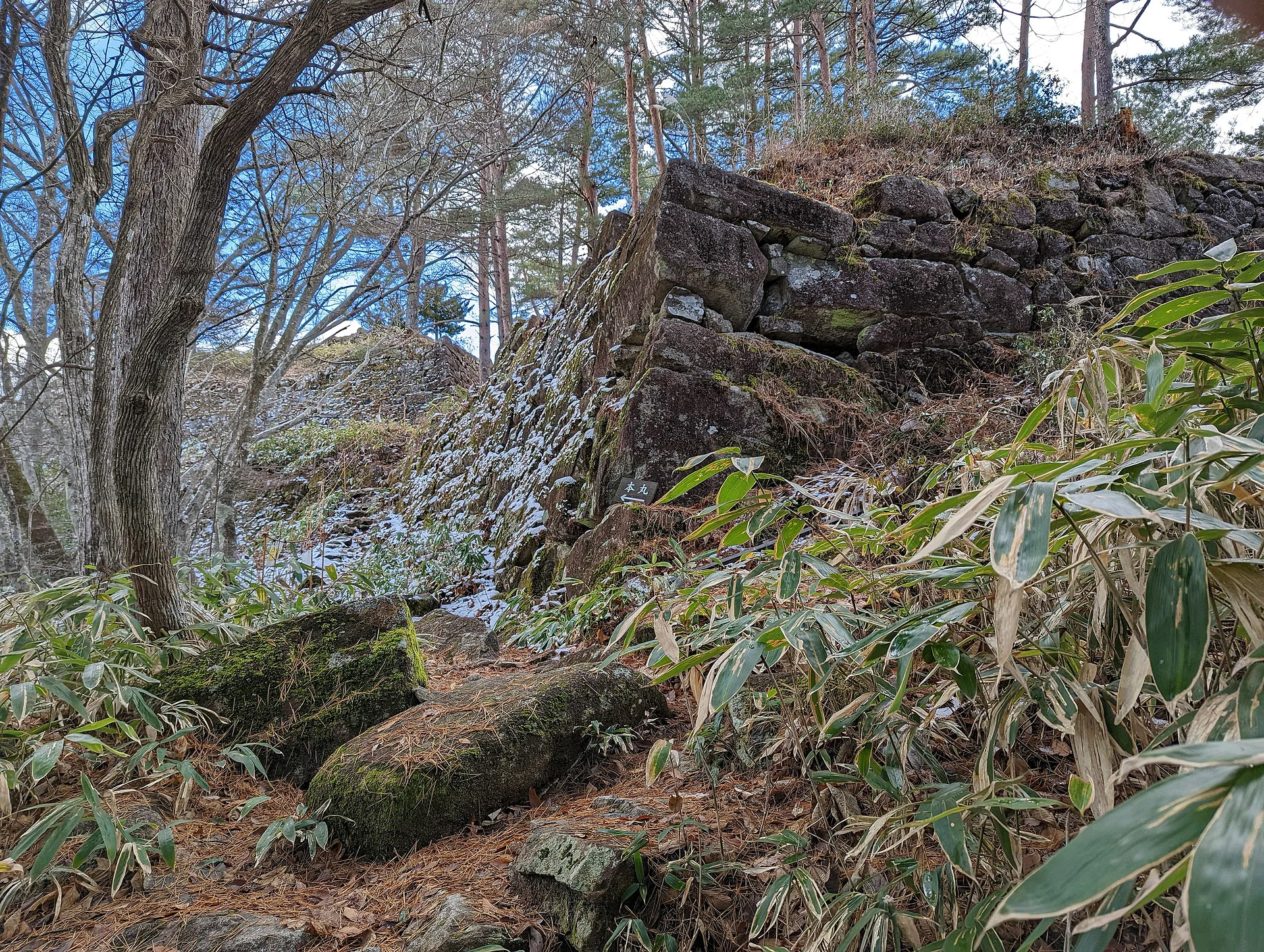
Mossy stones push through the roots of century-old cedar trees. At an elevation of 856 meters, the remains of Matsukura Castle rest in a silence disturbed only by the most curious hikers. This overlooked site offers one of the most striking perspectives of the Takayama valley and the Japanese Alps.
Why visit Matsukura Castle?
Built in the 14th century by the Kyōgoku clan, this yamashiro (mountain castle) reached its peak under the rule of Mitsuki Yoritsuna before being abandoned at the start of the Edo period. Unlike the castle in Takayama, which was completely destroyed, Matsukura retains tangible ruins, including dry-stone foundations, defensive terraces, and moats that remain visible in the terrain.
The primary appeal here is raw authenticity. You will find no concrete reconstructions or air-conditioned museums. Visitors essentially walk over history, guided by their imagination and a few explanatory signs in Japanese.
The climb to the ruins
The hiking trail
The path begins at the Matsukura Kannon shrine, which is accessible by car or bike from downtown Takayama. The ascent takes about 40 to 50 minutes through a dense forest of Japanese cedar. The trail is well-marked but occasionally steep, so wear sturdy footwear. After rain, some sections can be slick.
What remains of the castle
At the summit, three levels of terraces bear witness to the site's defensive layout. The stacked stone walls, a signature technique of Japanese medieval fortifications, still reach two meters high in some spots. The honmaru, or main enclosure, occupies the highest point with a surface area of about 30 by 20 meters.
The panorama of the Japanese Alps
On a clear day, the view justifies the effort. The vista extends across the Hotaka range and Mount Norikura, whose snow-capped peaks pierce the horizon for eight months of the year. Below, the city of Takayama displays its grid of historic streets. During the autumn, when the maples turn red, the scene is particularly photogenic.
Points of interest on the site:
- The ishigaki, dry-stone walls from the 16th century that are still standing
- The castle well, which is filled in but remains identifiable
- The karabori, moats carved directly into the rock
- The commemorative stele erected in 1934
Friendly tip: Plan your visit for early morning, before 9:00 a.m. You will avoid the summer heat during the climb and catch the low-angle light that is perfect for photographing the ruins. Bring plenty of water, as there are no facilities on the trail.
A site for history lovers
To be honest, this castle is not for every traveler. Families with young children or those with limited mobility will find the trail too demanding. Those who prefer reconstructed castles may be underwhelmed by these minimal ruins. However, enthusiasts of feudal Japanese history and hikers will appreciate this immersion in medieval Japan, far from the standard tourist circuits.
Opening hours
Open 24/7
Open year-round, though visiting between December and March is not recommended due to snow.

Actually, it is more of a hike than a castle. Since it is in ruins today, it is a spot recommended for those who enjoy exploring and walking, or for die-hard fans of Japanese castles. For everyone else, if you want to see an intact castle, look elsewhere. In the spring, it is supposedly a great spot to enjoy the cherry blossoms.