
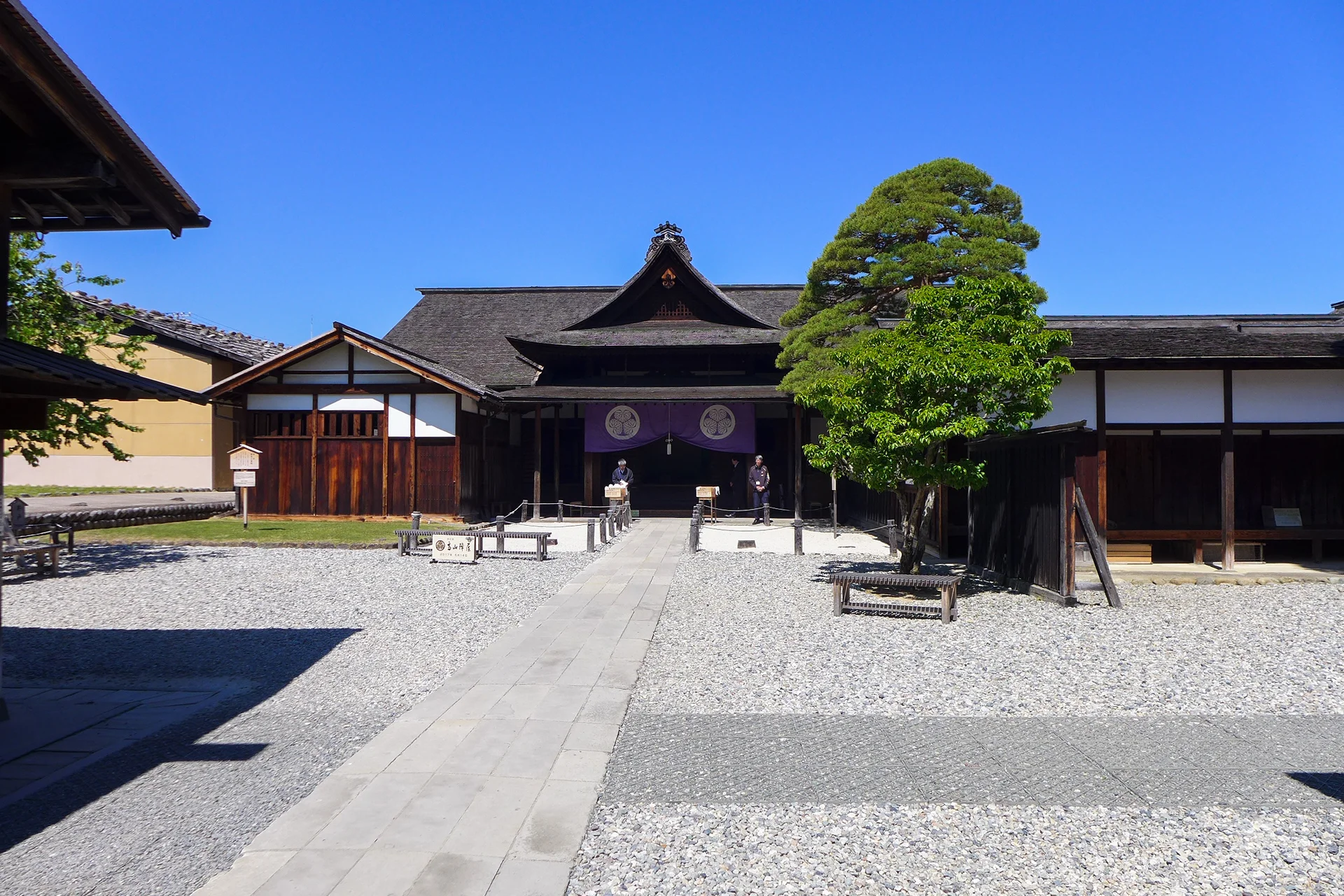
Takayama Jinya: The Last Edo-Period Government Office in Japan
The scent of hinoki wood hangs in the corridors. Under your socks, the tatami mats offer a faint, rhythmic creak. In this former prefecture where the Tokugawa shogunate ruled over the Hida province for 176 years, time seems to have stalled somewhere between the 17th century and today.
Why visit Takayama Jinya?
Of the sixty administrative offices that once existed across Japan at the end of the Edo period, this is the only one where the main building remains standing. This rarity earned it a designation as a National Historic Site in 1929. The complex functioned continuously from 1692 until 1969, serving first the shogunate and later the local prefectural administration.
The Hida region was rich in gold, silver, copper, and especially the high-quality timber prized for construction in the Japanese Alps. The Tokugawa shogunate decided to place this territory under its direct control, eventually sending 25 generations of governors to manage the province from within these walls.
A 40-room labyrinth of coded tatami
The visitor route winds through administrative offices, reception rooms, residential quarters, and kitchens. Each space served a specific function for the feudal government. The borders on the tatami mats change depending on the rank of the room, a subtle detail that sharp-eyed visitors will notice.
At the entrance, the seigaiha pattern painted on the alcove depicts stylized waves. This symbol was highly popular during the Edo period to represent prosperity and lasting peace. The original, which is protected in the rice granary, has been replaced by a faithful reproduction that measures 4.5 meters across.
The rabbits that hear everything
Tiny metal rabbits cover the nail heads on the wooden room dividers. These mamuki usagi, which face the visitor, carry a symbolic message. Their long ears serve as a reminder that the shogunate heard everything said within these walls. It was an elegant way to intimidate without making an explicit threat.
The interrogation room and its instruments of restraint
The oshirasu served as both a courtroom and an investigation chamber. Reconstructions show the devices used to extract confessions from the accused, including cramped bamboo baskets used to confine prisoners and the stones they were forced to kneel upon. The atmosphere here feels noticeably colder than in the rest of the building.
Friendly tip: In winter, bring thick socks. The tour lasts about an hour while walking in socks on tatami and wooden floors, and the cold can become uncomfortable starting in November.
The Onkura, the oldest rice granary in Japan
Transferred from Takayama Castle in 1695, this granary with its packed-earth walls stored the rice collected as tax from across the province. Its massive structure, designed to resist fire and humidity, makes it one of the oldest and largest warehouses from the Edo period still in existence. The interior now houses a museum displaying official documents, antique maps, and the everyday belongings of past governors.
The complex roofs are worth a second look. Unlike the roof tiles seen elsewhere in Japan, wood shingles dominate here. The region's heavy snowfall broke terracotta tiles far too easily, whereas wood, a local resource, provided a durable, practical alternative.
What to look for during your visit
- The massive reception hall with 49 tatami mats overlooking the garden
- The separate kitchens for the governor and the domestic staff
- The interior courtyard garden that changes character with every season
- The intentionally preserved mark of a peasant revolt against the rice tax

I loved this dive into ancient Japan. Throughout the entire visit, you are immersed in the Edo period when this place was still the administrative seat of the prefecture. The whole site has a very understated beauty. You can find a few brief explanations in English about the significance of the different areas.
Heads up: you can see some torture instruments in the courthouse. In any case, it is a unique place in Japan and recommended for history buffs!