
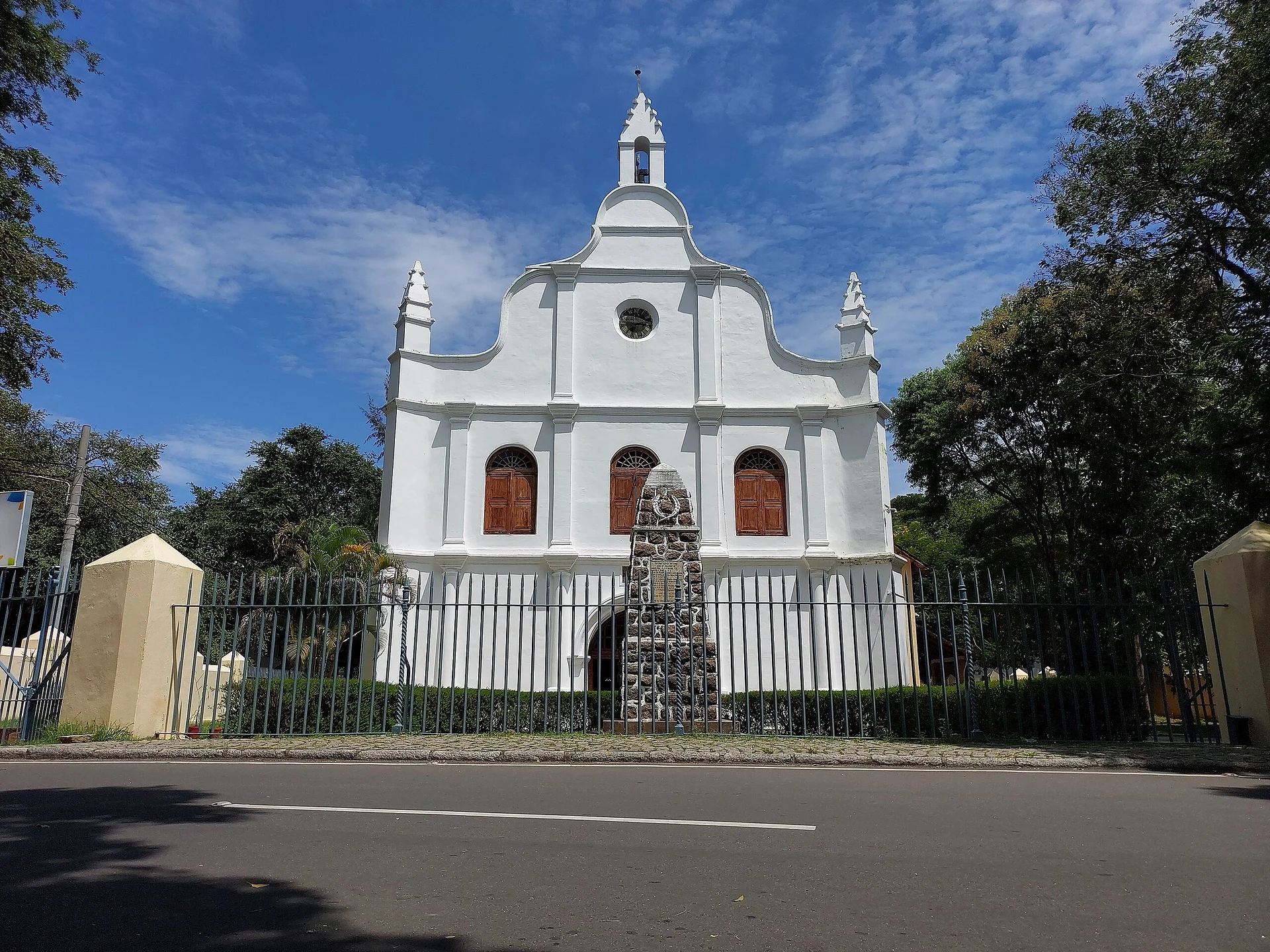
San Francesco Church: where explorer Vasco da Gama was laid to rest
Stone walls tell five centuries of colonial history. San Francesco Church, standing in Fort Kochi since 1503, holds the distinction of being the oldest European church in India. Its foundations testify to the Portuguese, Dutch, and British ambitions that followed one another on these shores of Kerala. Here rests the spirit of an era when caravels docked in search of spices and riches.
A place where maritime history takes shape
The Portuguese Franciscan friars accompanying Pedro Álvarez Cabral first erected a structure of wood and mud, dedicated to Saint Bartholomew. In 1506, the Raja of Cochin authorized a reconstruction in stone. The building was completed in 1516 and consecrated to Saint Anthony, patron saint of Portugal. The fate of this church changed with the death of Vasco da Gama in 1524, during his third expedition to India.
His body was buried right here. Fourteen years later, his remains were taken to Lisbon, but his original tombstone remains visible in the nave. This physical evidence of the explorer's presence turns a visit into a historical pilgrimage for those passionate about navigation and maritime epics.
Architecture with multiple influences
Simplicity dominates the aesthetic of the building. The wooden roof adorned with decorative tiles, semicircular arches, and the sober bell tower reflect Portuguese austerity. When the Protestant Dutch took Kochi in 1663, they destroyed all Catholic churches except this one, which they refurbished according to their own architectural codes.
The British, who arrived in 1795, brought their own modifications. In 1886, the church adopted its current configuration under Anglican aegis. Since 1947, it has belonged to the Church of South India. This succession of masters explains the unique architectural blend: a locally inspired wooden ceiling, antique floor tiles, a carved pulpit, and the Protestant sobriety that contrasts with the exuberance of Indian Catholic churches.
What to discover during your visit
Remarkable historical elements
The adjoining cemetery reveals colonial segregation: Portuguese graves occupy the north side, and Dutch graves the south side. The inscriptions in old Portuguese and Dutch are worth lingering over. Inside, the old cloth-based fan, still functional, and the Dutch baptism and marriage registers dating from 1751 to 1804 are pieces of inestimable value.
The war cenotaph
On the lawn in front of the church stands a monument erected in 1920. It honors the memory of the inhabitants of Kochi who fell during the First World War. This metal plaque engraved with names recalls Indian involvement in European conflicts.
Practical information for your visit
The church is free to visit. Religious services are held every Sunday for the CSI community. On weekdays, the site functions primarily as a tourist destination. The coolness of the interior offers a welcome respite from the oppressive humidity of the tropical climate.
The location, in the heart of Fort Kochi, allows you to combine this visit with other attractions in the colonial district: the Chinese fishing nets, the Mattancherry Palace, and the narrow streets with crumbling facades that retain the charm of the trading post era.
Insider tip: visit the church early in the morning, between 9 a.m. and 10 a.m., to avoid tour groups and enjoy the contemplative atmosphere. The morning light that filters through the windows illuminates the whitewashed walls beautifully. Take the time to read the inscriptions on the cemetery tombs, as they recount individual destinies that give substance to the grand colonial history.

This is one of the oldest churches in India. The place is simple and understated but full of history. The remains of Vasco da Gama were kept here before being returned to Portugal. Don't forget to look up, the roof is unique and looks like the hull of an overturned boat.