
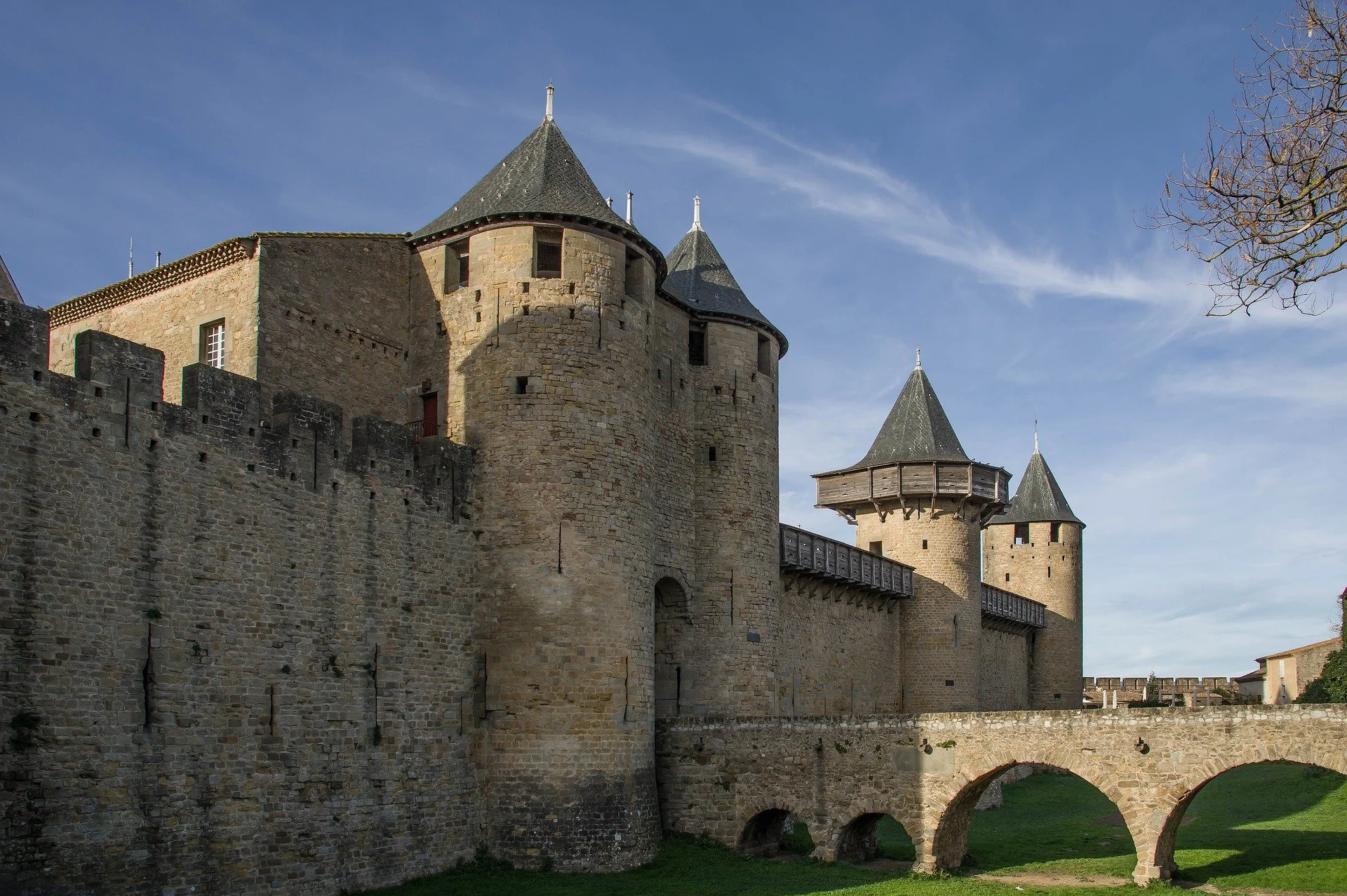
Carcassonne Medieval City, a legendary fortress
The slate roofs point skyward like knights' lances. This detail is surprising, as we are in the South, not in Brittany. It is the signature of Eugène Viollet-le-Duc, the architect who resurrected these ramparts in the 19th century. His choice was controversial at the time, but today it is inseparable from the most photographed silhouette in the Occitanie region.
Why visit the medieval city?
This fortress tells 2,500 years of military history. From the Romans to the kings of France, each era left its mark on these walls. The double enclosure of 3 kilometers (about 1.9 miles) and its 52 towers make up the best-preserved medieval defensive system in Europe, which earned it a UNESCO World Heritage listing in 1997.
The site nearly disappeared. In the 19th century, the ramparts were used as a stone quarry by the locals. It was thanks to the persistence of archaeologist Jean-Pierre Cros-Mayrevieille that the planned destruction was halted. The restoration project lasted 60 years, from 1853 to 1911.
The Château Comtal and the ramparts
Entry into the city is free and possible 24/7. The Château Comtal (Count's Castle), however, requires a ticket. This former residence of the Trencavel viscounts, built in the 12th century, offers a 0.8-mile (1.3 km) route along the interior ramparts with access to 35 towers.
What the visit includes
- Access to the wall walks and reconstructed wooden hoardings
- The lapidary museum with its medieval sculptures and early Christian sarcophagi
- A screening room tracing the history of the site
- A 360-degree panorama of the Pyrenees, the Montagne Noire, and the Aude valley
Pro tip: Buy your tickets online on the website of the Centre des Monuments Nationaux (French National Monuments Centre). The line can exceed an hour in July and August. Another option is coming on the first Sunday of the month between November and March, when admission is free.
The Basilica of Saint-Nazaire and the side streets
The religious building blends Romanesque and Gothic styles with rare harmony. Its 13th and 14th-century stained glass windows are among the most remarkable in the south of France. The light passing through these colored glasses turns the interior into a kaleidoscope on sunny days. Admission is free.
After the basilica, lose yourself in the cobblestone streets. The Porte d'Aude (Aude Gate), on the west side, remains less crowded than the main entrance through the Porte Narbonnaise. This is where scenes from the films The Visitors and Robin Hood, Prince of Thieves were shot. In the evening, when the shops close and the towers light up, the city regains an almost medieval atmosphere.
The lices and the outer tour
The space between the two enclosures is called the lices (lists). This strip of land was once used for tournaments and defense. Today, it is a walking path that offers varied viewpoints of the military architecture, including round 13th-century towers on the south side and square Gallo-Roman towers on the north side.
The contrast between the two types of construction illustrates the evolution of the art of war over a millennium. Plan on a good hour for the full walk on foot, longer if you stop to photograph the Pyrenees that stand out in the distance on a clear day.
Opening hours
*Information subject to change

Carcassonne is a very pretty medieval city that is really well preserved. You can walk around the ramparts, which are divided into several sections. It is very pleasant. Just a heads up, there are a lot of people in the summer, so come early in the morning if you can.