
When silk tells a thousand years of history in the heart of Kyoto
The rhythmic clatter of looms resonates on the third floor. Expert hands rake silk threads using nails filed into jagged teeth, creating patterns of startling complexity one centimeter at a time. At the Nishi-jin Textile Center, time seems to have slowed to preserve a craft over a millennium old.
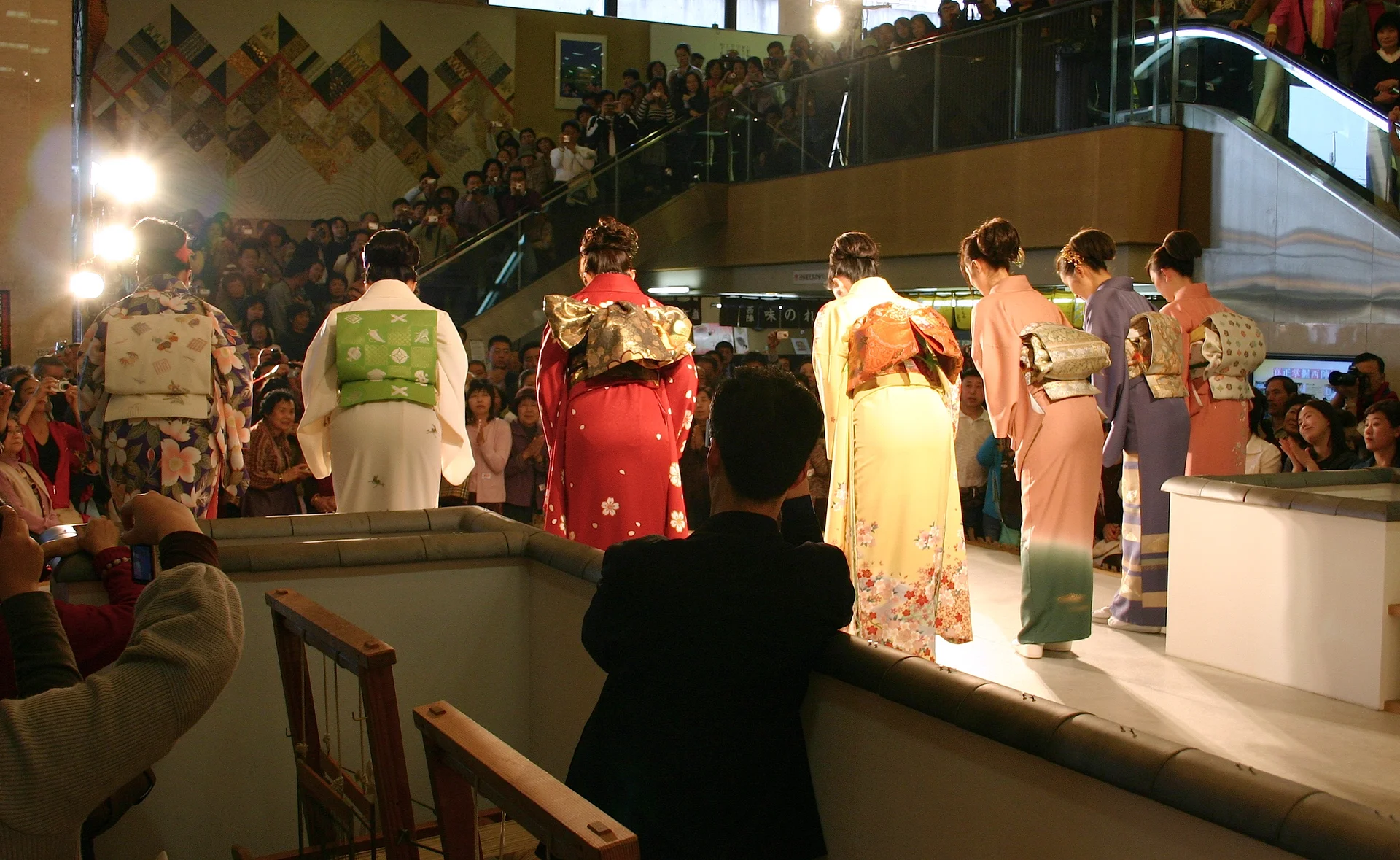
The kimonos on display shimmer under the lights, embroidered with gold and silver threads that capture the very essence of Japanese refinement.
The living legacy of the weavers district
Nishijin-ori is not just a simple weaving technique. It has been the textile soul of Kyoto since the fifth century. The very name of the district, which means Western Camp, dates back to the Onin War between 1467 and 1477, when weavers took refuge in this northwest part of the city. Upon their return, they transformed these ruins into a prosperous district that would define the excellence of Japanese textiles.
During the Edo period, Nishijin-ori became the ultimate status symbol. More than 20,000 looms produced kimonos for the imperial family, Buddhist monks, and Shinto priests. Today, the center perpetuates this legacy through an alliance of more than 700 small family businesses that refuse to let this ancestral know-how die.
The kimono shows, a ballet of silk and color
Six times a day, between 10:30 a.m. and 4:00 p.m., the third floor turns into a runway. The Kimono Shows present the center's most sumptuous creations. Expect kimonos embroidered with golden cranes, cherry blossom motifs on a background of summer waves, and brocades interwoven with precious threads. Each show lasts fifteen minutes and changes with the seasons, offering a free spectacle that justifies the visit on its own.
The fabrics on display reveal exceptional density, with 10,500 warp threads per meter compared to 8,000 to 9,000 for ordinary textiles. This extreme finesse slows the weaving process by 50 to 70 percent, but generates patterns of unparalleled precision.
Immersive experiences in the world of silk
Watching the artisans at work
On the second floor, weavers practice the tsuzure-ori technique, a Japanese cousin to Gobelins tapestry. Their specially filed nails scrape and gather colored threads with millimeter precision. Only a few centimeters can be woven in a day. The concentrated silence of the workshop contrasts with the hypnotic ballet of hands on the looms.
Weaving workshops for beginners
Hands-on 40-minute classes allow you to create your own miniature textile piece on traditional looms. The fee of 2,000 JPY (about $13) includes guidance from an artisan who passes down these ancestral movements. It is a unique, tangible souvenir that gives a completely different perspective on the kimonos displayed.
Stepping into the shoes of a geisha
More than 150 kimonos are available for rent for a photo session or a stroll through the streets of Kyoto. For a more elaborate experience, the center offers maiko dressing with traditional hair and makeup, or even the legendary junihitoe, the twelve-layer court kimono worn by ladies of the Heian period. Allow one hour to put on this architectural textile marvel.
Local tip: arrive a few minutes before the start of a kimono show to get the best seats on the third floor. The fourth floor, often overlooked by rushed visitors, houses the most remarkable historical pieces of the permanent collection. Also take the time to observe the silkworm rearing on the first floor. Understanding where the thread comes from adds an extra dimension to everything you will see afterward.
The living museum of Japanese textiles
The seven-story building displays its collections on several levels. The first floor combines a gift shop with reasonable prices and a space selling authentic textiles. The third-floor archives, renewed every three months, trace the evolution of Nishijin-ori from the Heian period to contemporary creations that adapt ancestral techniques to modern design.
Demonstrations of silk reeling, dyeing, and traditional embroidery punctuate the day. The center's free admission makes this dive into exceptional craftsmanship accessible to all visitors in Kyoto.

This place is really for fans of traditional Japanese costumes. While I wish the visit had been a bit longer, I enjoyed seeing the beautiful colors, outfits, and kimonos. You can often catch little fashion shows there, which add a bit of life to the place. The shop is also worth a visit, if only to admire the items.