
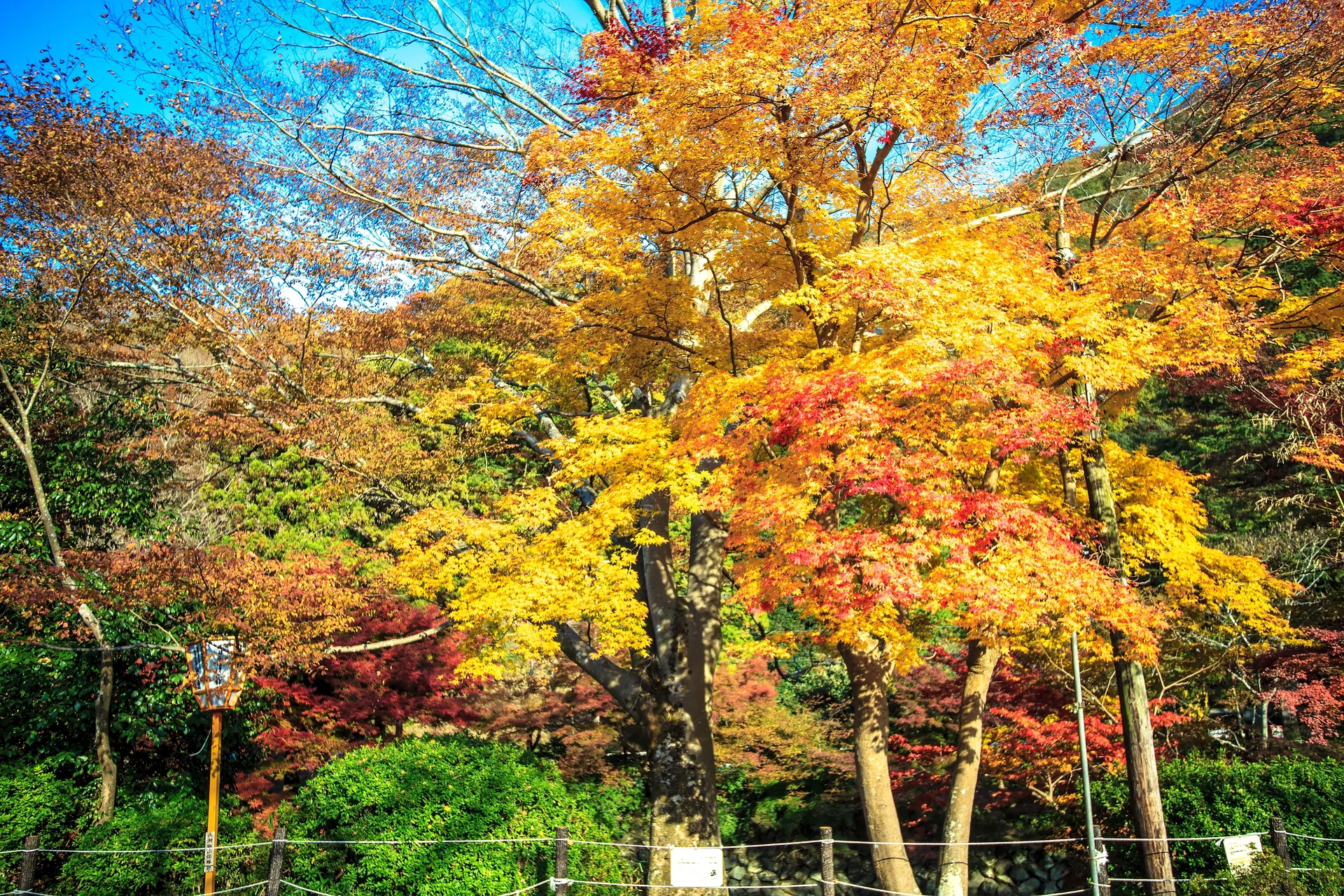
Mount Hiei, the cradle of Japanese Buddhism above Kyoto
At 848 meters in elevation, when the morning mist clings to the ancient cedar trees and the scent of incense drifts from the Konpon Chudo, you understand why monks chose this mountain as the heart of their faith. Mount Hiei is not just a tourist stop. It is a sacred peak that has shaped Japanese culture for more than twelve centuries.
Why visit Mount Hiei?
In 788, the monk Saicho founded the Enryaku-ji temple here, which became the headquarters for the Tendai school of Buddhism. The site had a massive influence on the archipelago. These wooded hills produced the founders of Zen, Pure Land, and Nichiren Buddhism, effectively defining much of the Japanese religious landscape. A UNESCO World Heritage site since 1994, the complex once consisted of more than 3,000 sub-temples at its peak.
This history is not entirely peaceful. In 1571, the warlord Oda Nobunaga burned the entire complex to break the power of the Tendai warrior monks. This devastating episode makes it even more striking that the flames lit by Saicho himself still burn in the Konpon Chudo today, having remained lit for 1,200 years.
The Konpon Chudo and its major restoration
The Konpon Chudo, designated a National Treasure of Japan, is finishing a massive restoration that began in 2016. Roofs, woodwork, paintings, and metal fittings have been completely treated. This project, which happens once every sixty years or so, is wrapping up. There is one important point for those planning a visit.
Local tip: The interior of the Konpon Chudo will likely remain closed to the public for much of 2026 and 2027 during the final finishing phases. However, an observation platform called the shugaku stage allows visitors to watch artisans at work directly on the roof. It is a rare opportunity to see how a Japanese National Treasure is preserved. Check the official website before heading out.
The three zones of the Enryaku-ji complex
The temple is divided into three distinct sectors separated by forest. The Todo (Eastern Pagoda) area is the main focus for most visitors. This is where you find the Konpon Chudo, as well as the Daikodo (Great Lecture Hall, built in 1634), the Daikoku-do, and the Amida-do.
The Saito (Western Pagoda) area is worth the walk, particularly for the Shaka-do, the oldest building on the mountain. You will also find the legendary Ninai-do, two halls connected by a central corridor that a monk named Benkei reportedly carried on his shoulders.
The Yokawa zone, more isolated to the north, is reached by shuttle. It is less crowded, and its Yokawa Chudo, partially built on stilts, holds a unique charm for those who appreciate quiet.
What to look for in the Todo zone:
- The three eternal flames of the Konpon Chudo, lit by Saicho 1,200 years ago
- The Daikoku-ten with three faces and six arms, a deity unique in the entire country
- The viewing platform for the roof restoration project
- The panorama of Lake Biwa from the cable car station
Reaching the summit: cable cars, ropeways, or trails
From Kyoto, two main routes are available. The most scenic route is via the Shiga side. Take the Keihan train to Sakamoto, then the Sakamoto Cable Car (11 minutes, open year-round) which drops you directly into the Todo zone. From Kyoto city, you can combine the Eizan cable car and the ropeway from Yase, but this route closes from early December to mid-March. Hikers can reach the summit on foot in about an hour from the base.
We recommend setting aside a full day. There are three zones to explore, forests to hike through, and a meal of Buddhist vegetarian cuisine (shojin ryori) at the Enryakuji Kaikan. If you want to stay on the mountain, the same Kaikan offers lodging with participation in morning prayers. It is an experience worth the effort.
Why it is worth the trip
- A UNESCO site away from the heavy tourist crowds of central Kyoto
- Cedar forests, misty ravines, and a preserved sacred mountain atmosphere
- The Konpon Chudo restoration project, a window into traditional Japanese craftsmanship
- Views of Lake Biwa from the Sakamoto cable car station
- The option to stay overnight and participate in morning prayers
Things to keep in mind
- The interior of the Konpon Chudo is closed for much of 2026 and 2027
- The journey from Kyoto takes time and requires planning
- No vending machines between the three zones, so bring water and snacks
- Shuttles to Yokawa do not run from January to mid-March
Estimated entry fees for Enryaku-ji temple
| Category | Price |
|---|---|
| Adult | 1,000 JPY (about $6.50) |
| High school student | 600 JPY (about $4.00) |
| Child (elementary school) | 300 JPY (about $2.00) |
| Sakamoto Cable Car (round trip) | 1,660 JPY (about $11.00) |
| Ropeway + Eizan cable car (round trip, Kyoto side) | 1,800 JPY (about $12.00) |
Prices are estimates and subject to change
Opening hours
How long for this activity
*Information subject to change

With this place, you get away from the hustle and bustle of downtown Kyoto. And that is not a bad thing! You are in a relaxing atmosphere that really encourages peace and meditation. I really liked the paths lined with stone lanterns with the light filtering through the trees. I had a lot of fun exploring this vast complex!