
Jaisalmer Fort: A living city within walls
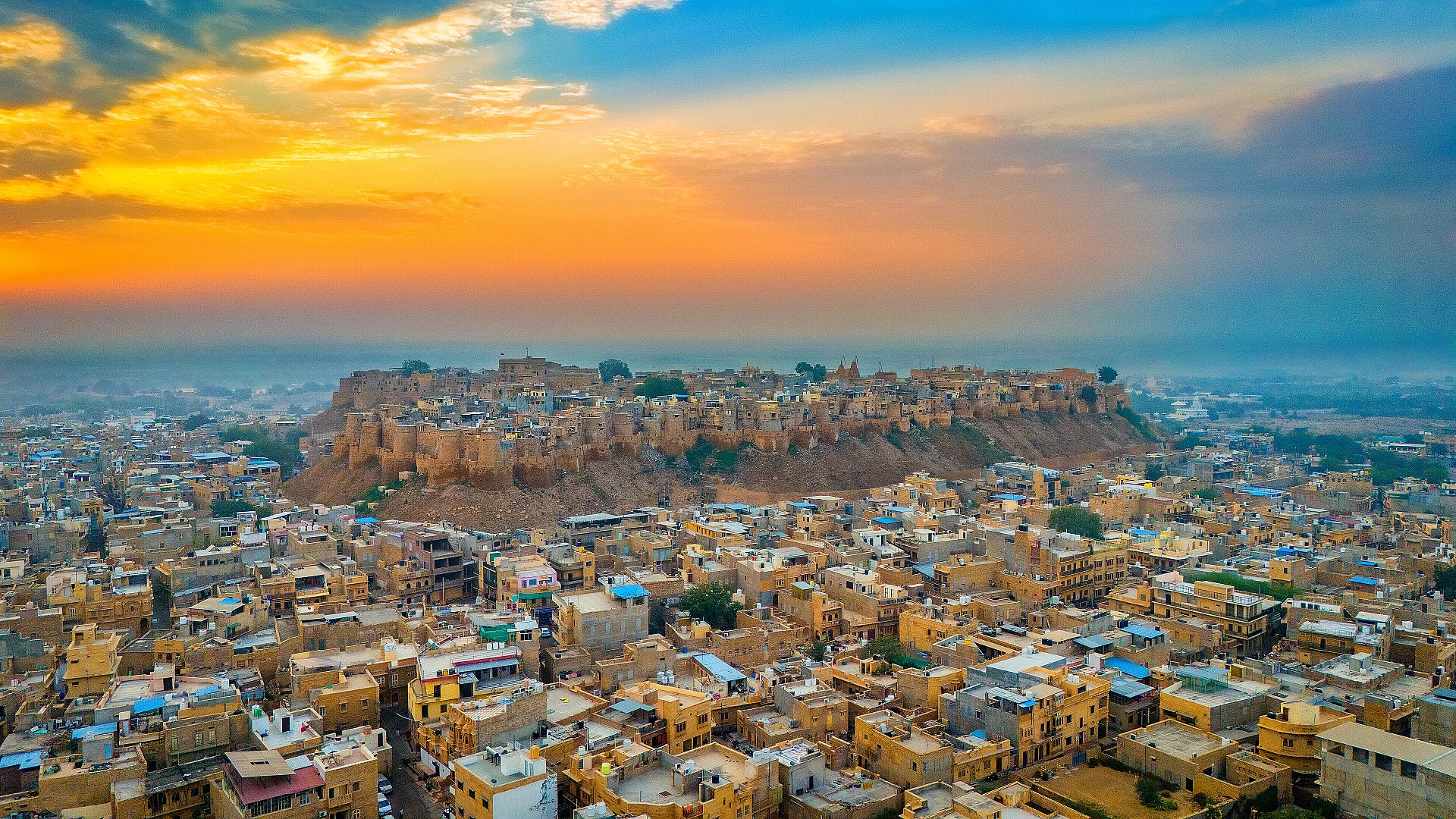
The stone here is golden. This is not a metaphor. The yellow sandstone of Rajasthan captures the low-angled sun, making the ramparts look like they are lit from within by burning embers. This is why residents call the place Sonar Quila, or the Golden Fort.
What makes Jaisalmer Fort unique?
Founded in 1156 by the raja Rawal Jaisal, this is not a site frozen in amber. It is one of the few inhabited forts in the world, with roughly 3,000 residents still living inside. You will walk through narrow alleys where Jain temples, carved havelis, corner grocery stores, and guesthouses share the same space. You are not visiting a museum, you are walking through a functioning neighborhood.
Designated a UNESCO World Heritage site in 2013, the fort stands 76 meters above the plains of the Thar Desert. Its 99 bastions create a jagged silhouette that is visible from miles away.
What to see inside
The heart of the fort is Dashera Chowk, a central plaza surrounded by palaces with intricate stone facades. The Raj Mahal, the former royal palace, is worth a stop for its cantilevered balconies and jharokas, which feature latticed screens carved from sandstone.
The Jain temples, built between the 12th and 15th centuries, are some of the finest examples of Jain sculpture in Northern India. The ceilings show technical precision, covered in floral patterns and divine figures carved into the same golden sandstone.
The havelis, or merchant houses, are equally impressive with their heavily ornamented facades. Some are open to visitors, while others remain private homes.
Friendly tip: Arrive early, before 8:00 AM, when the alleys are quiet and the low light highlights every carved detail on the walls. The fort undergoes a total transformation in the late afternoon. The stone turns a deep orange during the hour leading up to sunset.
A resilient but fragile landmark
The fort is built on a clay base. Population growth and tourism have increased water demand, which weakens the foundation. Entire sections have already been lost, and various organizations along with UNESCO are working on preservation.
Visiting the fort means accepting this reality. Some areas are under construction, while others show significant wear. This does not ruin the experience, but it provides a clearer picture of the site today.
Best for
- Lovers of medieval architecture and stone carving
- Travelers looking to experience Rajasthan beyond the tourist brochures
- Photographers, especially at dawn and dusk
- A visit of at least 2 to 3 hours to see the highlights
Less ideal if
- You expect a sterile, cordoned off museum site. The fort is loud and busy.
- You are visiting during high season and cannot start early. The narrow alleys quickly become crowded with tour groups.
- You have trouble navigating uneven cobblestones and steep inclines.
Opening hours
Daily: 9:00 AM to 5:00 PM.
Access to the public areas of the site is free, but the specific hours for the palaces and the museum located inside the fort walls can vary slightly by season. It is recommended to visit in the morning to avoid the intense heat and heavy crowds of tour groups.
How long for this activity
Plan on a half day to explore the alleyways, the Jain temples, and the palace. A full day is recommended if you want to wander through this fortified city at a leisurely pace.
*Information subject to change

I found the Jaisalmer Fort to be particularly well-maintained. All the buildings look like they have undergone renovations. The tour is super interesting, but there are a lot of tourists and therefore a lot of vendors of all kinds. Don't let yourself get scammed.