
Visit Évreux Cathedral
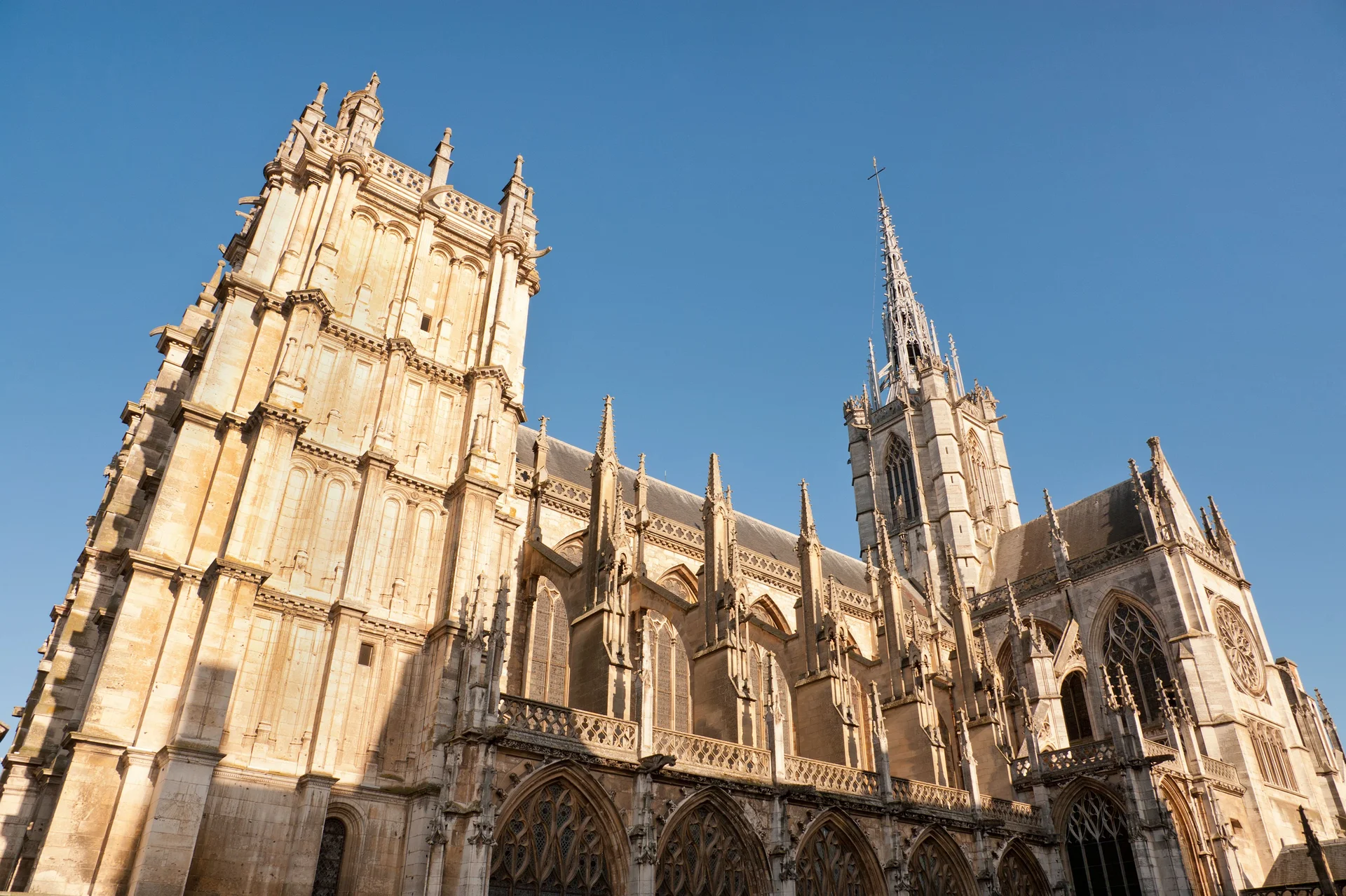
In Evreux, located in the Eure department, stands a Gothic cathedral that has been designated as a monument historique (historic monument) since 1862. As the seat of the local diocese, its flamboyant architecture makes it one of the most striking buildings in the city.
History
The diocese of Evreux dates back to the 4th century. According to legends recorded by monks, it was established following the Christianization of a pagan temple. What we know for certain is that during construction work, bases of Gallo-Roman columns were unearthed, along with a carved stone dating to the 7th century. It is nearly certain that a religious structure stood on this site during that era. The inability to conduct further excavations prevents us from knowing its exact nature or dimensions.
Rollo, a Viking warlord who became the first Duke of Normandy, provided significant donations to the churches he had previously raided following his baptism in 912. This record of his donation provides the first written evidence of a cathedral in Evreux. Construction began shortly after, rebuilding the structure in a Romanesque style.
During the 12th century, Évreux Cathedral was burned three times. Subsequent renovations shifted its style from Romanesque to Gothic. The first Gothic additions began in 1220, with this evolution continuing through the 15th century.
Destined for destruction during the French Revolution, the cathedral remained standing, even surviving the bombing raids that severely damaged it in June 1940. Since 1973, ongoing restoration work has kept the building in a perfect state of preservation.
Notre-Dame Cathedral of Evreux
Whether you are drawn by its nave with Romanesque arches and a Gothic choir, its grand organ, or its rare stained-glass windows, there is no shortage of reasons to visit the cathedral. Walk through its 26 chapels and take in the depth of this historic site.
Opening hours
| Monday | 08:30-19:00 |
|---|---|
| Tuesday | 08:30-19:00 |
| Wednesday | 08:30-19:00 |
| Thursday | 08:30-19:00 |
| Friday | 08:30-19:00 |
| Saturday | 08:30-19:00 |
| Sunday | 08:30-19:00 |

It is a real refuge during hot summer days, and, more seriously, this Gothic cathedral has a lot of presence. It has the advantage of having been cleaned recently. The small garden behind it is open to the public, and in the adjacent building there is a very nice little museum (free for residents of the 27 department).