
Visiting the Puente Nuevo
About 60 miles from Malaga, Ronda sits in the mountains, split in two by the rio Guadalevín. This layout is dramatic, as the river flows at the base of El Tajo, a gorge 550 feet deep. Three bridges span this chasm to connect the two sides, but the most masterful is the Puente Nuevo, an architectural feat that holds its own against the rugged landscape.
A 320-foot Monumental Structure
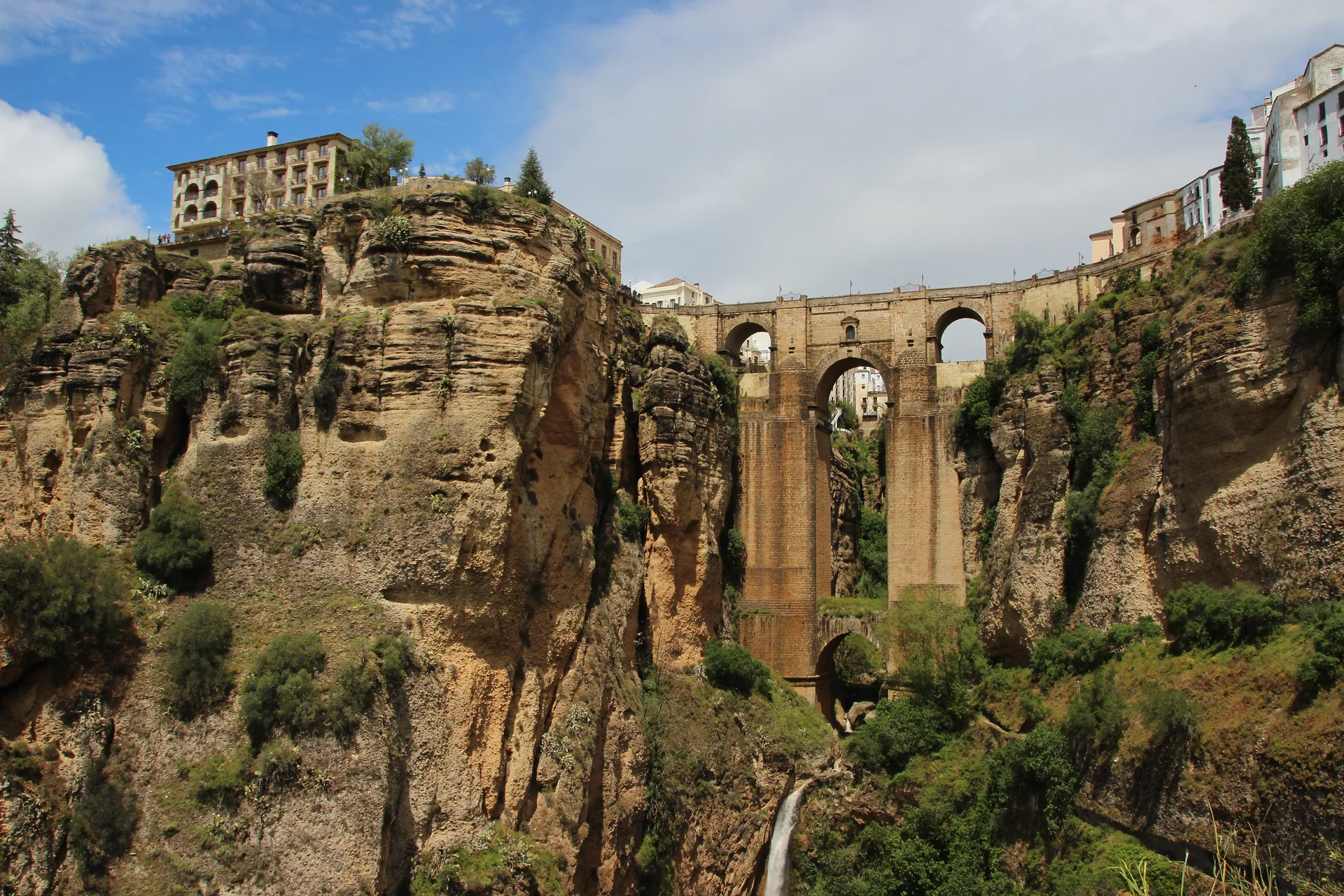
With its fortified ruins and historic charm, Ronda leaves a lasting impression on visitors. While the city has no shortage of monuments, the Puente Nuevo is clearly the most striking. It connects the modern districts to the historic center with such authority that it has become the face of the city. Standing 98 meters (320 feet) tall, its imposing stone masonry spans the gap between the two cliff faces. Its design features three arches, making it the largest of the three bridges crossing the Guadalevín. Construction began in 1759 and finished in 1793, under the direction of architect José Martín de Aldehuela. Its history goes beyond its utility as a crossing point. During the Civil War, the room inside its central arch was used as a prison, and it was not uncommon for opponents of the Francoist regime to be thrown over the railings. Today, the Puente Nuevo is one of the most admired structures in Andalusia. It houses an interpretive center that details its history and the surrounding environment of Ronda. Viewing it from the bottom of El Tajo is a common goal. The hike is somewhat strenuous, but the perspective is incredible. From there, you can see the full scale of the bridge and the balconies of houses hanging over the edge of the precipice, creating an unforgettable scene.
Opening hours
Open 24/7

This old bridge connecting two cliffs isn't the biggest, but it's still impressive. You end up wondering why people made life so complicated by settling in such a hard-to-reach area. Maybe that's exactly the reason? To protect themselves?