Visiting Ronda
Seville, Malaga, Cordoba, Granada… Andalusia is the part of Spain that fills most travelers’ daydreams. Yet few international visitors know about the small town of Ronda, less than two hours from Seville. It is a gorgeous place, and it is absolutely worth the detour!
Spectacular views
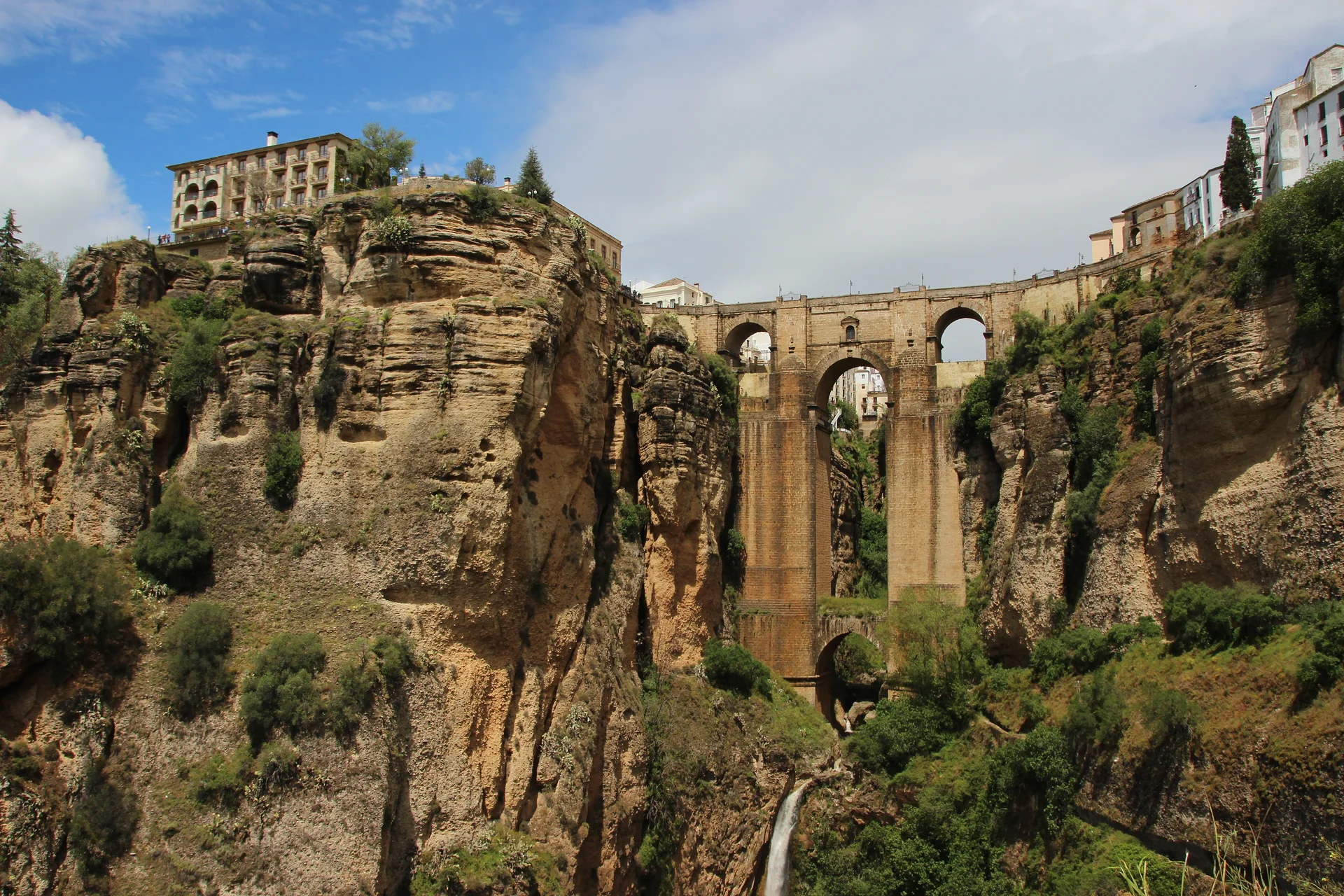
What hits you the moment you reach Ronda is the view of the Puente Nuevo (New Bridge), which links the old town to the new one. This arch took more than thirty years to build, and it opens onto a truly impressive panorama of the valley far below. Almost everyone is stunned the first time the bridge comes into view! Don’t hesitate to head down into the ravine and follow the Guadalevín River on a beautiful hike called the Camino de los Molinos. It’s even better in spring, when flower beds blanket the riverbanks.
Next, stop by the Centro de Interpretación del Puente Nuevo to learn more about the bridge’s history. It was built in the 18th century to span the gorge and connect the two halves of town. If you’re hungry for more views of the same caliber, head to the Ronda mirador along calle Blas Infante. Photographers love it for its wide, unobstructed look over the town. Finally, the Cuenca gardens step down in terraces along the hillside above the Tajo gorge.
A fascinating history
But Ronda has more to offer than views. The town was home in turn to the Romans, the Byzantines, and then the Moors, which explains the richness of its architecture today. Don’t miss the Arab Baths, the best preserved in all of Spain. Built in the late 13th century in Ronda’s old Moorish quarter (San Miguel), they have survived remarkably intact. Among the town’s most visited monuments, the bullring of the Plaza de Toros de Ronda is a must. Pedro Romero founded the Ronda School of Bullfighting here, known for its classical style. After touring the ring, which seats 5,000 spectators, head into the museum next door. Ronda also has some superb palaces: the Palacio del Rey Moro, the subject of many legends about the cruelty of King Almonated, and the Palacio de Mondragón, which holds lush gardens and the municipal museum.
When to go
You can visit Ronda year-round: the town has wonderful things to offer in every season. Spring and early fall, though, have a special flavor. If you’re there in April, don’t miss Semana Santa (Holy Week), when traditional religious processions wind through Ronda.
How to get there
Ronda is easy to reach from Seville, one of Andalusia’s most visited cities. The simplest plan is to fly into Seville (there is no nonstop service from the US, so expect a connection at a European hub), then rent a car for the 1 hour 50 minute drive. You can also take a bus to Ronda’s bus station.