
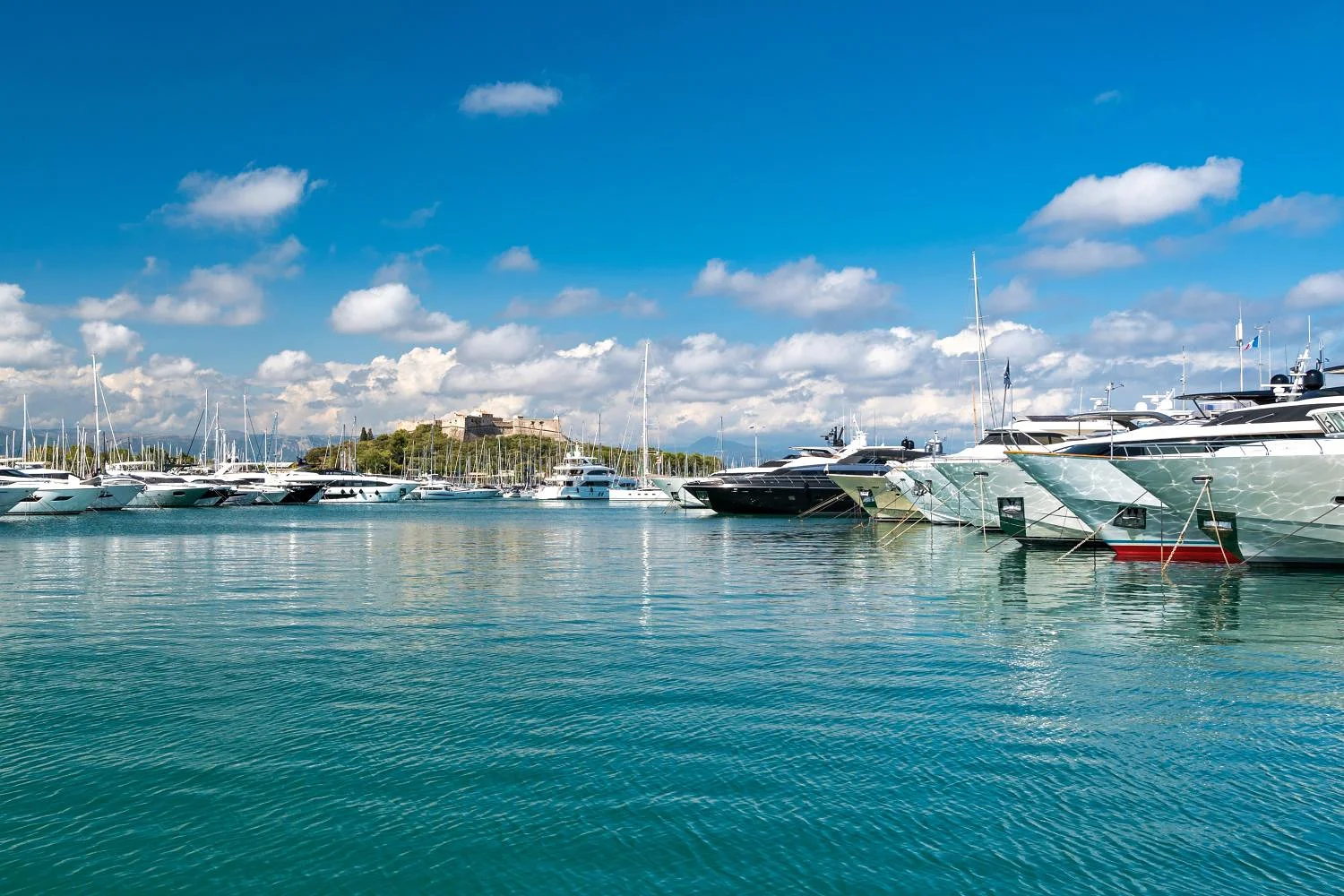
Port Vauban, from Roman garum to superyachts
Second-century brine vats sleep beneath the docks where fifty-million-euro yachts now tie up. Anse Saint-Roch, which grew into the largest marina in Europe by tonnage, has been inhabited since the Phocaeans founded the trading post of Antipolis in the 4th century BCE. The contrast is striking, and it is precisely what sets this harbor apart from the sterile marinas along the coast of France.
Why visit Port Vauban?
This harbor is much more than a parking lot for boats. It condenses 2,500 years of maritime history across 25 hectares of water. Greek fishing port, Roman naval base, departure point for the First Crusade in the 11th century, oil terminal in the 20th century, and seaplane base between the wars, every era has left its mark.
It was also here, at the bastion Saint-Jaume shipyard, that Commander Cousteau's famous Calypso was fitted out before the site closed in 1985.
The current layout dates back to the 1970s, when Antibes bet big on large yachting. With 1,501 moorings and 4,200 linear metres of quay space, the port accommodates everything from a 4-metre local fishing boat to a 165-metre mega-yacht. This coexistence between the luxury world and daily local life gives the neighborhood its distinctive energy.
Billionaires' Quay and large yachting
Inaugurated in 1986, the quai Camille Rayon is better known by its nickname, Billionaires' Quay. It owes its existence to Camille Rayon, a Resistance hero who became a harbor creator on the French Riviera. Protected by a 600-metre breakwater, this quay offers 18 berths for superyachts up to 160 metres long, managed by the International Yacht Club d'Antibes. Concessions sell for record sums, and the owners rank among the wealthiest people in the world.
Strolling along the quay at sunset is a spectacle in itself. Helipads, infinity pools, and tenders larger than some sailboats mean the equipment on these vessels defies imagination. In summer, uniformed crews bustle across the decks while the scent of oiled teak mixes with the sea air. By night, the atmosphere shifts. The lights of the yachts reflect in the dark harbor water, and the boardwalk grows surprisingly quiet.
From bastion Saint-Jaume to Plensa's Nomade
At the harbor entrance, nestled between the old town and Billionaires' Quay, the bastion Saint-Jaume has lived many lives. Roman temple, chapel, fortified tower destroyed in the 17th century, shipyard, and later an abandoned lot, its beautifully renovated ruins have served since 2010 as the pedestal for Nomade, a monumental sculpture by Catalan artist Jaume Plensa. This 8-metre human silhouette, made of white stainless steel uppercase letters, sits facing the sea with its knees pulled against its chest. Visitors can step inside and look out at the landscape through the lattice of characters. At night, spotlights transform the structure into a glowing sentinel.
Friendly tip: bastion Saint-Jaume and the Nomade are open daily except Monday. From June to August, access extends until 23h, making it one of the few spots in Antibes to enjoy a nighttime view of the harbor without buying a restaurant meal. The rest of the year, it closes at 18h.
A harbor committed to biodiversity
Beneath the pontoons, another world thrives. Since 2015, the port has installed Biohut artificial nurseries designed by the company Ecocean. These steel cages filled with oyster shells provide food and shelter for fish larvae and juveniles. The results are concrete, as ecological surveys have recorded more than 60 species of marine animals and plants in these habitats, including 15 species of commercial interest like white seabream, European seabass, and pink shrimp.
Certified as Ports Propres and Ports Propres Actifs en Biodiversité, Port Vauban also leads a program to replant Cystoseira algae along the riprap of its main breakwater.
Opening hours
*Information subject to change

Port Vauban is especially pleasant in any season, with absolutely magnificent views, whether from the ramparts of Antibes, Fort Carré, or the bay of Nice. You will have plenty of time to admire the many yachts, each one more impressive than the last!
A very good Italian restaurant to try at the port is Da Vinci, a 5 minute walk from the train station! Or the famous pizzas and ice cream at Gusto, next to the Porte Marine.