
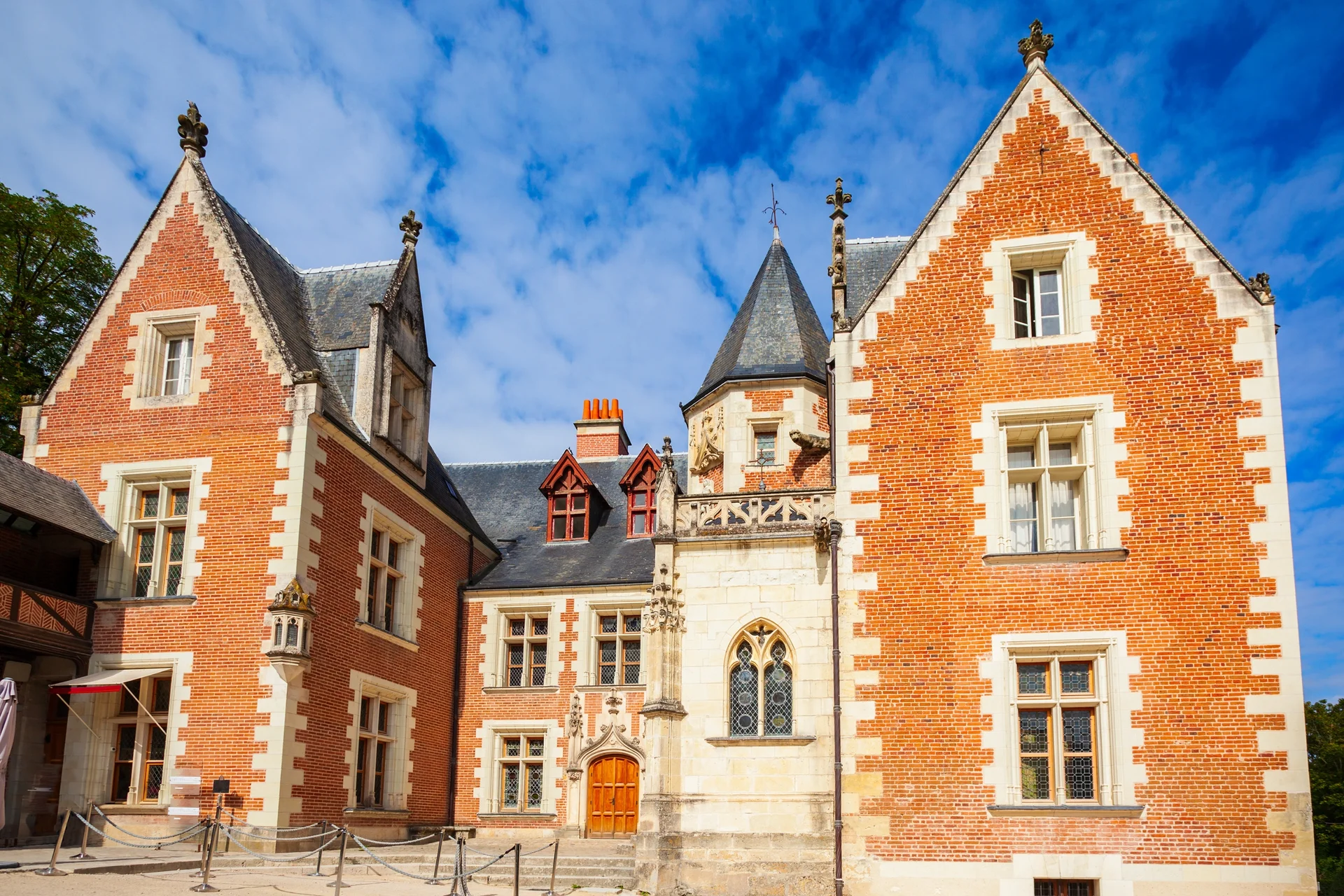
Clos Lucé, the final home of Leonardo da Vinci
On May 2, 1519, Leonardo da Vinci passed away in an upstairs bedroom at the age of 67. To this day, this space with its white tuffeau stone walls holds a distinct atmosphere. Morning light streams through the same window that offered the master a direct view of the Saint-Hubert Chapel at the royal castle of Amboise. Three years earlier, he had crossed the Alps by mule to settle here, bringing with him three paintings, including the Mona Lisa.
Why visit Clos Lucé?
This manor of pink brick and tuffeau stone tells a story that goes beyond an illustrious final chapter. Francis I, only 20 years old at the time, gifted this residence to the Florentine genius just 400 meters from his own home. A secret tunnel even connected the two castles to facilitate their daily interactions. The young king frequently visited the man he called "my father" to absorb his vast knowledge.
Owned by the Saint Bris family since 1854, the site has been transformed into a center for interpreting the work of da Vinci. It offers an intimate look at a universal mind, from the place where he continued to work on urban planning projects for Romorantin to his plans for draining the Sologne marshes.
Castle areas to explore
The Renaissance Residence
The tour begins in the apartments, reconstructed in the spirit of Italian bottegas. Leonardo's bedroom, his study, and the kitchen of Mathurine each reveal a fragment of his daily life. Reproductions of the Mona Lisa, The Virgin and Child with Saint Anne, and Saint John the Baptist sit on easels, a reminder that he never parted with these works.
In the basement, 40 models built by IBM based on original drawings reveal the scale of his technical genius. From tanks and aerial screws to flying machines, six 3D animations accompany these models constructed with period-appropriate materials.
The Leonardo da Vinci Park
Seven hectares of gardens serve as an open-air museum. Twenty life-size machines wait to be operated. You can turn the cranks of the aerial screw, board the tank, or cross a 20-meter solid oak revolving bridge. Thirty-two translucent canvases, ranging from 3 to 4 meters and suspended in the trees, display fragments of his paintings.
Friendly tip: Arrive around 9 am or after 3 pm to enjoy the park without the crowds. A real-time attendance monitor is available on the official website.
The Leonardo da Vinci Painter and Architect Galleries
Inaugurated in 2021, these 500-square-meter galleries occupy a former textile factory refurbished by the Atelier Chaix & Morel. The ground floor features a 15-minute immersive show where 17 of the master's masterpieces are gathered for the first time, featuring works from the Louvre, the Uffizi Gallery, the Vatican, and the National Gallery in London. Set to music by Jordi Savall, faces, hands, and blue horizons blend in a choreography of light.
The upper floor explores Leonardo as an architect through hands-on models, digital tables, and video games. A simulator even allows visitors to pilot a flying machine over a 3D model of the Romorantin palace.
A family-friendly destination
The Inventor's Notebook, a free activity booklet for children ages 7 to 12, turns every child into one of Leonardo's students. With drawing tables in the park, a shaded picnic area, and costumed tours led by Mathurine during school breaks, the site is well-designed for younger visitors. Plan for at least 2 hours for a full visit, or 4 hours if you prefer to see everything at a leisurely pace.
Opening hours
November to January: 10:00 AM to 6:00 PM.
February to June and September to October: 9:00 AM to 7:00 PM.
July to August: 9:00 AM to 8:00 PM.
The ticket office and the château close 1 hour before the park.
*Information subject to change

If you are visiting the chateaus of the Loire Valley, I recommend you take two hours to see the Clos-Lucé. This small residence does not have the scale of a chateau, but it is a real tribute to the genius of Leonardo da Vinci. I learned a lot about the life of this creator, but I was especially impressed to see some of his inventions in action, particularly the rotating bridge and the tank. The park also offers a beautiful walk. A must-do.