
Guggenheim Museum Bilbao, the monumental sculpture that reinvented a city
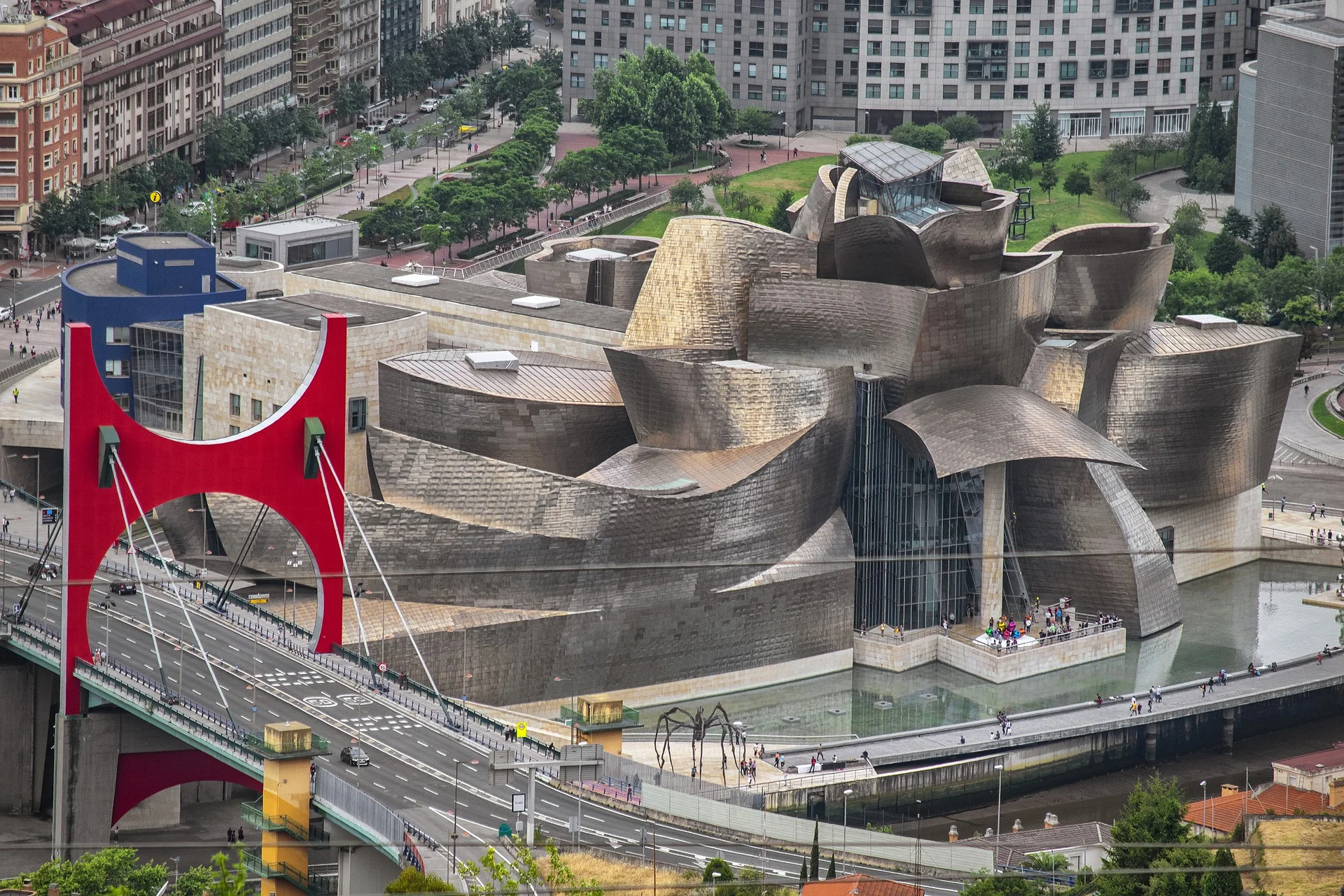
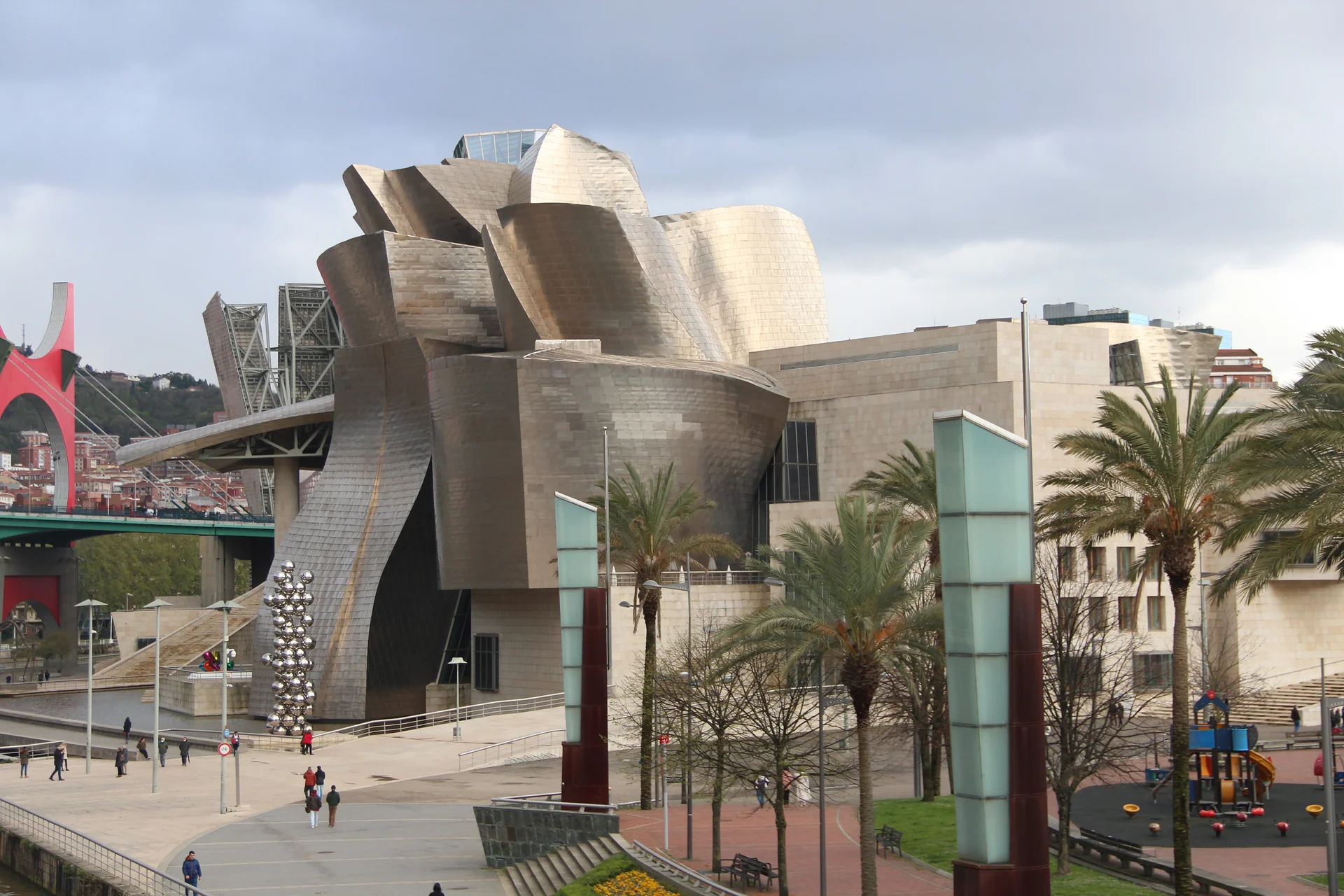
The 33,000 titanium panels capture the Basque Country light, turning every hour of the day into a shifting visual display. Since 1997, the Guggenheim Museum Bilbao has been more than just a museum. It is the physical metamorphosis of Bilbao, an industrial city turned contemporary art mecca. The vision of Frank Gehry did more than create a building. It invented a global phenomenon now known as the Bilbao Effect.
Why did this museum change everything?
On the banks of the Nervión, where abandoned docks once stood, this architectural sculpture rises and defies classic curves. Gehry drew inspiration from the movement of fish and the city's maritime industrial heritage. The result is an organic building that feels like a ship docked at the pier or the shimmering scales of a giant aquatic creature.
Built between 1993 and 1997 using the aerospace software CATIA, the museum is as much a technical achievement as an aesthetic one. Its 24,000 square meters house 11,000 square meters of exhibition space spread across nineteen galleries. Ten follow a classic rectangular layout recognizable by their stone finishes, while nine feature irregular shapes clad in titanium that ripple according to the light and weather.
The icons guarding the temple
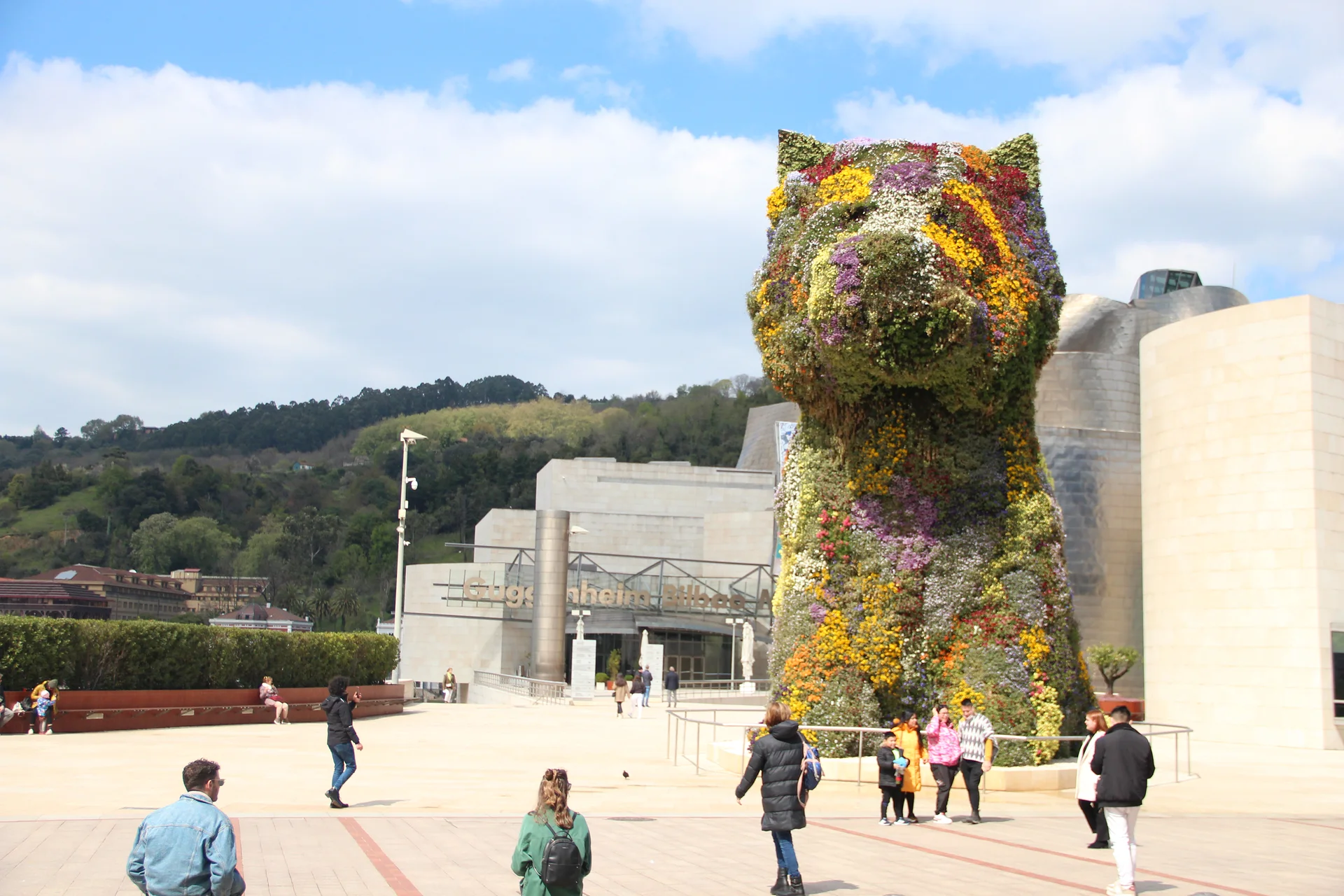
Before you even step inside, three monumental sculptures command your attention. Puppy, the iconic giant dog by Jeff Koons created in 1992, stands guard in front of the main entrance. Its 12.4-meter frame is covered in tens of thousands of live flowers, meticulously changed twice a year. This joyful sentinel embodies the optimism the American artist aimed to instill.
Between the museum and the river stands Maman, the monumental spider by Louise Bourgeois. Standing nearly 9 meters tall, this bronze and steel structure cradles a marble sac filled with eggs, a powerful allegory of protective motherhood. On the museum terrace, Koons' multicolored Tulips complete this outdoor triptych with their bright, explosive colors.
Inside the galleries
The heart of the museum beats in its dizzying 50-meter-high atrium, nicknamed The Flower by Gehry himself. This space, bathed in natural light, connects the galleries across three floors and offers striking views of the estuary and the surrounding hills.
The Matter of Time, an immersive experience
The largest gallery, stretching 130 meters, houses the permanent installation by Richard Serra. The Matter of Time consists of eight monumental Corten steel sculptures that form a sensory labyrinth. You can easily lose your way while exploring curves that shift your perception of space and amplify sound. Walking between these multi-ton steel plates becomes an almost mystical experience.
Permanent collections and exhibitions
The museum displays a masterful permanent collection featuring Mark Rothko, Antonio Saura, Willem de Kooning, and Anselm Kiefer. Rotating temporary exhibitions constantly refresh the offerings, confirming the Guggenheim's status as a major platform for global contemporary art. Jenny Holzer, Eduardo Chillida, and Fujiko Nakaya with her poetic fog sculpture round out this artistic pantheon.
Pro tip: Walk onto the La Salve bridge with its red arch to see the museum from its best angle, then cross the river via the Deusto library footbridge for a dramatic head-on view. Inside, try to visit during the quiet hour on Wednesday between 2:00 PM and 3:30 PM for a calmer experience.
Opening hours
*Information subject to change

Bilbao has become a tourist destination in its own right thanks to this extraordinary museum.
The neighborhood was redeveloped around this top-tier cultural space.
I loved its exterior architecture, which is worth the trip, and the view from the bridges is stunning.
That said, I was less thrilled by the collections, but it remains a surprising place.