
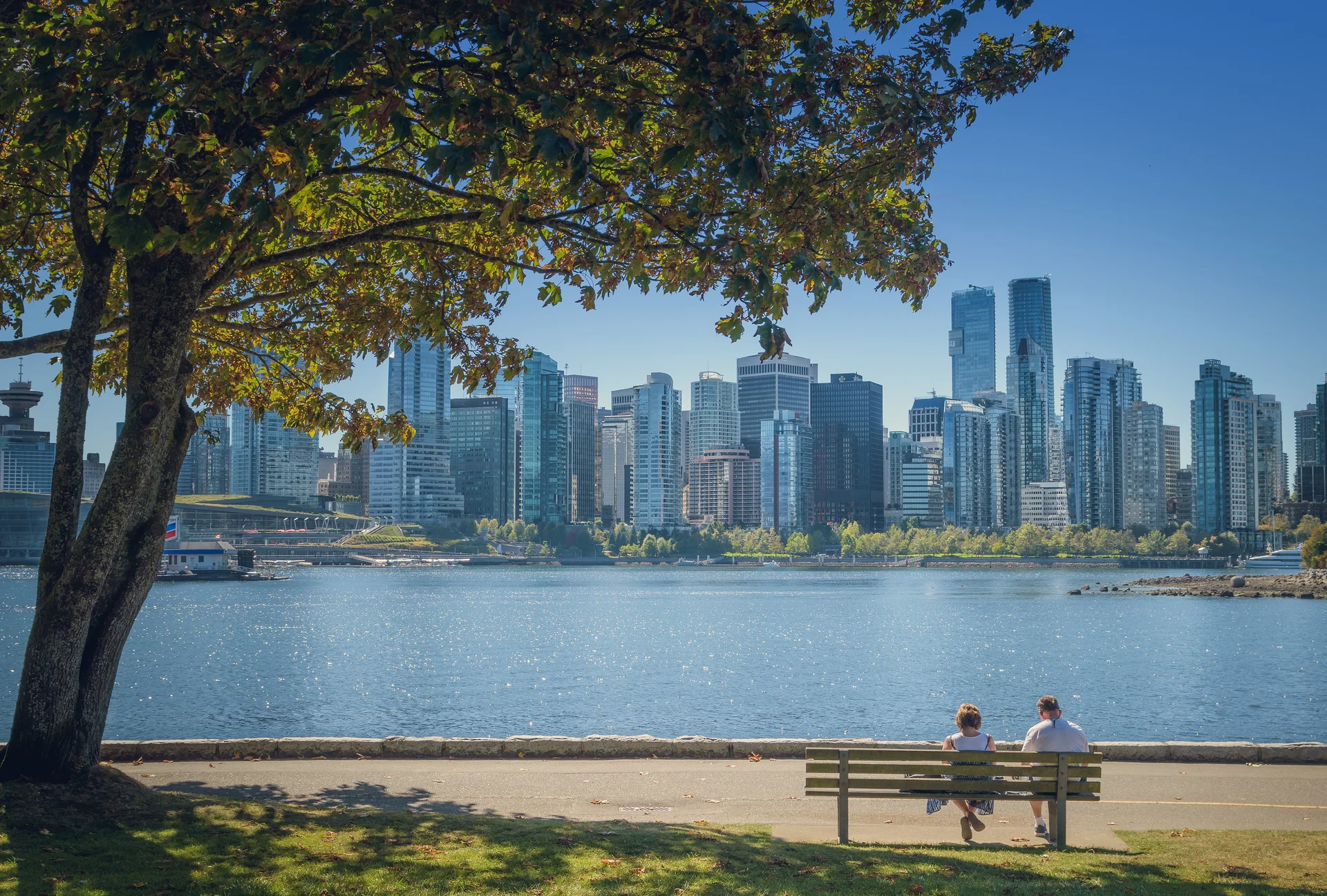
Stanley Park, 400 hectares of old-growth forest right on the ocean
The scent of red cedars hits you before you even step off the curb. Just a few steps are enough to transition from the glass towers of the West End into a temperate rainforest where some trees approach 800 years of age. That contrast between the city and the wild is the real magic of Stanley Park.
Why visit Stanley Park?
Opened in 1888 on the unceded ancestral territories of the Musqueam, Squamish, and Tsleil-Waututh nations, the park covers a 405-hectare peninsula. Archaeologists have uncovered artifacts there dating back more than 3,000 years, particularly at the site of the X̱wáýx̱way village near the current Lumberman's Arch.
Eight million visitors flock here every year. Its forest of Douglas firs and giant western red cedars is crisscrossed by 27 km of trails.
The Seawall, the backbone of the park
The waterfront path of the Seawall traces an 8.8 km loop around the peninsula. On foot, plan for two to three hours. On a bike, one hour is enough to complete the circuit, which runs counterclockwise. Pedestrians and cyclists each have their own dedicated lane.
Several rental shops are located on Denman Street. Renting a standard bike runs around 30 to 40 CAD a day, and e-bikes make it easy to push all the way to Granville Island via False Creek.
Stops worth a real pause
Brockton Point and the totem poles
The collection of totem poles at Brockton Point stands as one of the most photographed sites in British Columbia. Erected starting in the 1920s, these poles carved from red cedar represent the heritage of several Indigenous nations. The Spoken Treasures guided tour offers valuable insight into their meaning.
Prospect Point and Siwash Rock
Prospect Point overlooks the strait from 60 meters up, with sweeping views of the Lions Gate Bridge and cargo ships gliding toward the harbor. A cafe invites you to linger. Further along, Siwash Rock, an isolated rock pillar standing in the water, serves as an important spiritual site for the Coast Salish peoples.
Lost Lagoon and Beaver Lake
Lost Lagoon, accessible right from the Georgia Street entrance, owes its name to the tides that once made it disappear. In spring, swans nest in the reeds. Deeper in the park, Beaver Lake is a quiet wetland where herons and turtles share the space far from the crowds.
The beaches and the aquarium
Second Beach features a heated outdoor pool open in the summer. Third Beach, more secluded facing Burrard Bay, remains a local favorite for catching sunsets. The Vancouver Aquarium, Canada's largest aquarium, houses more than 65,000 animals. Sea otters and Steller sea lions are the main stars. Plan for two hours and book your tickets online.
Friendly tip: to enjoy the park without the crowds, arrive before 9 AM or enter via Pipeline Road rather than Georgia Street. The morning light filtering through the understory is spectacular, and your chances of spotting bald eagles jump significantly.
Opening hours
The park is open year-round, 24 hours a day.
Vancouver Aquarium: 10:00 AM to 5:00 PM (last entry at 3:30 PM), with extended hours during the summer (9:30 AM to 6:00 PM in July and August).
*Information subject to change

I absolutely fell in love with this urban park located on a peninsula!
I walked around this natural space, but you can also do it by bike since there is a bike path that follows the coastline.
During my visit, I really appreciated the nature vibe just a stone's throw from the city center. You walk along the forest and on the ocean side I even saw a seal!
For photography lovers, the views of Vancouver and its modern towers are splendid.