
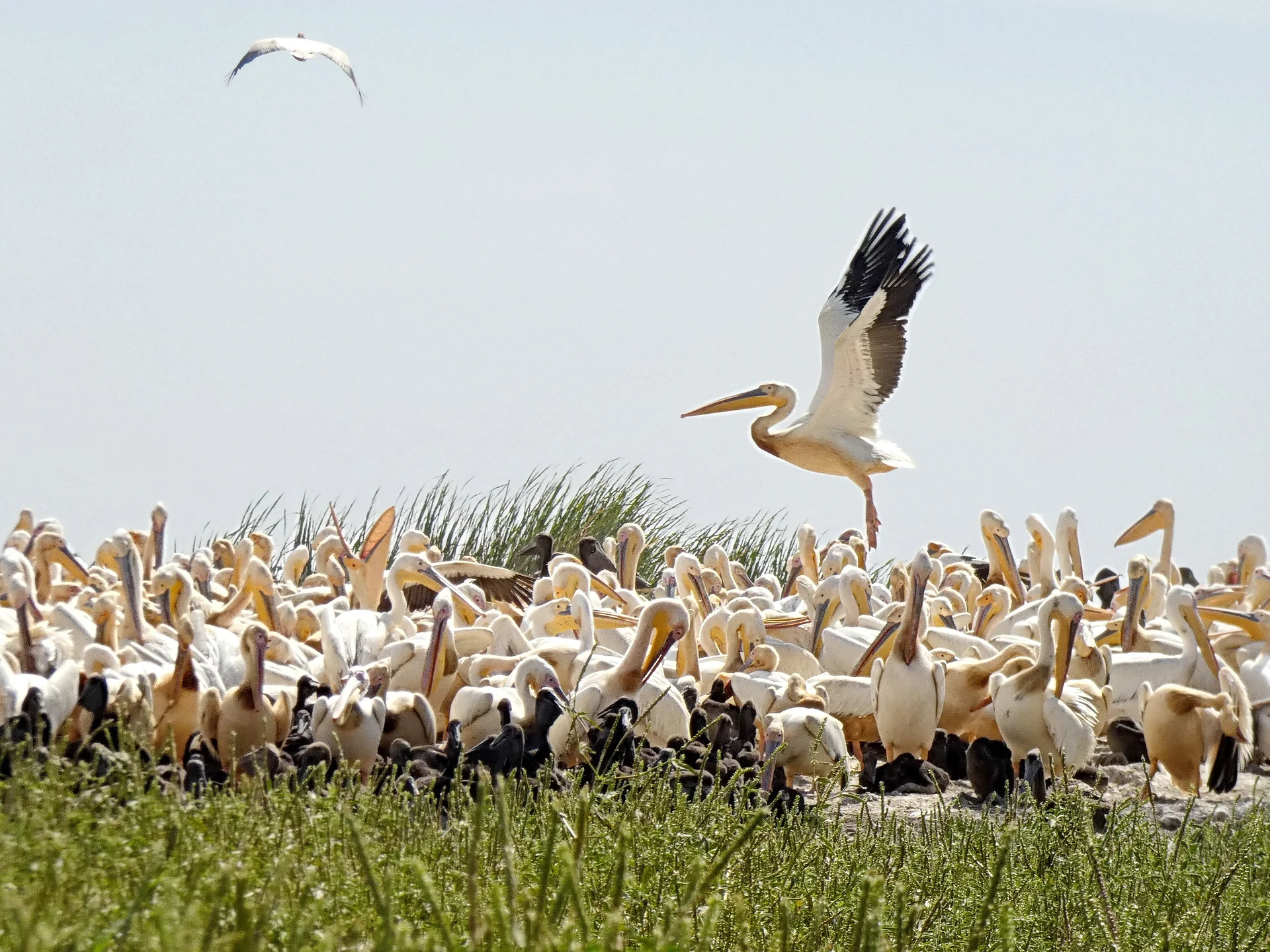
Visiting the Djoudj National Bird Sanctuary
The Djoudj National Bird Sanctuary was established in 1971. Expanded four years later, it was designated a wetland of international importance by the Ramsar Convention in 1980, followed by its inscription as a UNESCO World Heritage site in 1981. Geologically, it covers a massive expanse of 16,000 hectares spreading across the Senegal River delta. Formed as a basin, the area is one of the few green spaces in the Sahel. Migratory birds make this park a primary stop during their travels. The population is estimated at roughly three million birds, spread across 350 distinct species. Among these are the greater flamingo, the great white pelican, the spur-winged goose, and the gray heron. However, birds are not the only wildlife to see in this wild environment. Reptiles, such as monitor lizards and pythons, can be spotted by observant visitors.
A Critical Migration Hub
Serving as an oasis in the desert, the Djoudj National Bird Sanctuary is a key transit point for birds on migration. A chain of lakes, marshes, and sandbanks makes the terrain perfectly suited for a rest stop. It serves as the first migration stop for Palearctic and Afrotropical bird species after they cross the Sahara. Thanks to site management, these birds even use the area to settle temporarily and breed. Now a UNESCO World Heritage site, the Djoudj National Bird Sanctuary offers views of massive colonies of pelicans and greater flamingos. The animal diversity here is a draw for any visitor who takes the time to observe it.
Opening hours
| Monday | 08:00-18:00 |
|---|---|
| Tuesday | 08:00-18:00 |
| Wednesday | 08:00-18:00 |
| Thursday | 08:00-18:00 |
| Friday | 08:00-18:00 |
| Saturday | 08:00-18:00 |
| Sunday | 08:00-18:00 |

Millions of birds to see, especially in winter during the migrations, with hundreds of different species. But that is not all: mammals, crocodiles, amphibians, fish... Nature lovers will be thrilled.