
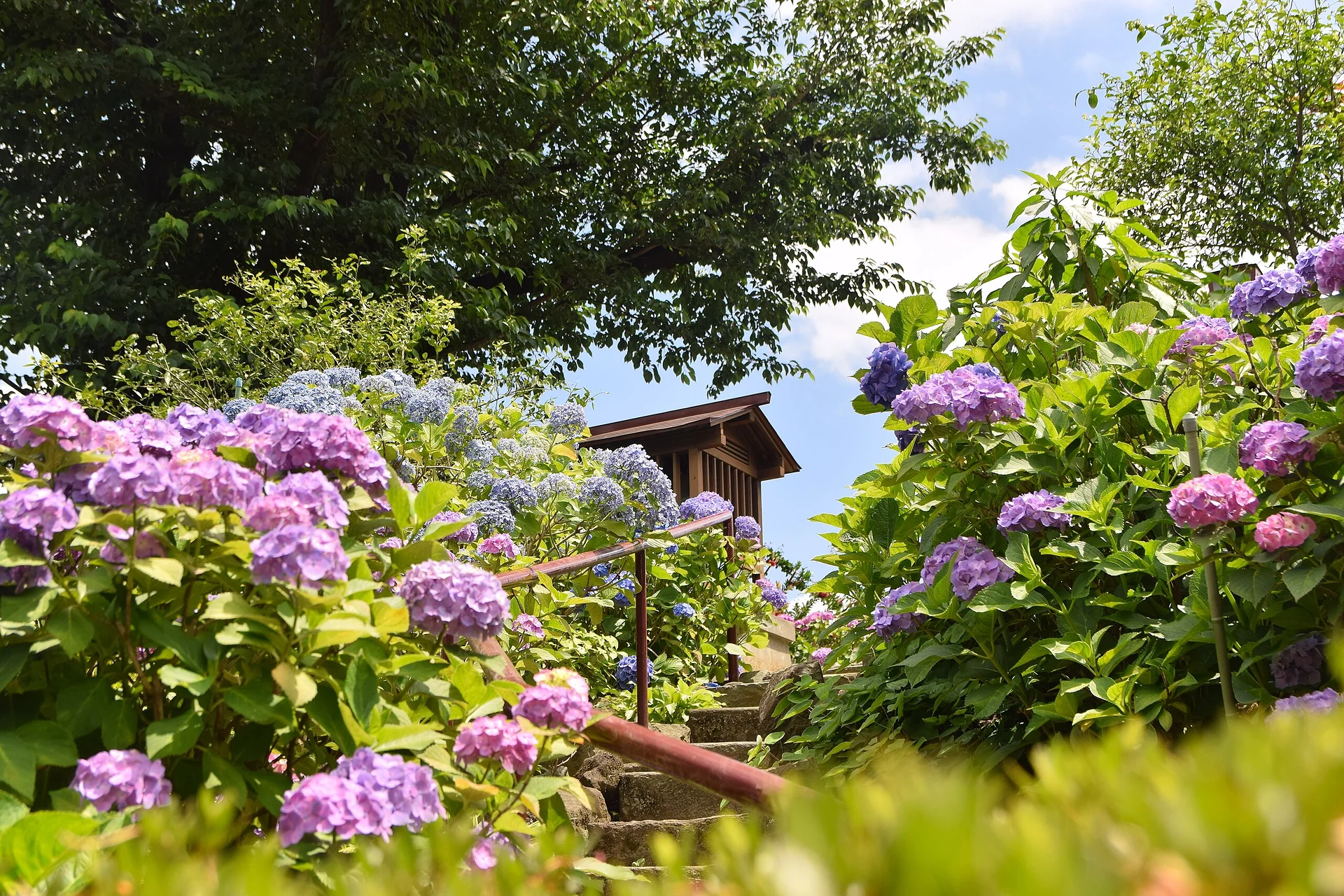
Hakusan Shrine, where hydrangeas and legends bloom
In the heart of the Bunkyo neighborhood, known for its universities and local history, stands a shrine founded in 948 that has endured for over a millennium without losing its character. Stone lanterns line the approach, local cats dart through the shrubbery, and every June, a burst of color transforms this place of worship into a poetic garden.
A shrine between imperial history and revolution
Moved to its current site in 1655, the Hakusan Shrine takes its name from Mount Hakusan in Ishikawa Prefecture, one of the most sacred mountains in Japan. Its status changed when it became a neighbor to the residence of the fifth shogun, Tokugawa Tsunayoshi, earning it shogunal patronage from that point on. During the Meiji era in 1868, the emperor selected twelve shrines to serve as spiritual landmarks for the new capital, from which the ten Tokyo Jissha were drawn in 1975, and Hakusan was among the chosen.
The most surprising piece of history? In 1910, Sun Yat-sen, founding father of the Republic of China, observed Halley's Comet from this shrine. That celestial sight reportedly inspired him to launch the revolution in his home country. A stone monument honors this revolutionary memory on the grounds today.
The Hydrangea Festival, the soul of the shrine in June
Each year in mid-June, more than 3,000 hydrangeas bloom around the shrine and in the adjacent Hakusan Park, turning the area into a symphony of blue, pink, and white. The Bunkyo Ajisai Matsuri draws visitors who come to admire the floral display that brightens the rainy season.
On weekends, the festival comes alive with mikoshi processions, food stalls, performances, and even free dental screenings. The winding paths that climb toward the Fujizuka, an artificial hill built to replicate Mount Fuji, are lined with hydrangeas and open to the public exclusively during this period.
Friendly tip: Arrive before 9am on weekends during the festival to avoid the crowds, but keep in mind that the office for stamps does not open until 10am. The smart play? Enjoy the morning quiet to photograph the hydrangeas, then explore the nearby Koishikawa Botanical Garden before returning for your stamp.
Goddesses, teeth, and cats: the shrine's curiosities
Hakusan venerates Kikurihime, the goddess of marriage, who is said to hold the power to strengthen family bonds and reconcile couples. The shrine naturally attracts those in search of romantic harmony. However, its most unusual claim to fame remains its association with toothaches.
Legend has it that an empress prayed here for relief from a toothache and was cured. During the Edo period, the shrine distributed toothpicks to devotees seeking dental relief. Today, you can leave your used toothbrush in a designated box during the hydrangea festival, and a special ceremony will be held for it. It is a practice unique to Japan.
The shrine is also home to a large population of cats, most visible in the morning and evening, prowling between the bushes and the fourteen mikoshi storehouses scattered across the site. These storage sheds for portable shrines stand as a testament to the site's historical significance.
Experiencing the shrine in daily life
Beyond the summer festival, Hakusan is a peaceful place to visit year-round. The surrounding neighborhood maintains a Showa-era charm with its many retro-style cafes, far from the reach of international chains. The purification fountains at the entrance are beautiful, and the komainu (guardian lion-dogs) sport an unusual set of golden eyes.
Opening hours
Open 24/7

I love these flowers and the atmosphere of Japanese temples. Needless to say, this place was perfect for me! You really have to go in June to enjoy it to the fullest. Yes, it is crowded, but that is the case with the cherry blossoms too. Besides, it is worth the trip. The plants are absolutely beautiful. A magical and very green spot.