
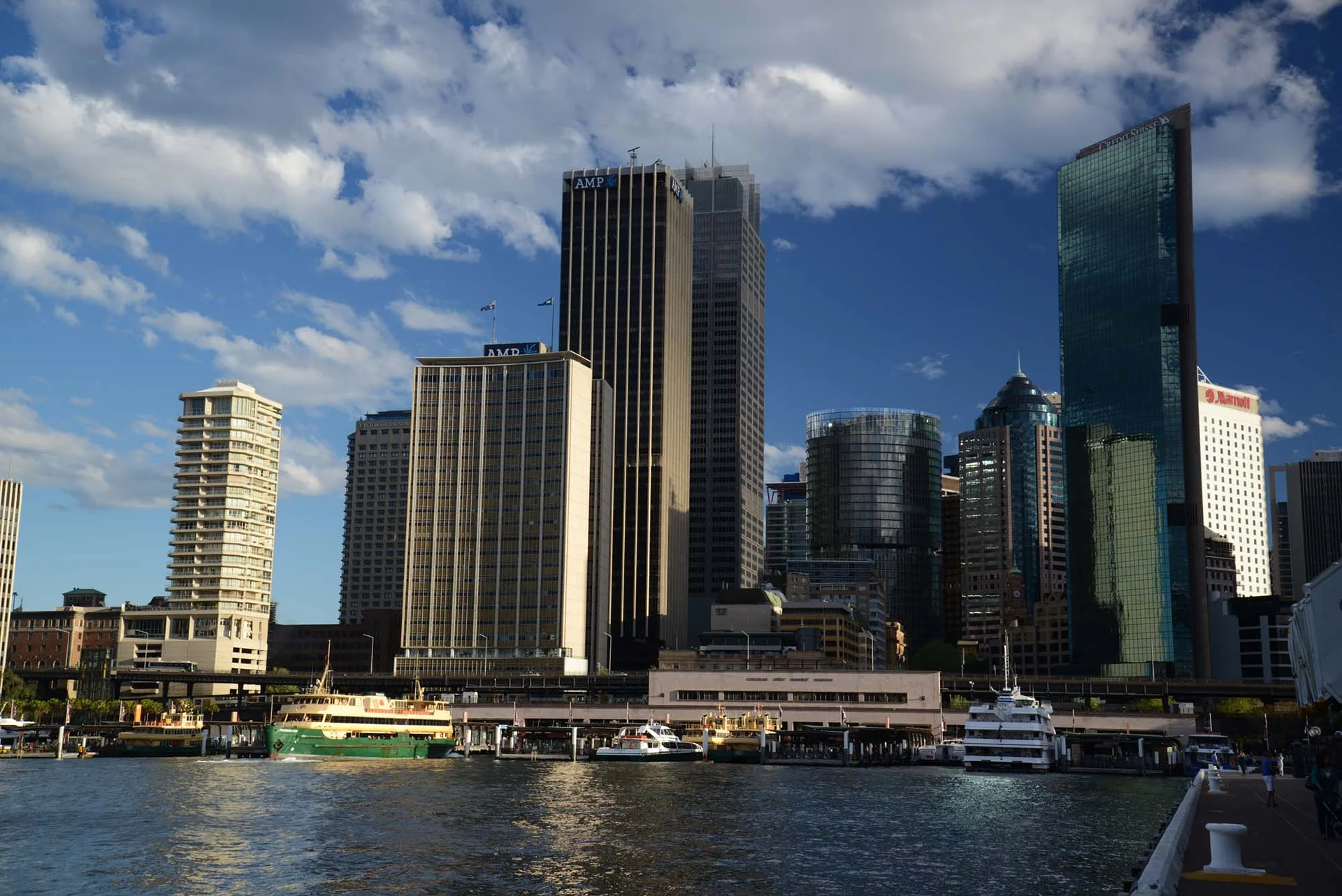
The beating heart of the Sydney harbor
Yellow and green ferries glide across the shimmering water while the Sydney Opera House unfurls its white sails on one side and the steel arch of the Harbour Bridge stands tall on the other. Welcome to Circular Quay, where modern Australia began on a January morning in 1788. It is more than just a transit terminal. It is the permanent stage of Sydney, alive with the bustle of commuters, laughter from outdoor cafes, and the melodies of street performers.
Why Circular Quay is essential
On January 26, 1788, the British First Fleet dropped anchor in this protected cove of Sydney Cove. Sailors landed on these shores belonging to the Gadigal clan, Eora people who named this place Warrung, or Little Child. This was the birth of the colony of New South Wales, the first state of Australia.
Between 1837 and 1855, convicts built the semicircular quay that gave the neighborhood its name. The port became the vital artery of Sydney, hosting merchant ships laden with wool and grain. Today, that colonial heritage is still visible in the cobblestones of the nearby Rocks district and in the architecture of the Customs House, which underwent a major restoration in 2012.
The pulse of Sydney in one place
Circular Quay functions as the hub of the Australian metropolis. Every day, tens of thousands of people pass through this transit center where trains, buses, light rail, and ferries converge. The underground train station connects all suburban lines, while the wharves line up ferry departures to every corner of the harbor.
This activity is not chaotic. The pedestrian promenade along the waterfront offers a rare sense of space in a major city. Street musicians play their didgeridoos, artists display their canvases facing the bay, and office workers in suits join tourists in shorts to contemplate a view that never gets old.
Dining with a view
The food scene rivals the scenery. High-end restaurants compete for prime locations. Quay, Aria, and Bennelong, tucked into one of the sails of the Opera House, offer refined contemporary Australian cuisine. For a more relaxed vibe, the Opera Bar at the base of the Opera House serves cocktails and fresh oysters facing the bridge. Cafe Sydney, perched on the roof of the Customs House, offers sweeping views over the entire bay.
Experiences from the docks
Circular Quay is not a final destination, but a starting point. The ferries leaving from the six wharves open Sydney like a picture book. The trip to Manly remains the iconic maritime experience. It is a 30-minute journey that passes under the Harbour Bridge, cruises past the posh residences of Kirribilli, and heads out to the ocean through the Heads. Dolphins sometimes swim in the wake.
Other lines serve Taronga Zoo with its plunging view of the city, Watsons Bay and its dramatic cliffs, or head up the Parramatta River to UNESCO-listed historic sites. Tourist cruises, ranging from gourmet lunches to jet-boat rides for thrill-seekers, all depart from here.
Culture and free entry
The Museum of Contemporary Art Australia stands on the western side of the quay in an imposing Art Deco building. Permanent entry is free, and the collections feature the best of Aboriginal and contemporary Australian art. Right next door, the Customs House houses a public library, exhibitions, and a fascinating model of Sydney under a glass floor in its atrium.
Friendly tip: To avoid the massive crowds on New Year's Eve, come to the fireworks rehearsals a few days before. The atmosphere is more relaxed and the pyrotechnic display is nearly identical. Another trick is that weekday mornings offer a golden light perfect for photographing the Opera House without the hordes of tourists.

I imagine this place is to Sydney locals what the Old Port is to people from Marseille: an overcrowded spot left in the hands of tourists.
Be that as it may, even if it is a cliché, go take a walk at Circular Quay, sit down at a bar, cafe, or restaurant terrace, and enjoy the scenery: the Sydney Opera House (a world-famous icon), the Harbour Bridge, the bay, the harbor, the ferries moving around, the boats at the dock, and people of all backgrounds passing by.
Expect to pay a lot for your drink, but you are not there for that.