
Rennes Cathedral: A Roman Basilica under Breton skies
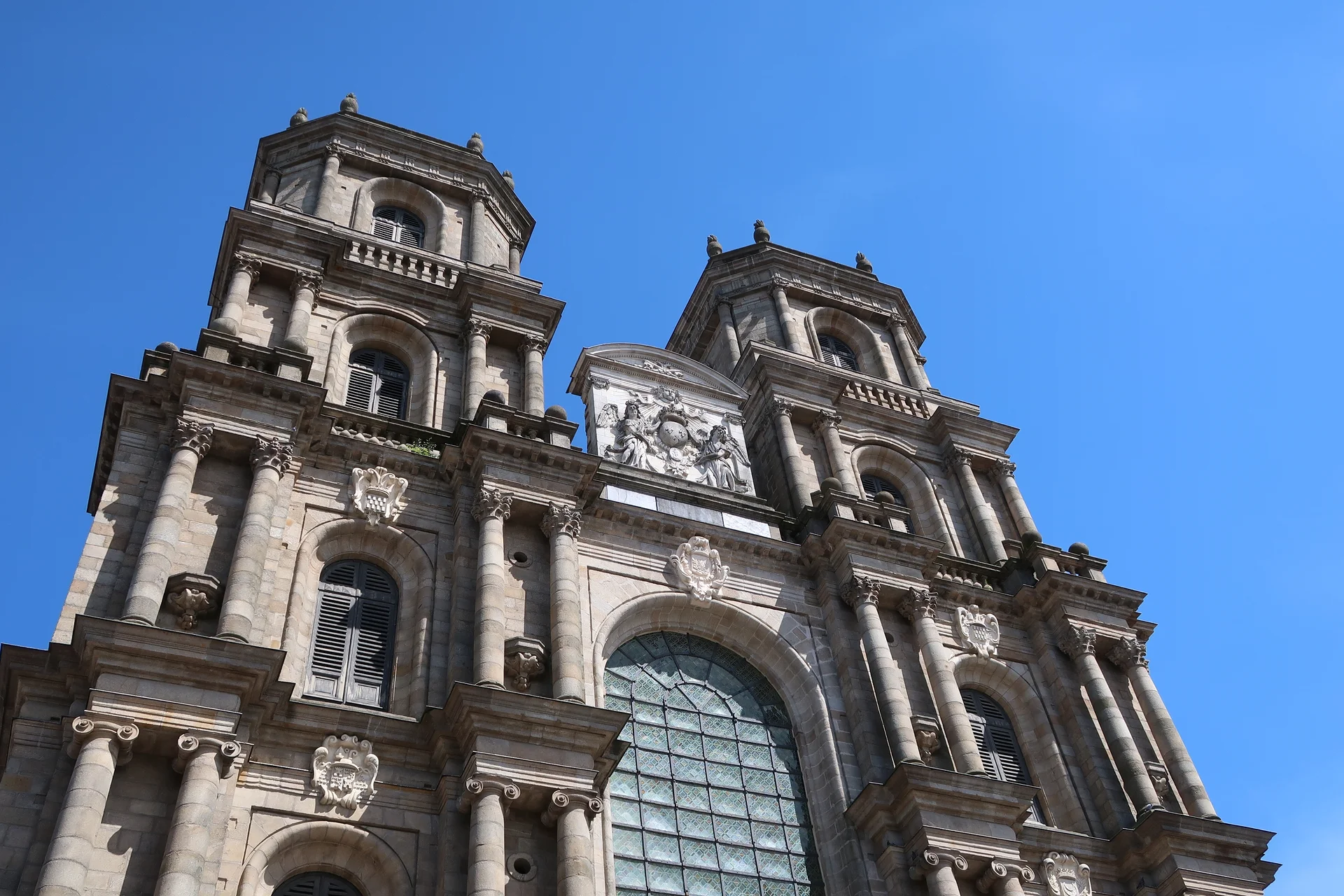
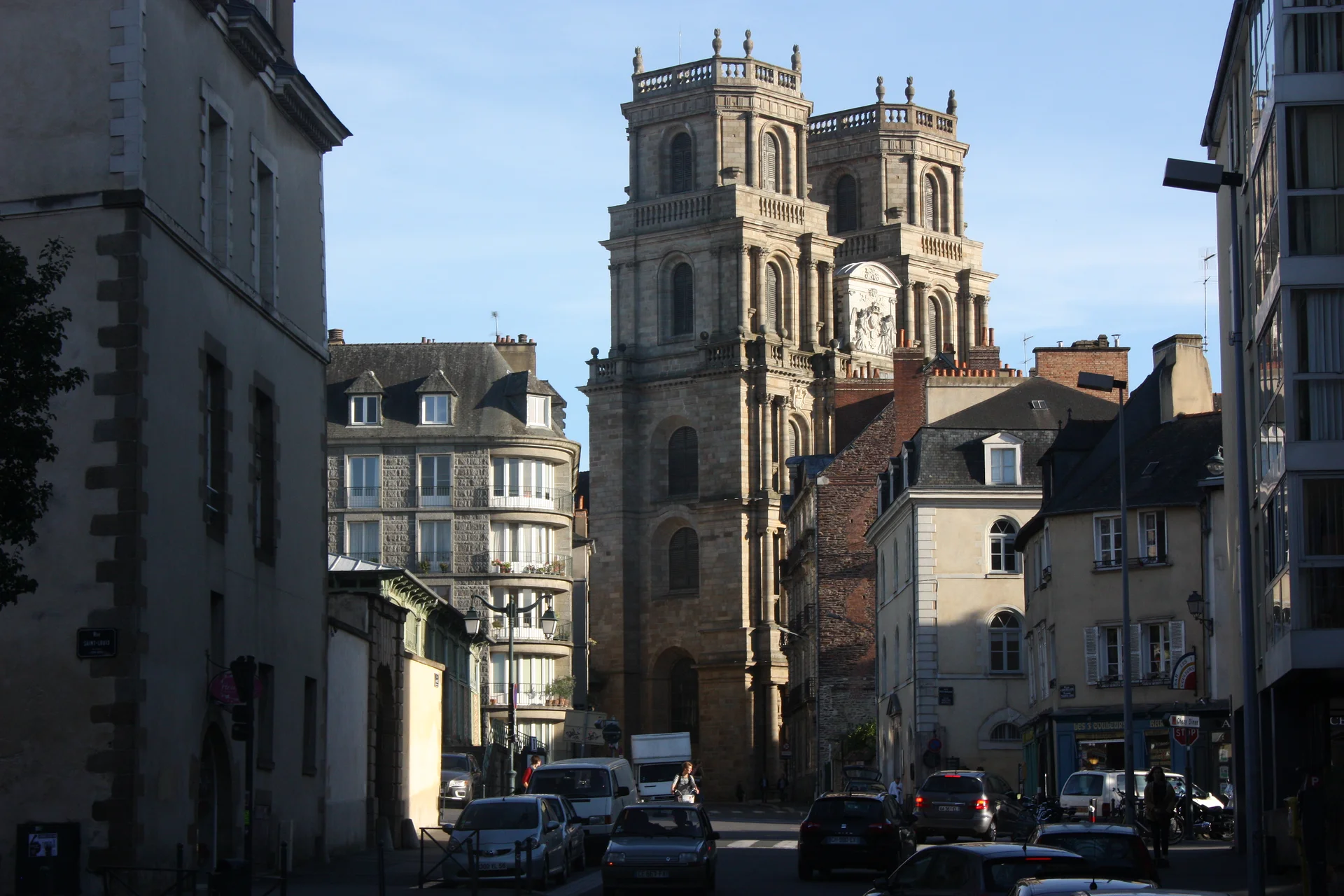
Outside, the granite is gray and austere. Inside, a midnight-blue ceiling is studded with gilded stars. This striking contrast defines the unique character of Rennes Cathedral. It stands as the only example of a Roman-style basilica in Brittany, and perhaps even in all of France. Dukes of Brittany once arrived here for their coronation ceremonies after passing through the nearby Portes Mordelaises (Mordelaises Gates).
Why visit Rennes Cathedral?
A place of worship has occupied this site since the 6th century. The current structure is the result of a reconstruction that began in 1787 based on designs by Nantes architect Mathurin Crucy, following the collapse of the Gothic choir in 1754. The French Revolution brought construction to a halt, and the building was not officially inaugurated until 1844.
In 1859, Napoleon III elevated Rennes to the rank of archbishopric, the first in Brittany. The pediment of the facade still bears the motto of Louis XIV: Nec pluribus impar. The 44 granite columns, intended to project an image of strength for the new edifice, were covered in stucco designed to mimic red marble beginning in 1841.
The interior decor: A dramatic transformation
Monseigneur Brossay-Saint-Marc, the bishop of Rennes in 1841, felt the interior was unworthy of a cathedral. As a close associate of Pope Pius IX, he leveraged his personal connections and family fortune to completely overhaul the building. The gray stone columns vanished beneath colorful stucco, and the walls were adorned with frescoes and gold leaf.
Look up. The vaults are painted a deep blue and sprinkled with stars to evoke the celestial sphere. Alphonse Le Hénaff created the large apse fresco depicting the handing of the keys to Saint Peter, which draws inspiration from the mosaics found in Roman basilicas. The chandeliers, restored by the Evellin workshop, complete this Mediterranean-inspired atmosphere of opulence.
The treasury room and the Antwerp altarpiece
Since 2019, a new treasury room has allowed visitors to admire the cathedral centerpiece: an Antwerp altarpiece dating to 1520. This collection of carved, painted, and gilded wood features 80 meticulously crafted figures. It is one of only 180 remaining 16th-century Antwerp altarpieces in the world, with fewer than 20 located in France.
The history of this piece has been turbulent. In 2007, thieves hid inside the cathedral overnight to steal three elements of the predella. Only one panel was ever recovered, found in Belgium. A restoration completed in 2019 returned the work to its original vibrant colors.
Notable items in the treasury room include:
- The gold chalice gifted by Pope Pius IX
- The rock crystal censer
- Liturgical vestments featuring coats of arms decorated with a pelican
- Processional crosses and ciboria
Friendly tip: Guided tours organized by the local tourism office every Wednesday in summer provide access to details often missed by casual visitors. Look for depictions of Anne of Brittany and Du Guesclin hidden within the wall paintings.
The four statues of the Tetramorph
Until 2019, four empty brackets hung above the transept crossing. They had been waiting since 1878 for the angel statues originally commissioned by Brossay-Saint-Marc. Sculptor Laurent Esquerré finally filled the void with four three-meter figures representing the symbols of the Evangelists: the man, the lion, the ox, and the eagle.
Opening hours
| Monday | 09:30-12:00, 15:00-18:00 |
|---|---|
| Tuesday | 09:30-12:00, 15:00-18:00 |
| Wednesday | 09:30-12:00, 15:00-18:00 |
| Thursday | 09:30-12:00, 15:00-18:00 |
| Friday | 09:30-12:00, 15:00-18:00 |
| Saturday | 09:30-12:00, 15:00-18:00 |
| Sunday | 14:00-18:00 |

Rennes Cathedral is impressive from the outside when you gaze at the facade. But do not stop at that first impression! You will be surprised by the richness and complexity of its interior decorations, which will delight any fan of religious art.
Right next door, do not miss a visit to the Mordelaises Gates, remains of the old fortifications that surrounded the city back in the Middle Ages!