
Visiting the Sambadrome
The concept of a permanent venue for samba festivals and competitions in Rio de Janeiro emerged in the 1980s. Tired of the annual cycle of building and tearing down temporary structures for the city carnival, the governor of Rio, Leonel Brizola, decided to construct a dedicated arena for samba parades. With the guidance of anthropologist Darcy Ribeiro, the Sambódromo Marquês de Sapucaí was born.
A temple of samba in the heart of Rio de Janeiro
The project was entrusted to architect Oscar Niemeyer, who had just 120 days to design and complete the structure before the start of the next carnival. Roughly 2,700 workers labored around the clock to finish this massive project, which cost 28 million euros. The Sambadrome opened its gates for the first time in 1984.
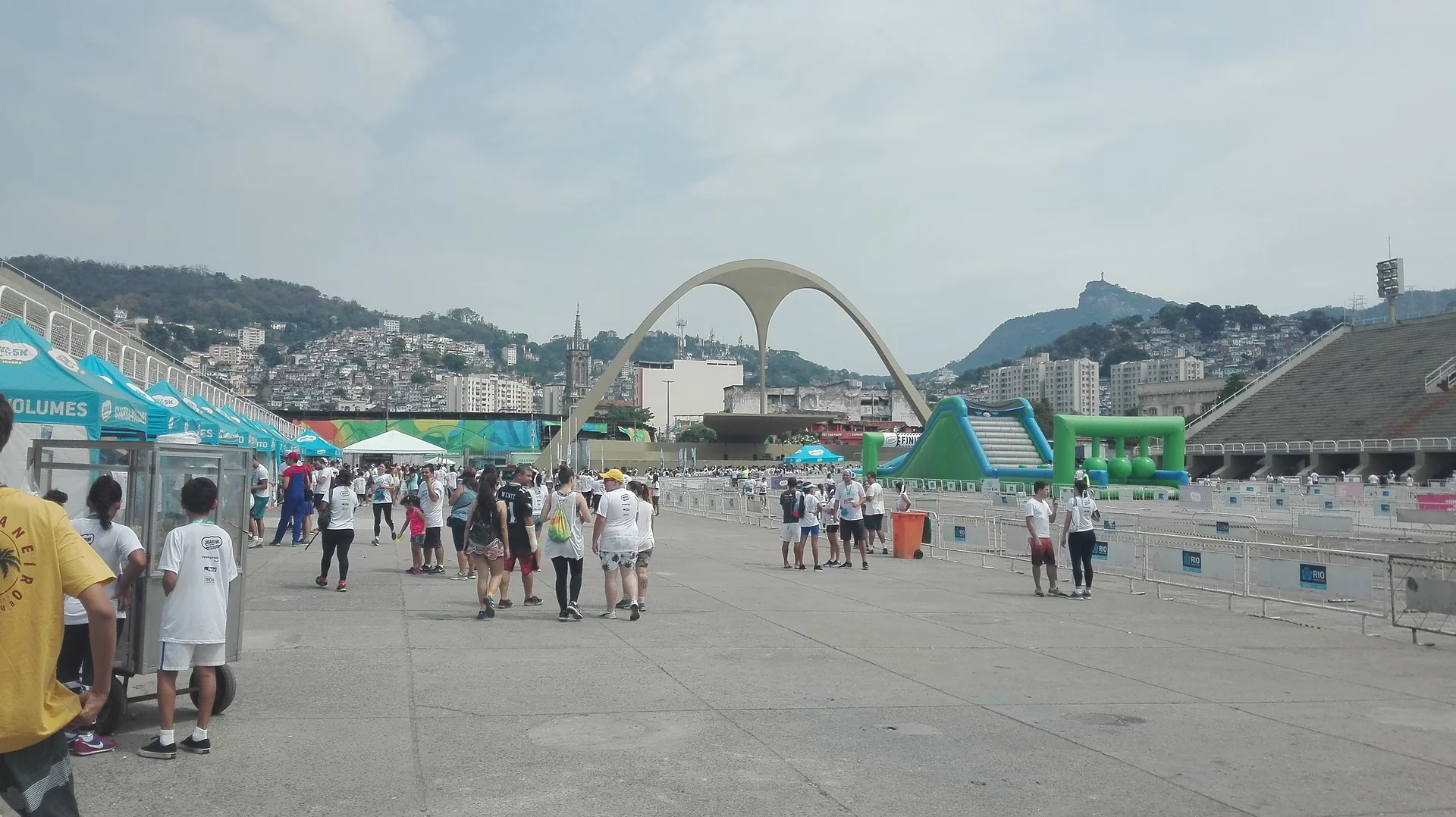
The arena is a 700-meter track, 13.5 meters wide, lined with grandstands and private boxes capable of holding up to 75,518 spectators. The track ends at a large plaza featuring an arch known as the Praça da Apoteose (Apotheosis Square), where dance schools once finished their performances in a grand finale. This specific closing ritual is no longer practiced today.
A cultural landmark for the Carioca
Beyond the festival dance performances, the Sambadrome hosts regular concerts and shows. During the 2016 Olympic Games, it served as the venue for archery and the marathon. The site also houses the Museum of the Rio Carnival. Major renovations were carried out in 2011 and 2015 to bring the facility up to modern public safety and accessibility standards.

The heart of the Rio de Janeiro Carnival, a very impressive permanent installation. It is the site of many sporting finishes, especially for running races. Even when empty, you can still feel the vibrations of the place.