
What to know about the Koutoubia Mosque and its thousand-year-old minaret
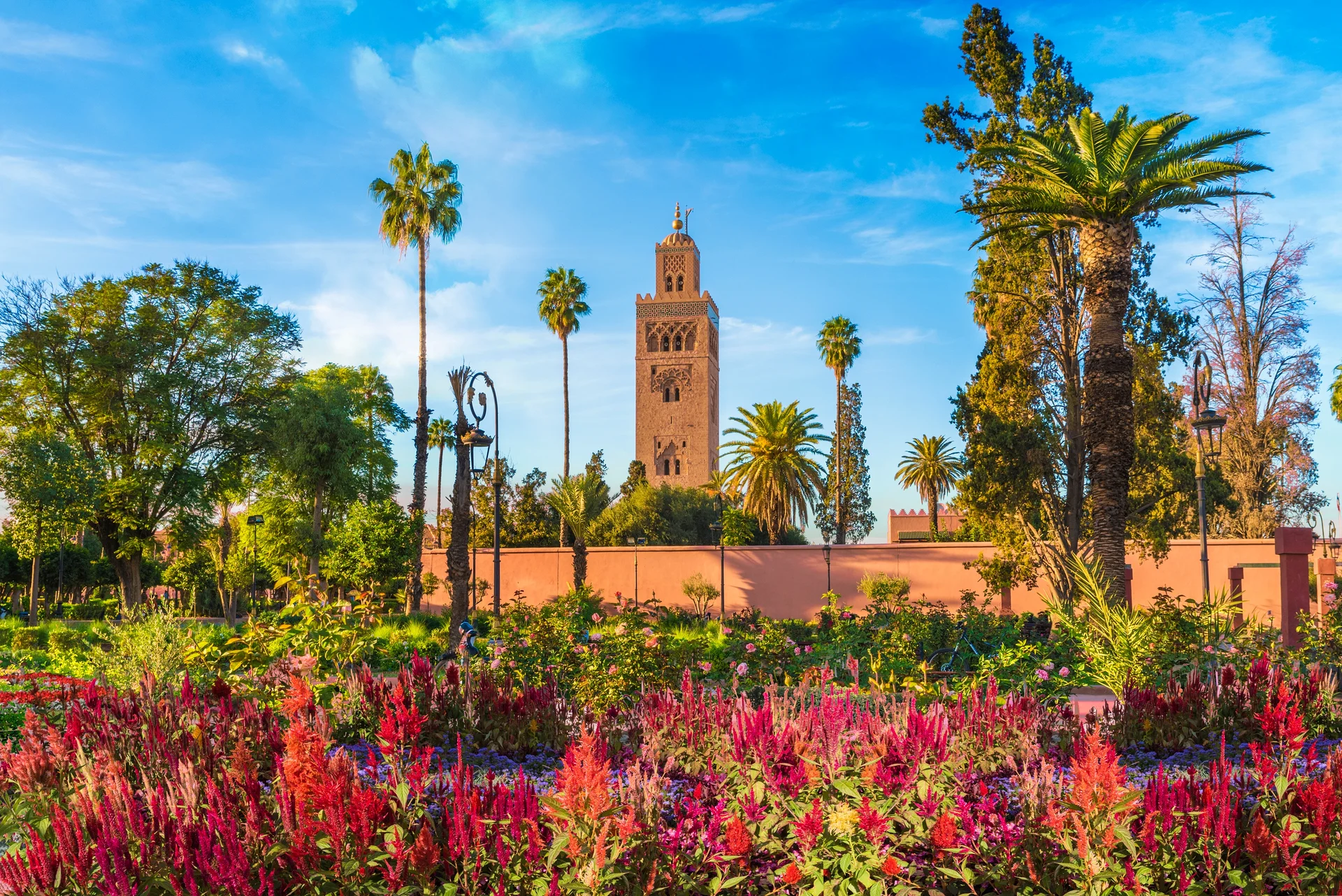
For nearly nine centuries, the 77-meter pink sandstone minaret has pierced the ocher sky of Marrakech like a prayer carved in stone. The Koutoubia Mosque stands as a monumental silhouette just steps from the Jemaa el-Fna, watching over the imperial city with the serenity of an eternal guardian. This 12th-century Almohad structure remains the spiritual and architectural emblem of the Red City.
Why is the Koutoubia Mosque so captivating?
Its name evokes the kutubiyyin, the booksellers who once sold their works at the foot of its walls, turning the surroundings into a bustling literary district. Built by the Almohad sultan Abd al-Mu'min around 1158 and completed under Yacoub al-Mansour, it represents the pinnacle of Western Islamic art. As the largest mosque in Marrakech, measuring 90 meters by 60 meters, it can accommodate 25,000 worshippers.
Its revolutionary minaret directly inspired the Giralda of Seville and the Hassan Tower of Rabat. This architectural influence reflects the reach of the Almohad Empire, which spanned from Andalusia to the Sahara. Restored in the 1990s, the site has benefited from cutting-edge solar equipment since 2016.
Is it possible for non-Muslims to visit?
No, non-Muslims cannot visit the interior of the Koutoubia Mosque. This is a strict rule that applies to this active place of worship.
However, everyone is free to:
- Admire the mosque and its minaret from the outside
- Walk through the surrounding gardens (Jardins de la Koutoubia)
- Explore the esplanade where the remains of the original mosque are located
- Visit adjacent sites like the Koubba de Lalla Zohra
Sacred architecture and construction secrets
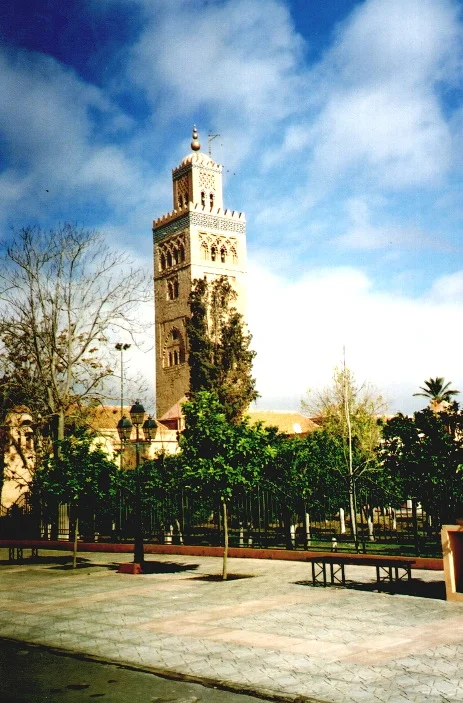
The square minaret, a signature of Berber architecture, rises without interior stairs, featuring instead a helical ramp that the muezzins once ascended on horseback. Its facades, adorned with embossed geometric patterns, create a play of light and shadow that shifts throughout the day. Polylobed arches and serrated merlons crown this symphony of stone.
At the top, three copper orbs called jamour symbolize Mecca, Medina, and Jerusalem. Legend says they were forged from the jewelry of the sultan's wife, who was caught breaking her Ramadan fast. Today, filled with mineral salt from the Atlas Mountains, they maintain their golden luster thanks to a mixture of nitrate and magnesium that is renewed annually.
The mystery of the two mosques
The current Koutoubia actually succeeded an initial mosque that was demolished to correct the orientation of the qibla toward Mecca. The ruins of this first construction remain visible on the esplanade, revealing the architectural evolution of the site and the Almohad builders' quest for spiritual perfection.
Meditation gardens and sacred esplanade
The Jardins de la Koutoubia, landscaped in the 20th century, offer a haven of peace for the non-Muslim visitors who cannot enter the building. Date palms, bitter orange trees, and Damask roses create an urban oasis where the scent of flowers mingles with the murmur of fountains. The paved paths invite you to contemplate the minaret from every angle.
The esplanade reveals other treasures, including the Koubba de Lalla Zohra, a 17th-century white mausoleum dedicated to a female mystic, and the ruins of the palace of Ali ibn Yusuf. Each stone tells a chapter of Moroccan history, from the Almoravid era to the Almohad dynasties.
Local tip: Come in the late afternoon to catch the golden light that sets the pink sandstone of the minaret ablaze. The sunset call to prayer, broadcast via loudspeakers, turns this into a unique spiritual experience, even for non-believers.
Don't miss:
- Best viewpoint: the Jardins de la Ménara for a panoramic perspective
- Archaeological ruins: remains of the first mosque on the north esplanade
- Night illumination: spectacular architectural lighting starting at dusk
- Mausoleum of Youssef Ben Tachfine: founder of Marrakech, located in the immediate vicinity
Opening hours
*Information subject to change

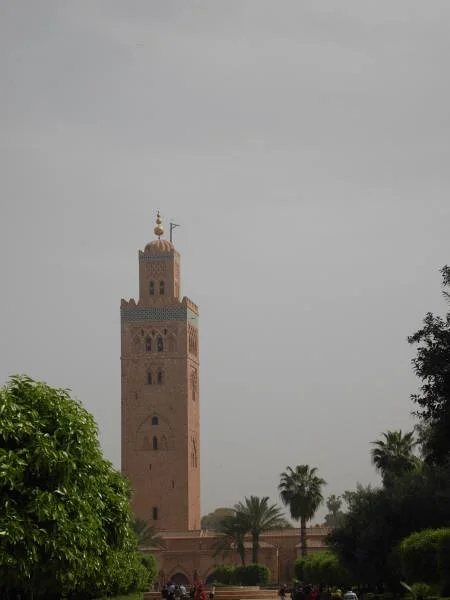
Like a lighthouse towering over the medina, the minaret of the Koutoubia Mosque is the emblem of Marrakech.
Dominating the rooftops and terraces of the historic city, you will be amazed by the finesse of its architecture.
Take the time to wander through the gardens at the foot of the minaret, I was able to take some beautiful photos with the leaning palm trees that frame the Koutoubia.