
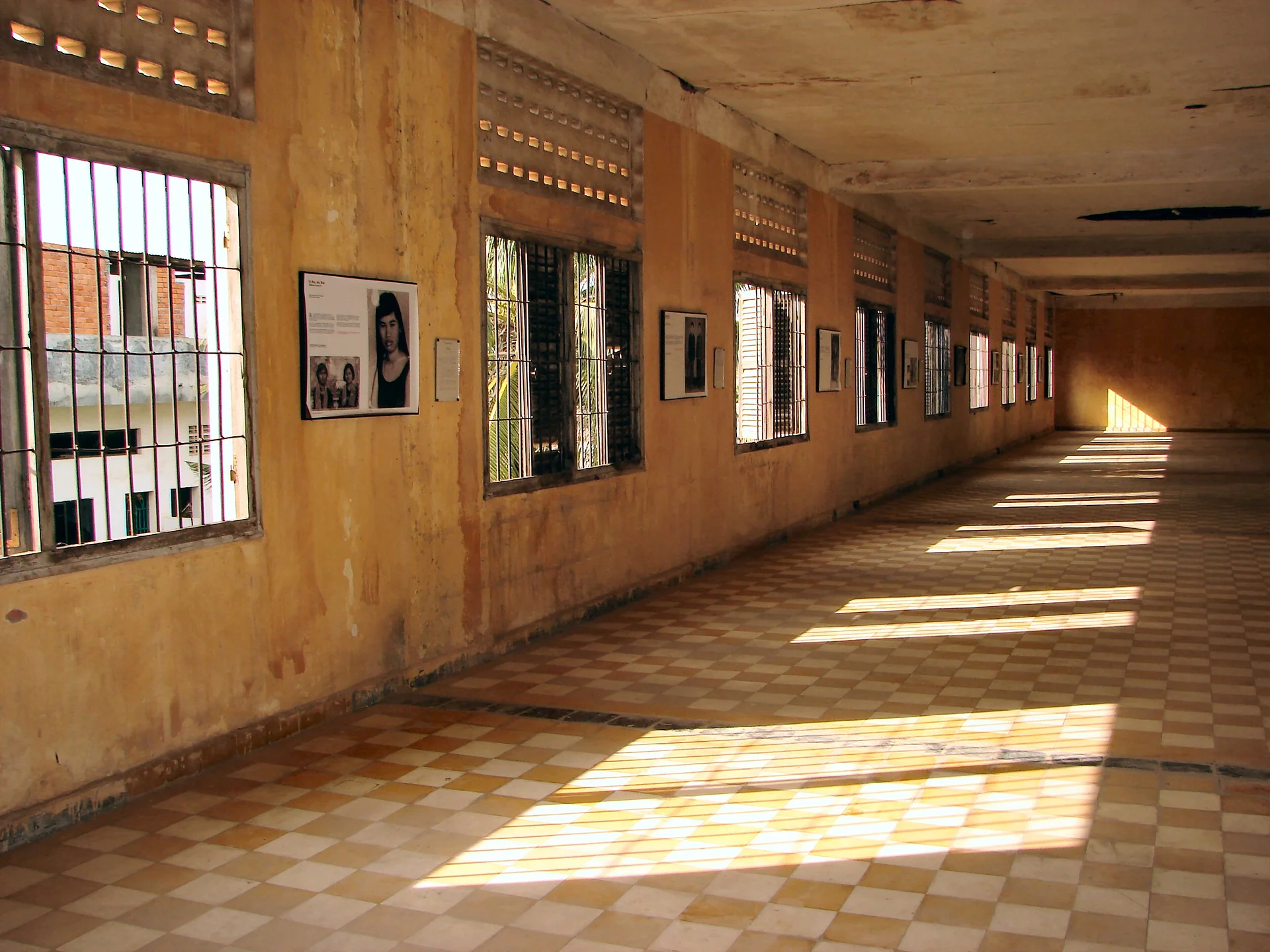
Visiting the Tuol Sleng Genocide Museum
A brief history
Following 5 years of civil war, the Cambodian communists known as the Khmer Rouge invaded the capital of Phnom Penh.
They forcibly deported 2 million residents within 48 hours to reset the nation to year zero. More than 350 prisons were established across the country to imprison and eliminate those who opposed the regime, resulting in 3 million deaths.
One of the most infamous of these sites was Security 21 (S21), known as Tuol Sleng, or the school from which no one returns. More than 15,000 people perished here. Only about a dozen survivors were ever found.
The school that houses the museum
You enter the facility through the courtyard, where the athletic equipment from this former school remains. The difference is that they were repurposed into torture instruments by the Khmer Rouge.
Fourteen white tombs are lined up, containing the remains of the final prisoners discovered on site.
Four identical buildings frame the perimeter. These former classrooms were converted into detention and torture centers. As you walk through these corridors, you will see a succession of empty rooms where metal rings embedded in the floor serve as evidence of the past. Up to 30 or even 50 prisoners slept directly on the tile, chained to the rings for weeks at a time. The floors and walls are stained. Some rooms contain a rusted metal bed where various torture devices were placed and where captives were shackled.
Photos of the prison as it was discovered, including images of the bodies, are on display. Every prisoner was also photographed, and many of these portraits are visible, pinned to boards.
The living testimony of survivors
At the end of your visit, near the refreshment area, one of the survivors is often present. They take turns here to share their stories with anyone who wishes to ask questions. Their faces are open and welcoming, reflecting the resilience of the Cambodian people.


Bonjour Maela,
Merci beaucoup pour votre commentaire, très complet. A la lecture de celui-ci, je me suis permis de modifier l'évaluation en mettant "non" pour les visites en famille.