
Place du Trocadéro: The ultimate frame for the Eiffel Tower
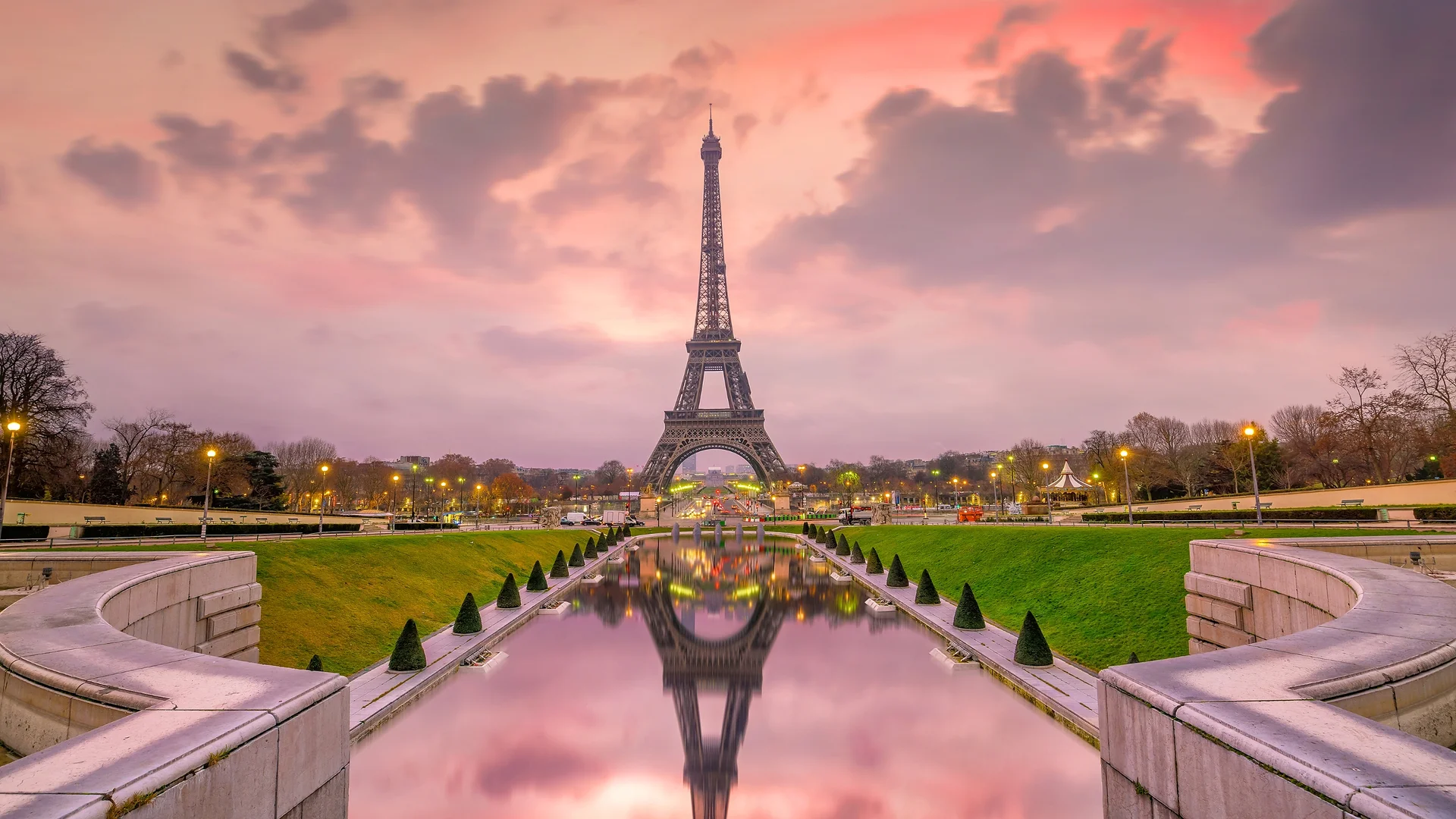
It is 7 a.m., the sun is skimming the horizon and casting a golden glow over the Iron Lady. A few photographers are setting up tripods in the quiet. Within two hours, hundreds of visitors will crowd the esplanade. This morning face-off with the Eiffel Tower from the parvis des Droits de l'Homme (Human Rights Plaza) remains one of the most photogenic experiences in Paris.
Why visit the Trocadéro?
The Chaillot hill has overlooked the Seine for centuries. Grading work began under Napoleon III to prepare for the 1867 World Fair. A Moorish-inspired palace was built here in 1878, then demolished in 1935. The current Palais de Chaillot, designed by architects Léon Azéma, Jacques Carlu, and Louis-Hippolyte Boileau, was inaugurated for the 1937 Exposition.
It was here, on December 10, 1948, that the United Nations General Assembly adopted the Universal Declaration of Human Rights. The terrace separating the two wings of the palace is now named the esplanade des Droits de l'Homme.
The esplanade and its gilded statues
Eight gilded bronze statues line the esplanade. Apollon musagète (Apollo as leader of the Muses) by Henri Bouchard and Hercule domptant le taureau de Crète (Hercules taming the Cretan bull) by Albert Pommier stand at the ends of the palace. These monumental figures, each over six meters tall, catch the sunset light and create a sharp contrast with the tower's metallic silhouette.
The view stretches unobstructed all the way to the Champ-de-Mars. No buildings break the perspective created in 1937 to highlight the Eiffel Tower. The architects deliberately left the central space empty, which once connected the two wings of the former palace.
The gardens and the Warsaw Fountain
The 93,930 square meters of gardens slope gently down toward the Seine. Midway down, the Warsaw Fountain puts on an impressive aquatic display. Its 20 water cannons project jets 50 meters into the distance, while 56 smaller jets rise four meters high. The total flow rate reaches 5,700 liters per second. It is the largest fountain in Paris.
Two stone sculptures mark the first set of stairs. L'Homme (The Man) by Pierre Traverse is to the west, and La Femme (The Woman) by Daniel Bacqué is to the east. Photographing the Eiffel Tower through these silhouettes produces one of the most shared images on social media.
Friendly tip: Arrive before 8 a.m. to enjoy the nearly empty esplanade and ideal lighting. In the evening, the Eiffel Tower sparkles for five minutes every hour until 1 a.m. It is a sight you should not miss from this vantage point.
The museums of the Palais de Chaillot
The Paris wing houses the Cité de l'architecture et du patrimoine (City of Architecture and Heritage), which displays casts of medieval sculptures and models of French buildings. The Musée de l'Homme (Museum of Mankind), reopened in 2015 after six years of renovations, explores the origins of humanity across three levels. The Passy wing hosts the Musée national de la Marine (National Navy Museum), dedicated to French maritime history.
Beneath the esplanade, the Théâtre national de Chaillot seats 1,200 people. Its auditorium was entirely rebuilt underground during the 1937 construction. The Aquarium de Paris also occupies the former limestone quarries beneath the gardens.

From the famous esplanade, the view of the Eiffel Tower is just extraordinary. Plus, I was lucky enough to get there early in the morning. A light mist had settled around the Eiffel Tower, and it gave such an unreal feeling to the moment. If you are passing through Paris, this place is a must, and it remains an essential stop for me.