
Visiting the Pont des Arts
The first metal bridge in Paris
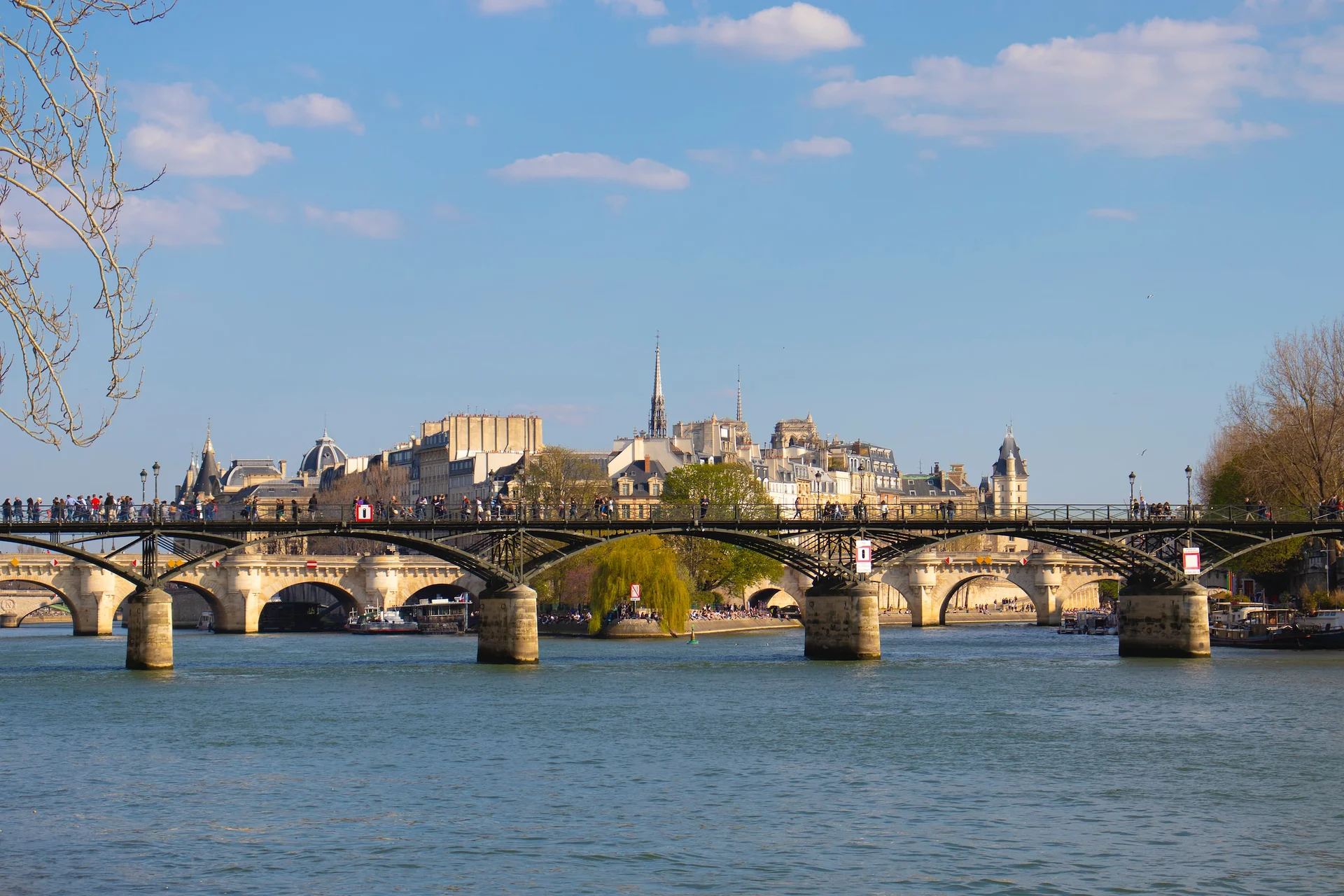
Spanning the Seine in the 6th arrondissement of Paris, the Pont des Arts is a picturesque historic landmark connecting the Cour Carrée du Louvre (Louvre Square Courtyard) to the Left Bank. It stands as the oldest metal bridge and is arguably one of the most famous crossings in the capital.
Constructed from cast iron at the start of the 19th century, it takes its name from the Palais du Louvre, which was once known as the Palais des Arts. With its 9 elegant arches designed exclusively for pedestrians, the bridge once felt like a floating garden, complete with benches, shrubs, and flower boxes. However, collisions on the water were frequent, much to the frustration of local boatmen, eventually forcing a redesign that removed 2 of the arches. After several alterations, its current dimensions now match those of the Pont Neuf.
A gathering spot for locals and visitors alike
Located near the Institut de France (Institute of France), home to the Académie Française, and tucked between the Quai Malaquais and Quai Conti, the bridge offers one of the best perspectives of the Île de la Cité. At sunset, visitors crowd the walkway for drinks, photography, or a casual stroll. If you prefer a quieter experience, visit at sunrise.
The Pont des Arts has appeared in countless books, paintings, films, and songs, cementing its reputation as a symbol of romance and carefree love in the city.
The story of the love locks
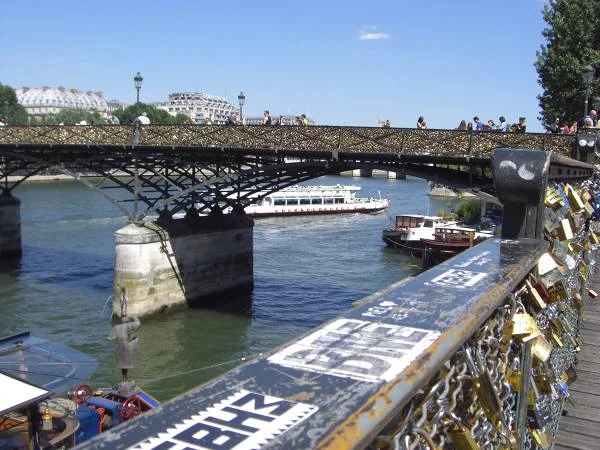
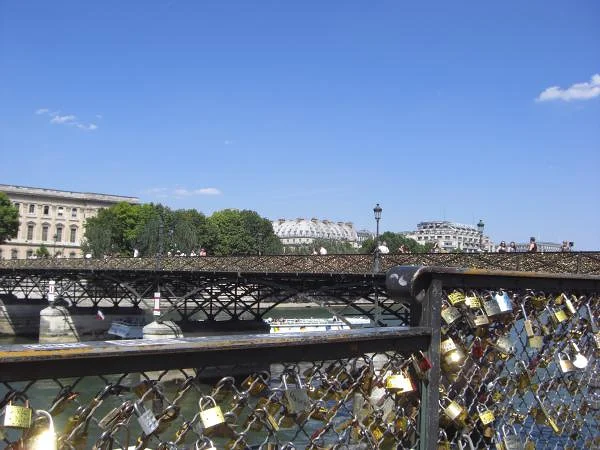
Starting in early 2008, following a trend seen in Eastern Europe, visitors began attaching padlocks to the bridge railings. While the city initially accommodated the practice by installing mesh panels, the collapse of a section in 2014 ended the tradition. The locks are now strictly prohibited for both safety and environmental reasons. In 2015, between 700,000 and 1,000,000 locks were removed, totaling 45 metric tons in weight. The railings have since been replaced with glass panels that frequently host temporary art exhibitions.

You might remember the Pont des Arts back when it was covered in padlocks. Well, those days are over, since the city decided to remove them. And it is for the best: for the structural integrity of the bridge, but also for the aesthetic. The panels that replaced them aren't very pretty, but that is just a detail and the walk over the Seine remains very pleasant.