
9/11 Memorial, where New York chose to turn emptiness into memory
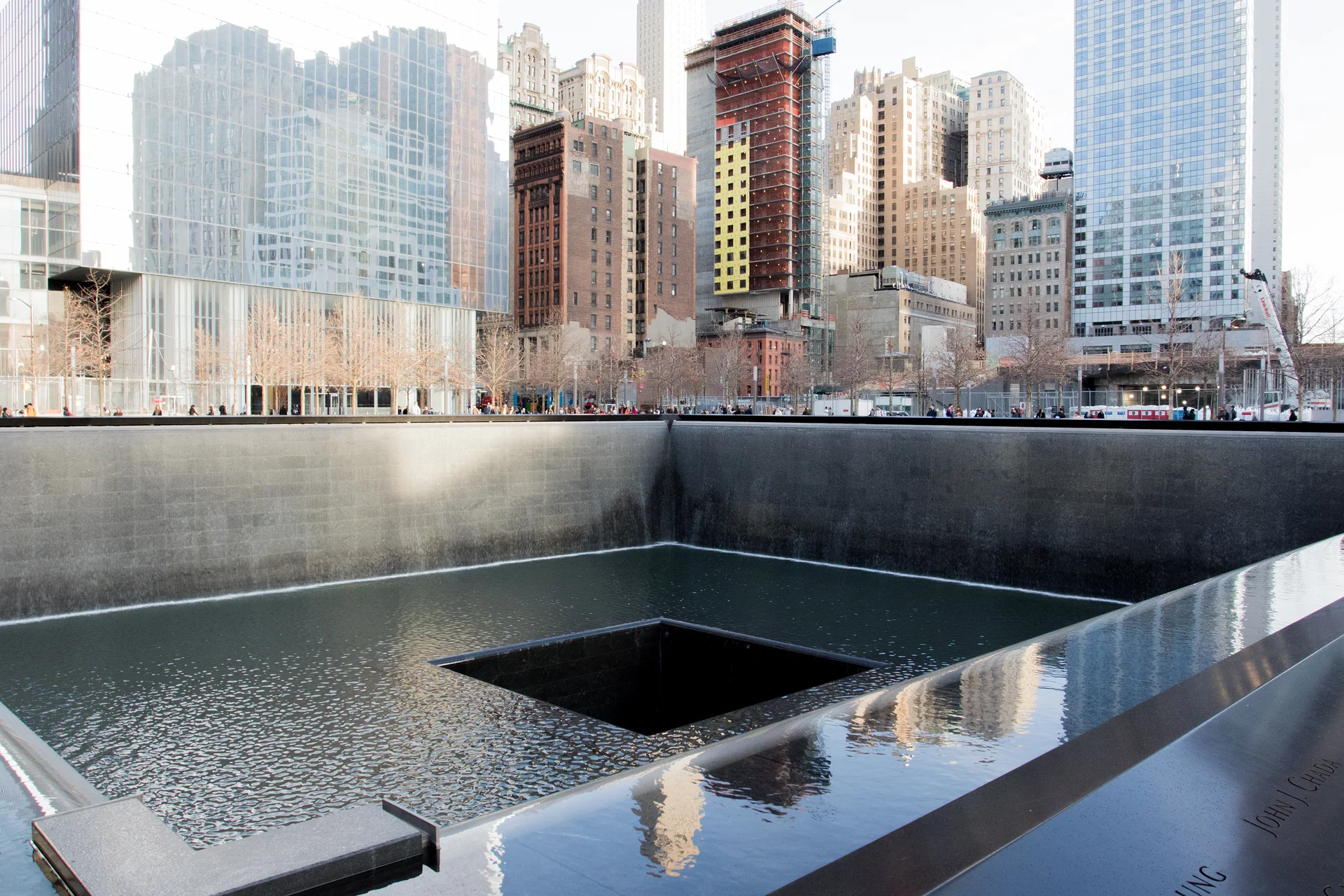
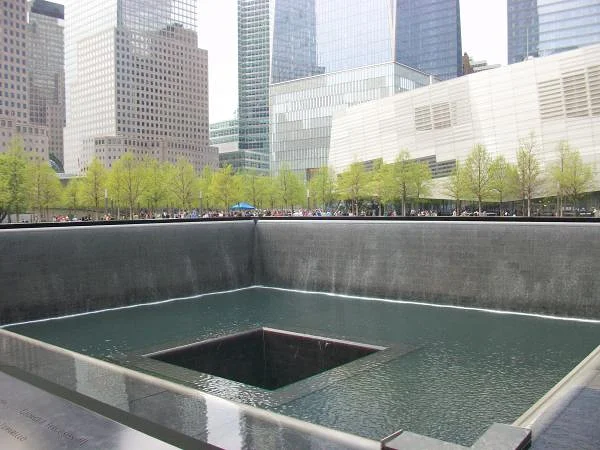
Water falls endlessly into two massive black concrete voids. The low rumble of the cascades masks the city noise. Around you, hundreds of names engraved in bronze catch the morning light. Each year, a white rose is placed next to the name of every victim on their birthday. This simple gesture, repeated 2,983 times a year, captures the spirit of this place.
Why visit the 9/11 Memorial?
This site occupies the exact footprint of the former twin towers of the World Trade Center, in Lower Manhattan. Designed by architect Michael Arad and landscape architect Peter Walker after an international competition that drew more than 5,200 proposals, the memorial opened in 2011, exactly ten years after the attacks. The underground museum opened to the public in May 2014.
Beyond the duty of remembrance, the site tells a story of collective reconstruction. The two reflecting pools, named Reflecting Absence, sit in the footprints of the North and South towers. Water cascades nine meters down into a central pit where you cannot see the bottom. The message is clear, the absence is permanent, but the memory flows without interruption.
What the underground museum reveals
The descent to the bedrock
The visit begins with a gently sloping ramp, dubbed The Ribbon, which takes you seven stories underground to the Manhattan bedrock. This gradual descent mimics the path workers took to clear the site after the collapse. As natural light fades, silence sets in.
Along the way, you pass the Survivors' Stairs, the Vesey Street staircase through which hundreds of people fled on September 11, 2001. These steps, recovered intact from the rubble, were the first artifact installed in the museum.
Foundation Hall and its monumental artifacts
The largest space in the museum opens onto the slurry wall, the concrete retaining wall built in the 1960s to hold back the waters of the Hudson. This wall held firm during the tower collapse. Had it given way, the river would have flooded parts of Lower Manhattan and the subway system. In the center of this hall stands the Last Column, an eleven-meter steel beam covered in inscriptions, missing person posters, and messages left by rescue teams. It was the final piece of metal removed from Ground Zero, on May 30, 2002.
The permanent exhibitions
In the footprint of the North Tower, the historical exhibition retraces the events of September 11, 2001, minute by minute through audio recordings, phone calls, fuselage fragments, and videos. The South Tower footprint houses the memorial exhibition, with portraits of each of the 2,983 victims lining the walls from floor to ceiling. Personal items donated by families accompany these faces.
Between these two spaces, a quote from Virgil forged in steel recovered from the towers adorns the wall. At its feet, the work of Spencer Finch, composed of 2,983 watercolor squares in various shades of blue, attempts to recreate the color of the sky that morning.
The outdoor memorial and its subtle details
The tree-lined plaza surrounding the two pools features more than 400 swamp white oaks. Among them, one tree stands out: the Survivor Tree, a Callery pear found charred in the rubble a month after the attacks. Cared for for years in a Bronx nursery, it was replanted on the site in 2010. Its branches still bear the scars of the fire, but it blooms every spring.
The Memorial Glade, inaugurated more recently on the southwest side of the plaza, pays tribute to first responders who became ill or died after exposure to toxins at the site. Six fractured but upright stone monoliths punctuate this quiet path that many visitors miss.
Pro tip: weekday slots from 9 a.m. to 10 a.m. offer a much more contemplative atmosphere. On Monday evenings, museum admission is free starting at 5:30 p.m., but tickets are released online every Monday at 7 a.m. and go very quickly. Another trick: download the free audio guide via the Bloomberg Connects app before your visit to save the $11 rental fee on-site.
Opening hours
*Information subject to change

I loved the 9/11 Memorial. "Reflecting Absence," the work by Michael Arad where water flows into the void, is very moving. These pools represent the two destroyed towers. You can see the names of the victims all around them. A few white roses are placed there. To complement the visit, I recommend checking out the fascinating museum, which covers both the day of the attacks with many documents and objects, and the geopolitical context of the events.