
Port Lympia: The harbor visitors walk past without stopping
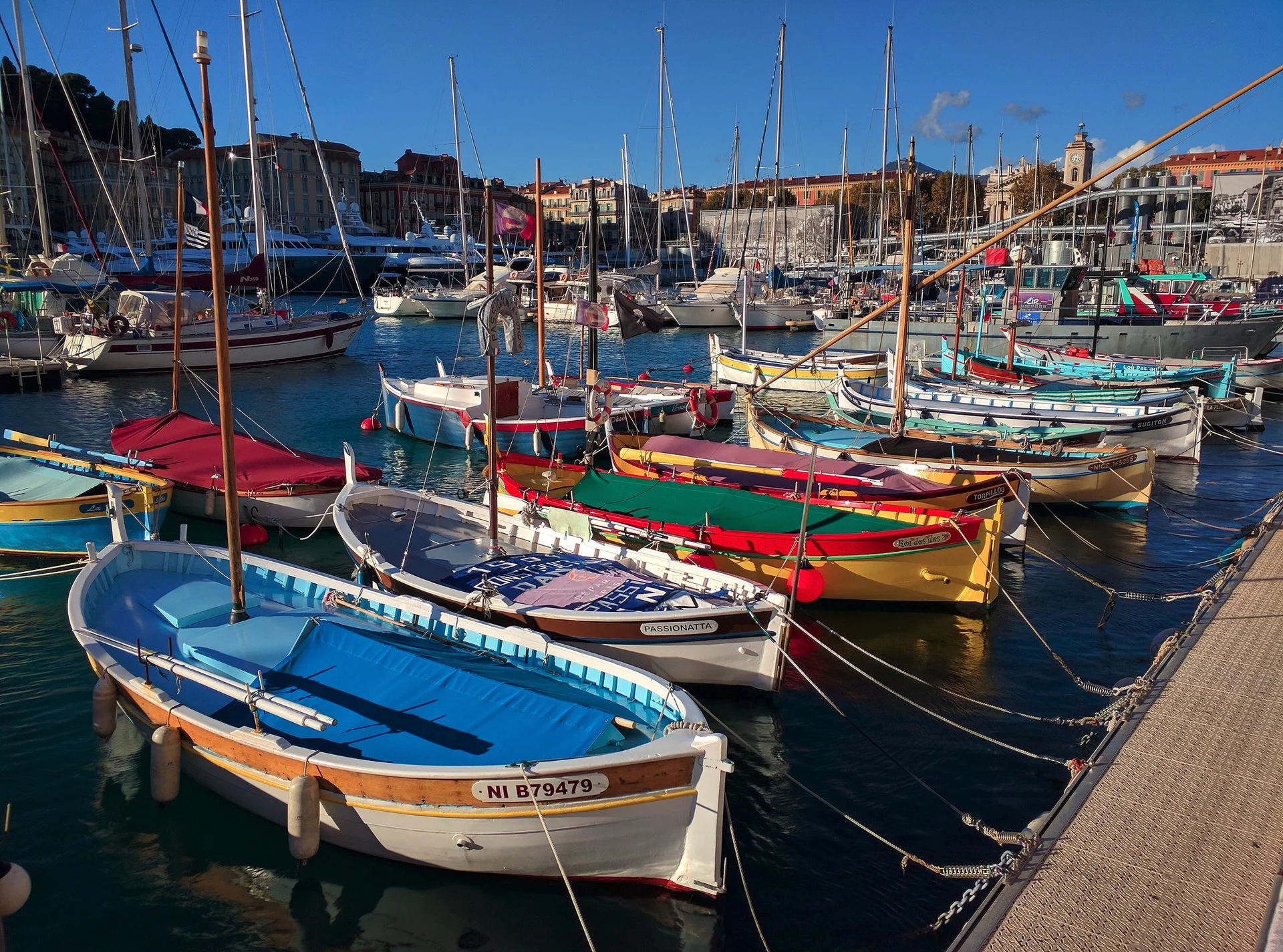
At dawn, when the fishing boats return with their catch, the colors of the basin shift hour by hour. The ochre, gold, and brick red facades of the 19th-century buildings reflect in the calm water. The pointus, traditional wooden fishing boats with classic lines, bob just yards from anonymous luxury yachts. This coastal blend, unique along the Riviera, gives the port neighborhood of Nice its distinct character.
Why visit Port Lympia?
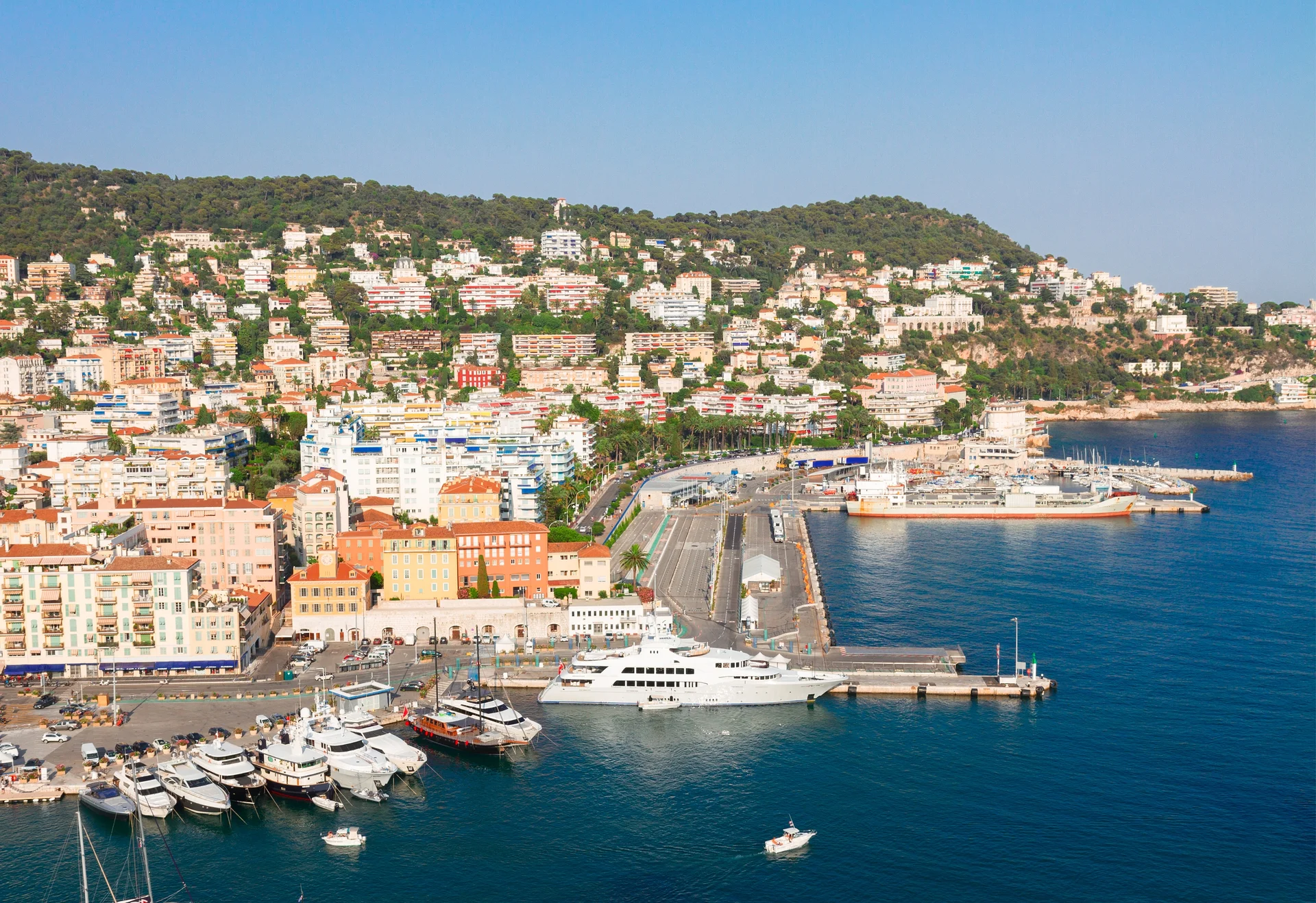
Construction of this harbor was authorized in 1748 by the Sardinian King Charles Emmanuel III, built over a marshy zone fed by the Lympia spring. The construction lasted for more than a century. Today, across its 20 hectares and 3.6 km of docks, artisanal fishermen, visiting sailboats, ferries bound for Corsica, and superyachts all share the space. This is not a frozen postcard harbor. It is a working port that remains fully active.
Unlike Old Nice, which stays packed during peak season, the harbor keeps a neighborhood feel. Locals gather here for a drink on a terrace, play pétanque at Place Arson, or check on their pointus. Tourists are just starting to discover it.
The pointus: The living maritime heritage of the harbor
Roughly ninety of them exist, painted in red, green, blue, or yellow, with names like Napoléon, La Ratapignata, or M'en Bati. The pointu is a wooden fishing boat built without blueprints, crafted by eye by the shipwright, featuring a sharp bow and a rounded stern locally known as a pig snout. This boat style has appeared all across the Mediterranean since antiquity, but nowhere else is it maintained with such dedication.
In the summer, the Lou Passagin, an electric solar-powered pointu, offers a free crossing of the basin between the east and west docks. The shuttle runs from May to September, from 10 AM to 7 PM. Short, quiet, and free, it stands as perhaps the best minute of free sightseeing on the entire French Riviera.
Friendly tip: the Fête du Port, held every September, transforms the docks for several days with live music, local food tastings, pointu regattas, and on-the-water events. It is the moment when the neighborhood reveals its true festive and community spirit, away from the typical tourist paths. Check the schedule with the Nice Tourism Office (Office de Tourisme de Nice).
Architecture and neighborhood highlights
Place Île de Beauté and Notre-Dame-du-Port Church
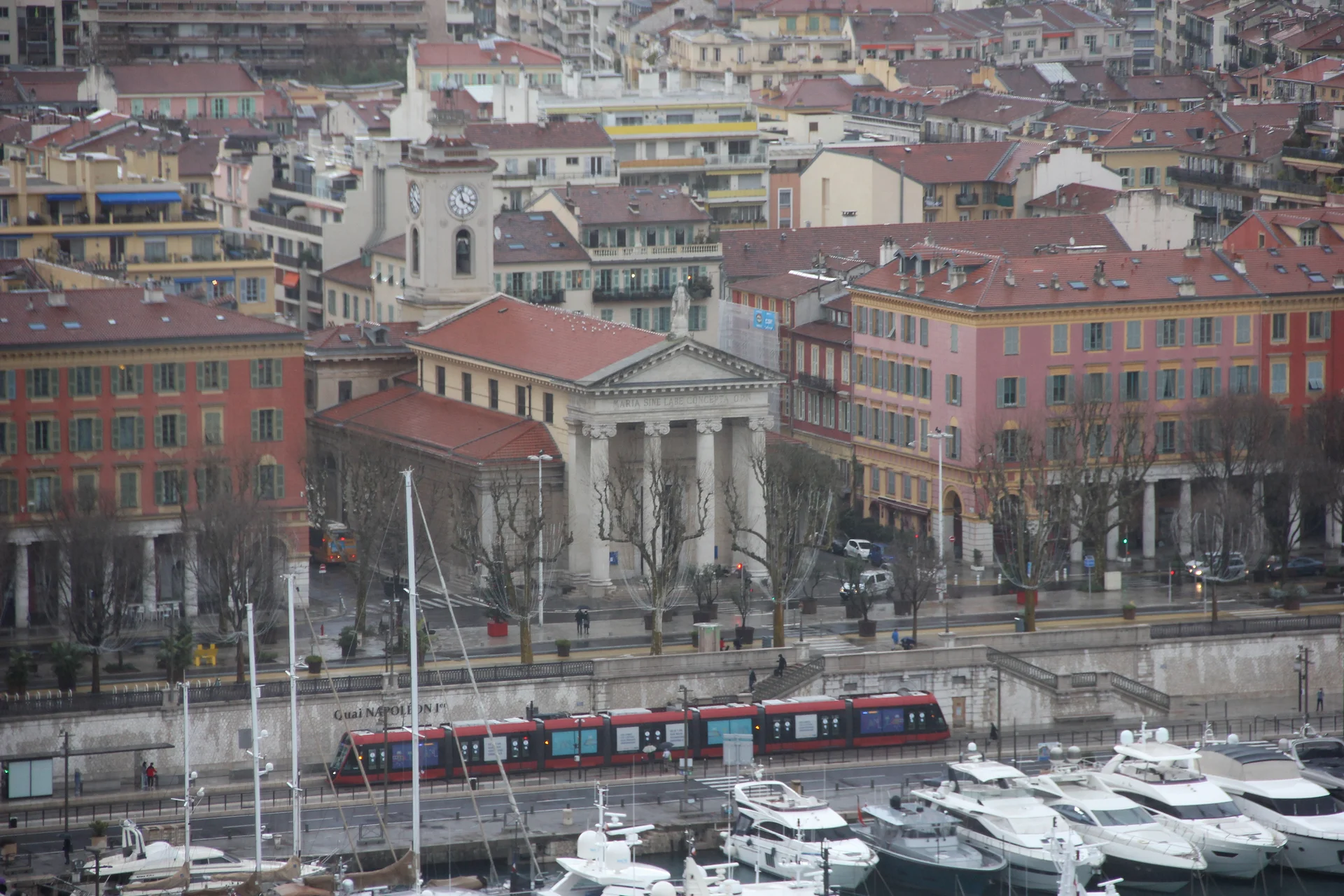
The central square of the harbor, featuring coffered arcades and historic cobblestones, is framed by buildings with red-ochre facades built in a Piedmontese-Sardinian neo-Baroque style. At the back, the Notre-Dame-du-Port Church dominates the scene with its four neoclassical columns. It opened in 1853 following plans by local architect Joseph Vernier, and its facade just underwent an exterior restoration.
Rue Cassini and the antique dealer district
Rue Cassini, which has linked Place Garibaldi to the harbor since the 19th century, underwent a complete redesign in late 2023 with widened sidewalks, a bike lane, and new greenery. Today, it serves as the most pleasant pedestrian route between the city center and the basin. Perpendicular to this axis, Rue Ségurane and Rue Antoine Gautier host a district of antique shops and second-hand dealers, complete with a flea market just below the docks that attracts furniture hunters and curious visitors alike.
The former prison and Terra Amata Museum
On Quai d'Entrecasteaux, the caserne Lympia, a former prison of Nice, has been listed as a historic monument since 1943. A few hundred metres away, the Terra Amata Museum (Boulevard Carnot) reveals that humans lived in a cave on this site 160,000 years ago. The modern marina thus rests on one of the longest human timelines in the Mediterranean.
Good to know:
- Free crossing of the basin in the electric pointu "Lou Passagin", from May to September (10 AM-7 PM)
- Direct ferry connections to Corsica (Bastia, Ajaccio, L'Île-Rousse, Calvi) and Sardinia (Golfo Aranci)
- Access via Tram Line 2, Port Lympia stop, from central Nice
- Antique district and flea market, ideal for wandering in the off-season
- Panoramic view of the harbor from the Castle Hill, a 10-minute walk away
Why the neighborhood is worth it
- An active working port mixing traditional fishing, recreational boating, and ferries for an authentic atmosphere
- The pointus, unique wooden boats of the western Mediterranean, present in high numbers and well-maintained
- The freshly renovated Rue Cassini, lively Rue Ségurane, and Place Garibaldi just steps away
- Less crowded than Old Nice during peak season, keeping terrace seating accessible
- Easy tram access and multiple connections to the rest of the Riviera
Things to keep in mind
- The major neighborhood redevelopment project (85 million euros) is only partially finished, with some docks and Place Île de Beauté still awaiting transformation
- Parking is difficult and affected by construction in several areas around the harbor
- Some work persists near the lighthouse parking area, which is temporarily closed for redesign
Corsica ferry ticket prices
| Destination | Crossing time | One-way (passenger) | Round-trip with car |
|---|---|---|---|
| Bastia | 6h to 8h | from $57* | from $180* |
| L'Île-Rousse | 5h30 to 7h | from $40* | from $146* |
| Ajaccio | 7h30 to 9h | from $51* | from $169* |
| Porto-Vecchio | 12h to 13h | from $57* | from $180* |
Approximate rates subject to change. Starting prices apply to low season for a single passenger in a standard seat. High season rates (July-August) can be significantly higher. Cabin surcharges apply for overnight crossings.
Opening hours
Free crossing via Lou Passagin (an electric traditional fishing boat): May through September, daily from 10:00 AM to 7:00 PM.
Quayside flea market: Varies by season, typically held on weekends.
How long for this activity
*Information subject to change

The Port of Nice is a really pleasant place to walk around, even if it is always crowded.
I really loved strolling along the docks, admiring the luxury yachts and the lively vibe of the neighborhood.
You can also see the ferries leaving for Corsica.
The area is nice for a walk, with pretty views and a typically Nice atmosphere.
By continuing toward the Promenade des Anglais, you get to enjoy the seaside even more. A lively spot...