
Visiting Luxor Temple
Along the banks of the Nile in Luxor, you are met with a sense of immense scale. Ramses II, the pharaoh who championed grand construction projects, is the figure who greets you at this site in the heart of the ancient capital of Thebes. Built during the 18th and 19th dynasties, the temple dedicated to Amon evolved steadily through the reigns of various pharaohs. Even Alexander the Great left his mark here. Unearthed in 1884, the Temple of Amon, also known as the Opet of the South, remains a fascinating site.
A legacy shaped by each pharaoh
Amenhotep III
The site was originally initiated by Amenhotep III, who oversaw a structure measuring 260m long and 50m wide. A 2.5km dromos (processional avenue) once connected it to the temple at Karnak. This path was lined with over 700 ram-headed sphinxes. While only a portion remains, their scale is evident. Under Nectanebo, some sphinxes were replaced with human-headed versions, reflecting the layers of influence that define this temple.
Ramses II
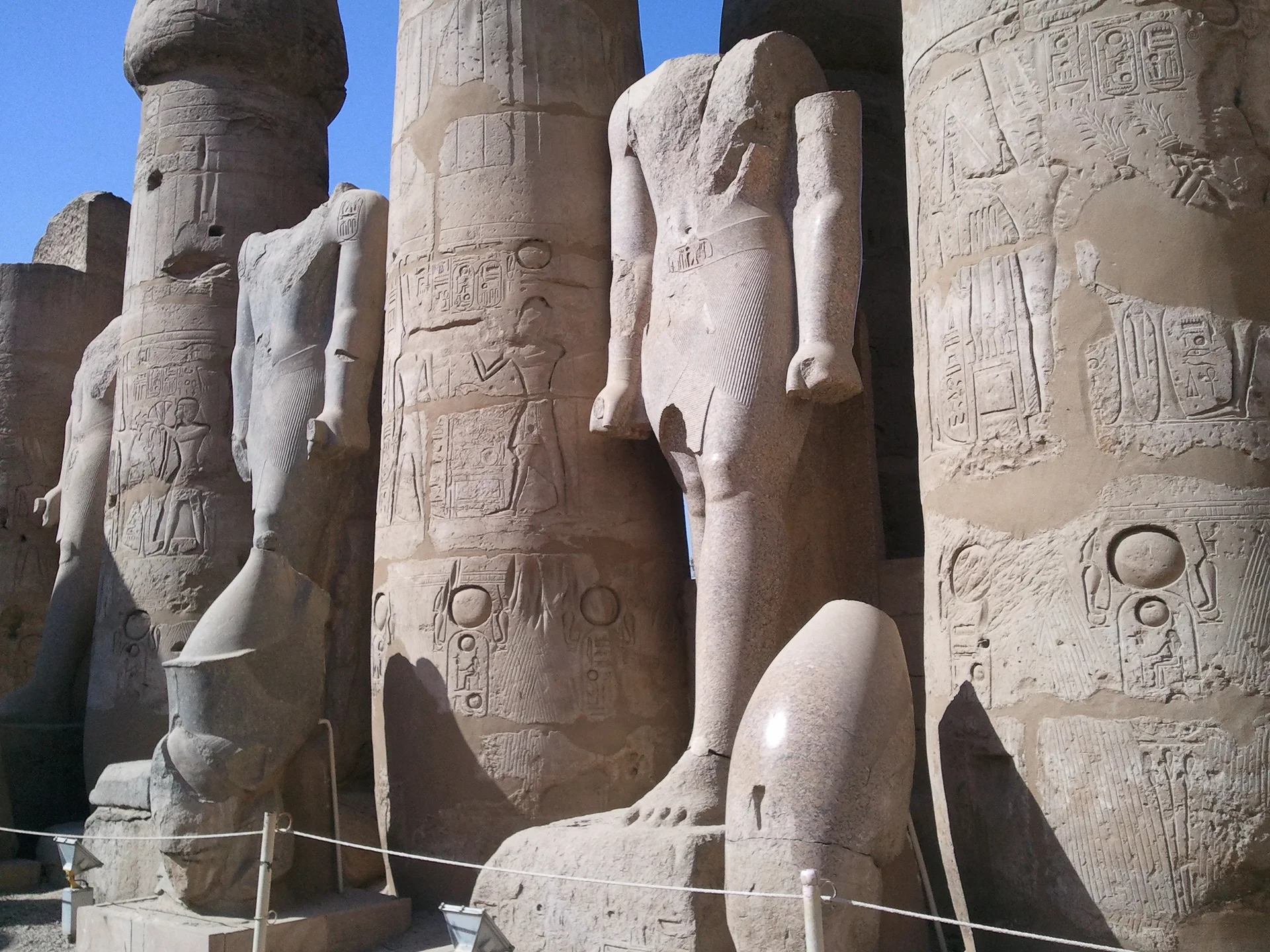
Ramses II added to the site with a 24m facade. A pylon depicts the Battle of Kadesh in its bas-reliefs, guarded by three rose granite colossi. A head of the Pharaoh rests on the ground, and you will easily recognize the 26m obelisk, as its twin stands in the Place de la Concorde in Paris. Its sides are inscribed with the monarch's name, and the power of the site is clear in the great courtyard surrounded by 76 columns.
Queen Hatshepsut and Amenhotep III
We owe the barque shrine to Queen Hatshepsut, where fine columns topped with papyrus capitals serve as an ode to nature. To the south of the courtyard, eleven giant statues and two seated colossi carved from granite remain, while the influence of Amenhotep III is visible in the colonnades and the impressive courtyard. Built upon the foundations of a Coptic church, the Mosque of Abu Haggag now stands on the site. Across every wall, the stone tells stories of the exploits of those who, for a time, were considered the gods they honored.
Opening hours
*Information subject to change

This temple is simply incredible. From the moment you enter, with the massive pylon and the statues of Ramses II, you are overwhelmed by the architecture. I was quite impressed by the good condition of the columns and especially the hieroglyphs that adorn the walls. A must-see during a trip to the land of the Pharaohs.