
Lisbon Cathedral: 3,000 years of history under one roof
You enter through the dark, austere nave, and you might assume the visit will be brief. Then you head down into the cloister. There, beneath Gothic arches, excavations ongoing since 1990 reveal a paved Roman street, 1st-century shops, and the foundations of a 12th-century Almoravid mosque. The floor of the cathedral rests on seven stacked layers of civilization.
Why visit Lisbon Cathedral?
The Sé de Lisboa, officially the Igreja de Santa Maria Maior (Church of Saint Mary Major), is the oldest church in the Portuguese capital. King Afonso Henriques ordered its construction in 1147, immediately after reclaiming the city from the Moors during the Reconquista, with help from English, Flemish, and German crusaders. The first bishop appointed was an Englishman, Gilbert de Hastings, a comrade-in-arms of the king.
The building stands on the site of the main mosque of al-Ushbuna, Islamic Lisbon. This choice, common in medieval Iberia, gives the site a rare symbolic depth. Earthquakes in 1321, 1531, and most notably 1755, partially destroyed and subsequently rebuilt the structure each time. The result is an architectural palimpsest where you can read layers of Romanesque, Gothic, Baroque, and Neoclassical styles.
A fortress-cathedral with a deceptive appearance
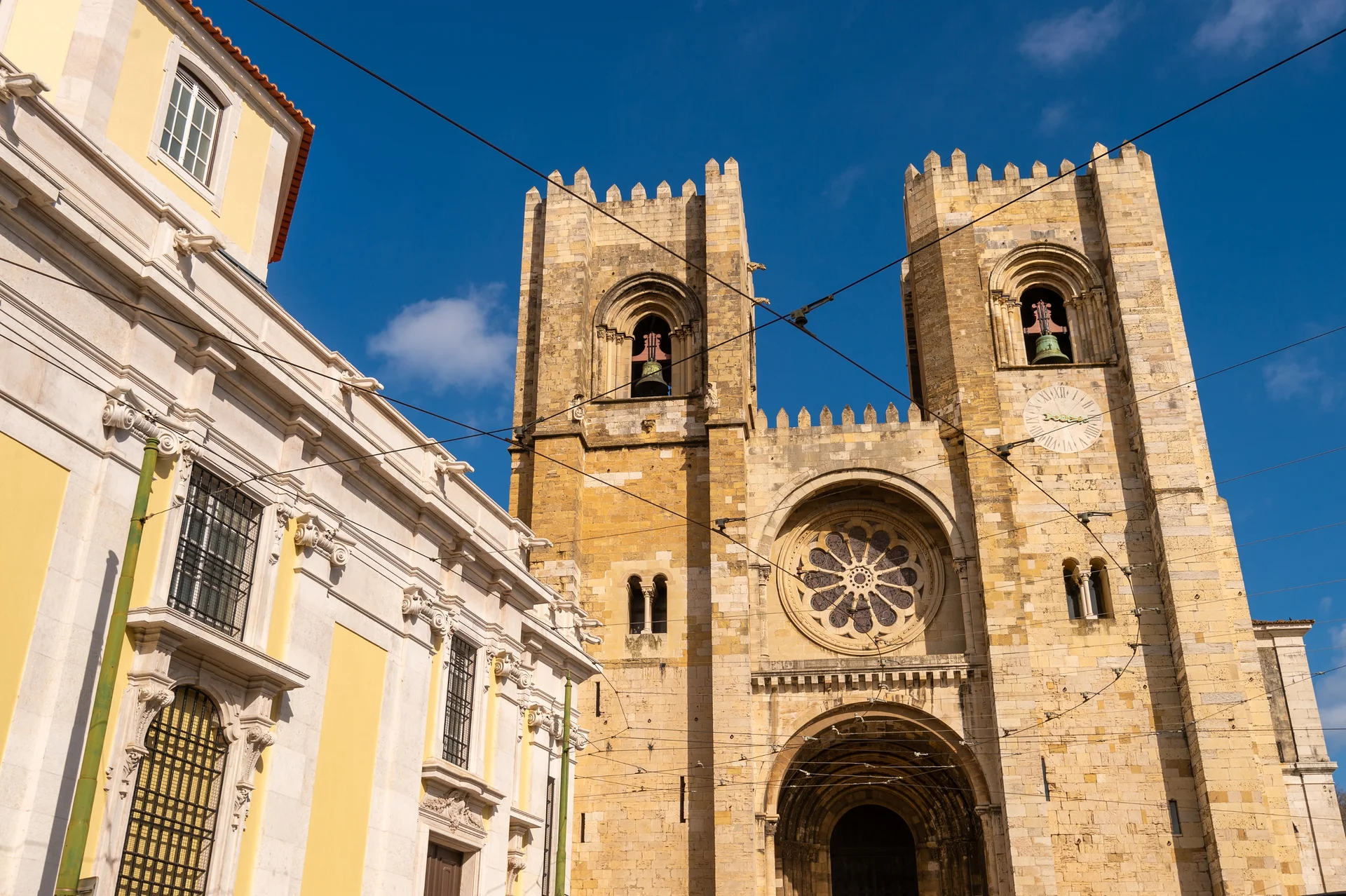
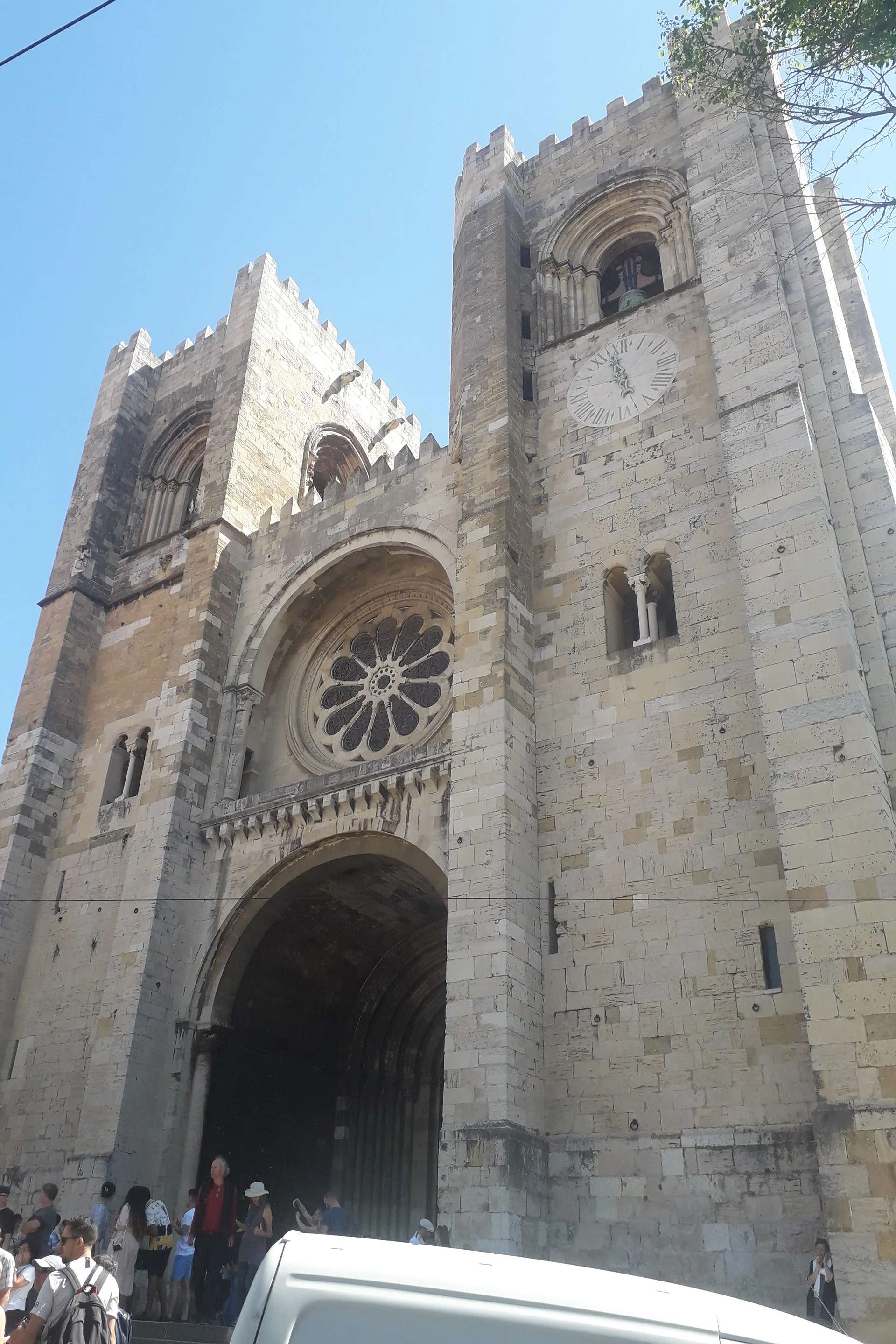
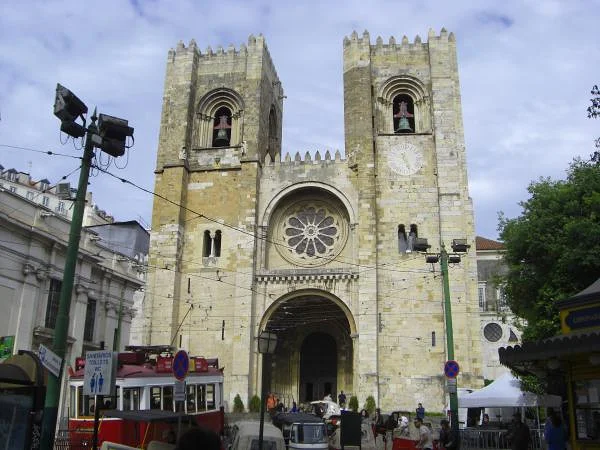
From the outside, the Sé looks more like a fortified castle than a church. Its two crenelated towers, arrow slits, and thick walls betray the era of its construction, when Lisbon remained a threatened frontier city. The large rose window between the towers, rebuilt after the 1755 earthquake, tempers this military austerity with a ring of light that illuminates the central nave.
The interior is sober, almost bare. The barrel vaults of the central aisle impose a particular silence. Light enters sparingly through narrow windows, which reinforces the feeling of gravity. It is a striking contrast to the Baroque cathedrals found elsewhere in Portugal. To the left of the entrance, the baptismal font where Saint Anthony of Padua was reportedly baptized in 1195 is decorated with azulejos (ceramic tiles) added in the 18th century.
The cloister and the archaeological crypt
3,000 years beneath your feet
The Cloister of D. Dinis, built between the late 13th and early 14th centuries, is the true treasure of the visit. A ground subsidence in 1990 triggered excavation campaigns that unearthed a complete stratigraphy, from the Iron Age to the Middle Ages. One detail fascinates archaeologists: the chronology is inverted. Roman remains are found higher up, and Islamic remains are found lower down, due to successive fillings that leveled the hill.
You can identify a paved Roman road oriented north-south, lined with small shops. Lower down are the walls of a monumental complex interpreted as the mosque-cathedral of al-Ushbuna, dating from the Almoravid period. A restoration project led by architect Adalberto Dias between 2018 and 2025 created an archaeological core to present these discoveries, while restoring the upper and lower cloisters.
The cathedral treasure
Four rooms upstairs house the Treasury: illuminated manuscripts, sacred goldsmithing, liturgical vestments, and an 18th-century monstrance made of precious stones. The silver reliquary containing the remains of São Vicente, the patron saint of Lisbon, is also kept here. Photography is prohibited, and a guard monitors the room to ensure this rule is followed.
Friendly tip: The cathedral is closed on Sundays and holy days for tourist visits. Come on a weekday morning to avoid the security line. The climb to the High Choir offers a plunging view of the nave and a rare angle on the rose window with its twelve apostles. It is the most photographed viewpoint inside, yet few visitors make the climb.
- Look for: The Saint Anthony baptismal font, the 1766 nativity scene by Machado de Castro in the choir, the tombs of King Afonso IV and his wife Beatriz in the Gothic chapels, and the sundial on the right tower.
- Good to know: Interior signage is almost exclusively in Portuguese. The "Sé Digital" add-on at $3.40* offers a smartphone audioguide in six languages, including English.
Opening hours
May to October: Mon, Tue, Thu, and Fri, 9:30 AM to 7:00 PM; Wed and Sat, 10:00 AM to 6:00 PM.
Closed on Sundays and religious holidays. Last entry 45 minutes before closing.
*Information subject to change

I have already visited quite a few cathedrals. The one in Lisbon is elegant, but there is nothing notable about it. For a paid admission, I was expecting to see more artwork and historical explanations. I did like the cloister, which reminds me a bit of the one at the Jeronimos Monastery, though not as beautiful, and the stained glass windows. Otherwise, nothing exceptional. The treasury displays some traditional vestments and relics. If you have limited time, a visit is not essential.