
Visiting the Basilica Cistern
Beneath the streets of Istanbul, hidden treasures with an air of mystery lie in wait. Sheltered from the city noise, about sixty underground water reservoirs from the Byzantine era still exist in the capital. Among these secret sites, the Basilica Cistern stands out as one of the most remarkable. Built between 527 and 565, it was largely forgotten until excavations in 1550. Its architecture is both imposing and disorienting, setting it apart in a city already packed with exceptional monuments.
A subterranean forest of columns
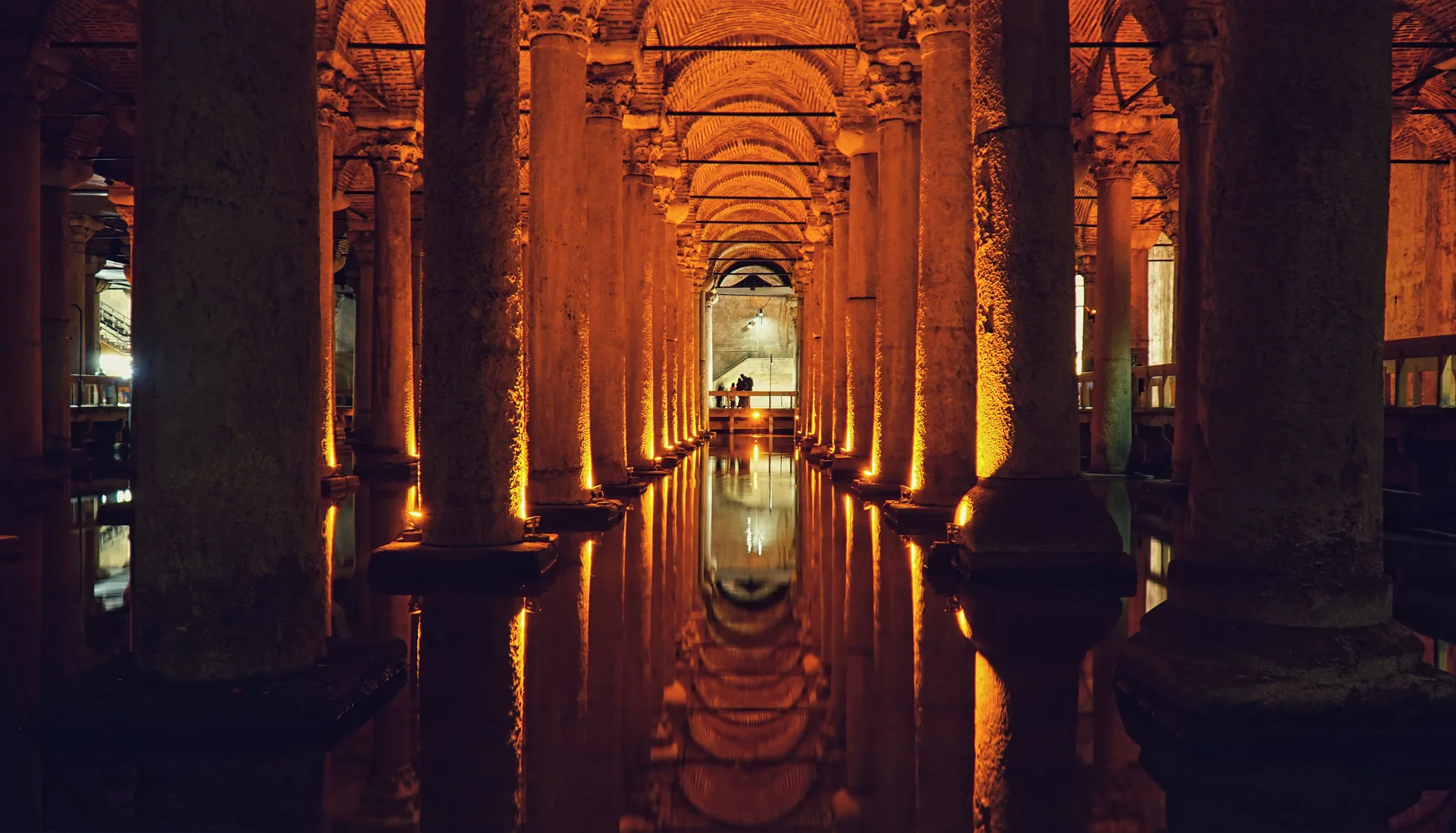
Walking through the site feels like exploring a restricted area, as the silence and stillness define the experience. Only soft music echoes through the underground space, punctuated by the faint sound of dripping water, while orange lighting enhances the feeling of a sacred world. The Basilica Cistern is the largest in the city. The chamber is massive, measuring 138 meters long by 65 meters wide, but that is not what strikes you first. You are confronted by an incredible forest of 336 columns, each 8 meters high, supporting the arches and vaults overhead. As your eyes adjust, the details emerge. The structure is composed of 12 rows of 28 columns, most featuring Corinthian capitals. Some display carvings known as peacock eyes, while two others feature Medusa heads as their bases. The stylistic variety exists because these columns were salvaged from older, long-lost structures. This sunken palace is all the more fascinating for its mismatched origins.
As you wander the walkways hovering above the water, it is easy to imagine the immense value of this space, which once held 100,000 cubic meters of water during the reign of Justinian I, the emperor who ordered its construction. The Basilica Cistern served as the water reserve for the Byzantine palace, fed by two aqueducts. It takes its name from the religious building that once stood above it. While that structure is long gone, the cistern remains to captivate visitors today.
Opening hours
*Information subject to change

During my first trip to Istanbul, I hadn't even heard of the Basilica Cistern. During my second visit, I did my research and decided to go. There isn't much to see per se, but the site is pretty unique. The dim lighting and all those columns give the place a unique atmosphere (and a refreshing one if you visit the city in the middle of summer!). I found the place very beautiful and relaxing despite all the tourists. There is the famous Medusa column that is different from the others, and which is an important element in the novel Inferno by Dan Brown.