Visiting Cangas de Onís
Cangas de Onís has long held historical weight in Spain. Serving as the capital of the Asturias region until 774, it is famous as the site of the Covadonga victory, where the Christian forces led by Pelagius the Conqueror dealt the first defeat to the Moorish forces. Today, Cangas de Onís functions as a local hub for tourism and agriculture. During your visit, make sure to stop by the market to sample the regional specialties of this part of northern Spain. You will find sheep's milk cheeses, cider, and rich stews like the traditional fabada.
The deep history of Cangas de Onís
Cangas de Onís sits in an area with human history dating back to the Neolithic era. Several prehistoric caves have been discovered nearby, including the Buxu cave with its wall paintings, the burial sites of the Azules, and the Güelga caves, where researchers found fragments of a flute carved from bone. Even more striking is the Santa Cruz chapel. Founded in 737 over the remains of a Roman temple, it houses an exceptional megalithic monument within its nave that dates back to roughly 4000 B.C.
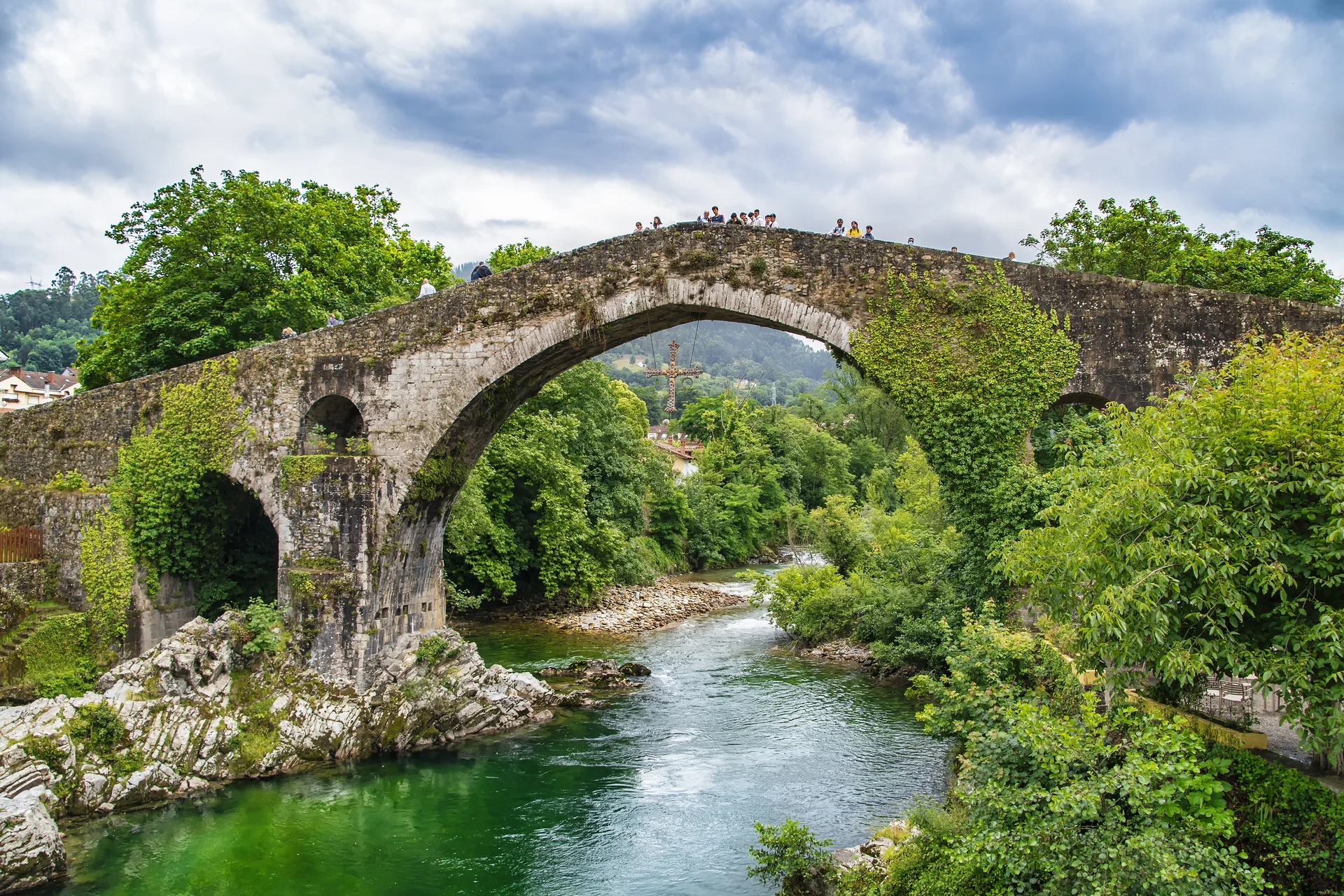
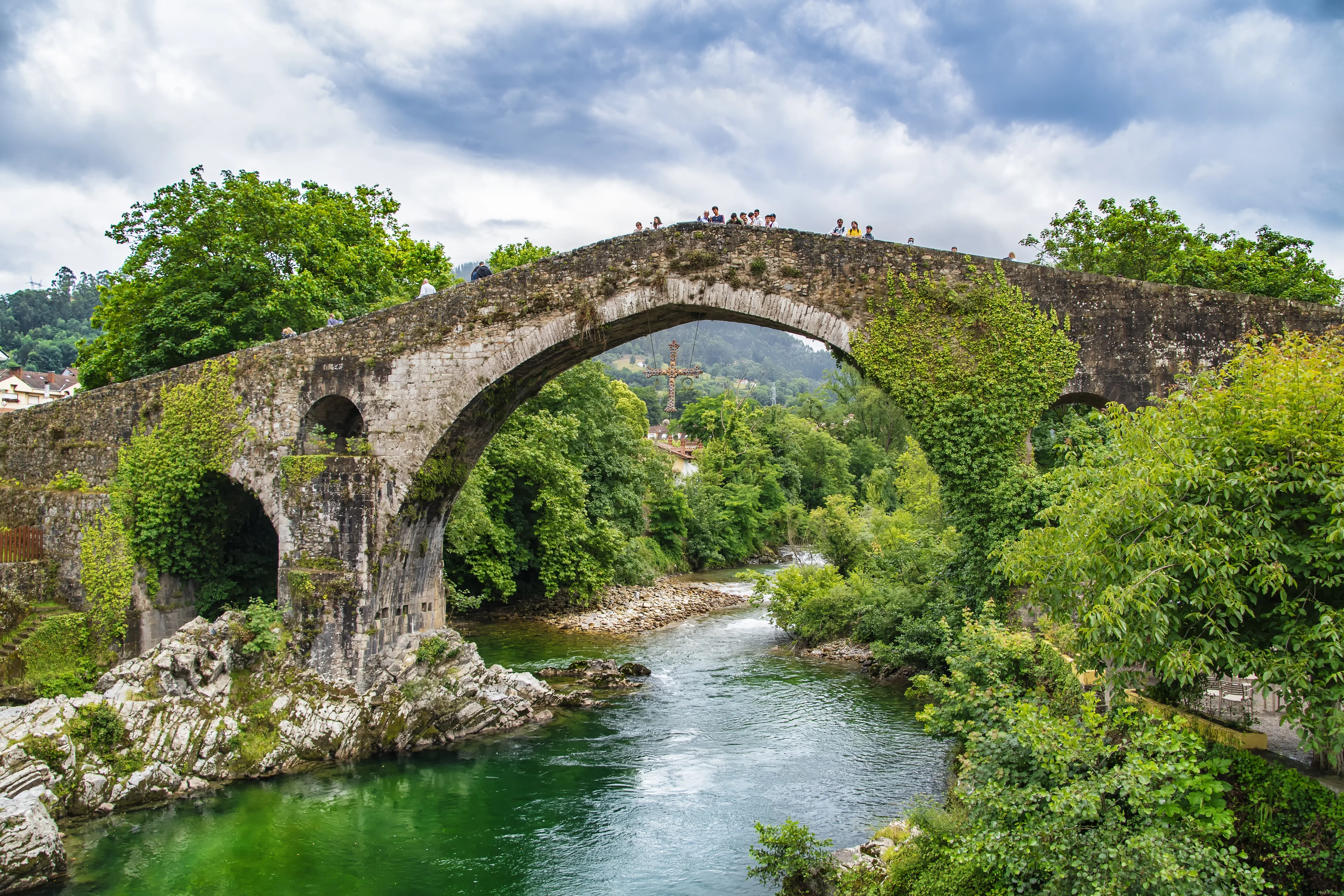
The town grew significantly during the Roman period. While the famous Roman bridge, or puenton, is sometimes attributed to that era, it is actually a medieval structure likely built using repurposed Roman stones. This bridge remained strategically vital until the 19th century, as it was the only way to cross the Sella river to connect Asturias with Cantabria. A wooden reproduction of the Victory Cross, the symbol of the Asturian resistance against the Muslim invasion, hangs from the center of its main arch.
Also worth seeing in Cangas de Onís is the parish church, built in 1963 and featuring an imposing three-story bell wall. Directly across the street, in the center of a small landscaped garden, stands a bronze statue of Pelagius the Conqueror.
Exploring Asturias
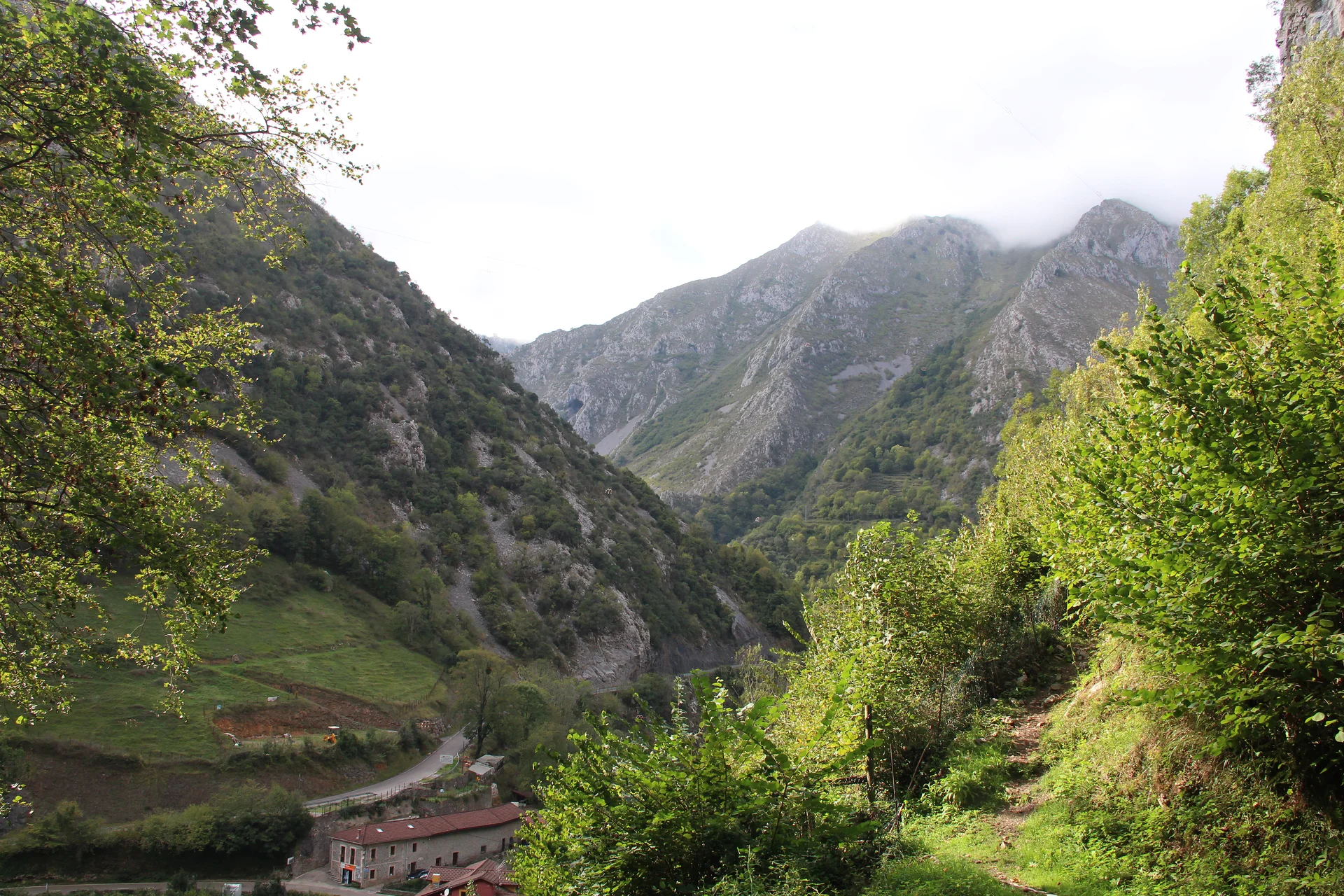
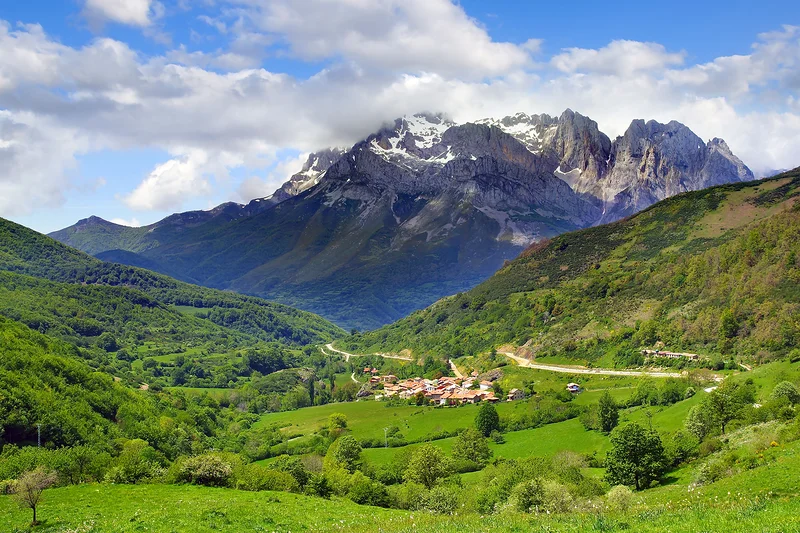
Cangas de Onís is perfectly positioned near three nature reserves, including the famous Picos de Europa National Park. This area contains the historic site of the Battle of Covadonga, featuring glacial lakes and the Covadonga Sanctuary Basilica: the Virgin is venerated in a cave at the foot of Mount Auseva, overlooked by a neo-Romanesque basilica completed in the early twentieth century. The sanctuary was founded under the reign of King Alfonso I to commemorate the victory of the kingdom of Asturias over the Moors. The image of the Virgin, known as Santina, which sits in the chapel, is a sculpture dating to the 16th century.
When to go
Cangas de Onís and the surrounding area are best visited from spring through the end of the summer season. Each year on June 13, the town hosts the festival of Saint Anthony of Padua, which offers a great opportunity to see local finery and traditions on display.
How to get there
The closest airport is in Oviedo, though León is not much further. From Oviedo, ALSA buses run regularly to Cangas de Onís. If you prefer to travel by train, you will need to get off in the neighboring town of Arriondas.